IN THE SUPREME COURT OF BRITISH COLUMBIA
|
Citation: |
R. v. Malik and Bagri, |
|
|
2005 BCSC 350 |
Date: 20050316
Docket: CC010287
Registry: Vancouver
Between:
HER MAJESTY THE QUEEN
AGAINST
RIPUDAMAN SINGH MALIK and AJAIB SINGH BAGRI
Before: The Honourable Mr. Justice Josephson
Reasons for Judgment
|
Counsel for the Crown: |
R.H. Wright, Q.C.
|
|
Counsel for the Defendant, Ripudaman Singh Malik:
|
E.D. Crossin, Q.C.
|
|
Counsel for the Defendant, Ajaib Singh Bagri:
|
R.C.C. Peck, Q.C.
|
|
Counsel for the Court: |
M.R. Shapray C.S. Judd
|
|
Place of Trial: |
Vancouver, B.C. |
Dates of Trial: |
|
|
YEAR/MONTH |
DAY(S) |
|
2003 |
|
|
April |
28, 29 30 |
|
May |
5, 6, 7, 8, 12, 13, 20, 21, 22, 23, 28 |
|
June |
20, 25 |
|
September |
3, 5, 8, 9, 10, 11, 12, 15, 17, 18, 19, 24, |
|
October |
1, 6, 10, 14, 16, 17, 20, 21, 22, 23, 24, 27, 28, 29, 31 |
|
November |
3, 4, 5 6, 10, 12, 13, 14, 17, 18, 19, 20, 21, 24, 25, 27 |
|
December |
5, 8, 9, 10, 15, 16, 17, 18, 19 |
|
2004 |
|
|
January |
5, 6, 7, 8, 9, 12, 13, 14, 15, 18, 19, 20, 21, 22, 26, 27, 28, 29, 30 |
|
February |
4, 9, 12, 13, 16, 17, 18, 27 |
|
March |
1, 2, 3, 4, 5. 8, 9, 10, 11, 12, 15, 17, 18, 19, 22, 23, 24, 30, 31 |
|
April |
1, 2, 5, 8, 13, 14, 15, 16, 19, 20, 21, 22, 25, 26, 19, 20, 21, 22, 25, 26, 27, 28, 29, 30 |
|
May |
3, 4, 5, 8, 9, 10, 11, 12, 13, 14, 18, 19, 20, 31 |
|
June |
2, 3, 4, 8, 9, 10, 11, 14, 15, 16, 17, 18, 21, 22, 23, 24, 25, 28, 29, 30 |
|
July |
5, 6, 7, 8, 12, 13, 14, 15, 16, 17, 22 |
|
August |
11, 12, 13, 17, 18, 19, 20, 23, 24, 25, 26, 27 30 |
|
September |
7, 8, 20 |
|
October |
1, 19, 20, 21, 22, 25, 26, 27, 28, 29 |
|
November |
1, 2, 3, 4, 5, 8, 9, 10, 12, 15, 16, 22, 23, 24, 25, 26, 29, 30 |
|
December |
1, 2, 3 |
TABLE OF CONTENTS
|
I. OVERVIEW........................................................................................................................ | |
|
|
|
|
II. THE CHARGES................................................................................................................. | |
|
| |
|
III. THE FACTS....................................................................................................................... |
18 |
|
A. Telephone Calls to Canadian Pacific Airlines............................................................. |
18 |
|
B. The Purchase of the L. Singh and M. Singh Tickets................................................... |
20 |
|
C. Telephone Call Checking on the Flight....................................................................... |
21 |
|
D. Baggage Check-in...................................................................................................... |
22 |
|
E. Movement of Baggage................................................................................................ |
24 |
|
F. The Kanishka Aircraft.................................................................................................. |
27 |
|
G. Loading of the Kanishka............................................................................................. |
28 |
|
H. Arrival of the Kanishka into Shannon Airspace........................................................... |
29 |
|
I. The Rescue and Recovery Operation........................................................................ |
30 |
|
J. CP Air Flight 003. ....................................................................................................... |
34 |
|
| |
|
IV. THE FORENSIC EVIDENCE CONCERNING AIR INDIA FLIGHT 182............................ | 35 |
|
A. Background................................................................................................................. | 35 |
|
B. Qualifications of the Experts...................................................................................... | 37 |
|
C. Overview of the Experts’ Opinions............................................................................. | 39 |
|
D. The Evidence of Professor Peel................................................................................ | 40 |
|
1. Basic Principles.................................................................................................. | 40 |
|
2. Location of the Bomb.......................................................................................... | 45 |
|
a. Hole in the Aft Fuselage............................................................................... | 46 |
|
b. The Longitudinal Crack................................................................................ | 49 |
|
c. Area of Damage on the Left Aft Fuselage (Targets 656, 1011 and 26)....... | 55 |
|
i. Target 656.......................................................................................... | 55 |
|
ii. Target 1011........................................................................................ | 58 |
|
iii. Target 26 – Radiating Cracks............................................................ | 65 |
|
d. Matching Bulge Apexes in the Left and Right |
|
|
Aft Fuselage................................................................................................. | 69 |
|
i. Left Aft Fuselage................................................................................. | 69 |
|
ii. Right Aft Fuselage.............................................................................. | 75 |
|
e. Target 653.................................................................................................... | 81 |
|
f. Why the Explosive Device Could Not Have Been in Baggage Area 51 Left | 86 |
|
E. The Evidence of Dr. Trimble...................................................................................... | 87 |
|
1. Targets 24 and 30............................................................................................... | 90 |
|
2. Target 47 ..................................................................................................... | 94 |
|
3. Front Fuselage.................................................................................................... | 94 |
|
4. Keel Beam Splice Joints..................................................................................... | 96 |
|
5. Evidence Inconsistent with an Explosion in Baggage Area 51.......................... | 98 |
|
F. The Reconstruction.................................................................................................... | 99 |
|
G. Wreckage Trail Analysis........................................................................................... | 100 |
|
H. Conclusion ................................................................................................... | 104 |
|
|
|
|
V. BACKGROUND EVIDENCE.......................................................................................... | 109 |
|
A. The Golden Temple Attack and Khalistan Movement.............................................. | 109 |
|
B. The Formation of the Babbar Khalsa Sikh Society of Canada................................ | 111 |
|
C. Talwinder Singh Parmar........................................................................................... | 112 |
|
D. Inderjit Singh Reyat................................................................................................... | 112 |
|
1. Mr. Reyat’s Quest for Explosives and the June 4 Test Blast........................... | 114 |
|
2. Mr. Reyat’s Evidence Regarding Mr. X and the June 4 Test Blast................... | 116 |
|
3. Mr. Reyat’s Procurement of Bomb Components............................................. | 117 |
|
4. The Scientific Evidence Concerning the Narita Explosion................................ | 119 |
|
5. Mr. Reyat’s Actions on June 21 and June 22, 1985.......................................... | 120 |
|
6. Conclusions Regarding Mr. Reyat.................................................................... | 120 |
|
| |
|
VI. EVIDENCE AGAINST MR. MALIK................................................................................ | 122 |
|
A. Overview ................................................................................................... | 122 |
|
B. Background Information........................................................................................... | 122 |
|
C. The Evidence of Jagdev Singh Dhillon..................................................................... | 122 |
|
D. The Evidence of Mr. A.............................................................................................. |
123 |
|
E. Defence Evidence Regarding Mr. A’s Allegations.................................................... | 128 |
|
1. Renovations to the Ross Street Temple........................................................... | 128 |
|
2. The Location of Mr. Malik’s Stall........................................................................ | 129 |
|
F. The Evidence of Mr. B.............................................................................................. | 129 |
|
G. The Evidence of Ms. D............................................................................................. | 138 |
|
1. Overview ... ………..………………………………………………………… | 138 |
|
2. Personal Background........................................................................................ | 138 |
|
3. Contact with Others at the Khalsa School........................................................ | 140 |
|
4. Relationship with Mr. Malik................................................................................ | 141 |
|
5. Mr. Malik’s Admissions...................................................................................... | 143 |
|
a. The Newspaper Confession...................................................................... | 143 |
|
b. The Cudail Discussion............................................................................... | 150 |
|
c. The Anashka Conversation........................................................................ | 152 |
|
d. The Mr. B Discussion................................................................................. | 153 |
|
e. The Calgary Meeting.................................................................................. | 153 |
|
f. The Seattle Meeting.................................................................................... | 153 |
|
6. Evidence Regarding 1996 and 1997................................................................. | 154 |
|
7. Human Rights Complaints................................................................................ | 157 |
|
8. Ms. D’s Civil Action............................................................................................ | 158 |
|
9. Contact with CSIS............................................................................................. | 158 |
|
10. Dealings with the RCMP................................................................................... | 161 |
|
11. Delay in Reporting the Newspaper Confession................................................ | 162 |
|
12. The Journal ................................................................................................... | 162 |
|
13. Interaction with Mr. B......................................................................................... | 166 |
|
14. Threats and Life in the Witness Protection Program....................................... | 167 |
|
15. The Cross-examination of Ms. D...................................................................... | 168 |
|
a. Emotional Attachment to the Khalsa Pre-school....................................... | 168 |
|
b. Relationship with Mr. Malik......................................................................... | 169 |
|
c. The Newspaper Confession...................................................................... | 171 |
|
d. The Cudail Discussion............................................................................... | 173 |
|
e. Reading Books about the Air India Explosion............................................ | 174 |
|
f. The Seattle Trip.......................................................................................... | 174 |
|
g. The Anashka Conversation........................................................................ | 175 |
|
h. Dealings with CSIS.................................................................................... | 175 |
|
i. Dealings with the RCMP............................................................................ | 177 |
|
H. The Evidence of CSIS Agent Nicholas Rowe.......................................................... | 178 |
|
1. Direct Examination............................................................................................ | 178 |
|
2. Cross-examination............................................................................................ | 183 |
|
a. The First Telephone Call and the Meeting at Starbucks............................ | 183 |
|
b. The Hotel Meetings..................................................................................... | 185 |
|
c. Ms. D’s Motivations and Involvement of the RCMP................................... | 187 |
|
d. Ms. D’s First Contact with the RCMP........................................................ | 190 |
|
I. RCMP Evidence Regarding Ms. D........................................................................... | 191 |
|
1. Initial Dealings with Ms. D................................................................................. | 191 |
|
2. Information Provided by Ms. D – November, 1997 to April, 1998..................... | 194 |
|
J. Telephone Calls Between Mr. Malik and Ms. D........................................................ | 201 |
|
K. The Evidence of Narinder Singh Gill......................................................................... | 201 |
|
L. The Evidence of Joginder Singh Gill......................................................................... | 208 |
|
M. The Evidence of Mr. Malik’s Financial Support of the Reyat Family........................ | 210 |
|
N. Evidence of Association........................................................................................... | 210 |
|
O. The Evidence of Mohinder Cudail............................................................................. | 211 |
|
P. The Evidence of Inderjit Singh Arora........................................................................ | 212 |
|
Q. Mindy Bhandher’s Whereabouts in Spring, 1997..................................................... | 213 |
|
R. The Evidence of Daljit Singh Sandhu....................................................................... | 215 |
|
S. The Evidence of Satwant Singh Sandhu.................................................................. | 218 |
|
T. Defence Evidence Regarding the Seattle Meeting................................................... | 221 |
|
|
|
|
VII. SUBMISSIONS OF THE PARTIES REGARDING MR. MALIK.................................. | 222 |
|
A. Motive ................................................................................................... | 222 |
|
1. Position of Mr. Malik........................................................................................... | 222 |
|
2. Position of the Crown........................................................................................ | 223 |
|
B. Evidence of Association........................................................................................... | 224 |
|
1. Position of Mr. Malik........................................................................................... | 224 |
|
2. Position of the Crown........................................................................................ | 228 |
|
C. Attempts to Recruit Individuals to Deliver Bombs.................................................... | 230 |
|
1. Position of Mr. Malik........................................................................................... | 230 |
|
a. Jagdev Singh Dhillon.................................................................................. | 230 |
|
b. Mr. A ................................................................................................... | 231 |
|
c. Mr. B ................................................................................................... | 233 |
|
2. Position of the Crown........................................................................................ | 238 |
|
a. Jagdev Singh Dhillon.................................................................................. | 238 |
|
b. Mr. A ................................................................................................... | 239 |
|
c. Mr. B ................................................................................................... | 239 |
|
D. Ms. D and Related Witnesses................................................................................. | 241 |
|
1. Position of Mr. Malik........................................................................................... | 241 |
|
a. Overview ................................................................................................... | 241 |
|
b. Relationship with Mr. Malik......................................................................... | 242 |
|
c. Ms. D’s State of Mind in 1996..................................................................... | 243 |
|
d. Ms. D’s State of Mind in 1997..................................................................... | 245 |
|
e. Ms. D’s Actions Belie Her Words............................................................... | 246 |
|
f. Destruction of Journal and File Materials................................................... | 247 |
|
g. The Newspaper Confession...................................................................... | 248 |
|
i. Information in the Public Domain..................................................... | 251 |
|
ii. The Bhandher Speeding Ticket........................................................ | 256 |
|
iii. Response
to Crown’s Submission on Delay in Reporting | 256 |
|
iv. Ms. D’s Journal................................................................................. | 257 |
|
h. The Cudail Discussion............................................................................... | 259 |
|
i. The Anashka Conversation........................................................................ | 262 |
|
j. The Mr. B Discussion................................................................................. | 263 |
|
k. The Calgary Meeting.................................................................................. | 264 |
|
l. The Seattle Meeting.................................................................................... | 264 |
|
m. General Issues Regarding Credibility......................................................... | 266 |
|
n. The Evidence of Mr. Arora.......................................................................... | 266 |
|
o. The Evidence of Nick Rowe....................................................................... | 267 |
|
p. Daljit Singh Sandhu.................................................................................... | 270 |
|
q. Satwant Singh Sandhu............................................................................... | 272 |
|
2. Position of the Crown........................................................................................ | 274 |
|
a. Overview ................................................................................................... | 274 |
|
b. Demeanour on the Witness Stand............................................................ | 275 |
|
c. The Nature of the Relationship................................................................... | 276 |
|
d. Telephone Contact Between Mr. Malik and Ms. D..................................... | 277 |
|
e. The Newspaper Confession...................................................................... | 278 |
|
i. Ms. D’s Journal................................................................................. | 281 |
|
ii. Independent
Confirmatory Evidence of the Newspaper | 282 |
|
iii. Information in the Public Domain..................................................... | 283 |
|
iv. Delay in Reporting the Newspaper Confession............................... | 284 |
|
f. The Cudail Discussion............................................................................... | 284 |
|
g. The Anashka Conversation........................................................................ | 286 |
|
h. The Mr. B Discussion................................................................................. | 287 |
|
i. The Calgary Meeting.................................................................................. | 288 |
|
j. The Seattle Meeting.................................................................................... | 288 |
|
k. The Evidence of Nick Rowe....................................................................... | 290 |
|
l. Ms. D’s Dealings with the RCMP............................................................... | 291 |
|
m. Daljit Singh Sandhu.................................................................................... | 292 |
|
n. Satwant Singh Sandhu............................................................................... | 293 |
|
E. Post Offence Conduct.............................................................................................. | 294 |
|
1. Position of Mr. Malik........................................................................................... | 294 |
|
a. Financial Support of the Reyat Family....................................................... | 294 |
|
b. The Evidence of Joginder Singh Gill.......................................................... | 296 |
|
2. Position of the Crown........................................................................................ | 297 |
|
a. Financial Support of the Reyat Family....................................................... | 297 |
|
b. The Evidence of Joginder Singh Gill.......................................................... | 299 |
|
|
|
|
VIII.APPLICABLE LEGAL PRINCIPLES................................................................................... | 300 |
|
A. Standard of Proof.................................................................................................... | 300 |
| B. Motive....................................................................................................................... | 303 |
| c. Vetrovec Cautions................................................................................................. | 304 |
|
|
|
|
IX. CONCLUSIONS REGARDING THE CASE AGAINST MR. MALIK............................ | 307 |
|
A. Cross-examination of Crown Witnesses................................................................. | 307 |
|
B. Motive........................................................................................................................ | 309 |
|
C. Evidence of Association........................................................................................... | 309 |
|
D. The Attempts to Recruit Individuals to Deliver Bombs............................................. | 310 |
|
1. Jagdev Singh Dhillon......................................................................................... | 310 |
|
2. Mr. A.................................................................................................................. | 311 |
|
3. Mr. B.................................................................................................................. | 313 |
|
E. Ms. D........................................................................................................................ | 318 |
|
1. Manner and Demeanour................................................................................... | 318 |
|
2. The Relationship Between Ms. D and Mr. Malik................................................ | 318 |
|
3. The Newspaper Confession............................................................................. | 326 |
|
a. Details of the Newspaper Confession in the Public Domain..................... | 329 |
|
b. The Evidence of Mr. Arora.......................................................................... | 331 |
|
c. The Bhandher Speeding Ticket.................................................................. | 332 |
|
d. The Journal................................................................................................. | 332 |
|
e. The Involvement of Daljit Singh Sandhu.................................................... | 335 |
|
f. The Involvement of Satwant Singh Sandhu............................................... | 335 |
|
g. Summary of Conclusions Regarding the Newspaper Confession............ | 336 |
|
4. The Cudail Discussion...................................................................................... | 337 |
|
5. The Anashka Conversation............................................................................... | 340 |
|
6. The Mr. B Discussion........................................................................................ | 342 |
|
7. The Calgary Meeting......................................................................................... | 343 |
|
8. The Seattle Trip................................................................................................. | 343 |
|
9. Final Conclusion Regarding Ms. D’s Credibility................................................... | 344 |
|
F. Post-Offence Conduct............................................................................................. | 345 |
|
1. Financial Support of the Reyat Family.............................................................. | 345 |
|
2. The Evidence of Joginder Singh Gill................................................................. | 346 |
|
G. Final Conclusions ................................................................................................... | 347 |
|
|
|
|
X. THE EVIDENCE AGAINST MR. BAGRI....................................................................... | 348 |
|
A. Motive........................................................................................................................ | 349 |
|
1. Mr. Bagri’s Speeches........................................................................................ | 349 |
|
a. Madison Square Gardens Speech............................................................. | 349 |
|
b. Panthak Conference Speech..................................................................... | 350 |
|
2. Statements to the Police................................................................................... | 351 |
|
a. Wilf Bells ................................................................................................... | 351 |
|
b. Detective Sergeant Keith Weston.............................................................. | 352 |
|
3. Other Evidence of Motive.................................................................................. | 354 |
|
B. Evidence of Inculpatory Statements......................................................................... | 354 |
|
1. Mr. C and Related Witnesses........................................................................... | 354 |
|
a. Overview.................................................................................................... | 354 |
|
b. Mr. C’s Background.................................................................................... | 356 |
|
i. General............................................................................................. | 356 |
|
ii. Criminal History................................................................................ | 356 |
|
iii. The Deshmesh Regiment and the New Orleans Incident............... | 358 |
|
iv. The Air India/Narita Explosions......................................................... | 362 |
|
v. Becoming an FBI Informant.............................................................. | 364 |
|
vi. Assistance from the FBI................................................................... | 366 |
|
Financial Assistance................................................................. | 366 |
|
Immigration Assistance............................................................. | 366 |
|
vii. Additional Immigration Matters......................................................... | 369 |
|
c. Mr. Bagri’s Alleged Statements to Mr. C.................................................... | 370 |
|
i. Post-MSG Conference Statement................................................... | 370 |
|
ii. Gas Station Conversation................................................................ | 372 |
|
iii. Stockton Conference Conversation................................................. | 376 |
|
iv. Richmond Hill Temple Conversations.............................................. | 378 |
|
“The Walls Have Ears”.............................................................. | 378 |
|
Reyat Extradition Conversation................................................. | 379 |
|
v. The Lachine Temple Speech........................................................... | 383 |
|
d. Mr. C’s Relationship with the RCMP.......................................................... | 383 |
|
e. Further Evidence of Mr. C.......................................................................... | 391 |
|
i. Relationship with Mr. Bagri............................................................... | 391 |
|
ii. Conversations with Kamal Jit........................................................... | 391 |
|
f. The Evidence of Mr. Parrish....................................................................... | 392 |
|
i. The New Orleans Incident................................................................ | 392 |
|
ii. Notes and Telexes; FBI Procedures................................................ | 393 |
|
iii. September 25, 1985 Debriefing....................................................... | 394 |
|
iv. Telexes regarding Mr. C................................................................... | 398 |
|
September 28, 1987.................................................................. | 398 |
|
January 25, 1988 Telex............................................................. | 399 |
|
April 13, 1989 Fax...................................................................... | 400 |
|
July 7, 1989 Telex...................................................................... | 401 |
|
v. Post-MSG Conference Statement................................................... | 403 |
|
vi. Memory-refreshing Exercise............................................................ | 403 |
|
g. Evidence of Defence Witnesses............................................................... | 405 |
|
i. The Evidence of Jack Cloonan......................................................... | 405 |
|
ii. The Evidence of Balbir Singh Grahala............................................. | 413 |
|
iii. The Evidence of Gurmit Singh Kalotia............................................. | 416 |
|
iv. The Evidence of Kamal Jit................................................................ | 421 |
|
2. Ms. E and Related Witnesses.......................................................................... | 423 |
|
a. Overview.................................................................................................... | 423 |
|
b. The Evidence of Ms. E............................................................................... | 424 |
|
c. First Contact with the RCMP..................................................................... | 430 |
|
d. Contact with CSIS...................................................................................... | 431 |
|
i. September 10, 1987 Interview.......................................................... | 431 |
|
ii. September 24, 1987 Interview.......................................................... | 435 |
|
iii. October 7, 1987 Interview................................................................ | 438 |
|
e. Mr. Laurie’s Reports................................................................................... | 440 |
|
f. Ms. E’s Evidence Regarding her Interviews with Mr. Laurie...................... | 441 |
|
g. Ms. E’s Interview with Cpl. Best................................................................. | 442 |
|
C. Jagdish Johal ................................................................................................... | 442 |
|
|
|
|
XI. SUBMISSIONS OF THE PARTIES REGARDING MR. BAGRI.................................. | 445 |
|
A. Motive......... ................................................................................................... | 445 |
|
1. Position of the Crown........................................................................................ | 445 |
|
2. Position of Mr. Bagri.......................................................................................... | 450 |
|
B. Mr. C and Related Witnesses.................................................................................. | 455 |
|
1. Position of the Crown........................................................................................ | 455 |
|
a. Mr. C ................................................................................................... | 455 |
|
i. Relationship with the FBI.................................................................. | 455 |
|
ii. Mr. C’s Character............................................................................. | 457 |
|
iii. Out-of-court Lies.............................................................................. | 459 |
|
iv. Refreshing Mr. C’s Memory.............................................................. | 460 |
|
v. Benefits for Testimony..................................................................... | 461 |
|
vi. Mr. Bagri’s Statements..................................................................... | 462 |
|
Post-MSG Conference Statement............................................ | 463 |
|
Gas Station Conversation......................................................... | 463 |
|
vii. No Reason to Fabricate................................................................... | 466 |
|
viii. Vetrovec Caution............................................................................. | 467 |
|
b. The Related Witnesses............................................................................. | 467 |
|
i. The FBI Witnesses – Mr. Parrish and Mr. Cloonan......................... | 467 |
|
ii. Balbir Singh...................................................................................... | 472 |
|
iii. Gurmit Singh Kalotia......................................................................... | 473 |
|
iv. Kamal Jit........................................................................................... | 474 |
|
2. Position of Mr. Bagri.......................................................................................... | 475 |
|
a. Mr. C ................................................................................................... | 475 |
|
i. Character.......................................................................................... | 476 |
|
Involvement in Criminal Activities.............................................. | 476 |
|
Immigration History................................................................... | 476 |
|
Pursuit of Benefits..................................................................... | 478 |
|
The New Orleans Incident......................................................... | 480 |
|
Becoming an FBI Informant...................................................... | 481 |
|
ii. Bias and Self-interest....................................................................... | 482 |
|
iii. Mr. C’s Evidence Regarding Mr. Bagri’s Alleged Statements.......... | 483 |
|
Post-MSG Conference Statement............................................ | 483 |
|
Gas Station Conversation......................................................... | 484 |
|
Stockton and Richmond Hill Temple Statements..................... | 487 |
|
iv. Vetrovec Caution............................................................................. | 489 |
|
b. Mr. Parrish.................................................................................................. | 489 |
|
c. Balbir Singh and Gurmit Singh Kalotia....................................................... | 493 |
|
d. Kamal Jit ................................................................................................... | 495 |
|
C. Ms. E and Related Witnesses.................................................................................. | 496 |
|
1. Position of the Crown........................................................................................ | 496 |
|
a. Ultimate Reliability of Ms. E’s Statements................................................. | 497 |
|
b. Accuracy of the Record............................................................................. | 500 |
|
c. Confirmatory Evidence............................................................................... | 502 |
|
2. Position of Mr. Bagri.......................................................................................... | 503 |
|
a. June, 1985 and December, 1985 Visits..................................................... | 503 |
|
b. Ms. E’s Statements Entitled to Little Weight.............................................. | 505 |
|
c. Ultimate Reliability of Ms. E’s Statements................................................. | 506 |
|
i. Oath.................................................................................................. | 506 |
|
ii. Promise of Confidentiality................................................................. | 506 |
|
iii. Record of the Statements................................................................ | 508 |
|
iv. Cross-examination........................................................................... | 509 |
|
v. Contemporaneity.............................................................................. | 509 |
|
vi. Tainting............................................................................................. | 510 |
|
vii. Trial Evidence................................................................................... | 513 |
|
d. R. v. Czibulka............................................................................................ | 513 |
|
D. Ms. Johal...... ................................................................................................... | 515 |
|
1. Position of the Crown........................................................................................ | 515 |
|
2. Position of Mr. Bagri.......................................................................................... | 517 |
|
E. Evidence of Association........................................................................................... | 519 |
|
1. Position of the Crown........................................................................................ | 519 |
|
a. Nature of Mr. Bagri’s Relationship with Mr. Parmar................................... | 520 |
|
b. Telephone Contact..................................................................................... | 521 |
|
c. Personal Contact....................................................................................... | 522 |
|
d. Evidence of Association with the Other Conspirators............................... | 523 |
|
2. Position of Mr. Bagri.......................................................................................... | 524 |
|
a. Telephone Contact..................................................................................... | 525 |
|
b. Personal Contact....................................................................................... | 528 |
|
|
|
|
XII. CONCLUSIONS REGARDING THE CASE AGAINST MR. BAGRI............................ | 529 |
|
A. Motive......... ................................................................................................... | 529 |
|
B. Mr. C and Related Witnesses.................................................................................. | 530 |
|
1. Credibility of Mr. C............................................................................................. | 530 |
|
2. Mr. Bagri’s Alleged Statements......................................................................... | 538 |
|
a. Post-MSG Conference Statement............................................................. | 538 |
|
b. Gas Station Statement............................................................................... | 539 |
|
c. The Other Statements............................................................................... | 547 |
|
3. Summary of Conclusions Regarding Mr. C...................................................... | 550 |
|
C. Ms. E......... ................................................................................................... | 550 |
|
1. Re-visiting Threshold Admissibility................................................................... | 551 |
|
a. R. v. Czibulka............................................................................................ | 551 |
|
b. Conclusion................................................................................................. | 553 |
|
2. Ultimate Reliability of Ms. E’s Statements........................................................ | 555 |
|
D. Ms. Johal................................................................................................................... | 561 |
|
E. Summary of Conclusions Regarding Mr. Bagri....................................................... | 561 |
|
F. Charter Remedies | 565 |
|
|
|
|
XIII. SUMMARY........................................................................................................................... | 566 |
|
A. Introduction............................................................................................................... | 566 |
|
B. Tickets and Check-in of Baggage............................................................................ | 568 |
|
C. Forensics.................................................................................................................. | 570 |
|
D. Historical Context ................................................................................................... | 573 |
|
E. Talwinder Singh Parmar........................................................................................... | 574 |
|
F. Inderjit Singh Reyat................................................................................................... | 575 |
|
G. The Case Against Mr. Malik...................................................................................... | 578 |
|
1. The Evidence of Mr. B....................................................................................... | 579 |
|
2. The Evidence of Mr. A....................................................................................... | 581 |
|
3. The Evidence of Ms. D...................................................................................... | 582 |
|
4. Conclusions Regarding Mr. Malik...................................................................... | 588 |
|
a. Mr. B and Mr. A........................................................................................... | 588 |
|
b. Ms. D ................................................................................................... | 590 |
|
H. The Case Against Mr. Bagri..................................................................................... | 595 |
|
1. Evidence of Motive............................................................................................ | 595 |
|
2. Evidence of Association.................................................................................... | 597 |
|
3. Inculpatory Statements by Mr. Bagri................................................................. | 597 |
|
a. Mr. C ................................................................................................... | 598 |
|
b. Ms. E ................................................................................................... | 605 |
|
4. Conclusion Regarding Mr. Bagri....................................................................... | 607 |
|
I. Final Conclusion ................................................................................................... | 608 |
|
|
|
|
APPENDIX A – List of Passengers and Crew of Flight 182........................................................ | 610 |
|
APPENDIX B – Boeing 747-200 Fuselage and Empennage with Skin Targets......................... | 616 |
|
APPENDIX C – Aft Fuselage Targets Near to Bulk Cargo Area................................................. | 617 |
|
APPENDIX D – Target T1011 – View from Left Side.................................................................. | 618 |
[1] In the early morning hours of June 23, 1985, Air India Flight 182, carrying 329 people[1], was destroyed mid-flight by a bomb located in its rear cargo hold. Remnants of the plane and bodies of some of the victims were recovered from the Atlantic Ocean off the coast of Ireland. There were no survivors.
[2] Fifty-four minutes earlier, another bomb had exploded inside the baggage handling area of the New Tokyo International Airport in Narita, Japan (“Narita Airport”). Two Japanese baggage handlers were killed instantly by the force of the explosion and four others were injured.
[3] Through the multinational police investigation that followed, it was learned that two suitcases had been checked in at the Vancouver International Airport (the “Vancouver Airport”) on the morning of June 22, 1985 and loaded onto two aircraft without any accompanying passengers boarding those flights. One of the suitcases had been interlined through Toronto and loaded onto Air India Flight 182. The other suitcase had been located in the baggage container from which the explosion at Narita Airport had originated. That suitcase had been destined for an Air India flight heading to Bangkok.
[4] A few days prior to these incidents, two separate airline tickets had been booked on Canadian Pacific Airlines flights originating out of Vancouver. These tickets, subsequently picked up and paid for in cash, corresponded with the tickets that were used to check in the unaccompanied baggage at the Vancouver Airport.
[5] The investigation into this matter continues to this day. In October, 2000, Ripudaman Singh Malik (“Mr. Malik”) and Ajaib Singh Bagri (“Mr. Bagri”) were charged with a series of offences alleging their involvement in a conspiracy to commit murder and place bombs on aircraft. The trial commenced in April, 2003 and continued for approximately sixteen months. No forensic evidence was led linking Mr. Malik and Mr. Bagri to either bomb. Leaving aside the issue of the location of the bomb on Air India Flight 182, the determination of guilt devolves to a weighing of the credibility of a number of witnesses who testified during the course of the trial. Neither accused testified in these proceedings.
[6] Mr. Malik and Mr. Bagri stand charged as follows:
Count 1
THAT between the 1st day of June, 1984 and the 24th day of June, 1985, at or near the Cities of Vancouver, Kamloops and Duncan, the District of Burnaby, the Corporation of the Township of Richmond and elsewhere in the Province of British Columbia and Canada did unlawfully conspire together the one with the other or others of them and with TALWINDER SINGH PARMAR and with a person or with persons unknown, to murder the passengers and crew of an aircraft designated as Air India Flight 301 scheduled to depart New Tokyo International Airport, Narita, Japan at approximately 1:05 A.M. on June 23, 1985 (Pacific Daylight Time) for Bangkok, Thailand, and the 329 passengers and crew (named in Schedule A, attached) of an aircraft designated as Air India Flight 182 which departed from Mirabel International Airport, Montreal, Quebec, Canada at approximately 7:20 P.M. on June 22, 1985 (Pacific Daylight Time) for Heathrow International Airport, London, England, contrary to Section 423(1)(a) of the Criminal Code of Canada, R.S.C. 1970, c. C-34 and against the peace of our Lady the Queen her Crown and Dignity.
Count 2
THAT on or about the 23rd day of June, 1985 (Pacific Daylight Time) at or near the Corporation of the Township of Richmond in the Province of British Columbia and elsewhere in the Province of British Columbia and Canada and off the west coast of the Republic of Ireland did commit the first degree murder of the 329 passengers and crew of Air India Flight 182 (referred to in Count 1 above), contrary to Section 218(1) of the Criminal Code of Canada, R.S.C. 1970, c. C-34 and against the peace of our Lady the Queen her Crown and Dignity.
Count 3
THAT between the 18th day of June, 1985 and the 24th day of June, 1985, at or near the Corporation of the Township of Richmond in the Province of British Columbia and elsewhere in the Province of British Columbia and Canada, and at or near Narita, Chiba Prefecture, Japan, did attempt to commit the murder of the passengers and crew of Air India 301 (referred to in Count 1 above) by attempting to place on board the said aircraft a bomb intended to cause its destruction and the death of its occupants, contrary to Section 222 of the Criminal Code of Canada, R.S.C. 1970, c. C-34 and against the peace of our Lady the Queen her Crown and Dignity.
Count 4
THAT on or about the 22nd day of June, 1985 (Pacific Daylight Time) at or near the Corporation of the Township of Richmond, in the Province of British Columbia, and elsewhere in the Province of British Columbia and Canada, and in Narita, Chiba Prefecture, Japan, did commit the first degree murder of HIDEO ASANO and HIDEHARU KODA, contrary to Section 218(1) of the Criminal Code of Canada, R.S.C. 1970, c. C-34 and against the peace of our Lady the Queen her Crown and Dignity.
Count 5
THAT between the 1st day of June, 1984 and the 24th day of June, 1985 at or near the Cities of Vancouver, Kamloops and Duncan, the District of Burnaby, the Corporation of the Township of Richmond and elsewhere in the Province of British Columbia and Canada did unlawfully conspire together the one with the other or others of them and with TALWINDER SINGH PARMAR and with a person or with persons unknown, to commit the indictable offences of causing to be placed on board aircraft in service, namely:
an aircraft designated as Canadian Pacific Airlines Flight 003 which departed the Vancouver International Airport at or near the Corporation of the Township of Richmond, British Columbia at approximately 1:30 P.M. on June 22, 1985 (Pacific Daylight Time);
Air India Flight 301 (referred to in Count 1 above);
an aircraft designated as Canadian Pacific Airlines Flight 060 which departed the Vancouver International Airport at or near the Corporation of the Township of Richmond, British Columbia at approximately 9:20 A.M. on June 22, 1985 (Pacific Daylight Time), and;
an aircraft designated as Air India Flight 181 which departed from Toronto, Ontario at approximately 5:20 P.M. on June 22, 1985 (Pacific Daylight Time) travelling to Montreal, Quebec where it was renamed Air India Flight 182 (referred to in Count 1 above);
bombs that were likely to cause damage to the said aircraft that would render them incapable of flight or that were likely to endanger the safety of the aircraft in flight, contrary to Section 76.2(c) and 423(1)(d) of the Criminal Code of Canada, R.S.C. 1970, c. C-34 and against the peace of our Lady the Queen her Crown and Dignity.
Count 6
THAT on or about the 22nd day of June, 1985, at the Vancouver International Airport at or near the Corporation of the Township of Richmond, in the Province of British Columbia did cause to be placed on board an aircraft in service, namely Canadian Pacific Airlines Flight 003 (referred to in Count 5 above), a bomb that was likely to cause damage to the said aircraft that would render it incapable of flight or that was likely to endanger the safety of the aircraft in flight, contrary to Section 76.2(c) of the Criminal Code of Canada, R.S.C. 1970, c. C-34 and against the peace of our Lady the Queen her Crown and Dignity.
Count 7
THAT on or about the 22nd day of June, 1985, at the Vancouver International Airport at or near the Corporation of the Township of Richmond, in the Province of British Columbia did cause to be placed on board an aircraft in service, namely Canadian Pacific Airlines Flight 060 (referred to in Count 5 above), a bomb that was likely to cause damage to the said aircraft that would render it incapable of flight or that was likely to endanger the safety of the aircraft in flight, contrary to Section 76.2(c) of the Criminal Code of Canada, R.S.C. 1970, c. C-34 and against the peace of our Lady the Queen her Crown and Dignity.
Count 8
THAT on or about the 22nd day of June, 1985, at or near the Corporation of the Township of Richmond, in the Province of British Columbia and at Lester B. Pearson International Airport at Toronto, Ontario, did cause to be placed on board an aircraft in service, namely Air India Flight 181 (referred to in Count 5 above) a bomb that was likely to cause damage to the said aircraft that would render it incapable of flight or that was likely to endanger the safety of the aircraft in flight, contrary to Section 76.2(c) of the Criminal Code of Canada, R.S.C. 1970, c. C-34 and against the peace of our Lady the Queen her Crown and Dignity.
A. Telephone Calls to Canadian Pacific Airlines
[7] On June 19, 1985, Martine Donahue, a reservations agent for Canadian Pacific Airlines (“CP Air”), fielded a telephone call from an individual seeking reservations for two passengers on separate flights.
[8] Ms. Donahue created two reservations for the male caller. The first reservation was in the name of Mohinderbel Singh and was for a round trip between Vancouver and Bangkok, Thailand. The passenger was booked on CP Flight 003 departing Vancouver for Narita, Japan on June 22, 1985, with a connecting flight from Narita to Bangkok on Air India Flight 301.
[9] The second reservation was in the name of Jaswand Singh and was for CP Air Flight 086 departing Vancouver for Montreal (Dorval) on June 22, 1985, connecting to Air India Flight 182 departing Montreal (Mirabel) for Delhi, also on June 22. This second leg of the flight was sold out at the time of booking, however, and the passenger was therefore placed on a waiting list. Ms. Donahue testified that a passenger arriving at Dorval and connecting to a flight departing from Mirabel would be required to retrieve his luggage and transport it to Mirabel, approximately one to one-and-one-half hours away by highway.
[10] During the one-half hour call, Ms. Donahue and the caller discussed the fact that he was Sikh. She recalled that he spoke English well with a slight East Indian accent, and had concluded that he was likely middle-aged and educated. The caller left a contact number of (604) 437-3216 for both tickets and advised Ms. Donahue that arrangements would be made to have the tickets picked up from a CP Air office. The telephone number provided had formerly belonged to Hardial Singh Johal (“Hardial Johal”) but was no longer assigned to him as of July 1984.
[11] The electronic ticketing record for the Delhi bound flight indicates that a number of changes were made to the flight plan in the early morning hours of June 20, 1985. CP Air Flight 086 from Vancouver to Dorval and Air India Flight 182 from Mirabel to Delhi were cancelled. CP Air Flight 060 from Vancouver to Toronto (confirmed) and Air India 181/182 from Toronto to Delhi (unconfirmed) were added. Both flights were scheduled to depart on June 22, 1985.
B. The Purchase of the L. Singh and M. Singh Tickets
[12] On June 20, 1985, an East Indian male attended at a CP Air office in downtown Vancouver to purchase the tickets that had been reserved the previous day. Gerald Duncan, a CP Air ticketing agent, described the purchaser as being in his early forties, approximately five feet eleven inches, two hundred and ten pounds, of average build and with a slightly grey beard tied up in a net. The individual wore a mustard coloured turban, plaid shirt, beige windbreaker and a ring with a clear stone, possibly on his right hand. The individual spoke English with a slight accent and did not provide his name. Mr. Duncan has never identified the purchaser of the tickets from photograph line-ups shown to him by police.
[13] The purchaser requested that the name on the first ticket be changed from Mohinderbel Singh to L. Singh and that the ticket be changed from return to one-way. He explained that the passenger intended to remain in Bangkok for more than one year, which obviated the need for a return ticket. The final itinerary for the L. Singh ticket was a one-way flight on CP Air Flight 003 from Vancouver to Narita on June 22, 1985, with a confirmed connection to Air India Flight 301 from Narita to Bangkok on June 23, 1985. The cost of this ticket was $1,283.00 plus tax and was paid for in cash.
[14] The purchaser also requested that the name on the second ticket be changed from Jaswand Singh to M. Singh and the contact number from (604) 437-3216 to (604) 437-3215. The new number had been assigned to Sodhi Singh Sodhi in June, 1985. Mr. Sodhi testified that he did not make flight reservations with CP Air on June 19, 1985, nor did he attend at the CP Air office on June 20 to pick up the tickets.
[15] The final itinerary for the M. Singh ticket was for a confirmed flight on CP Air Flight 060 from Vancouver to Toronto on June 22, 1985, connecting to Air India Flight 181/182 departing Toronto for Delhi on June 22 via Montreal and London. The passenger was wait-listed for this second portion of the trip. The cost of this ticket was $1,682.00 plus tax and was also paid for in cash.
C. Telephone Call Checking on the Flight
[16] Abdulaziz Premji was a CP Air reservations agent in Vancouver on June 22, 1985. At approximately 6:30 a.m., he received a telephone call from an individual identifying himself as Manjit Singh inquiring whether his flight to Delhi on Air India that day was confirmed. (Unless otherwise noted, all times refer to Pacific Daylight Time.) Mr. Premji reviewed the M. Singh ticket information and informed Mr. Singh that he was confirmed on CP Air Flight 060 to Toronto but remained wait-listed for Air India Flight 181/182 departing Toronto. His offer to book Mr. Singh on an alternate flight to Delhi was declined. Mr. Singh also inquired whether he could check his luggage straight through to Delhi from Vancouver. Mr. Premji informed him that this was not possible since his flight out of Toronto was not confirmed. Mr. Singh indicated that he would attend at the airport that morning and take his chances getting on the flight.
[17] Mr. Premji believes the caller to have been approximately 40 years of age and from the Punjab. He spoke English well and was soft-spoken.
[18] Jeanne Bakermans was on duty at the CP Air check-in counter at the Vancouver Airport on June 22, 1985. Between 7:30 and 8:00 a.m., an East Indian male in Western clothing without a turban or beard approached her wicket and presented her with the M. Singh ticket. Ms. Bakermans has viewed photograph line-ups on a number of occasions but has never been able to identify this individual.
[19] The M. Singh ticket indicated that the passenger had a confirmed reservation only for CP Air Flight 060 to Toronto; he was wait-listed for Air India Flights 181 (Toronto to Montreal) and 182 (Montreal to Delhi). Ms. Bakermans initially tagged the passenger’s suitcase to be off-loaded in Toronto. This individual was loudly adamant, however, that he was confirmed through to Delhi and that his suitcase should therefore be interlined onto the connecting Air India flights. Following an argument regarding the status of the M. Singh flights and with a line-up of customers awaiting service, Ms. Bakermans relented and tagged the suitcase to interline through to Delhi.
[20] The M. Singh flight coupon was not collected prior to boarding and the assigned seat remained empty until it was occupied by another passenger. No refund has ever been claimed with respect to the M. Singh ticket, nor has a lost, mis-directed or found bag for M. Singh ever been reported.
[21] Ms. Bakermans also checked in the L. Singh bag later that day. She testified that the holder of the L. Singh ticket was not the same individual who had presented the M. Singh ticket that morning since she would have recognized him had that been the case. The L. Singh suitcase was checked onto CP Air Flight 003 and was interlined through to Bangkok on Air India Flight 301. Vancouver Airport records for CP Air Flight 003 indicate that one of the containers filled with baggage destined for Narita was numbered AVE B289.
[22] The L. Singh flight coupon was not collected prior to boarding and the assigned seat remained unoccupied throughout the duration of the flight. No refund has ever been claimed with respect to the L. Singh ticket, nor has a lost, mis-directed or found bag for L. Singh ever been reported.
[23] CP Air Flight 060 departed the Vancouver Airport on June 22 at 9:18 a.m. and arrived at Terminal One at Lester B. Pearson International Airport (“Pearson”) in Toronto at 4:20 p.m. (E.D.T.).
[24] Within minutes of arrival, CP employees had unloaded all of the baggage from the aircraft. Standard practice in 1985 was for connecting baggage to be transported to the outbound domestic baggage room at Terminal Two for sorting. From there, baggage connecting to international flights was delivered to the international baggage room, also in Terminal Two.
[25] Airport personnel in the outbound domestic baggage room had been advised on June 22 to expect a large volume of baggage bound for Air India Flight 181/182. Accordingly, arrangements were made for dedicated Air India carts to transport such baggage to a designated Air India luggage belt in the international baggage room. On June 22, the “M. Singh” bag was the only bag from CP Air Flight 060 that had been tagged at the Vancouver Airport to be interlined onto Air India Flight 181 at Pearson.
[26] Air India required all baggage destined for Flight 181/182 to undergo X-ray screening. Baggage, both connecting and that checked-in locally in Toronto, was screened through an X-ray machine located on the designated Air India belt in the international baggage room. Burns International Security (“Burns”) personnel were responsible for X-raying the baggage.
[27] At approximately 4:45 p.m. (E.D.T.) on June 22, the X-ray machine malfunctioned and could no longer be used. Approximately two thirds of the Air India baggage had been X-rayed prior to the malfunction. The Burns supervisor and an Air India security officer directed Burns personnel to use a hand-held explosive vapour and trace detector (the “PD4C Sniffer”) to complete the screening. One of these Burns personnel, Naseem Nanji, testified that the Air India security officer instructed them to listen for a whistling sound, which he demonstrated by holding a match flame to the device. Ms. Nanji observed her co-worker screening suitcases with the PD4C Sniffer, and testified that she heard “short beeps” from the device on more than one occasion that afternoon but did not hear any whistling sounds.
[28] Antonio Coutinho was a station attendant involved in the loading and unloading of baggage for Air India Flight 181 on June 22. He testified that he observed an Air India representative demonstrate the use of the PD4C Sniffer to security personnel and instruct them that they would hear a “beep” if there was an explosive in a bag. The representative put a lit match to the device to demonstrate this “beep”.
[29] Mr. Coutinho subsequently observed a large reddish brown suitcase with a “heavy baggage” tag trigger beeps from the PD4C Sniffer each time it was passed over the bag. The bag had been checked in at Toronto and was destined for Bombay. To Mr. Coutinho’s surprise, security personnel suggested that the lock on the suitcase was triggering the device and allowed it to pass through security. Because the Bombay baggage containers were already full, this particular bag was placed on an excess baggage cart for loading into the bulk cargo compartment at the rear of the aircraft.
[30] Timothy Sheldon, an expert in the evaluation of explosive detection equipment, testified with respect to the operation and effectiveness of the PD4C Sniffer. He explained that the device emitted a slow ticking noise when in operation that accelerated to a “high pitched whine” depending on the level of vapour it detected. The PD4C Sniffer had not distinguished between explosives and dummy packages during testing he had conducted in 1988, leading him to conclude that it was not effective as anything other than as a deterrent.
[31] Burns personnel completed their screening of the Air India baggage by 6:00 p.m. (E.D.T.). They did not set aside any bags of a suspicious nature. The screened bags were put into sealed baggage containers that were then transported to the tarmac for loading onto the aircraft.
[32] The aircraft used for Flight 181/182 was a Boeing 747-237B (the “Kanishka”) owned by Air India, the state airline of India. The Kanishka had been properly and regularly maintained by Air India, and its Certificate of Air Worthiness authorizing it to fly commercially was up to date. The aircraft had been declared mechanically sound and safe to depart following mandatory pre-flight inspections at both Pearson and Mirabel.
[33] Air India Flight 181 was transporting a damaged engine (fifth pod) and engine parts to Bombay for repair. Difficulties in loading these engine parts onto the aircraft at Pearson delayed its eventual departure. The additional weight of the extra engine, which was suspended under the left wing close to the fuselage, moved the aircraft’s centre of gravity forward and required additional loading in the rear bulk hold to counterbalance the additional weight.
[34] Four containers of Delhi bound baggage were loaded onto the aircraft. As well, Baggage Area 52 in the rear bulk hold was loaded with loose overflow baggage destined for Delhi. With the exception of some baggage destined for Mirabel and Heathrow, the balance of the baggage loaded onto Air India Flight 181 was destined for Bombay, including 100 pieces of baggage in Area 51. Any bags which were to be interlined from CP Flight 060 onto Air India Flight 181 on June 22 would have been loaded into baggage areas 52 or 54.
[35] Air India Flight 181 departed Pearson at 8:00 p.m. (E.D.T.), one hour and 25 minutes after it was scheduled to depart. It landed at Mirabel in Montreal at 9:02 p.m. (E.D.T.). Upon arrival, Air Canada employees removed baggage destined for Montreal from the forward cargo compartment of the aircraft and loaded several baggage containers into this same area. No baggage bound for Delhi was removed from the aircraft.
[36] 202 passengers had checked in for Air India Flight 181 at Pearson. These passengers and 22 Air India crew remained onboard at Mirabel where another 105 passengers boarded the aircraft. No boarding pass was issued to the holder of the M. Singh ticket at either Pearson or Mirabel.
[37] On June 22, the Kanishka aircraft, re-designated Air India Flight 182, departed Mirabel for Heathrow Airport in London, England en route to Delhi and Bombay at 10:18 p.m. (E.D.T.), one hour and 58 minutes after it was scheduled to depart.
H. Arrival of the Kanishka Into Shannon Airspace
[38] Air India Flight 182 entered Irish airspace at 12:06 a.m. on June 23, and engaged in routine radio communication with Michael Quinn of the Shannon Air Traffic Control Centre (“A.T.C.C.”). The last recorded communication from Air India Flight 182 to the A.T.C.C. was at 12:09 a.m., though the aircraft remained on the radar screen at the appropriate position, altitude and speed for a number of minutes thereafter. The flight had proceeded normally and had been uneventful in every respect to this point.
[39] At approximately 12:14 a.m., Air India Flight 182 disappeared off Mr. Quinn’s radar screen at 51 degrees north and 12.50 degrees west. After advising the marine rescue coordination centre at Shannon that an aircraft had disappeared off screen, Mr. Quinn repeatedly attempted to re-establish radio and visual contact with Flight 182 and solicited the assistance of other commercial aircraft in the area in doing so. These efforts proved unsuccessful and no further contact was ever made with Air India Flight 182.
I. The Rescue and Recovery Operation
[40] A massive search and rescue operation was immediately launched off the west coast of Ireland upon the disappearance of Air India Flight 182 from the radar screen at the Shannon A.T.C.C. Nineteen ships, both military and civilian, responded to the emergency call. So, too, did numerous aircraft, including airborne search and rescue units from Britain’s Royal Air Force. It quickly became evident to those attending at the scene that what they had hoped would be a rescue operation was in fact a grim recovery operation. Heroic efforts were made to recover as many bodies as was possible in the circumstances. In light of substantial defence admissions in this area, the Crown called only seven of the hundreds of individuals who came together on June 23 to assist in the terrible aftermath of this unspeakable tragedy. The emotional impact of the event on these individuals was evident in the witness box nearly 20 years later.
[41] The first vessel to arrive at the scene was an 18,000 ton container ship, the Laurentian Forest, en route to Dublin from Quebec. Daniel Brown, a young seaman at the time, described how his vessel had diverted off course to head towards the area where Air India Flight 182 had been reported missing. A small lifeboat with seven crew, including Mr. Brown, was dispatched from the Laurentian Forest and spent many hours attempting to retrieve as many bodies as possible from the choppy seas. Mr. Brown emotionally described how he had held victims in his hands whom he had simply not been able to pull into his boat. Various helicopters assisting at the scene lowered recovered bodies onto the Laurentian Forest, all of which were eventually retrieved by an American helicopter and transported to shore.
[42] Captain James Robinson was the Lieutenant Commander of the Irish offshore navy patrol vessel, the L.E. Aisling on June 23, 1985. Upon receiving the emergency report, the L.E. Aisling headed with a crew of 50 to the last reported location of the Kanishka, 60 to 70 miles away. Captain Robinson described the scene that met them as follows:
Over the next 30 minutes or so, as we moved into the area of the major search, more helicopters came on the scene, more ships began calling in. The situation on the bridge of my ship was, as you can imagine, somewhat tense. The area was full of smoke from the searching aircraft. And I must admit I got a little bit concerned myself. I thought, this is what you’ve been trained for; now go ahead and do it. And at 12:32 we found ourselves at what we reckoned to be the datum and we were surrounded by wreckage and just bodies everywhere.
[43] Using a small inflatable craft, divers from the L.E. Aisling recovered as many bodies as they were able.
[44] Captain Robinson was appointed the on-scene commander of the recovery operation shortly after arriving at the scene and coordinated the activities of the 18 other vessels that attended at the crash site to assist. These vessels were primarily civilian and included, in addition to the Laurentian Forest, other large merchant ships, oil rig support vessels and numerous Spanish fishing boats. Included as well was a volunteer lifeboat from Valencia in southwest Ireland operated as part of the Royal National Lifeboat Institution. Captain Murphy testified that he and his crew of seven volunteers went well beyond the 50 mile limit for his vessel in responding to the emergency call. They recovered a number of bodies but were forced to return to shore due to low fuel and darkness.
[45] Cpl. Tom Smyth was an Able Seaman onboard the L.E. Aisling who had been tasked with photographing the crash site and recovery operations. Many of his photographs were entered as exhibits at trial.
[46] Squad Leader John Brooks and Air Load Master Mark Tait of the Royal Air Force were aboard the first of three Sea King rescue helicopters dispatched from the Royal Air Force search and rescue detachment in South Wales on June 23. Mr. Brooks was the radar/winch operator, and Mr. Tait was the winchman who was lowered from the helicopter into the water to recover bodies and, when that was no longer possible, wreckage from the aircraft. Mr. Tait related the logistical and emotional difficulties in recovering the deceased from the sea.
[47] Of the 329 passengers and crew aboard Air India Flight 182, 132 bodies were recovered and transported to Cork Regional Hospital in Cork, Ireland. The bodies of the remaining 197 victims have never been recovered.
[48] Assistant Commissioner Joseph Long was an inspector in the Irish Garda Siochana at the time of the disaster. Inspector Long had overall responsibility for taking physical possession of the deceased, recording this procedure, providing temporary storage of the deceased during this process, and ensuring their transportation to hospital. He testified that upon being informed of the disaster on June 23, he attended at the Cork Airport where he organized Garda, army, medical and spiritual personnel to await the arrival of the deceased. Upon arrival, the deceased were taken to the mortuary where they were pronounced dead by medical personnel and spiritual assistance was rendered. The victims were then transported by army vehicles to Cork Regional Hospital where they underwent post-mortem examinations and were identified by family members.
[49] CP Air Flight 003 departed Vancouver Airport at 1:37 p.m. on June 22 and flew directly to Narita, Japan, arriving at 10:47 p.m. Upon arrival at Narita Airport, Japanese baggage handlers removed the baggage containers from the aircraft and took them to the baggage handling area. They removed what they believed to be all of the Narita bound baggage from container B289 and were in the process of unloading the remaining interlined bags when a bomb (the “Narita bomb”) exploded inside a bag near the opening of the container. Two Japanese baggage handlers, Hideharu Koda and Hideo Asano, were killed instantly by the force of the explosion. Four other baggage handlers were injured. The Narita bomb exploded at approximately 11:15 p.m., 54 minutes before A.T.C.C. communications with Air India Flight 182 ceased.
IV. THE FORENSIC EVIDENCE CONCERNING AIR INDIAFLIGHT 182
[50] Following the in-flight disintegration of the Kanishka, most of the aircraft came to rest on the ocean floor almost 7,000 feet below the surface. During the accident investigation that followed, the submerged wreckage was surveyed, photographed and videotaped, and pieces were recovered off the ocean floor. Floating wreckage was also recovered and examined. Each piece was given a unique number called a “target”. The RCMP returned to the crash site for two subsequent salvage operations in 1989 and 1991 during which further underwater video footage was captured and further wreckage recovered. Of the 465 targets observed on the ocean floor, 159 were positively identified as aircraft components or as coming from particular parts of the aircraft. 21 of these targets were ultimately recovered and brought to the surface, comprising approximately 5% of the entire aircraft.
[51] Analysis of the recovered wreckage did not indicate any malfunction, pre-existing defect, metal fatigue or corrosion that could have been the initiating cause of the break-up of the Kanishka. This analysis encompassed the recovered targets, photographs and videos of the underwater wreckage, the cockpit voice recorder, digital flight data recorder, and an examination of the Air India fleet for corrosion.
[52] Most of the foregoing evidence was entered by way of admission and was augmented by the testimony of Sgt. Bart Blachford, the RCMP member with primary conduct of the forensic investigation into the explosion of the Kanishka.
[53] The underwater images of many of the unrecovered targets were converted into computer aided design (“CAD”) images, which in turn were used to simulate certain important targets from the aft fuselage of the aircraft. Under the supervision of the RCMP, these simulated targets were assembled with the actual recovered wreckage in a partial reconstruction of the Kanishka at a warehouse in the Lower Mainland as an aid to understanding the technical expert evidence regarding the destruction of the aircraft. Experts presented portions of their evidence at this warehouse during the trial and referred extensively to the reconstruction in demonstrating their respective theories.
[54] The significance of this expert evidence lies primarily in their differing opinions regarding the location of the bomb that precipitated the destruction of the Kanishka. The Crown theory, supported by the opinion evidence of Professor Christopher Peel, is that it was located in Baggage Area 52, which contained the M. Singh bag. The defence theory, supported by the opinion evidence of Dr. Edward Trimble and Mr. Frank Taylor, is that it was located some five feet forward of that location in Baggage Area 51, containing luggage checked in at Toronto. A conclusion that the defence evidence raises a reasonable doubt with respect to the Crown’s bomb location would fundamentally undermine its theory about the role of these accused in the alleged offences. Thus, while the distance between the two proposed bomb locations is remarkably small, its significance is great.
B. Qualifications of the Experts
[55] The Crown called Christopher Peel, an expert in physical metallurgy; specifically, the effects of internal detonations on the structure of aircraft. Professor Peel is currently Technical Director for the Future Systems Technologies division of QinetiQ, a partly privatized amalgamation of the United Kingdom Ministry of Defense’s research establishments. During his career, he has been involved in over 20 investigations of internal detonations in civilian transport aircraft, including the destruction of Pan Am Flight 103 over Lockerbie, Scotland. Professor Peel testified for the Crown at the subsequent trial of the Lockerbie accused with respect to the location and size of the bomb that destroyed the Pan Am aircraft. Professor Peel’s work on that project led to his assuming a leading role in an international program designed to evaluate and improve the resistance of civilian aircraft to acts of sabotage.
[56] The defence called two experts: Mr. Frank Taylor and Dr. Edward Trimble.
[57] Mr. Taylor was qualified as an expert in the fields of aeronautical engineering, aeronautical design, aviation safety, aeronautical accident investigation, wreckage trail analysis and wreckage reconstruction. Previously a senior lecturer in design, safety and accident investigation at Cranfield University in England and Director of the Cranfield Aviation Safety Centre, Mr. Taylor is currently an air accident investigation consultant. He has performed trajectory and wreckage trail analysis in connection with a number of aircraft incidents, including Pan Am Flight 103 at Lockerbie, a 1995 Brazilian airliner crash, and the 1980 crash of an Italian DC9.
[58] Dr. Trimble was accepted as an expert in the field of aircraft accident investigation, competent to give opinion evidence respecting the causes of aircraft accidents, including identification of where breakup begins within an aircraft. Dr. Trimble is currently an air accident investigation consultant. He was formerly Principal Inspector of Air Accidents (Engineering) with the Air Accident Investigation Branch, and during his long tenure with that organization investigated approximately 75 aircraft accidents, including the incident at Lockerbie.
C. Overview of Experts’ Opinions
[59] Aircraft accident investigation classically relies on three primary analyses: forensic analysis, structural damage analysis, and wreckage trail analysis. With most of the wreckage of Air India Flight 182 resting on the ocean floor, investigators were denied the forensic evidence that had been available at Narita, such as bomb components and chemical residues. Nevertheless, Crown and defence experts agree that it is possible to conclude from the indirect evidence provided by the structural damage to the Kanishka that its in-flight disintegration was precipitated by the detonation of an explosive device approximately four to five times larger than that which exploded aboard Pan Am Flight 103 over Lockerbie. They also agree that the device was located in the rear bulk cargo hold on the left side of the aircraft. As noted above, where they disagree is with respect to the precise location of the device within those broader parameters.
[60] The expert testimony regarding the structural and wreckage trail analysis spanned 14 days of trial and was both technical and complex. The Court convened for two of those days at the warehouse housing the partial reconstruction. This permitted the expert witnesses to explain their respective opinions with reference to the reconstruction so as to facilitate the Court’s understanding of the spatial relationship between the various targets and the damage sustained by them. Extensive written evidence was also tendered, comprising expert reports from all three witnesses in this area, a supplemental critique prepared by Professor Peel and a subsequent response by Dr. Trimble.
[61] What follows is only a cursory summary of this complex body of expert evidence regarding the location of the explosive device that precipitated the destruction of the Kanishka.
D. The Evidence of Professor Peel
[62] As background to his opinion, Professor Peel explained the basic structure of an aircraft and the general effects of the detonation of an explosive device within a pressurized fuselage.
[63] An aircraft’s fuselage is its functional centre and contains the passenger cabin and a lower cargo area. The internal volume of the fuselage is deliberately pressurized to compensate for lower atmospheric pressure at high altitudes. The fuselage comprises a thin aluminum skin stiffened with horizontal structures running longitudinally called “stringers” and hoop-like structures around its circumference called “frames”. Any damage to the fuselage that affects pressurization will produce significant forces on the aircraft’s structure.
[64] Professor Peel described his experience analyzing the effects of explosive forces on the structure of pressurized aircraft and how this led him to identify certain damage patterns that pointed conclusively to the presence of a bomb and its location (“bomb indicators”). In addition to involvement in previous aircraft accident investigations, in particular, that of Pan Am Flight 103 over Lockerbie, Professor Peel also participated in an aircraft explosions research program that had been initiated following the Lockerbie investigation. Designed to investigate the possibility of reducing the vulnerability of civil aircraft to bombs, the program entailed the development of a detailed analytical understanding of the effects of explosive pressures on aircraft, and the validation of that understanding through a battery of over 200 tests and trials. These tests were conducted on simple metal panels through to fully pressurized aircraft. Significant trials involving the latter were conducted at Shoeburyness in 1996 and Bruntingthorpe in 1997.
[65] Drawing from this experience, Professor Peel testified that the effects of a bomb on an aircraft fuselage are both predictable and measurable. The properties of metal dictate the level of pressure it can withstand and, correspondingly, the pressure required for different types of deformation. Aluminum alloy, for example, will first stretch when stress is applied. There are several different stages to that stretching, beginning with elastic deformation (the metal stretches but will return to its original condition once the pressure is released), plastic deformation (the metal does not return to its original condition once the pressure is released), and metal exhaustion or failure. Although aircraft are designed with large safety margins such that the metal does not generally approach the point at which it will plastically deform or stretch to failure, it can reach failure if there is explosive pressure within the fuselage. Professor Peel gave evidence of the typical aircraft pressures and stresses required to cause these different types of deformation. He illustrated, too, with graphs and tables how pressures diminish as one moves away from the source of the explosive pressure and how different zones of damage correspond.
[66] Professor Peel explained that, generally speaking, where a bomb is of a sufficient size to blow a hole in the fuselage, the boundaries of the hole will be limited by the strength of the surrounding material and the size of the explosive device. Surrounding this hole in a relatively symmetrical pattern will be an area of twisted, curled and deformed metal. There will also be an outer zone of metal that has also been damaged, but to a lesser extent. Metal that has been released by the passage of cracks will be folded outwards, while material that has not been cracked but deformed en masse will be bulged outward.
[67] The dynamics of pressurization forces within the aircraft’s fuselage will result in critical cracks emanating from the initial explosive hole. The extent of these cracks will determine the remaining structural integrity of the fuselage. The cracks will tend initially to radiate, and then turn longitudinally as the explosive overpressure reduces and the service pressure (that which is inherent in the fuselage) dominates. In particular, one or two cracks will become dominant and run longitudinally through the structure both forward and to the aft of the blast hole. These cracks will, in essence, separate the fuselage causing it to move apart in the manner of a clam shell. The longer a crack, the more the stress is intensified at its tip. Where explosive pressures drive a crack longer than two or three bays in length, the crack will run unstoppably and catastrophically through the fuselage.
[68] When describing locations within an aircraft, the experts speak of “body stations”. These are vertical stripes around the circumference of the fuselage at 20 inch intervals and numbered in sequence from the front to the rear. “Forward” refers to the direction of the cockpit at the front of the aircraft, while locations to its rear are described as moving “aft”. The left and right sides of the aircraft are determined as if facing forward.
[69] As an aide to understanding the opinion evidence to follow, a CAD diagram showing four views of a Boeing 747-200 fuselage with the numbered targets is attached as Appendix “B”. A CAD diagram focused on the aft fuselage targets near the bulk cargo area is attached as Appendix “C”.
[70] Professor Peel locates the explosive device that destroyed the Kanishka at or near Body Station (“BS”) 2020 in Baggage Area 52 Left. He relies upon six bomb indicators in so concluding:
- a hole in the belly skin and cargo compartment floor of the aft fuselage;
- a longitudinal crack running along the left side of the fuselage forward of the aft end of Target 8;
- a longitudinal crack running aft along Target 320;
- a zone of damage on the left side of the aircraft encompassing Targets 1011, 656 and 26;
- radial cracking on Target 26; and
- creasing/bulging on the left and right sides of the aircraft with apexes roughly centred at BS 2020.
[71] Dr. Trimble’s approach to the structural analysis of the Kanishka involves a consideration of a broader range of targets than listed above. In order to focus on the main areas of disagreement between the experts, however, Dr. Trimble’s evidence regarding these particular targets will be integrated into the review of Professor Peel’s evidence that follows.
[72] Professor Peel testified that an explosive hole in the fuselage of an aircraft will produce characteristic patterns of damage:
1. A hole blasted in the structure -- The boundaries of this hole will be limited by the strength of the surrounding material and the size of the explosive device.
2. A surrounding area of severely damaged material that remains attached to the surrounding structure -- The metal in this area will have been torn into slivers or petals typically triangular in shape (because of radiating cracks emanating from the blast hole) and folded back or curled. The metal will be torn between rivet holes. The mechanical properties of metal suggest that this zone will be a few bays in extent.
3. An outer zone of deformed material -- Metal that has been released by the passage of cracks will be folded outwards, while material that has not been cracked but deformed en masse will bulge outwards. This zone of lighter damage will also exhibit failure of the shear ties (attaching the fuselage skin to the frames) by outwards displacement of the skin.
[73] The extent of these different forms of damage must be mutually consistent and must also correspond with the direction of crack propagation.
[74] It is evident from the foregoing that an identifiable blast hole in the fuselage is a primary bomb location indicator. Professor Peel states that the surrounding ragged edge to the blast hole in the Kanishka can be observed in the tear at the aft end of Target 8 that does not follow the attachment rivets, a similar curve at the aft end of Target 11, and the twisted metal and heavily compressed frames on Target 656. The relatively undamaged forward edge of Target 320 at BS 2100 allows the aft extent of the initial blast hole to be refined forward a number of bays. According to Professor Peel, only a bomb location of BS 2020 is consistent with the location of the hole, the surrounding zones of damage and the direction of crack propagation.
[75] Dr. Trimble generally agrees with Professor Peel with respect to the forward edge of the blast hole but does not otherwise comment with respect to the size expected of the hole. Although he locates the explosive device in the region of BS 1960 – 1980, further forward than does Professor Peel, he explains that the forward edge identified by Professor Peel is also consistent with his location because there is a substantial reinforced fuselage circumferential joint at BS 1960 which would have constrained the initial major rupture of the belly skin.
[76] Professor Peel counters that the physical evidence is simply inconsistent with the expected patterns of damage of an explosion in the region of BS 1960. Such an explosion would have been expected to have created, in principle, a hole from BS 2040 forwards to BS 1880, a ragged edge from BS 2090 to 1830, and surrounding detached skin and folding damage from BS 2120 to 1800. This is not the case. Instead, for example, the aft ends of Targets 8 and 11 are intact where the hole should have been. Professor Peel describes Dr. Trimble’s theory about the circumferential joint constraining the rupture of the belly skin as unsound, and offered calculations regarding the pressures that joint is able to withstand. Although the reinforced area is approximately three times stronger than the fuselage skin, the sheer explosive pressure of a bomb at Dr. Trimble’s location would still have shattered the area, including the area of fuselage skin immediately forward of the reinforced joint which remains intact. He offered calculations to substantiate his opinion. Target 8 also exhibits cracks running towards the proposed bomb location, a physical impossibility if a primary rather than secondary crack.
[77] In addition, Professor Peel asserts that the pattern of damage postulated by Dr. Trimble creates an unacceptable level of asymmetry. Dr. Trimble assigns damage due to explosive forces at least as far forward as the keel beam joints at BS 1480, a distance of 24 bays from his bomb location. At the same time, he claims that overpressure damage ends aft of the bottom edge of Target 26, less than 2 bays away from the bomb location. According to Professor Peel, a bomb of sufficient explosive capacity to damage the keel beam joint from BS 1960 would have created severe explosive damage far aft of Target 26.
[78] Another important bomb location indicator identified by Professor Peel is the presence of a major longitudinal crack running both forward and aft of the initial blast hole.
[79] Professor Peel identifies this crack on the Kanishka as running forward along the left edge of Target 7 and Target 8 from BS 1965 to the bulkhead at BS 1480. It runs aft from approximately BS 2100 along the left edge of Target 320 to the bottom edge of Target 74. These parameters would place the bomb aft of BS 1965 and forward of BS 2100, thus consistent with his proposed bomb location of BS 2020.
[80] The aft-running crack as identified by Professor Peel would have split Targets 320 and 307 along their shared boundary. The remaining crack directions on Target 307, which must be taken into account in determining whether the manner in which that target separated is consistent with this proposition, are as follows: the crack at the target’s aft edge runs upward for approximately 15 inches until it reaches the corner of Target 74; the balance of the crack runs downwards. The crack runs forward along the top edge of the target, and the crack separating the forward edge of Target 307 from Target 656 runs downward. Professor Peel suggests that the following detachment sequence is consistent with these crack directions:
- the initial blast hole defined the forward edge of Target 656 and the longitudinal crack ran aft along the bottom of Targets 307 and 74;
- as the left side of the fuselage swung up, the bottom edge of Target 307 swung up and out with it;
- a radial crack from BS 2020 forwards likely ran along the lower edge of Target 369 above the passenger floor and went up through the window belt aft of Target 369. This left Target 307 attached to metal missing in the reconstruction at its top edge and Target 74 along its aft edge;
- a secondary crack ran forward along the top of Target 356 to Target 656 under the passenger floor. Targets 307 and 656 were attached to the fuselage only at the aft end of Target 307, much like a hinge; and
- the final detachment of Target 307 occurred by downward tearing along the aft edge, following which Targets 307 and 656 detached together by rotation in an outwards, upwards and aft direction.
[81] Professor Peel also explained that tests at Bruntingthorpe demonstrated a remarkably similar deformation and separation pattern as is seen on Target 307.
[82] With respect to Target 320, Professor Peel notes the following observations as supporting his theory that the aft portion of the longitudinal crack ran along the junction of Targets 307 and 320:
- the crack running aft from the blast hole is aligned with the forward running crack, and both are straight in nature;
- the fracture on the left edge of Target 320 is sinusoidal (wave-like), not gently folded downwards as represented on the simulated target in the reconstruction. It therefore mirrors the sinusoidal nature of the forward running longitudinal crack, and also matches the sinusoidal fracture edge on Target 307; and
- the lack of heavy deformation on the left side of Target 320 indicates that this is the edge to the primary crack.
[83] Dr. Trimble agreed in principle with the concept of a longitudinal crack but took issue with Professor Peel’s identification of its parameters. With respect to the forward portion of the crack, he indicated that the gap in recovered wreckage aft of Target 8 rendered it speculative to conclude that it originated any further aft than BS 1965. The aft portion of the crack and its implications for the mode of separation of Targets 307 and 320, he stated, were inconsistent with the crack direction on Target 307.
[84] In order for Target 307 to have detached as Professor Peel suggests, the fracture of its aft edge should have been entirely upwards. It was not, however, as it ran downward at its top. Moreover, the fracture along the top edge should have propagated in an aft direction, not forwards. Professor Peel’s speculation about what the missing material above Target 307 might have revealed is contrary to sound principles of aircraft accident investigation which ground analysis on available physical evidence.
[85] Dr. Trimble also states that had Target 307 detached in the manner suggested by Professor Peel, it would have been found in the early part of the wreckage trail. Instead, it was found very late in the trail, even later than Target 320 which was itself late in the trail. (Mr. Taylor noted in his analysis that the only way he could account for this was that Target 307 must have been delayed by being trapped in some structure at the rear of the aircraft.)
[86] Dr. Trimble was also critical of the comparison of Target 307 to the trials at Brutingthorpe, stating that the manner in which the equivalent piece separated was so markedly different as to be an unreliable comparable.
[87] Dr. Trimble proffers a different explanation for the separation of Target 307. He suggests that the curl in the upper aft corner that Professor Peel refers to as a hinge is actually an area of outward venting. The fracture running forward along the upper edge of T307 emanates from this curl, as does the fracture emanating downward along the aft edge. The only area that does not correspond to this analysis is the lower 15 inches of Target 307 in the aft end. Dr. Trimble rationalizes this upward progression of the fracture as possibly the result of venting. He describes the target as having flapped outwards and downwards in the same manner as the right side of Target 320 flapped downwards.
[88] With respect to Target 320, Dr. Trimble states that the sinusoidal nature of the left side fracture is evidence of quilting (which indicates high levels of overpressure), and correlates with the evidence of quilting on Target 307. The presence of quilting implies that deformation occurred before the passage of the crack separating Targets 307 and 320. Early passage of a crack would have released the high internal pressure and removed the conditions for quilting. This, in turn, suggests that the crack was secondary rather than primary.
[89] Dr. Trimble also states that even if the aft-running crack between Targets 320 and 307 could be said to have been an early longitudinal crack, the available physical evidence locates the beginning of this fracture at the front left corner of Target 320 at BS 2100. There is no recovered wreckage to support the conclusion that the fracture began at any point further forward than BS 2100, and it is therefore entirely speculative to rely on the aft-running fracture to support a bomb location at BS 2020.
[90] Although Dr. Trimble did not challenge the concept of an aft-running crack, he did not propose a route alternative to that identified by Professor Peel. It was suggested to him, and he agreed, that there were only two choices for the crack, either to the right or left of Target 320. Dr. Trimble agreed in cross-examination that the crack running along the right side of Target 320 could not have been that crack due to the significant folding on that side.
[91] Professor Peel responded to Dr. Trimble’s evidence by identifying a number of difficulties with his theory regarding Target 307. He described Dr. Trimble’s explanation for the change in direction in the vertical fracture at the aft of the target as unconvincing. He also stated that had a separate hole been blown in the aft end of Target 307 to initiate the crack running forward along the top of Target 307, there should have been a corresponding aft-running crack severing Target 74; a crack formed at an explosively generated hole that ran in only one direction was unlikely.
[92] With respect to Target 320, Professor Peel responded that the relatively light sinusoidal deformation evident on the crack along the left of Target 320 was the result of the buckling process associated with the passage of the crack and the blast wave, not the result of quilting. He disagreed fundamentally with Dr. Trimble’s assertion that quilting must necessarily precede cracking, explaining that results from his trials indicated that the passage of cracks occurs in well under one second yet pressure is maintained for up to 20 seconds. Pressure is therefore not immediately dumped, and depressurization takes significantly longer than cracking.
c. Area of Damage on the Left Aft Fuselage (Targets 656, 1011, and 26)
[93] As discussed, Professor Peel expected to observe an area around the initial blast hole comprised of highly deformed and damaged material. He identified this area on the Kanishka as encompassing Targets 656, 1011 and 26.
[94] Target 656 comprises the remains of a fuselage frame from the left side of the aircraft at BS 2040. A small piece of fuselage skin and a short damaged length of vertical floor support strut remain attached. Target 656 was joined to Target 307 before the explosion. This target is an area of contention between the experts with Professor Peel arguing that it sustained direct blast damage and Dr. Trimble maintaining that it sustained secondary damage from a baggage strike.
[95] Professor Peel identifies two types of explosive blast damage to Target 656. Firstly, the skin attached to the frame is bulged outwards aft of the remaining portion of the frame, and exhibits a tight curl on its forward edge. Both the bulging of the fuselage skin with its detachment from the underlying structure and the tight curl are characteristic of explosive damage. Secondly, there is a severe crease in the fuselage frame downwards and aft at BS 2040 as if “stomped on by a large foot”. Professor Peel asserts that explosive blast pressure bent this frame, indicating that the bomb location was above and slightly forward of the creased area of the frame at BS 2040.
[96] Professor Peel maintains that the intense nature of the damage sustained by Target 656 at BS 2040 suggests relative proximity to the explosive device. This is consistent with a bomb location at BS 2020, not one more remote such as BS 1960.
[97] He also states that the relationship between Target 656 and those that surround it is significant:
· Target 1011 – The badly damaged remains of the transverse beam at the aft end of Target 1011 is located at BS 2040, immediately above the frame and forward end of T656. Both these remnants show evidence of intense damage and deformation in an aft direction; and
- Target 307 – Target 656 joins Target 307 at approximately BS 2060. The continuity of a crease running between the two targets indicates that they were initially damaged as one piece and then separated in a secondary process. Both targets also exhibit signs of overpressure damage. Taken together, they indicate that there was clearly significant overpressure damage and deformation both at and aft of BS 2040. Target 656, however, exhibits more intense damage than does Target 307, suggesting it was closer to the blast.
[98] Professor Peel maintains that the impact of a piece of baggage striking the vertical strut, as suggested by Dr. Trimble, simply cannot account for the totality of damage incurred by the target. Moreover, a heavy bag will travel at a much slower speed than a blast wave. Accordingly, he states, it is difficult to contemplate how blast damage could be imparted to Targets 656 and 307, yet have them remain in place sufficiently long for a bag to strike the floor strut.
[99] Dr. Trimble disagrees that the damage sustained by Target 656 is explosive damage. He responds that the frame should have been deflected aft if the bending had been caused by explosive pressure. However, it was not. Rather, the lower arc was torsionally twisted aft relative to the upper arc, with a sharp transition between the two. The most that can be said is that the damage to Target 656 is consistent with an explosive force at some position forward of the target within the bulk cargo compartment.
[100] Dr. Trimble offered a detailed analysis of the damage sustained by Target 656. He notes that the aft outboard flange of the frame is deformed outwards and cracked between each of the shear ties. This is consistent with an aft deflection of the vertical support strut (which supports the cabin floor above), which could have occurred due to baggage from the bulk compartment being jettisoned aft from the source of the explosion. He explains the creasing which extends across Targets 656 and 307 as having been induced by the bending of the aft fuselage immediately following the explosion.
[101] T1011 is a section of passenger floor from the left side of the aircraft between BS 1960 and BS 2040. (See Appendix “D”). The floor, though fragile and cracked, is relatively intact between BS 1980 and 2040. Attached to the target are four transverse beams supporting the passenger floor positioned at BS 1980, BS 2000, BS 2020 and BS 2040. The outboard edges of those beams were attached to the fuselage of the aircraft with flanges at the top and bottom of each. The inboard edge of T1011 would have been directly above the outboard edge of the bulk cargo bay floor at this location, which includes all of Baggage Area 52 Left and part of Baggage Area 51.
[102] Professor Peel and Dr. Trimble do not agree as to the manner and direction in which the transverse beams are deflected, which has significant implications for where they place the explosive device relative to the Target 1011. Professor Peel locates Target 1011 outboard and above of an explosive device at BS 2020, while Dr. Trimble places it outboard and aft of an explosive device located forward of BS 1980.
[103] In describing the deflection of the transverse beams, Professor Peel states that the lower outboard portion of the beam at BS 1980 has been deflected firmly forwards, the beam at BS 2000 has been similarly deflected forward but to a lesser degree, and the beam at BS 2020 remains nearly vertical. He describes the beam at BS 2040 as having been deflected aft, but puts little weight on this point given its highly damaged state.
[104] Professor Peel states that this pattern of damage is consistent with explosive pressures being developed with a face-on aspect to varying degrees with respect to the beams at BS 1980, 2000 and 2040, and with mostly side-on pressure with respect to the beam at BS 2020. He described the difference between face-on and side-on pressures by comparing them to a wave striking a breakwater:
I’d like just to make the analogy with a wave sweeping up a beach and striking a breakwater. I think it’s fairly simple to understand that as the wave strikes the end of a breakwater it will slide along the breakwater easily, the breakwater will feel very little pressure. But if the wave strikes the breakwater at an angle or even face on, then the waves will be reflected, the pressure will build up on that breakwater. So it is with explosives. This is really quite critical because the difference between the reflected pressure and the side-on pressure could be as much as 10 to 1.
[105] In his opinion, this principle is reflected in the damage to the transverse beams on Target 1011 and unambiguously places the bomb at BS 2020.
[106] Professor Peel makes a number of further observations:
- the outboard ends of the three remaining beams are significantly more deformed than their inboard ends, which are close to their original position and remain at right angles to the passenger floor. Aligning the inboard end of the transverse beams to their original upright positions demonstrates that the upper outboard portions of the beams have been preserved in near vertical position and that it is the lower outboard portions at BS 2000 and 1980 that have been deflected forward;
- the top edges of the transverse beams are flanged. The flanges at the outboard end of the beams at BS 2000 and 1980 are bent in a manner consistent with pressure from an aft direction;
- the passenger floor appears to have been pushed upwards in the region of BS 2020. There is a crack at BS 1980 with bending upwards on either side, and the floor panel is severed at BS 1960. This pattern of damage is again consistent with an explosion at BS 2020;
- damage to neighbouring targets is wholly consistent with a bomb location of BS 2020:
- Target 656 – While the beam at BS 2040 has detached from Target 1011, a remnant of the fuselage frame from BS 2040 remains attached to Target 656, and is bent strongly aft. This portion of deformed fuselage frame on Target 656 lay precisely below the heavily damaged and missing section of beam on T1011.
- Target 26 – Target 1011 adjoins Target 26. The damage to Target 1011 mates up with the radial cracking and folding on the lower forward portion of Target 26.
[107] Professor Peel was questioned how Target 1011 could have survived if it had been located so close to the explosive device. He replied that the explosive force would have ruptured the passenger floor directly above the bomb and would have radiated outboards both above and below the remnants of the floor, thus equilibrating the explosive pressures on both sides of the floor. Target 1011 then rotated outwards and upwards from the fuselage together with Target 26.
[108] Dr. Trimble describes T1011 as:
…probably the most significant target in all of the wreckage at our disposal, and this is the target which locates the longitudinal limits of this device.
[109] In direct contrast to Professor Peel, the thrust of Dr. Trimble’s evidence is that the bottom shear ties of the outboard end of the beams had essentially remained undeflected; rather, it was the upper shear ties that exhibited aft deflection relative to the lower ties. He also points to the damaged condition of the passenger floor forward of BS 1980 and to the relatively undamaged condition of the floor on Target 1011.
[110] Dr. Trimble describes this damage pattern as the result of a progressive cascade failure from a heavy upward, aft and outboard thrust from an explosion forward of BS 1980. Its maximum effect was experienced in the corner formed by the intersection of the support beam, the floor and left side fuselage at BS 1980, leading to an upwards bulging of the floor and the aft deflection of the upper shear tie at that location with the floor being taken aft with it. The frame attachments at BS 1980 having failed, a similar process would then be inflicted upon the corresponding joint at BS 2000 but with less force and, accordingly, less deflection of that shear tie. The same but even further reduced effect was suffered by the joint at BS 2020. This evidence, he concludes, solidly places the device forward of BS 1980.
[111] Dr. Trimble also notes other evidence of damage on Target 1011 consistent with this explanation. There is outwards kinking deformation on the lower flange and upwards flexing of the upper flange, consistent with a heavy thrust within the outboard area of the beam on its forward side. There is crippling damage to the stringer clip resulting from the beam having been displaced forcibly in an aft direction. As well, the floor has suffered longitudinal shearing with a loss of its outboard section.
[112] Dr. Trimble disputes Professor Peel’s theory, stating that had the blast been from BS 2020 and the lower portion of the beams deflected forward, he would have expected that the lower shear tie on the outboard end of each beam would have been displaced at a greater angle than the upper shear tie. In fact, he says, however, the opposite occurred.
[113] Professor Peel responds that the damage sustained by T1011 is not consistent with a cascade sequence of failure progressing aft from BS 1960. He explains that a cascade effect occurs when the failure of one element of a structure leads to the failure of the next such element because loads are transferred from the failing element to the next sound portion of structure. Dr. Trimble’s theory, he says, is based on the incorrect premise that an explosive load exerts a force at one localized point. In fact, explosive effects are not confined to a particular point since the blast creates pressure over an expanding front. Here, the high rate of explosive loading would have swept along the transverse beams in an outboard direction and struck the skin first at BS 2020 and then at roughly even intervals at the outboard ends of the beams until the pressure was insufficient. The deformation or deflection of any of the beams is not dependent upon the failure of its neighbour as required by a cascade theory.
[114] Professor Peel adds that it is a basic principle of structural performance that loads stressing a material beyond its strength cannot be transmitted through the material to cause a stronger component to fail. The frame-beam intersections in the area at issue here are stronger than the floor and floor attachments. Consequently, the upwards rotation of the lightweight floor in the region of BS 1960 could not have deformed the frame-beam intersections aft of that point in the manner suggested by Dr. Trimble. Moreover, he adds, as a matter of aircraft design, there would have been no floor paneling immediately above the most deformed corner of the beam/frame intersection to transmit the load in the manner proposed by Dr. Trimble in any event. To this, Dr. Trimble acknowledges that there is a designed gap between the floor and the left sidewall but maintains that the outboard edge of the floor paneling did not appear to present a finished sealed edge as one would have expected.
iii. Target 26 – Radiating Cracks
[115] Professor Peel described the concept of radiating cracks, another important bomb indicator. Both at Lockerbie and in his materials and explosions testing, rapidly growing cracks radiating from the initial explosive hole were observed. These cracks ran outwards from the centre of the explosion and released the metal from the structure, which then bent, folded and curled outward. Some panels, being completely released, were accelerated from the aircraft. Because the stresses in the circumferential direction generated by internal pressure are twice those in the longitudinal direction, there is a natural tendency for vertical cracks to turn and run longitudinally. Explosive over-pressure in the area of the bomb will be severe and give rise to high local stresses in all directions. Cracks will therefore tend to initially radiate, and then turn longitudinally as the explosive overpressure reduces and the service pressure becomes dominant. This turning effect will be emphasized as cracks approach the window belt, a stronger reinforced area of the fuselage.
[116] Professor Peel observed radiating cracks in the left aft fuselage of the Kanishka. Targets 287, 658, 26 and 369 are separated by cracks in the fuselage skin that radiate from the hole in the left aft fuselage from BS 2000 to 2040. The two cracks that border T26 are particularly significant since they are initial radiating cracks emanating from the bomb and driven by explosive pressure. This is evident from the fact that the folds present on Targets 658 and 369 do not continue into Target 26, clearly indicating that the cracks preceded the folds. These radiating cracks can be projected downwards to an originating point at or near BS 2010. Significantly, the direction of deflection of the transverse beams on Target 1011 points to the same explosion location.
[117] Dr. Trimble did not dispute the concept of radiating cracks but was of the opinion that the available physical evidence did not support Professor Peel’s conclusion that the cracks bordering either side of Target 26 were indeed such radiating cracks.
[118] At Lockerbie, where investigators had been able to recover virtually all of the wreckage, it had been possible to pinpoint the location of the explosive device and to trace fractures radiating from the epicenter of the blast. In the present case, however, the position of the bomb is not known, there is a large area for which there is no recovered wreckage, and there are several large pieces of wreckage in the left aft fuselage which are separated by vertical and diagonal fractures in the window belt. Consequently, states Dr. Trimble, it is entirely speculative to conclude that all of these fractures constitute radiating cracks. Given the bulging in this area of the left aft fuselage, it is more probable that the associated fractures were caused by the bomb force directly striking the window belt.
[119] Moreover, even if these fractures could be considered to have resulted from radial cracks, there is no logical reason to choose the fractures separating Target 26 as the radial cracks which dictate the location of the bomb. For example, one could have equally legitimately chosen the cracks separating Target 658, which would have led to a different bomb location. Dr. Trimble also states that radiating cracks are an inherently unreliable bomb location indicator since it is difficult to determine their point of initiation. Even if Target 26 was a reasonable choice, the associated fracture paths do not dictate a bomb location immediately below it. Given the damage pattern in the bottom front area of T26, a bomb location at BS 1960 or 1980 would also have been legitimate.
[120] Dr. Trimble further states that Professor Peel has not provided any detailed support for his proposition that the radiating cracks are consistent with the direction of the deflection of the beams on Target 1011. To the contrary, the folding damage to the bottom front area of Target 26, when considered with all of the other damage in the area, is more consistent with the area being the aft boundary of the left side bulge (discussed further below).
[121] In responding to these criticisms, Professor Peel notes, firstly, that the circumferential cracks on the left aft fuselage are continuous and can be traced from low down on the fuselage to above the window belt without intersections. Furthermore, the crack path immediately before the window belt shows how certain of these cracks were deflected by the window belt, though they ultimately penetrated it. This suggests they are not a secondary failure mechanism and may be a strong indicator as to the source of crack initiation. Professor Peel suggests that it would be remarkable if four parallel cracks formed in the window belt in the manner put forth by Dr. Trimble and then coalesced in the region of the blast hole.
[122] Professor Peel also points out that Dr. Trimble did not dispute the representation of the folds on Targets 369 and 658, the targets neighbouring Target 26. That these outwards folds do not continue into Target 26 strongly suggest that Target 26 was at the source of the explosion and was separated by early radiating cracks before the folds in the two neighbouring targets were formed.
[123] Professor Peel states that Dr. Trimble appears to have formed his opinion based on the early stages of wreckage construction when Targets 26, 287 and 658 were incorrectly positioned with respect to each other. This incorrect position may have given him the misleading impression that the fold low down on Target 26 was somehow related to the folds in Targets 658 and 287.
d. Matching Bulge Apexes in the Left and Right Aft Fuselage
[124] Target 26 is a simulated target on the left aft fuselage from BS 1990 to BS 2140, close to the bomb locations of both experts. Two vertical creases run through the window belt on the target at approximately BS 2020 and 2050. The targets surrounding it, from fore to aft, are Targets 28, 287, 658, and 369. The experts disagree with respect to the placement of Target 26 within the bulge in the left aft fuselage. Professor Peel places Target 26 at the apex of a bulge bounded by Targets 658 and 257 in the front, and Target 369 in the aft. Dr. Trimble places Target 26 at the aft boundary of a bulge situated further forward and comprising Targeting 28, 287, and 658.
[125] Professor Peel explained how marked creases are a distinctive feature associated with proximity to an explosive device, as was seen at Bruntingthorpe and Lockerbie. Such creases mark the apex of the bulge where the curved blast front first strikes the fuselage skin. The faceting results from the stiffening provided by the strong frames and also from the curved nature of the blast front. Professor Peel observed such faceting on Target 26 on the left of the fuselage and similarly on Target 71 on the right (discussed further below). These creases are roughly centred at BS 2020.
[126] Target 26 exhibits a general bulging of the skin outwards and upwards, as well as a faceted appearance. Professor Peel identifies a pronounced similarity between the creasing on Target 26 and that observed through the window belt above the blast hole in the aircraft destroyed at Lockerbie. He places Target 26 at the apex of the massive outwards bulge in the left aft fuselage comprising Targets 287, 658, 26 and 369. The lower portion of the fuselage skin has folded in an outwards and forward direction. Target 26 separated from Targets 658 and 369 early in the process and, with the fold at the aft end acting like a hinge, was driven outwards, upwards and to the rear. Both Targets 658 and 369 folded upwards and outwards across the top of the window belt.
[127] Professor Peel was questioned how it could be that the greatest explosive force will naturally be experienced in the region closest to the device and yet Target 26 shows only creasing and no massive deformation. He replied that while there is no massive deformation on the target, there is a fairly intense curl at its bottom which is characteristic of explosive damage. According to Professor Peel, this curl represents the top and centre of the blast damage hole in the fuselage. There are also broken stringers higher up on Target 26 and a general outwards bulging of the target as a whole. He repeated that it would have accelerated away quickly in the detachment sequence.
[128] Dr. Trimble agrees with Professor Peel that Target 26 separated from Targets 658 and 369, and, from the folds at the aft end, was driven outwards, upwards and to the rear. In his opinion, however, such displacement is consistent with the effects of a large outward thrust upon the lower/forward region of the target at BS 1980.
[129] Dr. Trimble also disagrees with Professor Peel that the fold across Targets 658, 287 and 28 does not continue into Target 26, citing the reconstruction as a relevant factor in this regard, i.e., that the cutting of the lower area of Target 26 to fit the reconstruction into the warehouse significantly reduced the visual representation of the well-founded deformation pattern which had previously been obvious. Dr. Trimble states that the initial positioning of these targets was more soundly based upon the observed deformation and revealed a number of characteristics that have subsequently become obscured. Firstly, the bulging on the left fuselage was limited to Targets 287, 658 and the bottom front corner of Target 26, thus consistent with a spherical blast centered in the middle of this area. Secondly, the creasing on Target 26 was demonstrably outside the area of the bulge. Finally, there was no comparable bulging aft of Target 26; had the creasing been at the epicenter of the spherical blast as Professor Peel suggests, there should have been as much plastic deformation aft of that point as forward of it.
[130] Accordingly, Dr. Trimble sets the parameters of the bulge on the left aft fuselage at Target 26 in the aft, Target 28 in the front, and Targets 658 and 287 in between. The centre of this arc would be forward of the BS 2020 bomb location claimed by Professor Peel. Dr. Trimble explains the outwards deformation below the window belt on Target 369 as simply indicative of overpressure venting. A bulge with these parameters would also explain why the upper area of Target 26 exhibits no continuation of the curl/fold deformation apparent on Target 658, and the relatively flat nature of Target 658.
[131] With respect to the creasing on Target 26, Dr. Trimble asserts that creases that lie within vertical cracks in the window belt are not accurate indicators of bomb location. More energy is required to drive a crack through the reinforced window belt than to crease it, and therefore creases in such a scenario must necessarily mark an area further away from the bomb location, not the apex of the bulge. Moreover, bulging in the fuselage skin can only occur while it remains a pressure vessel. Once the fuselage is ruptured by the passage of cracks, the pressure is dissipated and the conditions for creasing are accordingly removed. Dr. Trimble states that Bruntingthorpe and Lockerbie are distinguishable; the window belts were not fractured by explosive forces and therefore the creases in those cases can accurately be said to have marked their respective apexes. Dr. Trimble describes the creases on T26 as “pseudo-arc-like” and states that they are not unexpected indications at a radius from where he would place the explosive device.
[132] With respect to the curl at the bottom of Target 26, Dr. Trimble says that it marks the aft extremity of the bulge in the left side of the aircraft caused by the explosion.
[133] In response, Professor Peel maintains that cracks in the window belt can lie outside or surround creases because the formation of creases in the window belt by outwards displacement requires more energy or higher pressure levels than does the propagation of cracks through same. Once a crack exceeds one or two bays in length, it will drive itself at stress levels well below those required to crease or bulge the material. This is a basic principle of fracture mechanics borne out by testing and service events such as Lockerbie.
[134] Dr. Trimble, in turn, replies that it is universally accepted that more stress is required to fracture aluminum than to merely deform it. His simple point is that the minor creasing found on Target 26 is indicative of far less stress than the fractures between Targets 28, 287, 658 and 26.
[135] Professor Peel also disagreed with Dr. Trimble’s assertion that early radiating cracks would dissipate the pressure in the fuselage required for bulging. Rather, he states, the time it takes for the internal pressure to vent and reach equilibrium with the outside atmosphere is significantly greater than the time for deformation to occur and cracks to grow. The passage of cracks will perhaps take one tenth of a second after the initial damage to penetrate the whole of the aircraft, but pressure will be maintained for several tenths of a second thereafter because of the significant time required to vent. This response was both predicted and borne out by Professor Peel’s testing. In fact, he points out, this principle is evident in the present case as well. Cracks are observed and agreed by both experts to escape from the blast hole and propagate through the fuselage; bulged and folded material is limited to a region closer to the explosive. Clearly, therefore, cracks can grow under lower levels of pressure than deformation requires.
[136] Professor Peel identifies a bulge in the right aft of the Kanishka, the apex of which roughly matches that on the left at BS 2020. The two main targets it encompasses are Targets 71 and 40. Target 71 is a simulated target from the window belt of the right aft fuselage extending from BS 1920 to 2080. It sits immediately above baggage area 52 Right. Target 40, also simulated, lies immediately below Target 71 and runs from BS 1820 to 2080. It extends from the level of the cargo floor and meets Target 71 at the window belt. Target 40 encompasses the main aft cargo door and the bulk cargo door further aft. Professor Peel asserts that Target 71 marks the apex of explosive damage on the right side of the aircraft. Dr. Trimble agrees with some of Professor Peel’s description of damage sustained by the targets, but counters that a lack of explosive damage to a critical area at the top of Target 40 at BS 2020 points to the location of the device at BS 1960.
[137] Professor Peel identifies Target 71 as marking the apex of the explosive damage on the right side of the aircraft. He points to the following deformation:
· Targets 71 and 321 (located to the front of Target 71) reveal a large bulge in the right hand side of the aft fuselage. A fracture in the window belt at BS 1920 separates these two targets. Target 321 shows a significant double fold along the lower edge outwards, upwards and forwards. The direction of this fold mirrors the folds seen on the left side in Targets 287 and 28;
· Target 71 exhibits a right angle vertical crease through the window belt at BS 2020 with a lesser crease at BS 2040;
· Target 71 has marked faceting with a significant triangular curl between BS 2040 and 2060, typical of blast damage;
· Target 282 (to the aft of Target 71) is detached from the frames by having been driven outwards, upwards and to the rear; and
· the apex on Target 71 matches up with the apex at Target 26 on the left side of the aircraft, centered roughly at BS 2020.
[138] According to Professor Peel, the damage to Target 40 is not inconsistent with his proposed bomb location. The top aft edge of the aft cargo door in that target is displaced slightly outward. This is consistent with deformation of the door by the cargo container immediately inboard at Baggage Area 44 Right (Target 24). Using either expert’s location for the explosive device, the pressures on the hinge area are sufficient to spring it in this manner.
[139] Professor Peel was questioned how the bulk cargo door and its surrounding structure in Target 40 could have survived relatively unscathed if the device was where he placed it. He replied that the right side of the fuselage skin is designed with greater strength than the left side since the normal wear and tear with the use of the large cargo doors on the right side would otherwise damage the fuselage structure. Accordingly, the fuselage skin between these doors is reinforced, doubled, and in some areas, trebled, in thickness. Furthermore, the bulk cargo door is a plug door that is recognized in the aircraft industry as being of significantly greater strength than those opening outwards, such as the container door, which are reliant upon the strength of its hinges and latches.
[140] Dr. Trimble counters that the damage sustained by the right aft fuselage is consistent with a major outboard force in the region between BS 1920 – 1980. The primary factors upon which he relies in this regard are as follows:
· the significant outwards displacement of the aft corner of the very strong main cargo door at BS 1920;
· the rupture of the window belt between Targets 321 and 71 through BS 1920; and
- outward curling of the fuselage skin on Target 40 approximately between BS 1920 and 1980. He notes that it is surprising that there is a lack of similar deformation in the skin above the bulk cargo door which is of the same thickness.
[141] Dr. Trimble agrees for the most part with Professor Peel’s description of the damage to Target 71 but challenges his conclusion that the pronounced bending in the target was caused by a major thrust in the window belt. Such a scenario does not correspond with the other evidence, including the outburst pattern on the left side comprising Targets 287, 658 and 26, and 1011. Dr. Trimble explains the crease as resulting from the left deflection of the aft fuselage after it had been damaged structurally by the explosion.
[142] Professor Peel, however, finds it difficult to envisage a mechanism for break-up that would produce a crease in Target 71 alone and not in Target 40 immediately below it. It would have to be argued, he says, that Target 40 separated from the aircraft before Target 71 was creased, which is inconsistent with Dr. Trimble’s assertion that the two targets were separated as a pair. Such a mechanism would not explain the obvious venting damage to Target 71 between BS 2040 and 2060, nor the extreme damage to Target 282. Dr. Trimble responds that, since most of the skin along the top edge of Target 40 had curled outward due to venting, Target 71 may have remained attached to Target 40 by only a few frames, in addition to the possibly unvented area above the bulk cargo door. The fuselage skin within the aft area of Target 40 would therefore have escaped bending load transfer from Target 71 before it suffered its final detachment as the fuselage aft of this area swung left and downward.
[143] Dr. Trimble also strongly disagrees with certain aspects of Professor Peel’s opinion regarding Target 40.
[144] Firstly, he challenges Professor Peel’s characterization of the top aft edge of the aft cargo door as having been “slightly” displaced. Dr. Trimble states that underwater video images show that this heavily constructed main cargo door in Target 40 was displaced outwards by more than its substantial thickness, with probable overstressing of its aft hinge and mid-span latch. Such displacement is a clear indication of a major outboard force in the area of the top aft edge of the door, BS 1920.
[145] Secondly, such damage is not consistent with deformation of the door by the container in Baggage Area 44 Right. It would have been necessary for the container to have displaced laterally outboard to have exerted maximum loading on the aft upper corner of the door; a forward/outboard displacement would have loaded the door further forward. Moreover, the pattern of damage to the outboard side of the container (Target 24) was not consistent with the assertion that the outward displacement of the door was caused by impact from the container.
[146] Finally, there was an empty space between Baggage Area 52 Left and the bulk cargo door. Had the explosive device been in 52 Left at BS 2020, there would have been nothing to impede the forces impinging on the bulk cargo door and very thin surrounding skin. However, the area surrounding BS 2020 on the right shows no venting. This necessarily locates the device forward of BS 2020. Indeed, there was evidence of such venting damage further forward in the region of BS 1980 and further aft on Target 71 between BS 2040 and 2060.
[147] Professor Peel responds to this last point by pointing out that the upper aft portion of Target 40 above the bulk cargo door had been deliberately left in a neutral and undeformed condition in the reconstruction since it was obscured from view in the underwater images, leaving insufficient evidence from which to infer the nature of damage, if any. In any event, considering Targets 40 and 71 together, it can be seen that the area below the window belt on the right side shows blast damage both forwards and aft of BS 2020 on either side of the bulk cargo door. Similar damage would therefore likely have been seen at BS 2020 on Target 40 had this area not been obscured from view. Professor Peel adds that it would be illogical to expect a device at BS 1920 or 1960 to produce relatively modest damage at this location on Target 40, more severe damage on Target 71 between BS 2020 to 2060, and yet little in between these locations. Target 282 to the immediate aft of Target 71 also shows heavy deformation.
[148] Target 653 is a small portion of the bulk cargo floor from the left side of Baggage Area 51 extending from BS 1920 to approximately BS 1960. The target retains a short section of one fuselage frame at its forward edge at BS 1920. Target 653 was positioned immediately above the hole formed by the aft left section of Target 8 flapping down and under, and the lower part of Target 11 on the right flapping upwards and out. Baggage would have been stacked on top of Target 653 since Baggage Area 51 was loaded.
[149] Both experts agree that there was high pressure in the area of Target 653 and that, because of this, the survival of the target is surprising. Professor Peel explains its survival by reference to luggage placement, while Dr. Trimble’s opinion is that it survived because the bomb exploded directly above it. Both experts assert that Target 653 could not have survived if the bomb was located where the other places it.
[150] Professor Peel states that Target 653 is the forward edge of the blast hole in the cargo floor. He points to the rough symmetry between the edges of Targets 653 and 40 and the hole in the fuselage belly skin below. The bomb pressures at BS 2020 would have reduced to the point that the deformation observed on Target 653 was consistent with it being located at the edge, not centre, of the blast hole.
[151] Professor Peel explains that the pile of baggage immediately above Target 653 would have protected the surviving frame given the angle of attack of an explosive at BS 2020, approximately 30 inches above the cargo compartment floor. This angle of attack also explains the survival of the portion of cargo floor in light of the destruction of the belly skin below. At his location, the surviving edge of the floor on Target 653 and the edge of hole in the belly skin are both just visible from the proposed bomb location.
[152] Dr. Trimble was critical of Professor Peel’s explanation, stating that he had failed to mention a number of significant characteristics of the target, such as its downward dishing deformation, its slight forward bowing and the remarkably intact nature of the floor support beam. His theory is that the damage sustained by Target 653 was consistent with an explosion two to three feet above the bulk cargo compartment floor slightly aft of the target at about BS 1960 to 1980. The overpressure thrust experienced on the forward and aft sides of the remaining frame at BS 1920 would have been the same, thus creating no pressure differential. As the area of flooring experienced a downward thrust, it would have deflected downwards almost immediately before beginning to rupture. The frame then rotated forward from its lower edge. The failure of the transverse chord removed the ability of the frame to react to loads and it therefore did not substantially deform. Following this sequence of damage, Target 653 was jettisoned from the belly of the aircraft through the hole on the left side of Target 8 where it flapped downward. It was the early separation of Target 653 from the surrounding structure and its ejection through the opening in the belly skin that enabled the frame to survive in relatively good condition.
[153] Had the explosion occurred in Baggage Area 52, there would not have been as much torsional influence on the transverse chord and Target 653 would not have jettisoned as quickly. It would have remained in place sufficiently long to have sustained the impact of the main pressure blast upon the belly skin. A blast at BS 2020 would have broken through the bulk cargo compartment floor, and the longitudinal component of that pressure would have struck the light frame on Target 653 head on, destroying it. A spherical blast would also have produced a diagonal downward vector towards the aft face of the frame. The presence of suitcases in Baggage Areas 51 and 52 (between the device and Target 653) would not have saved the frame from associated damage effects. If, as Professor Peel asserts, intervening suitcases did not protect the Target 1011 beams from face-on pressure, there is no reason why they should have saved the frame on Target 653.
[154] Professor Peel is critical of Dr. Trimble’s explanation for Target 653’s survival on the basis, in part, that the gentle forward deflection of the frame was not consistent with the close proximity of the frame to an explosive device that Dr. Trimble claims destroyed all of the frames forward of it. He also disputes Dr. Trimble’s theory that the target survived because the device was located near BS 1920 and thereby created pressure equilibrium on both sides of the surviving frame. “Side-on” pressures could not be created by an explosion at BS 1960 to 1980 since it would have been too far aft of BS 1920. For even distribution of pressure on the frame to be achieved, the bomb would have to have been located at or very close to BS 1920. However, this would be inconsistent with the evidence of crack directions in the fuselage skin and forward edge of the blast hole. The possibility of the relatively flimsy cargo floor surviving a blast immediately above it at BS 1920 is small; it would have been severely damaged, not left relatively intact. Moreover, this does not explain how the belly skin immediately below this section of cargo flooring remained intact.
[155] Professor Peel also finds “completely unacceptable” Dr. Trimble’s claim that the strong keel beam at BS 1480 was ruptured by an explosive blast while this frame, much closer to the bomb, was only slightly deformed. Finally, if the explosive device had been in the vicinity of BS 1970 as Dr. Trimble claims, it would have to have been located very close to the floor to enable the hole in the belly skin without disrupting the floor paneling on Target 653. Were this the case, however, it is difficult to explain the damage to the upper portions of the cargo container in Baggage Area 44 Right and cargo door on the right side of the aircraft.
f. Why the Explosive Device Could Not Have Been in Baggage Area 51 Left
[156] Professor Peel contends that the explosion could not have occurred in Baggage Area 51 Left for the following reasons:
1. the aft-most position of the forward running longitudinal crack is at approximately BS 1965. The bomb was necessarily aft of this location, which eliminates most of Baggage Area 51;
2. the bomb had to have been aft of the curved fractures on Target 8 and 11, again eliminating most of Baggage Area 51;
3. the crack along the aft edge of Target 8 runs outwards from the centre line of the aircraft towards the left. The fact that it was propagating toward the explosive site indicates that it was a secondary, rather than primary, crack. As a result, the upper portion of the hole that remains in Baggage Area 51 is denied as a bomb location;
4. even if the bomb had been located in the aft-most region possible in Baggage Area 51, the aft ends of Targets 8 and 11 as well as Target 653 would have been blasted away; and
5. because of the physical dimensions of a suitcase, a bomb could not have been closer than four inches to the boundary curtain that separates the two baggage areas. This leaves only a small region aft of Target 8 within Baggage Area 51 Left in which the device could have been located. However, the device would have had to have been very small to have created such a neat and precise hole, which, in turn, is inconsistent with the extent of the damage sustained by the aircraft.
E. The Evidence of Dr. Trimble
[157] While Professor Peel’s approach to structural analysis focused on a select number of bomb indicators, Dr. Trimble’s approach was broader. He documented the damage sustained by the Kanishka on a significantly more comprehensive basis and, from there, identified a break-up sequence and bomb location that, in his opinion, was consistent with all available evidence, including that which was seemingly inconsistent or anomalous.
[158] Dr. Trimble summarized the disintegration of the aircraft as follows:
- the structural damage to the Kanishka was consistent with in-flight structural break-up as a result of the explosion of an improvised explosive device within the left side of Baggage Area 51, which initiated a primary longitudinal fracture of the belly skin from just aft of BS 1960, the forward extension of which rapidly reached the forward bulkhead at BS 1480;
- the resultant shock waves and overpressure pulses induced tension failure of the left keel beam splice joint at BS 1480, as well as left-side biased rapid disintegration of the aft fuselage. The left aft fuselage suffered early deflection to the left;
- as a result of the overpressure induced weakening of the fuselage and the rapid onset of left yaw, the forward fuselage suffered inertia-induced lateral deflection and bending failure to the right at an early stage of the in-flight break-up;
- this right deflection resulted in compressive deformation to the right forward fuselage and forward cargo door;
- Engine Number 3 detached from the right wing early in the break-up sequence;
- two pairs of First Class seats were released from the forward fuselage at an early stage in the in-flight break-up sequence;
- following the in-flight disintegration of the aft fuselage and separation of the forward fuselage, the wing and centre-section fuselage later impacted the ocean after the separation of many parts from the wing and remaining engines.
[159] Dr. Trimble locates the explosive device that precipitated this sequence in the region of BS 1960 to 1980 at a height of approximately 30 inches above the bulk cargo floor in Baggage Area 51 Left. This positioning of the device accords with the following evidence, much of which was discussed above:
1. the forward edge of the blast hole was at the aft left edge of Target 8. The substantial reinforced circumferential joint at BS 1960 had the effect of modifying the extent of the hole;
2. there is a forward-running longitudinal fracture up the left side of Targets 7 and 8 to the bulkhead at BS 1480;
3. there is a transverse fracture across the left side of the aft edge of Target 8 at approximately BS 1965;
4. the aft left of Target 8 flapped massively downward and up underneath the right side of the target. Also, the lower portion of Target 11 in the right aft fuselage flapped massively outward and upward;
5. as discussed above, the survival of Target 653 can be accounted for by an explosion at Dr. Trimble’s location;
6. the aft deflection of the transverse beams on Target 1011 indicate that the device was located forward of BS 1980;
7. Target 26 exhibits outboard deformation consistent with a thrust from the region between BS 1960 and 1980;
8. there is ample evidence of a major pulse going from the proposed bomb location to the aft outboard corner of the container in Baggage Area 44 Right (Target 24), as well as to the upper aft corner of the main cargo door in Target 40. Moreover, the window belt directly above the main cargo door had ruptured, splitting Targets 321 from 71 in the region of BS 1920;
9. there is overpressure venting of the skin between the main cargo door and the bulk cargo door in the right aft fuselage. The thickness of this skin is equivalent to that above the bulk cargo door, yet the latter exhibits no corresponding venting in the area of BS 2020;
10. there is overpressure venting at the top aft corner of Target 307 which caused it to flap downward while still attached to Target 320;
11. there is evidence that a blast front swept forward up the left side of the aircraft under the aft cargo compartment floor which tore away the left sides of all the transverse frames on Target 7 and caused the aft tension failure of the left keel beam splice joint; and
12. there is an arc of damage to the left fuselage marked by the outwards deformation of Targets 287, 658, 26 and 11.
[160] Dr. Trimble also notes damage to the keel beam splice joints and areas of the front fuselage.
[161] Dr. Trimble identifies the pronounced bending in Target 71 in the right aft fuselage as an area inconsistent with his proposed bomb location. He suggests that this might have been the area where the rear fuselage displaced to the left as a result of the rapid disintegration of the aft left side of the aircraft.
[162] Dr. Trimble’s opinions regarding many of these targets were incorporated into the discussion of Professor Peel’s bomb indicators above. Some of those that were not are discussed below.
[163] Target 24 comprises the outboard edge of the baggage container that occupied Baggage Area 44 Right in the aft cargo compartment of the Kanishka, immediately forward of Baggage Area 51. Target 30 is the base to this container.
[164] Dr. Trimble states that Target 24 provides some “very interesting indications with regard to the positioning of the device”. He provides a detailed analysis of the damage sustained by the target, including:
- the aft wall was in generally good condition except for an area of localized inward deformation with dark coloration;
- the upper length of the vertical post had deflected forward, while the vertical member of the base attachment bracket had been bent substantially aft; and
- the outboard surface of Target 24 had sustained extensive damage. The horizontal buffer strip had separated outwards off its attachment rivets. There were also areas of inward and outward compression, as well as vertical tearing and inward curling on the inclined and vertical faces.
[165] Dr. Trimble concluded that these damage observations were consistent with a forward, upward surge of pressure passing between the outside of the container and the container door.
[166] With respect to Target 30, Dr. Trimble testified that there was a fracture in the outboard aft base of the container that corresponded with the attachment bracket on Target 24 referred to above. The fracture had contained an embedded fragment of blue fibrous material when first examined that was lost by the time QinetiQ received the target for examination. Target 30 also showed evidence of pitting and downward dishing in the aft. Dr. Trimble concluded that the fracture direction and character were consistent with having been formed as a combination of the downward force and downward aft deflection of the sill in that area.
[167] In Dr. Trimble’s opinion, the damage sustained by Targets 24 and 30, together with the fact that Baggage Area 51 had been filled with 100 suitcases, indicates that the explosive device was located close to this area. Indeed, the damage is consistent with an explosion in Baggage Area 51. He envisioned a downwards, forwards, outboard thrust from about 30-36 inches above the bulk cargo compartment floor into the aft outboard area of the container, displacing the horizontal doors. This could have caused the depression in the corner of the base, flexing the rear sill downward and causing the broad fracture in the corner. The entrapment of fabric in such a fracture was virtually impossible unless done at the moment the fracture was created. There was evidence of an outwards thrust from the aft area of the inclined face, with a residual thrust wanting to go outwards and forwards. The inward curling was characteristic of the passage of hard-object debris into the container, after being reflected off the aft cargo compartment door. The outward displacement of the aft top corner of the aft cargo door showed that it had received a major thrust, which was consistent with the anticipated effects of a device positioned in Baggage Area 51.
[168] It is the opinion of Professor Peel that Targets 24 and 30 do not bear upon the location of the bomb. He also indicates that there is no connection “whatsoever” between the piece of fabric that Dr. Trimble claims was embedded in Target 30 and the explosion. Professor Peel describes the damage sustained by the container as giving the impression of having been driven forwards and outwards, crushing into the cargo door (Target 40), and deforming and perforating its outer panel. He suggests that some of the inward deformation to Target 24 could have resulted from impact with the sea.
[169] Dr. Trimble takes issues with Professor Peel’s analysis of the damage to Target 24. The inward deformation, he says, is not consistent with impact with the sea, particularly since there are marks to the inside of the target indicating that it was compressed onto linear edges, such as the hard edges of a suitcase. Such marks could only have been generated when the container had baggage inside and could not have been occasion by sea impact. Similarly, had the container been driven into the cargo door as Professor Peel asserts, the pattern of damage would have been fundamentally different. For example, the buffer strip would have been deformed inwards; instead, it was displaced outboard. The upper aft region of the outboard side of Target 24 shows no evidence of the degree of damage that such forceful contact with the cargo door would have caused. Moreover, in order to have had any chance of inducing the outward loading the aft upper corner of the main cargo door, Target 24 would have had to displace laterally outboard to its right. Any significant forward displacement of the container, as suggested by Professor Peel, would have induced a reduced load upon the upper aft corner of the door.
[170] Target 47 is a section of aft cargo compartment flooring that rests immediately above the Target 7 belly skin starting at BS 1740. Dr. Trimble described how the left side of all of the transverse frames had been torn away from BS 1740 forward to the bulkhead at BS 1480. The right sides of these frames remained intact. The shear ties attaching the frames to the belly skin had deflected aft, indicating that the frames had experienced a forward overpressure thrust predominantly on the left side under the cargo floor. Dr. Trimble also described how Target 2, the small section of cargo compartment floor immediately forward of Target 47, had sustained greater damage and how this was consistent with reflected shock impact off the BS 1480 bulkhead and a strong forward-moving overpressure surge. A small section of belly skin from the front right area of Target 7 had separated from the stringers, and dark streaking on the inner face at the rivet holes indicated that there had been a fire under the belly of the aircraft at a very early stage in the break-up sequence.
[171] While acknowledging that his opinions with regard to the keel beam splice joints and to areas of the front fuselage were more relevant to the break-up sequence of the Kanishka than to the location of the explosive device that precipitated it, Dr. Trimble offered a well considered and detailed opinion in that regard. Professor Peel, agreeing that these matters were not relevant to bomb location, did not address those issues in his testimony.
[172] Target 358 is a piece of fuselage from the right side of the aircraft just forward of the wing root, and includes a passenger door. Target 193 is the corresponding target on the left side of the front fuselage, and also contains a passenger door.
[173] Dr. Trimble identified an arc of massive inwards deformation in the lower portion of Target 358, and notes that the window belt is bent outwards to the right. There is also honeycomb composite material wedged in the fuselage forward fracture. He states that such damage observations are consistent with the nose of the aircraft having deflected laterally to the right at approximately BS 780 and overriding the right wing root area. It also suggests that the forward fuselage suffered another failure in lateral bending just forward of the door.
[174] While both Targets 358 and 193 exhibit clear overpressure damage, that on Target 193 is more severe, particularly above the door area where the skin has been forced off the stringers and sections of frame are missing. The outside of this target also shows a different damage pattern to that on Target 358. The fact that the crown skin in the forward half of Target 193 is still attached to its stringers indicates that the overpressure forces had reduced forward of the 2 Left door in this target.
[175] The keel beam runs along the belly of the aircraft and is constructed of two parallel “T” section booms attached to the lower outside surface of the fuselage skin. The beam is the main structural attachment supporting the rear fuselage. Target 7 is a large section of the fuselage skin from the belly of the aircraft that includes the keel beams. The keel beam splice joints are located at BS 1480.
[176] According to Dr. Trimble, the left boom is missing its four bolts and two side plates, which together with the axial ovality of the holes, indicates that the left joint separated essentially due to an aft pull on the joint. The right joint still has its side plates and bolts, and is bent approximately 30 degrees to the left. Dr. Trimble characterizes as “striking” the fact that these two major joints so close together did not separate in the same manner; i.e., they would have been expected to fail in the same fashion had the cause of the failure been, for example, aft tension. He explains that the only consistent explanation for the differential damage is the deflection of the aft fuselage to the left. A large tension force was produced on the left side of the fuselage consistent with the anticipated effects of a left side explosion, resulting in the loading of the rear pressure bulkhead and the bulkhead at BS 1480. This introduced a very high tensile force consistent with the mode of failure of the left hand joint. The entire aft fuselage then swung very rapidly to the left by approximately 30 degrees. One reason for this could be that the aircraft was carrying a spare fifth pod engine on the left wing, which would have meant that there would have been more drag on the left side of the aircraft. As well, it is likely that as soon as there was an explosion in the left aft fuselage, the control cables to the tail surfaces would have been instantly disrupted, inducing an immediate response in the rudder. If that response was in the right rudder then the aft fuselage would have deflected immediately to the left, which would have had serious aerodynamic implications for the nose of the aircraft.
5. Evidence Inconsistent with an Explosion in Baggage Area 51
[177] Dr. Trimble contends that there are numerous important areas of damage and absence of damage inconsistent with an explosion in Baggage Area 51:
1. Target 653 – The vertical frame at BS 1920 could not have survived a blast from BS 2020 when all of the other left side frames forward of BS 1920 were torn away;
2. Targets 24 and 30 – The solid wall of 100 suitcases in Baggage Area 51 would have prevented a focused shock front originating at BS 2020 from penetrating the baggage container in Baggage Area 44 Right. This focused shock caused the downward dishing of and fracture in the base of the container (Target 30) and the outward and inward damage to the corrugated wall of the container (Target 24);
3. Target 40 – There should have been evidence of blast damage or overpressure venting above the bulk cargo door as it was located immediately opposite Baggage Area 52 with no intervening structure or baggage to protect it;
4. Targets 321 and 71 – The spherical bulge in the right aft fuselage should have been much further aft, centred at approximately BS 2020 rather than BS 1920 to 1960;
5. Target 1011 – Given its proximity to Professor Peel’s bomb location, the relatively fragile composite flooring and transverse beams that comprise this target should have been destroyed or severely damaged, particularly in light of the massive damage sustained by stronger pieces of structure further away from the blast; and Targets 28, 287, 658 and 26 – The spherical bulge so clearly evident across these four pieces of left side window belt fuselage should have been centered much further aft, such that the mid-point of the bulge, rather than its aft boundary, was centered at BS 2020.
[178] At the direction of Professor Peel, the targets in the reconstruction were positioned in their post-blast configuration, that is, the position the targets would have been in at the time the effects of the explosive blast ceased. This was a novel manner of reconstruction which, to the knowledge of the experts, had never been employed before. The traditional approach is to position the pieces of wreckage flush against the fuselage in a more neutral pre-blast fashion. The defence experts were critical of Professor Peel’s approach on the basis that it introduced a dangerous level of subjectivity into the analysis; once a target is moved off of the fuselage, subjective considerations inevitably go into the decision of how it should be positioned.
[179] As an example, the defence points to the bulge on the left side of the aft fuselage. The initial reconstruction in which the targets were mounted in the traditional manner showed the bulge spanning from the aft end of the Target 28 to the front corner of Target 26, which would have supported a blast centered forward of BS 2020. The post-blast positioning had the effect of enlarging the area covered by the bulge, thus supporting Professor Peel’s opinion that the explosion was centered at BS 2020.
[180] Wreckage trail analysis is premised on the principle that the manner in which wreckage is distributed provides useful clues as to what befell the aircraft. As Mr. Taylor explained, when an aircraft breaks up at altitude, denser pieces tend to travel forward straight ahead and are relatively unaffected by cross-winds. Lighter pieces tend to stop in their tracks and are strongly affected by cross-winds. Consequently, wreckage will fall in a pattern resembling a field hockey stick with the densest pieces on the curve nearest the aircraft and the lighter ones progressively further downwind in a straight line. As the pieces separate, they form sequential lines at several second intervals parallel to the first line, called the “leading edge”. In this manner, wreckage trail analysis provides an indication of the order of break-up of the aircraft. Pieces along the leading edge are those that separated first and are, accordingly, the most likely to indicate the cause of the break-up.
[181] The Crown and defence experts place different levels of reliance on wreckage trail analysis in arriving at their respective conclusions. Professor Peel testified that the wreckage trail material in the present case indicated an in-flight disintegration in the aft left section of the fuselage, given the propensity of wreckage from that area of the aircraft. Beyond this level of generality, however, he did not consider wreckage trail analysis helpful, certainly not with respect to identifying the location of the bomb. Indeed, he went further and stated that the use of wreckage trail analysis to identify the order of detachment of specific targets or their proximity to the blast was unsound.
[182] In contrast, Mr. Taylor and Dr. Trimble testified that wreckage trail analysis was an essential component of in-flight accident investigation and that any information gleaned from such analysis was important and could not be ignored. Mr. Taylor acknowledged that wreckage trail analysis alone could not determine the precise location of the explosive device in the present case.
[183] Mr. Taylor’s wreckage trail analysis of Air India Flight 182 led him to identify a number of targets at or near the leading edge that separated early in the break-up process: Targets 2, 7, 8, 339, 26, 658, 656, 30 and 341. He also referred to a CAD diagram in his expert report in which the targets from the aft fuselage were color-coded in accordance with their estimated time of separation from the aircraft structure based on their position in the wreckage trail.
[184] One anomaly that Mr. Taylor noted was that Targets 656 and 307, though located adjacent to each other in the rear fuselage, had separated 10 seconds apart. In his opinion, Target 656 detached very early in the break-up sequence, just after the formation of the crease shared by both targets. The most likely explanation for Target 307’s late separation was that it folded downward onto the adjacent Target 320 and, as it detached, got caught up in the remains of the fuselage further aft. This was possible since there were pieces of rear fuselage from further aft and the rear pressure bulkhead far downtrack. Target 307 would have been carried on by the airstream had it detached outward, upward and aft as put forth by Professor Peel. Professor Peel’s suggestion that the target stayed attached to Target 74 to its aft, which separated after three seconds, is not supported by its position in the wreckage trail.
[185] According to the wreckage trail, Targets 7 and 8 separated very early, almost certainly while still joined. Target 2 was also likely still attached. In Mr. Taylor’s opinion, the most probable explanation was that they fell together and separated upon hitting the ocean surface. Target 653 separated early and, as a piece of bulk cargo compartment floor, needed a hole from which to do so. The early separation of Targets 7 and 8 provided an opening through which it could exit. Mr. Taylor found it interesting that Targets 28 and 321, two large pieces from the left and right sides of the rear fuselage, both separated within two seconds.
[186] Mr. Taylor testified that Targets 71 and 40 from the right aft fuselage had a good fracture match and separated after six seconds. It was his opinion that Target 71 had not been blown out at the beginning of the break-up, in contrast to Targets 26 and 658 from the left aft fuselage, both separating from the aircraft structure after only one second. The most likely explanation was that Target 71 had remained attached to Target 40 and may have remained attached during some or all of the descent to the ocean. He added that the lower area of Target 11 from the left fuselage showed a major flapping out which must have occurred as part of the initial event.
[187] It was Mr. Taylor’s conclusion that the general sequence of disintegration and the damage to various targets suggested that the explosion occurred just to the rear of Baggage Area 44 Left in the vicinity of BS 1940 to 1980. This would put it within Baggage Area 51 Left. He deferred, however, to Dr. Trimble’s opinion on this matter given his more detailed study of targets in this area.
[188] Given that only 5% of the Kanishka was ultimately recovered from the ocean’s depths, it is remarkable that the Crown and defence experts were able to narrow the location of the explosive device that brought the aircraft down to within approximately five feet. That this was possible is a testament to the tremendous and dedicated efforts of the many involved in the recovery, reconstruction, and analysis of the wreckage. It is but happenstance that these five feet, a marginal distance in the context of a Boeing 747 aircraft, carry such significance in the present case.
[189] All three experts are eminently qualified and respected within their fields of expertise. Each marshaled a compelling case for locating the explosive device as he did, leaving the Court with the challenging task of assessing these competing theories and the technical evidence upon which they are based.
[190] It is agreed amongst the experts that the Kanishka was destroyed by the detonation of an explosive device within its left aft fuselage. The sole issue is the precise location of that device. In this regard, I consider Professor Peel’s specialized expertise in physical metallurgy and, more specifically, the effects of internal detonations on the structure of aircraft, to be a highly relevant factor in according his opinion significant weight.
[191] Dr. Trimble has impressive aircraft accident investigation experience in terms of both number and breadth. Here, however, the cause of the crash and the general location of the explosive device that precipitated it are not disputed and, therefore, many of the broader considerations generally brought to bear in an accident investigation are not engaged. What is engaged, instead, in pinpointing the location of the explosion is a detailed understanding of the effects of internal detonations on the structure of aircraft, including the properties of metal, and the principles of pressurization and crack propagation. The relevance of these factors is underscored by the extent to which they ground many of the areas of disagreement between Professor Peel and Dr. Trimble. Some examples include the following:
- Dr. Trimble cites the constraining effect of the reinforced skin joint at BS 1965 to explain the apparent anomaly of his bomb location being very close to the forward edge of the blast hole. However, when questioned how much stronger the joint was than the fuselage skin, he replied “I do not know. Appreciably stronger.” Professor Peel asserts that although three times stronger than the fuselage skin, the area of the joint would not have been able to withstand the intense pressures that he calculates it would have sustained from a bomb at Dr. Trimble’s location.
- In concluding that the crack separating Targets 307 and 320 was likely secondary rather than primary, Dr. Trimble points to the presence of quilting on those two targets. The early passage of that crack would have dissipated the pressure and removed the conditions for quilting. He makes a similar assertion with respect to the creases on Target 26, stating that the passage of cracks through the fuselage in that area would have dissipated the pressure necessary for creasing. Such creasing, therefore, is not an indicator of an apex or proximity to the explosion.
I accept Professor Peel’s description of these assertions as fundamentally unsound. He states that the time required for the internal pressure to vent and reach equilibrium with the outside atmosphere is significantly greater than that required for deformation to occur and cracks to grow. He explained that his trial aircraft explosion results indicated that the passage of cracks occurred in well under one second while pressure was maintained for up to 20 seconds thereafter.
- While Dr. Trimble attributes the damaged frame on Target 656 to a baggage strike, Professor Peel more logically contends this is highly unlikely since a bag travels at speeds considerably slower than a blast wave and would therefore have difficulty “catching up” with a deforming structure loaded by the blast.
- In explaining the separation of Target 307, Dr. Trimble suggests that the crack running forward along the top edge of Target 307 was initiated by a separate hole blown at its aft end. Professor Peel more logically counters that as a basic principle of fracture mechanics, a crack formed at an explosively generated hole running solely in one direction is highly unlikely.
- Dr. Trimble’s analysis of Target 1011 is premised on the concept of a progressive cascade failure, a concept Professor Peel asserts, and I accept, is fundamentally misleading and inappropriate in this case.
[192] The manner in which an aircraft’s structure will react to the stresses and pressures of an internal detonation is an area squarely within the experiential domain of Professor Peel, and I therefore prefer his opinion to that of Dr. Trimble to the extent they differ with respect to the application of these fundamental principles.
[193] Having approached his analysis from the perspective that patterns are an important initial starting point in determining bomb location, Professor Peel’s location of BS 2020 also has the advantage of being internally consistent in terms of the damage sustained by the various important targets. The consistency of the damage to Targets 26, 1011 and 656 is a cogent example in this regard.
[194] In contrast, Dr. Trimble’s evidence regarding the various targets is less consistent with respect to bomb location, leading in some instances to a location at BS 1960 to 1980, while in others, seemingly to one in the region of BS 1920 (Target 653, and Target 71 and 40). His evidence regarding these latter two targets also demonstrates that on occasion his opinion was influenced by apparent misapprehensions. Dr. Trimble asserts that the lack of damage to the fuselage skin above the bulk cargo door in Target 40 indicated that the device could not have been at BS 2020. Professor Peel points out, however, that that area had been left in a neutral condition in the reconstruction because it had been obscured from view in the underwater photographs. He further pointed out that underwater images of Targets 40 and 71 show blast damage both forwards and aft of BS 2020 on either side of the bulk cargo door and that, accordingly, the pattern of damage assumed by Dr. Trimble is inherently illogical.
[195] Significantly, Professor Peel’s evidence is also consistent with other evidence at trial leading to the strong inference that Air India Flight 182 was destroyed by a bomb contained in a suitcase loaded in Vancouver. As set out earlier, the M. Singh and L. Singh tickets were booked at the same time by one individual. Both tickets were for CP flights connecting to Air India flights, one headed east, the other west. Both tickets were picked up at the same time by one individual and were paid for with cash. The holders of the M. Singh and L. Singh tickets checked in at Vancouver Airport on June 22, 1985 and each checked in one bag, both to be interlined onto their connecting Air India flights. Neither individual boarded his flight. In neither case were claims made for a refund of the ticket or for a lost bag. Two bombs subsequently exploded within 54 minutes of each other, one aboard Air India Flight 182 which carried the M. Singh bag and the other at Narita during the unloading of the flight that had carried the L. Singh bag. Forensic evidence conclusively linked the Narita bomb to Mr. Reyat.
[196] The foregoing leads to an overwhelming inference that the bomb which precipitated the destruction of Air India Flight 182 was contained in the M. Singh bag. Both suitcases were part of one conspiracy, a conspiracy that saw the successful detonation of an explosive device in the L. Singh bag linked to Mr. Reyat and Mr. Parmar. That the M. Singh bag, in all these circumstances, could have contained something other than an explosive device defies both logic and common sense.
[197] I am satisfied beyond a reasonable doubt that the M. Singh bag contained an explosive device which detonated in Baggage Area 52 of Air India Flight 182.
A. The Golden Temple Attack and Khalistan Movement
[198] Evidence of the political and religious issues facing Sikhs in India and abroad during the early to mid-1980s was led through Dr. Paul Wallace, an expert in the historical and political development of Sikhism. He provided an historical overview of the development of the Sikh religion from its origins to the present day.
[199] The Golden Temple complex in Amritsar is the single most important representation of the Sikh faith in the world, comparing in significance to the Vatican for Catholics, the Kaba for Muslims and the Wailing Wall for Jews. Under heightened tension between Hindus and Sikhs in India, the Indian army launched an attack on the Golden Temple complex between June 2 - 4, 1984 (“Operation Bluestar”). The Indian army entered the Golden Temple complex and, facing resistance, brought in tanks which eventually destroyed a number of buildings and structures. While estimates vary widely, Dr. Wallace testified that approximately one thousand people died in the incident. Many important documents and historical records of the Sikh religion were also destroyed.
[200] Operation Bluestar dealt a devastating blow to relations between Sikhs and Hindus. Sikhs, both inside and outside India, reacted with shock and outrage. Dr. Wallace testified that moderates and extremists alike were of the opinion that the attack represented a sacrilege against their religion. He testified that the reaction of Sikhs living outside of India was at least as strong as within the country, a view that was echoed by many of the witnesses who testified during the trial.
[201] On October 31, 1984, Indian Prime Minister, Indira Gandhi, was assassinated by her Sikh bodyguards. This incident further agitated the relationship between Sikhs and Hindus and led to a violent campaign against Sikhs, which included thousands of deaths and the burning and destruction of a great deal of Sikh property.
[202] Dr. Wallace testified that the Golden Temple attack and the assassination of Indira Gandhi were the two precipitating events that, in his opinion, led to the political movement for the formation of an independent Sikh homeland to be called Khalistan.
B. The Formation of the Babbar Khalsa Sikh Society of Canada
[203] The Babbar Khalsa Sikh Society of Canada (the “Babbar Khalsa”) was incorporated in British Columbia under the Society Act on November 1, 1984. The original applicants for incorporation included Talwinder Singh Parmar (“Mr. Parmar”), “Mr. Bagri”, Surjan Singh Gill (“Surjan Gill”), Avtar Singh Narwal (“Mr. Narwal”), Gurmit Singh Gill(“Gurmit Gill”)and Satnam Singh Khun Khun(“Mr. Khun Khun”). The Certificate of Incorporation stated, inter alia, that the purpose of the Society was to promote and maintain the character of Sikhism and to struggle for the establishment of a Sikh homeland.
[204] Mr. Parmar, an un-indicted co-conspirator in this case, immigrated to Canada with his family on May 31, 1970. He was considered a priest in the practice of the Sikh religion and was Chairman of the Babbar Khalsa. Mr. Parmar was killed in India on October 14, 1992.
D. Inderjit Singh Reyat[205] Inderjit Singh Reyat (“Mr. Reyat”) is a baptized Sikh born in India in 1952. He immigrated to Canada in the mid-1970s, initially settling in Vancouver where he was employed by Auto Marine Electric (“AME”) as an automotive electrician. He was subsequently transferred to various AME branches in the Lower Mainland until he finally settled in Duncan on Vancouver Island in 1979. Mr. Reyat was active in the Sikh temple in Duncan and often attended at various Vancouver area temples, playing drums at religious ceremonies.
[206] On May 10, 1991, Mr. Reyat was convicted after trial in the British Columbia Supreme Court of two counts of manslaughter with respect to the deaths of the two Japanese baggage handlers as a result of the explosion at Narita Airport on June 23, 1985. He was also convicted of five charges relating to the acquisition, possession and use of explosive substances contrary to the Criminal Code. The Court found that the Sanyo tuner that had housed the Narita bomb could be traced directly to Mr. Reyat, and that other bomb components were consistent with items he had acquired. It concluded that he had fabricated or, at a minimum, aided others in the fabrication of the Narita bomb. Mr. Reyat’s convictions were upheld by the British Columbia Court of Appeal in 1993.
[207] In this trial, the bulk of the evidence making up the case against Mr. Reyat in relation to the Narita explosion was proffered by way of admission of fact. Mr. Bagri and Mr. Malik did not challenge the admissibility of any of this evidence, relieving the Court of the necessity of hearing many months of complex and technical forensic evidence.
[208] Mr. Reyat was added to the Indictment in the present proceedings in June, 2001. On February 10, 2003, Mr. Reyat pleaded guilty to a new indictment charging him with manslaughter in aiding and abetting in the construction of an explosive device placed onboard Air India Flight 182, which exploded and killed all 329 passengers and crew. The Agreed Statement of Facts read into the record at the time of his plea was as follows:
In May and June, 1985, in the Province of British Columbia, Mr. Reyat acquired various materials for the purpose of aiding others in the making of the explosive devices. Mr. Reyat was told and believed that the explosive devices would be transported to India in order to blow up property such as a car, a bridge or something “heavy”. Although Mr. Reyat acquired materials for this purpose, he did not make or arm an explosive device, nor did he place an explosive device on an airplane, nor does he know who did or did not do so.
At no time did Mr. Reyat intend by his actions to cause death to any person or believe that such consequences were likely to occur. However, unbeknownst to Mr. Reyat the items that he acquired were used by another person or persons to help make an explosive device that, on or about June 23, 1985, destroyed Air India Flight 182, killing all 329 people on board.
[209] The Crown called Mr. Reyat as a witness at trial. The gist of his evidence was that Mr. Parmar had approached him sometime in 1984 to make an explosive device that would be used in India to assist the Sikh people. Mr. Parmar, he said, did not elaborate as to who would be using the device or how it would be used. Upset with the Government of India for its mistreatment of Sikhs, Mr. Reyat agreed to assist.
1. Mr. Reyat’s Quest for Explosives and the June 4 Test Blast
[210] A number of witnesses testified with respect to Mr. Reyat’s interest in acquiring dynamite in 1984 and 1985 for the ostensible purpose of blasting tree stumps on his property. Mr. Reyat had also expressed an interest in explosives to an AME co-worker, on one occasion expressing such interest in the context of angry remarks about the Indian Government and Indira Gandhi in particular.
[211] On May 8, 1985, Mr. Reyat purchased a 12 volt Micronta auto clock with a 24 hour alarm from the Radio Shack store in Duncan, British Columbia (the “Duncan Radio Shack”). He returned to the store one week later to seek assistance with respect to connecting the clock to a relay. There were nine long-distance telephone calls between Mr. Parmar’s residence and Mr. Reyat’s residence or workplace that month.
[212] On June 4, 1985, Canadian Security Intelligence Service (“CSIS”) surveillance agents observed Mr. Parmar and an unknown East Indian male (“Mr. X”) travel from Mr. Parmar’s residence in Burnaby to Mr. Reyat’s residence in Duncan. At 6:30 p.m., the three men departed Mr. Reyat’s residence and drove to AME in Duncan. They entered the building at 6:34 p.m. and exited at 6:59 p.m., after which they were followed at a high speed to a nearby wooded area.
[213] All three men were observed standing outside the vehicle speaking before Mr. X got back into the car. Mr. Parmar and Mr. Reyat went into the woods. Seconds later, CSIS agents heard a very loud bang which was believed to be a rifle “report”. Mr. Reyat and Mr. Parmar then returned to the vehicle, which traveled to Mr. Reyat’s house. At 8:10 p.m., Mr. Reyat’s vehicle traveled from his residence to the Departure Bay Ferry Terminal.
[214] Later that evening, CSIS agents on the Mainland observed a male they believed to be Surjan Gill pick up Mr. Parmar at the Horseshoe Bay Ferry Terminal and drive to Mr. Parmar’s residence. Surjan Gill and Mr. Parmar were then observed in the darkened garage of that residence for six to seven minutes, apparently engaged in a conversation.
2. Mr. Reyat’s Evidence Regarding Mr. X and the June 4 Test Blast
[215] Mr. Reyat’s evidence regarding his role in the development of an explosive device, the June 4 test blast, his contact with Mr. Parmar and the identity of Mr. X was intentionally vague and evasive, often bordering on the absurd. He testified, in effect, that the real purpose of Mr. Parmar’s trip to Duncan had been to learn about propane conversion for his vehicle. He minimized the nature of the explosive device that was tested on June 4 and testified that Mr. Parmar had told him that the device he had created was useless. He further testified that his role then became that of an assistant to Mr. X who was going to gather materials in Duncan to make the device.
[216] Mr. Reyat was questioned extensively about the identity of Mr. X but professed to know little about him even though Mr. X had resided with him in his home for nearly a week. He described Mr. X as a Sikh from Toronto in his early 20s who was possibly a teacher. He wore a turban and had a short beard. Although Mr. Reyat said that he wrote down Mr. X’s telephone number, he maintained throughout that he did not know his name. Mr. X has never been identified by police.
3. Mr. Reyat’s Procurement of Bomb Components
[217] The evidence reveals that Mr. Reyat acquired a number of items linked to the Narita bomb in the period immediately following the June 4 test blast:
- Sanyo FMT 611K Tuner –- Mr. Reyat acknowledged that on June 5, 1985 he attended at the Woolworth Department Store in Duncan (the “Duncan Woolworth”) with Mr. X and was present when a Sanyo FMT 611K tuner was purchased. During a November 6, 1985 search of Mr. Reyat’s residence, the RCMP seized an invoice from the Duncan Woolworth for the purchase of a Sanyo FMT 611K tuner on June 5, 1985. The invoice was in the name “I. Reyat” and included Mr. Reyat’s home telephone number. The investigators searched for but did not find a corresponding tuner in the residence.
- Micronta Clock and Relays -– In addition to the one purchased on May 8, 1985 as earlier noted, Mr. Reyat purchased a second Micronta clock from the Duncan Radio Shack on June 4, 1985. The RCMP did not locate a Micronta clock during the November 6 search of his residence and workplace, nor did they observe one in Mr. Reyat’s vehicle on November 14, 1985.
- Relays –- Mr. Reyat purchased two 12 volt relays from the Duncan Radio Shack on June 4, 1985. He exchanged one of the 12 volt relays for a 6 volt relay the following day, June 5. He purchased another 6 volt relay from the Radio Shack on June 19, 1985. The RCMP found no relays during their November 6 search. The relay fragments from Narita are forensically consistent with the 6 volt relays carried by Radio Shack.
- Gunpowder -– On June 5, 1985, Mr. Reyat, in the company of another East Indian male, purchased a one pound (454 gram) tin of Dupont IMR 3031 smokeless gunpowder from Bucky’s Sports Shop in Duncan. Mr. Reyat acknowledged that it was “possible” that this individual was Mr. X. The RCMP found a one pound tin of Dupont IMR 3031 smokeless gunpowder in Mr. Reyat’s residence. Only 37 grams of powder remained in the tin. Residue on some fragments in the Narita explosion is consistent with this gunpowder, though it would also have been consistent with other sources of indistinguishable single base smokeless powder.
- 12 Volt Battery -– On June 22, 1985, the day of the two ill-fated flights, Mr. Reyat, in the company of an East Indian male (whom he testified was not Mr. X) attended at the AME store in Burnaby, British Columbia between 10:00 a.m. and 11:30 a.m. He requested a 12 volt battery with terminals which would fit into the holes of a metal bracket he had brought with him. Mr. Reyat purchased two Eveready 12 volt lantern batteries that fit that requirement, an unusual model of battery.
[218] In addition to invoices documenting most of the foregoing purchases, the RCMP also seized the following during its November 6 search of Mr. Reyat’s residence and workplace:
- A Sanyo VCR carton -- There was an unusual green tape on this carton that was forensically consistent with the green tape found on the Narita blast debris.
- Liquid Fire – The RCMP found a can of Liquid Fire brand starting fluid on a workbench at AME forensically consistent with fragments found at the Narita explosion. AME also sold this product commercially.
- Blasting caps and dynamite – Mr. Ken Slade testified that he had provided Mr. Reyat with a number of electric blasting caps and a quantity of dynamite sometime in 1985. The RCMP found approximately 530 grams of dynamite removed from its tube casing in a plastic bag in the Reyat residence. This dynamite, however, was not of the same formulation as that seized from Mr. Slade the same day. Neither type of dynamite is chemically consistent with the residue on the Narita debris fragments.
[219] With the exception of a Micronta clock, one or more relays and the Sanyo FMT 611K tuner, Mr. Reyat maintained that he acquired these items for completely benign purposes.
4. The Scientific Evidence Concerning the Narita Explosion
[220] Following the explosion of the Narita bomb, Japanese police investigators immediately cordoned off the blast site and began the process of recovering, cataloguing and identifying over 3,200 small pieces of debris. Japanese and Canadian forensic experts painstakingly analyzed many of these pieces in the months and years following the explosion. They determined that the Narita bomb had been housed in a Sanyo FMT 611K stereo tuner still packed in its original box with Styrofoam packing blocks and tuner manual. Investigators were able to narrow the possible sources of this tuner to one of five Sanyo FMT 611K tuners shipped to the Duncan Woolworths in September, 1981.
[221] They identified other components of the Narita bomb as including a Micronta auto clock, a can of Liquid Fire starting fluid, an Eveready 12 volt lantern battery, a 6 volt electrical relay, gunpowder, blasting caps, and dynamite. Green tape, clear plastic tape and masking tape were found on a number of the fragments collected from the blast site. As was noted above, many of these items were forensically consistent with items seized from Mr. Reyat’s home and workplace.
5. Mr. Reyat’s Actions on June 21 and June 22, 1985
[222] Mr. Reyat testified that he worked on June 21, 1985 and also acknowledged that he had placed a phone call to Hardial Johal at 7:17 p.m. that evening.
[223] Mr. Reyat testified that he traveled to Vancouver on the 7:00 a.m. ferry on June 22, 1985, stating his purpose to be work on his brother’s truck. He could not explain why long distance tolls indicated that there had been a phone call to his residence in Duncan from Hardial Johal’s telephone number at 10:50 a.m. and a call from his residence to Hardial Johal’s at 4:00 p.m. that same day.
6. Conclusions Regarding Mr. Reyat
[224] Mr. Reyat’s involvement with the procurement of parts and the development of bombs used in the conspiracy to blow up Air India planes is not at issue in these proceedings. He has been convicted of offences in relation to both bombings.
[225] Mr. Reyat’s credibility on the witness stand is also of little moment in relation to the outcome of this trial. That said, it is without hesitation that I find him to be an unmitigated liar under oath. Mr. Reyat endeavoured to reveal as little information as possible regarding the complicity of himself and others in the offences, while attempting unsuccessfully to craft a story consistent with his plea to manslaughter and his admissions of fact in that connection.
[226] Much of his evidence was improbable in the extreme and entirely inconsistent with common sense. When caught in obvious and numerous irrationalities, he would seek refuge in memory loss or offer tentative possibilities or guesses.
[227] The most sympathetic of listeners could only conclude, as do I, that his evidence was patently and pathetically fabricated in an attempt to minimize his involvement in his crime to an extreme degree, while refusing to reveal relevant information he clearly possesses. His hollow expression of remorse must have been a bitter pill for the families of the victims. If he harboured even the slightest degree of genuine remorse, he would have been more forthcoming.
VI. THE EVIDENCE AGAINST MR. MALIK
[228] It is the theory of the Crown that Mr. Malik’s role in the Air India/Narita explosions was in organizing and financing the operation. While the core of its case against him rests on evidence of a confession he made to a former employee, the Crown submits that his guilt has also been established through evidence of his attempts to recruit individuals to deliver the bombs to the Vancouver Airport and his post-offence conduct, comprising an attempt to obstruct the Air India investigation and the provision of financial assistance to Mr. Reyat’s family in the 1990s.
[229] Mr. Malik, a successful local businessman, was a founding member of the Khalsa Credit Union and the Khalsa School. Mr. Malik was also the president of the Satnam Education Society and the Satnam Trust between 1992 and 1997.
C. The Evidence of Jagdev Singh Dhillon
[230] Jagdev Singh Dhillon was a friend and sometime business partner of Mr. Malik. Mr. Dhillon and Mr. Malik regularly attended religious gatherings on weekends in the early 1980s, some of which were held at Mr. Malik’s home in Vancouver.
[231] Mr. Dhillon testified about one such occasion. He had been sitting with a group of people in Mr. Malik’s kitchen when Mr. Malik entered from an adjoining room where he had been meeting with others and said something to the effect, “They say to crash the planes”. Mr. Dhillon did not recall the precise words spoken by Mr. Malik but recalled that he had used the word “they” and that he had been left with the impression that Mr. Malik had not been involved in the discussion that had been taking place. Mr. Dhillon also could not recall the date of this incident, though he believed it to have been sometime after the raid on the Golden Temple or the assassination of Indira Gandhi and prior to the Air India/Narita explosions.
[232] Mr. A is a baptized Sikh who came to Canada in 1962. He testified that he began to support the concept of an independent Khalistan following the attack on the Golden Temple but did not condone the use of violence to meet that objective. He attended demonstrations at the Indian Consulate and those of the International Sikh Youth Federation (“ISYF”).
[233] Mr. A testified that he also attended meetings at the homes of Mr. Parmar and others. During three such meetings that he recalled, Mr. Parmar spoke of killing Indira Gandhi and taking revenge against the Government of India. Mr. Parmar sought donations from those in attendance and Mr. A acknowledged contributing $300.00 at the last of these meetings, this being the only occasion that he had spoken to Mr. Parmar.
[234] Mr. A testified that he had been to Mr. Malik’s home on one occasion approximately 20 to 25 years ago to hear a religious singer, but did not speak with him. Mr. Malik was not in attendance at any of the meetings he attended after the Golden Temple attack.
[235] Mr. A testified that his first direct contact with Mr. Malik was outside the Ross Street Temple in Vancouver. Mr. A did not recall the month, but testified that it had been between the attack on the Golden Temple and the assassination of Indira Gandhi in 1984. This was the first occasion on which Mr. A had ever spoken with Mr. Malik aside from simple greetings when purchasing religious items from Mr. Malik’s stall at the Temple.
[236] Mr. A drove to the Ross Street Temple by himself that Sunday morning. Hundreds of people were coming and going when he arrived at approximately 10:00 a.m. Mr. A was immediately called over by Mr. Malik who was standing at a stall located outside the main entrance of the Temple.
[237] Mr. Malik took him over to a fence by the side of the Temple and, becoming serious, stated:
…the Government of India attacked Harimander Sahib [the Golden Temple]. We are to take revenge of that. … You are to drop the attaché case at the airport. … There is a time bomb in that. When the plane will go, the plane will be destroyed with that. … You are not to go with that, you are just to load there at the airport.
[238] Mr. A testified that he had responded by saying, “Innocent people are to be killed, what is their fault? If you are going to take revenge then kill Indira Gandhi”. Mr. Malik replied that “Parmar had asked him to get this work done”. Mr. A ended the discussion by saying that he could not do the job and then departed.
[239] Mr. A recalled that he last spoke to Mr. Malik approximately five or six years ago at the Ross Street Temple regarding the possibility of a job at the Khalsa School for his son. He also testified that he called Mr. Malik in 1998 regarding his mortgage with the Khalsa Credit Union. Mr. A had a high mortgage and was having difficulty paying his back taxes. Mr. A called Mr. Malik to discuss the possibility of Mr. Malik purchasing his house, but he was not interested. Mr. A testified that he harboured no animosity towards Mr. Malik, but acknowledged in cross-examination that he had referred to him as a “crook” during his police interview.
[240] Mr. A first spoke to the RCMP in December, 2003. He testified that he had never mentioned his encounter with Mr. Malik to anyone prior to that interview, not even to his wife when she told him that a witness in these proceedings had testified that Mr. Malik had asked him to carry a bomb onto a plane. Mr. A’s only explanation for his silence was that he spoke “very little”. Mr. A acknowledged having seen and heard media reports about this trial between October and December, 2003. His explanation for going to the police in December, 2003 was that “other people were telling” and innocent people had been killed through no fault of their own. Mr. A denied being aware of the one million dollar reward being offered by the RCMP in relation to this case.
[241] The cross-examination of Mr. A focused on his evidence regarding the location of the alleged encounter with Mr. Malik. Mr. A indicated that Mr. Malik’s stall had been located on the north side of the building to the west of the Temple’s front doors. He appeared unaware of renovations to the Temple in 1986, and, when shown a 1987 photograph of the front of the Temple, testified that it looked the same as it had in 1984. He also marked the location of the stall on a recent photograph.
[242] Mr. A was additionally cross-examined about his financial circumstances. After denying that he had experienced any financial difficulties the previous year, he was confronted with bankruptcy documents indicating that he had declared bankruptcy in July, 2003. He had claimed on these documents that he did not own a home, which contradicted his evidence that he owned a home valued between $350,000 and $450,000. Mr. A was also confronted with a number of other inconsistencies regarding his testimony with respect to his financial situation and the information he had provided to the Trustee in Bankruptcy.
[243] Finally, Mr. A was cross-examined about his involvement with the Akali Singh Sikh Temple and the Akali Singh Sikh Society, the society which ran that temple. He denied ever being a director of the society despite considerable documentary evidence suggesting otherwise. Mr. A was confronted with evidence that money had gone missing from the Akali Singh Sikh Temple in 1965 (one of the years he had been a director and had approved the balance sheet) and that he had been named in a lawsuit over the missing money. He denied any responsibility in relation to that incident.
E. Defence Evidence Regarding Mr. A’s Allegations
1. Renovations to the Ross Street Temple
[244] David Jackson (“Mr. Jackson”), the Co-Director of Licenses and Inspections for the City of Vancouver, testified that the 1969 plans for the Ross Street Temple show that it was originally sunken and completely surrounded by a 12 foot moat-like berm, with the exception of pedestrian bridges extending from the Temple on three sides, including the north side. That bridge spanned 29 feet across the ravine to level ground, where a concrete plaza connected it to the parking lot.
[245] Mr. Jackson testified that the Temple was inset from the edge of the ravine by six feet, making it 35 feet from the door of the building to the end of the bridge. It was 12 feet from the bridge to the bottom of the ravine, which was level with the basement floor of the Temple. The concrete plaza at the end of the bridge was 36 feet by 36 feet. The southern-most boundary of the plaza was 35 feet from the front of the Temple. There were stairs from the south end of the plaza leading down to the basement level.
[246] Mr. Jackson confirmed that there had been no renovations to the north side of the building prior to 1986, when washrooms were added to the basement. This renovation added 1,570 square feet to the north side of the Temple. The roof of the newly-constructed bathrooms was level with the bridge, creating a flat concrete concourse the entire width of the north side and eliminating the 12 foot ravine.
[247] Mr. Jackson’s evidence, and the documentary exhibits entered at trial, are consistent with the evidence of a number of witnesses, all of whom described the Ross Street Temple as being surrounded by this ravine in 1984.
2. The Location of Mr. Malik’s Stall
[248] The following witnesses all testified that Mr. Malik’s stall had been located in the basement of the Ross Street Temple prior to the 1986 renovations:
(i) Daljit Singh Sandhu (“Daljit Sandhu”);
(ii) Amarjit Johal;
(iii) Satwant Singh Sandhu (“Satwant Sandhu”); and
(iv) Sukhdev Sangha.
[249] The Crown’s theory is that in early 1985, Mr. Malik asked this witness to carry a suitcase on a flight to India for the purpose of teaching the Government of India a lesson.
[250] Mr. B, a baptized Sikh, came to Canada from India in December, 1969. He first met Mr. Malik in the mid-1970s, was one of the founding members of the Khalsa Credit Union and later became a trustee of the Khalsa School.
[251] Mr. B testified that he had a conversation with Mr. Malik in early 1985 when he approached him for a $40,000 loan to avoid foreclosure on his home. Mr. Malik responded that he would assist him if he did a job for him by taking a suitcase to India to teach the Government of India a lesson. When Mr. B replied that he feared being jailed in India since he was a baptized Sikh, Mr. Malik responded that Mr. B could stay in England and that his men would pick up the suitcase from there. Mr. Malik indicated that he would take care of the travel arrangements. He also told Mr. B that he would be considered a martyr if anything happened to him and that the panth would look after his children.
[252] Mr. B did not ask Mr. Malik what would be in the suitcase he was to carry. The conversation ended with Mr. B telling Mr. Malik that he would think about it and get back to him. Mr. B testified that he eventually received financial assistance from his family and informed Mr. Malik towards the end of March, 1985 that he no longer required his assistance. Mr. Malik responded by telling him not to mention their earlier conversation to anyone, a comment he repeated two weeks later at the Ross Street Temple.
[253] Mr. B learned of the Air India explosion on June 23, 1985. He testified that he received a threatening telephone call that evening from an unknown male who referred to him as “[ ]” and stated, “the work was done. Don’t open your mouth”. He further testified that Mr. Malik had also called him later that evening and told him, “the mishappening with Air India had taken place. If anyone asks you about it or questions you, let him [Malik] know”.
[254] Mr. B testified that he next saw Mr. Malik two to three weeks later, at which time Mr. Malik again reminded him not to say anything about their conversation. Mr. Malik then came to Mr. B’s farm with his children approximately one month after the Air India explosion. Mr. B testified that he told Mr. Malik that the police wished to speak to him, to which Mr. Malik responded, “It’s God willing. Whatever God does is right and you stay in touch with me”.
[255] The cross-examination of Mr. B focused on his deteriorating relationship with Mr. Malik in the twelve years between the alleged conversations and his first report to the police on April 7, 1997.
[256] Mr. B acknowledged that he and Mr. Malik first became financially intertwined in 1988 when Mr. B purchased a farm that he had previously been leasing. This purchase appears to have been the seed of an acrimonious and litigious dispute between Mr. B and Mr. Malik which remains ongoing today. As will be reviewed below, this dispute culminated on April 7, 1997, when Mr. B threatened to assault and publicly embarrass Mr. Malik, following which he proceeded to contact the police and report his 1985 conversations with Mr. Malik for the first time.
[257] Regarding the initial purchase of the farm, Mr. B testified as follows:
· in 1988 the provincial government had wanted to sell the farm he had been leasing;
· lacking sufficient funds to purchase the farm, he initially sought assistance from Mr. Malik;
· he had $50,000 to $60,000 in savings and loans to put toward the purchase price of $351,000;
· Mr. Malik arranged four loans at the Khalsa Credit Union for his immediate family members in the amount of $15,000 each, for a total of $60,000. Mr. Malik signed as a guarantor for those loans;
· as Mr. B was not eligible, Mr. Malik took out a mortgage in the amount of $251,000 in his own name from the Bank of Nova Scotia; and
· upon the purchase of the farm, Mr. B transferred title to Mr. Malik and then entered into a trust agreement providing Mr. B with beneficial ownership and Mr. Malik legal title.
[258] Mr. B testified that he was responsible for the mortgage payments to the Bank of Nova Scotia and the payments to the Khalsa Credit Union on the four loans to his family members. He further testified that, before he travelled to India in 1990, Mr. Malik had him sign a voucher in the amount of $75,000, with interest at prime plus 2.6%, to secure the four Khalsa Credit Union loans he had guaranteed, purportedly in the event that something happened to him while he was away. Mr. B testified that he never received $75,000 or any part thereof from Mr. Malik.
[259] Mr. B’s evidence with respect to the events that followed is that:
· he was able to arrange a mortgage with the Farm Credit Corporation later that year;
· he then asked Mr. Malik to transfer title to the farm to him;
· Mr. Malik indicated that he would agree only if Mr. B granted him a mortgage in the amount of $75,000 to secure the voucher he had earlier signed;
· he believed this demand to have been unfair;
· nonetheless, Mr. Malik “tricked” him into granting the mortgage; and
· he was cheated again when Mr. Malik unilaterally altered the voucher interest rate of prime plus 2.6% to a mortgage interest rate of 26.8% after the mortgage document had been signed by Mr. B.
[260] The new mortgage was executed on December 18, 1990 and legal title was transferred from Mr. Malik back to Mr. B and his wife on December 19, 1990. Following legal action by Mr. Malik for failure to make payments under that mortgage, Mr. B's farm was subject to a court-ordered sale pursuant to an Order dated November 24, 1993. Mr. B felt obliged to retain counsel despite having little in the way of financial resources.
[261] During the same time period, Mr. B commenced legal proceedings against Mr. Malik related to the mortgage. He testified that Mr. Malik then falsely claimed a conflict with Mr. B’s lawyer, forcing the latter to withdraw from the case. Mr. B was obliged to retain another lawyer, who then withdrew after six months as Mr. B was unable to pay his fees. He testified that he later came to believe that this lawyer also used to work for Mr. Malik. He sought out other lawyers but suspected that Mr. Malik called each of them and indicated that Mr. B would not be able to pay their fees.
[262] At the time of the court-ordered sale, Mr. B testified that he had leased and owned the farm for approximately 13 years, with him and his family working extremely hard operating the business. The farm sold for $1,006,000, with the claims against it totalling approximately $1,003,000. He testified that Mr. Malik fraudulently claimed approximately $284,000 of the sale proceeds flowing from the mortgage that Mr. Malik had tricked him into signing.
[263] A hearing was held on December 7, 1994 for directions regarding the disbursement of the funds held in trust with respect to the proceeds from the sale of the farm. The only claim Mr. B disputed was that of Mr. Malik. He was persuaded to withdraw his objection when Mr. Malik told him that, if he did so, he would return his money minus his legal fees. Mr. B signed a document entitled “Acknowledgment and Release” which indicated that he would be paid back the money he was owed in two instalments of $11,200 and $161,000. Mr. B testified that he signed the release in draft form and that Mr. Malik paid him the first instalment of $11,200, stating that he would pay the second instalment of $161,000 in India. Mr. Malik indicated that the release would be finalized when Mr. B received the balance of his money. Mr. B claimed that Mr. Malik did not pay him the $161,000 and, instead, altered the draft release by deleting the word "draft" on the document to make it appear to be the final agreement in order to cheat Mr. B out of that sum.
[264] Mr. B testified that he returned to Canada from India in June, 1995 to find that Mr. Malik was reneging on the agreement to pay him $161,000. He testified that he then hired a lawyer to sue Mr. Malik, but eventually had to discharge him for lack of funds for legal fees.
[265] Mr. B’s family continued to receive demand letters from the Khalsa Credit Union between 1995 and 1997 for repayment of the unpaid balance of $20,000 to $22,000 owing on the four $15,000 loans. Mr. B testified that by 1995, he was virtually destitute and without his farm or home.
[266] Mr. B acknowledged that in 1985 he had read about the one million dollar reward being offered by the RCMP for information leading to the prosecution of the individuals responsible for the Air India bombing.
[267] Mr. B testified that he phoned Mr. Malik on April 7, 1997, and asked why he was receiving demand letters from the Khalsa Credit Union when he had paid Mr. Malik $284,000 to settle the $60,000 debt. Mr. Malik’s response was that it was his (Mr. B’s) problem. Mr. B then told Mr. Malik that he was going to beat him up and publicly insult him. Later that same day, Mr. B called the police and disclosed for the first time his allegations concerning the conversation he had had with Mr. Malik in 1985.
[268] Despite these events, Mr. B claimed that it was his conscience that had motivated him to come forward. He testified that he had asked Surjit Singh Gill, “If somebody has a secret –- has his secret with them, should they disclose it or not?” without disclosing what the secret was. He testified that Surjit Singh Gill “advised me that one must disclose it”.
[269] Mr. B acknowledged that he had not mentioned having received threatening telephone calls on the night of the Air India explosion in a number of statements and interviews to the police and the Crown in 1997 and 1999. He was somewhat unclear when questioned about this further delay in reporting this information, first stating that he was “a bit scared” and also that his memory may have been a problem.
[270] Mr. B testified in direct that he had not told anyone but the RCMP about his conversation with Mr. Malik regarding suitcases. Throughout his testimony, he repeatedly denied having told Narinder Singh Gill (“Narinder Gill”) about the conversation, though he did at one point concede that it was possible he had.
[271] Mr. B also testified about a meeting he attended with Ms. D at a lawyer’s office in 1998, and denied having told her about his conversation with Mr. Malik. He was cross-examined about various details of his interaction with Ms. D before, during and following that meeting.
[272] The evidence of Ms. D is at the heart of the Crown’s case against Mr. Malik. It is the Crown’s theory that Mr. Malik engaged in a series of conversations with her that implicate him in the Air India/Narita explosions. In particular, the Crown submits that on one occasion, Mr. Malik made a detailed and highly inculpatory statement to Ms. D which provides compelling evidence of his complicity in the conspiracy.
[273] Ms. D was [ ] years of age at the time of her testimony in these proceedings. She came to Canada at the age of [ ] and is now a divorced mother of [ ] children. Ms. D’s parents were both baptized Sikhs, though she, however, is not. Ms. D learned English in her youth and speaks Punjabi poorly, though she can understand it if spoken slowly and softly.
[274] After moving to British Columbia in [ ], Ms. D took courses in early childhood and special needs education, following which she began her career in the childcare field. She moved to [ ] in late 1990 and in approximately January, 1991, came across an advertised position for a teacher at the Khalsa School daycare. She inquired about the position, leaving her name and contact number, but did not follow up with a resume since she had become busy with her new job at a different daycare centre.
[275] In September, 1992, Ms. D was contacted by someone at the school and subsequently by Mr. Malik to attend for an interview. She met with Mr. Malik at the pre-school and was immediately hired as the pre-school supervisor. Although the position entailed a reduction in salary from what she had been earning elsewhere, Ms. D testified that she accepted it because it offered her a unique opportunity to become involved with the children of the local Sikh community.
[276] Ms. D entered into a “non-Sikh employment contract” with the school which permitted her to wear dresses and to have short hair. She began volunteering at the pre-school almost immediately, but was not placed on the payroll until sometime in October, 1992. Ms. D worked full time at the school and testified that she worked long hours, generally starting before 8:00 a.m. and ending after 5:00 p.m. She often worked weekends and described her responsibilities as including student enrolment, staffing, programming, obtaining government licenses and funding. When asked about not being compensated for working many extra hours and weekends, Ms. D testified that she did not care because she loved her work and it was like “heaven”. She testified that Mr. Malik appeared to appreciate her hard work. He once compared her to his highly respected spiritual advisor, Bhai Jiwan Singh, whom he placed at nine on a scale of one to ten with her being an eight because she was not baptized.
3. Contact with Others at the Khalsa School
[277] During her time at the school, Ms. D became friends with Satnam Kaur Reyat (“Mrs. Reyat”), the wife of Mr. Reyat, who was initially living with her four children in a suite located above the pre-school. Ms. D worked and socialized with Mrs. Reyat at the pre-school daily. Mrs. Reyat referred to her as her “little sister” and confided in her about personal matters.
[278] Ms. D also described a very good relationship with Narinder Gill, who was in charge of building maintenance and payroll at the school.
4. Relationship with Mr. Malik
[279] Ms. D testified that she had a good relationship with Mr. Malik from the outset. That relationship eventually evolved into one of love and respect. At the commencement of her evidence, Ms. D testified that she continues to love, respect and miss Mr. Malik:
Q [Ms. D], today do you hate Mr. Malik?
A I could never hate him. Never.
Q Do you want to take revenge against Mr. Malik?
A Oh lord, never. Never.
Q What are your feelings for him today?
A I still love him. I still respect him. I miss him. And I hate being here. I just wish I wasn’t here.
Q Did you ever make a promise to Mr. Malik about your love for him?
A Yes, I did.
Q What did you promise him?
A I promised him no matter what, no matter where, regardless what, I’ll always love you, always respect you, and if I can, I will always be there to help you. …
[280] Ms. D was also asked whether she felt that her testimony amounted to a betrayal of her promise:
Q Do you feel that by giving evidence for the Crown you are breaking that promise?
A Of course, yes.
Q And how does that make you feel today?
A Oh, don’t know how horrible I feel. If there was any way, anything, I wouldn’t be here. I just don’t want to. It’s a betrayal that is so insulting to me. I just – I just don’t want to.
[281] Ms. D testified that Mr. Malik first informed her of his personal feelings towards her in January, 1995. She was happy about this revelation but was unable to express her own feelings towards him. They became very close that year and always found time to spend together. Ms. D testified that her respect for Mr. Malik evolved to feelings of love. They held hands and hugged but never kissed or physically consummated the relationship. Mr. Malik came to the school on Monday, Wednesday and Friday of each week, always visiting her first. Ms. D testified that Mr. Malik called her virtually every day from his office or home in 1995, 1996 and 1997. In addition, she testified that she attended a number of political dinners with Mr. Malik to which his wife was not invited.
[282] Ms. D testified that Mr. Malik told her that he loved her and twice wrote her notes stating the same, though she destroyed them for fear of their being discovered. Mr. Malik told her that he was no longer attracted to his wife and that their physical relationship was limited to holding hands and hugging. He told Ms. D that he desired a sexual relationship with her, but feared he would lose everything if this breach of Sikh principles were to be discovered. Mr. Malik told her that there might come a day when she would hate him, to which she responded that she could never hate him.
[283] Ms. D testified that Mr. Malik would sometimes reveal confidential information which he asked her to record in the event she ever needed it in future. He also told her very personal information about people such as Bhai Jiwan Singh and Balwant Singh Bhandher (“Balwant Bhandher”), as well as information regarding the collection of money to support the families of the assassins of Indira Gandhi.
[284] At the time of her testimony, Ms. D had not seen or spoken to Mr. Malik in a number of years. She testified that she had last seen him in person outside the Khalsa Credit Union on April 19, 1998. She had not spoken to him on the phone since leaving the pre-school in November 1997.
[285] Ms. D described a confrontation she had with Mr. Malik in late March or early April, 1997, during which, according to the Crown’s theory, he confessed his role in the alleged conspiracy (the “Newspaper Confession”). Ms. D testified that the Newspaper Confession took place on one of the following dates: March 28, 1997, March 31, 1997 or April 2, 1997. She related the timing of this incident to an article in the Indo-Canadian Awaaz newspaper which was published on March 28, 1997 (the “Awaaz article”).
[286] Ms. D testified that she arrived at the pre-school one morning and saw a number of staff members huddled in a corner whispering to one another. They told Ms. D that they were reading an article about Mrs. Reyat and her husband.
[287] Ms. D called Mrs. Reyat and asked her to come to the school. Ms. D obtained a copy of the newspaper and took it to the back room on the second floor of the school where she asked Mrs. Reyat to translate the article, written in Punjabi. Mrs. Reyat told Ms. D that the article concerned the Air India investigation and mentioned that arrests would be made in June. Mrs. Reyat told her that the article identified six people: Mr. Reyat, Hardial Johal, Mr. Bagri, Surjan Gill, Mr. Parmar and a prominent West End Sikh, which she explained was a reference to Mr. Malik.
[288] Ms. D testified that the discussion with Mrs. Reyat about the article had a strong impact on her emotional state, causing her to lose energy to the point that she could no longer stand. Mrs. Reyat held her in her arms as she cried. She wished that Mrs. Reyat had made everything up. Ms. D testified that she could not believe what she had been told and hoped it was not true.
[289] Ms. D testified that her thoughts then turned to Mr. Malik and how she could help him:
I was going to find out if it was truth. I was going to get bottom to it and I was think – it was running in my mind how could I – how could I get us out of this. What could I do to make it better. What was there that I could do to help the person I cared so, so much about. I just wanted to talk to Mr. Malik. I just wanted – I wanted to make it all better for him.
[290] Ms. D remained at the school following her conversation with Mrs. Reyat, testifying that she was anxious to speak to Mr. Malik and unable to concentrate.
[291] Ms. D approached Mr. Malik in the trustee’s office at the school between 4:15 and 4:30 that day. She entered the office and placed a copy of the article in front of Mr. Malik, who was on the telephone. Mr. Malik looked down and said that it was too long for him to read. Ms. D asked him to explain it. She told him that she understood arrests would be made and asked, “Are we in trouble?” Mr. Malik initially told her not to worry and said, “You know me; I donate money all the time”. When she remained steadfast, he looked at her and then revealed the intimate details of the roles that he and others had played in the conspiracy.
[292] Mr. Malik explained that each person had been assigned a task and that he had been generally responsible for overseeing them. He told her that he had booked two airline tickets at the downtown office of Canadian Airlines. The first ticket he booked was for a flight from Vancouver to India, with connections in Japan and Bangkok. He then booked a second flight from Vancouver to India, with a connection in Montreal. He told her that there had been an issue with the second ticket going from a smaller to a larger airport so he had called back to change the connection from Montreal to Toronto, with a wait list for a continuing flight to India via England on Air India. Mr. Malik said that he told the ticket agent that he would arrange to have the tickets picked up.
[293] Mr. Malik continued by explaining to Ms. D that he had provided money and instructions to Daljit Sandhu to pick up the tickets. He explained that, as there were insufficient funds to pay for return tickets, Daljit Sandhu had changed them to one-way tickets. He had also changed the names on the tickets to two people who lived near the Ross Street Temple and the contact telephone number to that of the Ross Street Temple. Mr. Malik told her that Daljit Sandhu was “dressed up” when he went to get the tickets; his beard was in a net and he wore a “fancy ring”.
[294] Mr. Malik told Ms. D that Hardial Johal was a hard working man who did a lot of running around and was part of the group that delivered the suitcases to the airport. He had run around the airport encouraging any Sikhs he saw not to board the plane. Mr. Malik also told her that Mr. Bagri, Balwant Bhandher and another male had gone with Hardial Johal to the airport with the suitcases, that Balwant Bhandher had driven to the airport in his brown van and that the delivery had been “really good”.
[295] Ms. D asked about Balwant Bhandher, stating that he was a pretty strong guy who would not be scared. Mr. Malik replied that he was, in reality, a “big chicken like you” and related a story about his being stopped in his van by the RCMP in the 1990s and how he had panicked, fearing arrest for his involvement in the conspiracy.
[296] When Ms. D asked about Mr. Reyat, Mr. Malik replied that he was not very intelligent and would be stuck in jail his entire life.
[297] Mr. Malik told her that Surjan Gill had worked hard, but had decided at the last minute not to participate in the plan. When Ms. D asked whether Surjan Gill might tell anyone about it, Mr. Malik told her not to worry and that it was well taken care of. He also told her that he had sent Satwant Sandhu to assist Mr. Reyat when he was having difficulties building a bomb.
[298] Mr. Malik stated that if things had gone right and the plane had arrived on time, there would have been a far greater impact; there would have been far more deaths and people would have known what they were about. People would have understood Sikhism as well as Khalistan and would have known what they were fighting for.
[299] Mr. Malik stated that the Sikhs on the plane were not real Sikhs. He related the story of a woman who had come to his stall and purchased a kara for her 9 or 10 year old daughter a week before the crash. He could not recall who the family was but recalled that the woman’s husband had died in an accident and that they lived in her brother’s basement.
[300] Ms. D asked Mr. Malik if there was anything that would “get him”. He told her not to worry, saying that if there was anything, it was in the ocean off the coast of Ireland and nothing had been found on him.
[301] Mr. Malik referred to the conspiracy as “the project” and told Ms. D that a number of people had gathered at Mr. Parmar’s house and waited for word that the planes had taken off smoothly. She testified that those people were Hardial Johal, Mr. Bagri, Mr. Parmar, Daljit Sandhu, Balwant Bhandher and Man Mohan Singh.
[302] Ms. D testified that she asked Mr. Malik why he had participated in the plan. He replied that because of her upbringing, she did not understand Sikh politics and the Khalistan issue.
[303] Ms. D described Mr. Malik’s demeanour during the conversation as soft-spoken with a hint of sadness in his voice, though at times he grinned. At the end of the meeting, Mr. Malik told Ms. D that he did not want her repeating the details of the conversation to anyone or acknowledging that she knew anything. He warned her that people would know that it came from him and that it would get her into a lot of trouble. Mr. Malik told her that he could protect her if he was there, but that there would be times when he would have to deny that he had told her anything. He told her to remember that he could not always protect her. He then sent her to get hot water for tea.
[304] Ms. D saw Narinder Gill speaking to Mrs. Kuldip Sekhon when she left the office. She had a conversation with him about the article and then brought Mr. Malik his hot water.
[305] Ms. D gave evidence about an incident involving the attempted suicide of a female student at the Khalsa School, Pritty Cudail (the “Cudail Discussion”).
[306] Ms. D and the vice-principal of the school had regularly visited the girl at the Surrey Memorial Hospital during her recovery. Ms. D testified that while initially supportive of these visits, Mr. Malik later told her to end them. The Khalsa School conducted an internal investigation into the incident.
[307] On May 8, 1996, Mr. Malik phoned Ms. D at approximately 11:30 a.m. and told her that he did not want her speaking to the girl’s family or visiting her in the hospital. Later that afternoon at approximately 4:30 p.m., Mr. Malik came to see her in her office. She testified that Mr. Malik was angry with her, questioning her intelligence and raising issues with respect to her manner of dress and allegations she was having an affair with Narinder Gill.
[308] Ms. D testified that the conversation then turned to issues surrounding the attempted suicide. She testified that during this discussion Mr. Malik stated, “If one child dies for Sikhism so what”, and, “Others will learn not to break the rule, we will not be bending our rule for anyone”. Mr. Malik then looked at her and said “1982, 328 people died; what did anyone do? … People still remember Khalistan”. When Ms. D did not respond, he said, “you know what I mean.” He continued, “you were in [ ]” and she responded “[ ]”. Mr. Malik then said, “We had Air India crashed” and, “nobody, I mean nobody can do anything. It’s all for Sikhism. Cudail won’t get anywhere. Ministry won’t listen; no one will”. Ms. D testified that Mr. Malik was calm but very serious during this conversation. He pointed his index finger at her and stated, “I am like a Hindu god and I have Chakkar on my finger. I rotate everything. And all – everyone follows. Trustees follow it”.
[309] After the conversation, Mr. Malik asked Ms. D to go for a coffee. He then got up, rubbed her back and told her to remember that he loved her. Ms. D testified that she did not leave with Mr. Malik, and broke down emotionally. She could not stop crying and wrote things on pieces of paper including, “If one child dies, so what” and “1982, 328 people died. So what. Air India crashed. We had Air India crashed. So what”. She left the school with the larger pieces of paper and her journal, leaving a pile of scrap paper on her desk. The next morning, Mrs. Reyat saw some of what was written on the scrap paper, and the two of them ripped up and discarded it.
[310] Ms. D testified that in approximately April, 1997, following the Newspaper Confession, she overheard a conversation between Mr. Malik and Raminder Singh Bhandher (“Mindy Bhandher”) in the trustee’s office at the school. They were discussing an incident in which Mr. Malik, Mr. Bagri and Mr. Parmar had been looking at a diagram of an aircraft. Mindy Bhandher explained to Mr. Malik that Mr. Narwal’s son, who had walked in on that meeting, had been telling people about it. Mr. Malik asked Mindy Bhandher why he did not try to stop him or shut him up.
[311] Ms. D entered the office at the point that Mr. Malik began to sound angry. After Mr. Malik excused Mindy Bhandher, Ms. D questioned him about what she had heard. Mr. Malik explained that there had been an occasion when Mr. Narwal, Mr. Bagri and Mr. Parmar had been looking at an anashka (plan or drawing) in a Kamloops basement while Mr. Parmar did calculations. Ms. D could not recall whether the basement had been that of Mr. Narwal or Mr. Bagri. Mr. Malik explained that the anashka was “about the Air India that fell” and that Mr. Narwal’s son had come running down the stairs while they were looking at it. Mr. Malik told her that this incident had taken place prior to the Air India disaster.
[312] Ms. D testified about a 24-hour religious program she had attended with Mr. Malik in May, 1997. During a discussion with him about who was in attendance, she mentioned that Mr. B was not present. Mr. Malik told her that Mr. B had not attended because he was mad at Mr. Malik, explaining that they had had a falling out over $240,000 and that he had once asked Mr. B to take a suitcase on a plane for him. When she asked what was going to be in the suitcase, Mr. Malik replied that “it was a device that he wanted to send on the Air India plane he was going on”.
[313] Ms. D testified that Mr. Malik told her about a meeting at Balwant Bhandher’s Calgary residence, prior to the Air India bombing, which he had attended with Balwant Bhandher, Mr. Reyat, Mr. Parmar, and Bhai Jiwan Singh. He told her that the purpose of the meeting had been to discuss the progress of the Air India plan.
[314] Ms. D testified that Mr. Malik had told her that his spiritual leader, Bhai Jiwan Singh, had been aware of the Air India plot because he had blessed it during a religious program in Seattle prior to the explosion. Mr. Malik told her that Mr. Parmar, Mr. Reyat, Balwant Bhandher, Narinder Gill and certain Babbar Khalsa members from Seattle had been present.
6. Evidence Regarding 1996 and 1997
[315] Ms. D testified that her relationship with Mr. Malik became strained after she had an argument with Aniljit Singh Uppal (“Mr. Uppal”) in August, 1997. Mr. Uppal, a trustee at the Khalsa School, demanded an apology but she refused. Later that evening, Ms. D received a telephone call from Mrs. Sekhon informing her that Mr. Malik also expected her to apologize to Mr. Uppal.
[316] Ms. D met with Balwant Bhandher twice on August 28, 1997. During the second meeting, he accused her of taping conversations and of being a CSIS spy. She testified that he pushed her onto a chair, placed his hand on her and told her that she was going to provide a written resignation to the school in which she indicated she was doing so voluntarily. Balwant Bhandher told her that she was never to go to the media or the police, and that Mr. Malik had the power to have the RCMP arrest her. Ms. D told Balwant Bhandher that he should prepare the letter for her signature and that she would pick it up at the end of the week.
[317] Ms. D called Mr. Malik at home later that evening and asked why she was being accused of being a spy. He replied that Kuldip Kaur had told him she had been recording their conversations. Mr. Malik indicated that he was very afraid of her and did not want her at the Khalsa School, though he did not wish her to resign from the pre-school. He asked her to write a letter stating that she would not enter the Khalsa School.
[318] Ms. D wrote such a letter on September 8, 1997 which Mrs. Reyat faxed to Mr. Malik the following day. Ms. D subsequently received a telephone call from Narinder Gill advising her to re-write the letter since Mr. Malik was upset about a reference it contained to being passed on to the “appropriate authorities”. Satwant Sandhu then came to her office and drafted a new letter for her to sign. Ms. D re-wrote the text of the letter and provided it to him. It read, “I, [ ], hereby promise not to get involved in Khalsa School Surrey’s affairs”.
[319] After the letter was forwarded to Mr. Malik, he began asking for her resignation from the pre-school. In September, 1997, Mr. Uppal was placed in charge of the Khalsa School. Ms. D acknowledged that she understood that the school was attempting to cut ties with her between August and October, 1997.
[320] Ms. D and Mr. Malik had a meeting on October 17, 1997 during which he told her that she had the choice of resigning or being laid off. He also offered her the option of staying at the school, but upon signing a blended employment contract. Mr. Malik told her that she would be required to follow all of the Sikh contract rules and donate 10% of her salary to the school. Ms. D refused and accused Mr. Malik of changing the rules and hiring her on false pretences. She testified that she and Mr. Malik then walked together to the Khalsa School. During this walk he confronted her with the allegation that she had been taping his telephone calls. He then propositioned her for a sexual relationship.
[321] Ms. D testified that Mr. Malik called her the morning of October 20 and told her that he was afraid of her, that she knew too much, and that he wanted her to resign. That same day, she received two threatening telephone calls from a person with a Punjabi accent warning her that she was being watched and that she should leave Mr. Malik alone. Later that evening, she observed a van following her and felt that the people inside were trying to intimidate her. When she confronted Mr. Malik about these incidents, he told her that it was too bad and that she should resign.
[322] Ms. D described two phone calls she received from Mr. Malik on November 1, 1997. During the first, he asked whether she had considered her resignation. She replied that she did not wish to discuss the matter and asked him not to call her at home and bother her about resigning. Mr. Malik called backed shortly thereafter and told her she was fired and was being laid off as of the following Monday. Ms. D responded that she wanted it in writing.
[323] Ms. D filed a complaint with the British Columbia Human Rights Commission (the “BCHRC”) on May 23, 1996. The focus of this complaint related to comments by Mr. Uppal regarding her manner of dress and the fact that she was being asked to sign a Sikh employment contract. She testified that Mr. Malik had told her beginning in about 1994 that Mr. Uppal did not approve of and was embarrassed by her manner of dress.
[324] Ms. D testified that on the same day that she filed her human rights complaint, she was persuaded by Mr. Malik to withdraw it.
[325] In September, 1997, Ms. D again contacted the BCHRC. She received blank forms from the Commission by mail on November 4, 1997, the day after she ultimately left the pre-school. This complaint was received by the BCHRC on November 21, 1987. It named the Trustees and Board of Directors of the Satnam Education Society, and detailed a number of areas of employment discrimination under the headings Religion, Personal Grooming, Sexual Harassment, Defaming of Character, Physical Harassment, Verbal Harassment and Mental Harassment.
[326] In January, 1998, Ms. D commenced a civil lawsuit against the Satnam Education Society, Mr. Malik, Balwant Bhandher and Mr. Uppal, alleging that she had been wrongfully dismissed from her position at the pre-school. She testified that she commenced the lawsuit because she “wanted to make a difference” and that she had been embarrassed and mistreated as a female employee. The lawsuit was settled out of court, with Ms. D agreeing to accept the sum of $12,000.
[327] Ms. D testified that she first learned of the existence of CSIS in February, 1997. She had been at Balwant Bhandher’s house discussing a problem when he turned to her and told her that he thought she had been trained by CSIS and was working as a CSIS spy. Mr. Malik had also confronted her about being a CSIS spy sometime prior to September, 1997.
[328] Ms. D testified that she spoke to Jasminder Kaur Sahota (“Mrs. Sahota”) in September, 1997 regarding rumours circulating in the community that she was a CSIS spy. She told Mrs. Sahota that she was tired of the rumours and was prepared to approach CSIS directly to ask about them. Mrs. Sahota told her that she herself had been in contact with CSIS and provided Ms. D with the business card of CSIS agent, Nicholas Rowe (“Mr. Rowe”). Ms. D testified that her sole interest in approaching CSIS was to discover who was spreading the rumours about her, adding that she was not interested in providing them with any information.
[329] Ms. D contacted Mr. Rowe from work in October, 1997 and they agreed to meet at a Starbucks in Surrey. When asked if she recalled what she told Mr. Rowe, she replied:
I said, Mr. Rowe, I have a question to ask you. I said, is there someone in CSIS spreading around that I am spying for them. And he said, no. I said, I want a true answer, because I am being accused and I don’t know where it is coming from. Please tell me, because I’m not going to stop hunting till I found out – find out who is spreading about me being a CSIS spy. And he goes, who told you you are CSIS spy. I said, Balwant Singh Bhandher and Mr. Malik have called me a CSIS spy, and I said, my job is in jeopardy. I cannot concentrate at work; I’m having a very difficult time. And I said, I just want to know. And I said, just pray to God it’s not you guys, because I am very upset.
[330] At the conclusion of the conversation, Mr. Rowe gave her his business card, and indicated that he would check into matters and get back to her.
[331] Ms. D met with Mr. Rowe again a few days later at a hotel. She recalled him being in the company of a woman and asking about the Satnam Education Society. Ms. D met with Mr. Rowe a subsequent time, also at a hotel, but did not recall any of the details of that meeting. She claimed for the most part to have little recollection of discussing a litany of improper and illegal activities that she believed were taking place at the Khalsa School.
[332] Ms. D testified that she repeatedly told Mr. Rowe that she did not want to meet with the RCMP and did not trust them.
[333] Ms. D met with Mr. Rowe again on October 30, 1997 in New Westminster. She testified that when Cpl. Doug Best of the RCMP unexpectedly attended the meeting, she felt “ticked off” and wanted to leave. Ms. D felt she had not “hit it off” with Cpl. Best. When he mentioned that he was with the Air India Task Force, she lost any interest in talking to him.
[334] Ms. D testified that her last contact with Mr. Rowe was on November 1, 1997 when she called to tell him about the telephone calls she had received from Mr. Malik that day.
[335] Ms. D met with the RCMP on Sunday, November 2, 1997. She met with Cpl. Best and Insp. Bass at an RCMP detachment in Surrey and recalled the meeting lasting for 20 to 25 minutes.
[336] On Monday, November 3, she met Cpl. Best and a number of other RCMP officers at a White Spot restaurant. They provided her with a transmitting device to carry in her purse when she attended at the pre-school, and instructed her to signal them if she felt threatened by indicating that she had a headache.
[337] When Ms. D arrived at the school she was immediately asked to leave by Mr. Uppal. Ms. D requested written proof that she had been fired. Mr. Uppal subsequently returned with Balwant Bhandher and handed her a letter to that effect. Ms. D testified that she then took a phone call and, feeling that Mr. Uppal and Balwant Bhandher were getting too close to her, called for the assistance of the RCMP by giving the pre-arranged signal. A number of officers responded to the call and eventually escorted Ms. D out of the school. Ms. D attended the police station later that morning and provided her first formal statement to the RCMP.
11. Delay in Reporting the Newspaper Confession
[338] Ms. D did not reveal the Newspaper Confession to the RCMP until raising it in a discussion with Cpl. Best on March 23, 1998. She then met with S/Sgt. Schneider and Cpl. Best on April 2, 1998 and April 27, 1998, and provided a formal statement about the alleged incident.
[339] Ms. D testified that she had not earlier revealed this information because she did not think it was of any value and also did not wish to become involved in the Air India case:
Because I didn’t know that my statement had any value. What I was telling Mr. Schneider and Bellows [sic] I didn’t tell them thinking it had any effect. Like, it wasn’t – I don’t have proof for that and I wasn’t there, so what I was telling them was information I got from Mr. Malik, so it wasn’t as if I was part of that. …
…
And I just didn’t want to be involved with anything. And I told Nick Rowe, I told Doug Best, don’t put me anywhere near anything dealing with Air India. I don’t want to have anything to do with it.
[340] Ms. D kept a journal and collected personal information in a filing cabinet she kept at her home. She recorded confidential information given to her by Mr. Malik and kept it in her files. She testified that she destroyed much of this material after leaving the pre-school because she did not want it discovered, concerned about the appearance of possessing such information in the face of allegations that she was a spy.
[341] One document she did not destroy was a Kleenex tissue containing words written by Mr. Malik. It read, “Dear [ ]”, followed by a short incomplete statement about how she would be compensated. Ms. D testified that Mr. Malik had written this as proof that she would not get into trouble for refusing to sign fraudulent documents regarding government funding for a desired expansion to the Khalsa School.
[342] During her first police interview on November 3, 1997, Ms. D mentioned that there was a reference to the Cudail Discussion in her journal. She provided Cpl. Best with some pages from her journal when she met with him on November 7, 1997. Included in those pages was a detailed reference to the Cudail Discussion, containing the words, “1982 – 328 people died – what did anyone do” and “We’d Air India crashed”.
[343] Three days later Ms. D provided Cpl. Best with a further portion of her journal dealing with her human rights complaint and civil lawsuit. She turned over other portions during a Crown interview in June, 1999.
[344] Ms. D testified that she first destroyed materials contained in her journal after leaving the pre-school on November 3, 1997. After removing material she felt she needed, she burnt those pages dealing with school issues and information given to her by Mr. Malik. Ms. D destroyed material in her filing cabinet at the same time, burning them in her fireplace. She explained that she feared getting into trouble for spying on Mr. Malik if she was ever searched. She also wanted to keep her relationship with him private. Ms. D acknowledged that she continued destroying materials between the various dates that she produced portions of her journal to the police and the Crown.
[345] Ms. D was cross-examined extensively about the following journal entry that she wrote under the handwritten dates, February 28 – 16 March 1997:
[Mrs. Reyat] told me some stuffs that came in paper it shocked me I confronted Malik and he confirmed but told me not to worry but I am worried I care about him and Mrs. Reyat. …
[346] Ms. D maintained her position that this reference did not relate to the Newspaper Confession, suggesting at times that it referred to another incident in which Mrs. Reyat had told her of things from the newspaper which resulted in her confronting Mr. Malik.
[347] Ms. D was confronted with notes of her interview with Crown counsel which indicated that, when asked whether this passage referred to the Newspaper Confession, she had answered in the affirmative. The fact that the Crown had explicitly referenced this journal entry as corroboration of Ms. D’s evidence about the Newspaper Confession at Mr. Malik’s bail hearing was also raised. In response, Ms. D insisted that she had always maintained that she had never written about this incident in her journal, and suggested that Crown counsel may have become confused about this issue during their many days of interviews.
[348] Ms. D was also cross-examined with respect to alterations she had made to a number of pages in her journal which had become apparent when comparing pages copied by the RCMP in November, 1997 with the same pages provided by Ms. D in June, 1999. This cross-examination focused on a change to the date of an entry and the addition of words for the apparent purpose of making the journal appear to flow chronologically. When questioned about these changes, Ms. D explained that she had made them during a Crown interview while just “doodling with a pen”. She denied that there had been any reason for the alterations and claimed that none had been deliberate.
[349] Ms. D testified that she received a telephone call from Narinder Gill in the spring of 1998 asking if she would take Mr. B to meet with her lawyer because he, too, was having problems with Mr. Malik. Ms. D spoke with Mr. B and they planned to meet at a later date at the Burrard Skytrain station and attend at her lawyer’s office.
[350] Ms. D sat in on the meeting between her lawyer and Mr. B as the latter described his relationship and history with Mr. Malik. At one point, Mr. B mentioned that he had once asked Mr. Malik for money and that Mr. Malik had wanted him to carry suitcases on Air India. Ms. D testified that both she and her lawyer interrupted Mr. B and told him that they were not there to discuss that matter.
[351] After the meeting, Ms. D and Mr. B walked back to the Skytrain station. Ms. D testified that she had asked Mr. B whether he had gone to India and whether he was the person who had not wanted to carry the suitcases. He replied, “Yeah, you know about that”. Ms. D told him that she did. She said that he became angry and commented that he would have been in trouble at customs over the suitcases. Ms. D could not recall whether she had subsequently spoken to Mr. B by telephone since that meeting at her lawyer’s office.
14. Threats and Life in the Witness Protection Program
[352] Ms. D described threats and harassment to which she had been subject since leaving the pre-school:
· On February 14, 1998, she was warned by a relative of Balwant Bhandher to be careful because Mr. Malik, Mr. Bhandher and Mr. Uppal had met and would “try to shut her up permanently”.
· A few weeks after this incident, Ms. D was at a Skytrain station when an East Indian male approached her and told her to “watch it or Malik will finish you”, before making a threatening gesture with his fingers across his neck.
· In March, 1998, eggs were thrown at Ms. D’s house in the middle of the night. She also received a number of unsettling phone calls that same month.
· In June, 1998, Ms. D was shopping with her child at the Guildford Shopping Centre when a former acquaintance from the Khalsa School approached her and warned her that she was creating a lot of problems. This individual was aware of personal information about her child and warned her that she and her family would be severely harmed if she did not “watch it”.
[353] Following these incidents, the RCMP moved Ms. D to a number of temporary homes. While Ms. D assumed that her fifth move would be permanent, she subsequently ran into someone from her past and had to be moved yet again. She emotionally described how being in the witness protection program had cost her her job, family and contact with friends. She continues to have constant concerns about her safety and security.
15. The Cross-examination of Ms. D
[354] Ms. D was cross-examined on a number of topics, some of which included:
· her employment and emotional attachment to the pre-school;
· her relationship with Mr. Malik;
· circumstances surrounding the Newspaper Confession;
· circumstances surrounding the Cudail Discussion;
· whether she read books written about Air India;
· the Seattle Trip;
· the Anashka conversation;
· her dealings with Mr. Rowe;
· her dealings with the RCMP;
· her November 7, 1997 statement to the RCMP; and
· her allegations regarding Satwant Sandhu.
a. Emotional Attachment to the Khalsa Pre-school
[355] Ms. D was cross-examined about her emotional attachment and feelings towards the Khalsa School. When questioned about a journal entry in which she described the pre-school as being “like her baby”, she explained the reference as being in the context of her long hours at her job and the fact that she would never harm the pre-school. Ms. D also acknowledged that she wrote the following in her second complaint to the BCHRC:
The Trustees promised me a permanent job, so I spent numerous hours of personal time and money. I regarded the place as my home and my own school because that is what the trustees told me it was.
[356] She explained that it had been her understanding that all Sikhs considered the Khalsa School as their own community school and that she had not been suggesting that she owned it or that it belonged to her in making that statement.
b. Relationship with Mr. Malik
[357] The cross-examination of Ms. D on this issue focused on her relationship with Mr. Malik and others at the Khalsa School from the spring of 1996 to the fall of 1997. Referencing a number of her journal entries, the defence repeatedly suggested to Ms. D that her relationship with Mr. Malik had not been one of love and trust as she had testified in her direct examination.
[358] When asked, for example, whether there had been times in the spring of 1996 when she had thought that, had she not loved her job so much, she would not “take Mr. Malik’s garbage”, she agreed there had been such times. Even so, Ms. D maintained that she had had a loving relationship with Mr. Malik, though she would confront him on certain matters, after which he would apologize and they would make up.
[359] Ms. D conceded that she had been aware that there had been a movement to remove her from her position at the pre-school and that Mr. Malik’s treatment of her in relation to the Cudail incident had been hurtful. She further agreed that certain improper and illegal actions at the Khalsa School troubled her and that she had concluded at certain points that “Mr. Malik’s religious beliefs were a façade”. Ms. D acknowledged that she had written in her journal that Mr. Malik was “a thief hiding behind religion. He misuses the trust account”. This entry, she explained, referred to her feelings in relation to a particular incident at the time which did not create any issues for her with respect to her “love affair” with Mr. Malik.
[360] Ms. D was also questioned about the apparent inconsistency between her direct evidence that she and Mr. Malik “were doing pretty good” in December, 1996 and her journal entries from the same time period. In an entry written near the end of November, 1996, for example, Ms. D wrote that she had told her husband that,
I’m slowly going to break my ties with Mr. Malik. I don’t trust him. I’ll stop visiting slowly – I’m now scared of my life. I like my job but these people are weird.
[361] She agreed that she had been troubled at the time, but stated that she had found it difficult to leave.
[362] Other matters about which Ms. D was questioned included Balwant Bhandher’s allegations that she was a CSIS spy, her May, 1996 human rights complaint, the campaign to force her to resign from her job and Mr. Malik’s close involvement in that regard.
[363] The cross-examination of Ms. D on this topic focused on her delay in coming forward with the Newspaper Confession and the fact that she had told the RCMP on November 7, 1997 that Mr. Malik had made no references to Air India other than what he had stated in the context of the Cudail Discussion. The following exchange was recorded in her RCMP statement of that date:
Q Are there any other references that you can recall or that you have a note on where Mr. Malik specifically made reference to Air India?
A No.
[364] Ms. D was cross-examined about her response:
Q … Were you asked that question by Cpl. Best?
A Yes, sir.
Q Is that – is your – is your answer true?
A From what I understood and the way he asked, my answer to that was no.
Q So the answer – your answer is true?
A From that understanding, yes sir, because I didn’t have any other evidence or anything on Air India, sir.
Q Okay. Well, let’s take it in two stages. If Malik had made any other references to Air India, is it true to say no?
A Did he make any other reference to Air India?
Q Yes.
A The way you are explaining I would say not true. But the way – in --
Q Okay. Well, let’s just – you can explain. I just want to understand your evidence. When you answer no, Malik did not make any other reference, that is an untrue answer, is it? It’s a false answer?
A If you break down it’s – to answer that I would say no as if – as I don’t have any proof.
Q Well, he – you say he told you things in the office –
A Yes, sir.
Q -- concerning the newspaper?
A Yes, sir.
Q That’s something – a reference to Air India, surely?
A Yeah, but I don’t have proof to it, sir.
Q But he said those things to you?
A But he said lot of things in five years to me, sir, but I do not have proof.
Q Well, I don’t understand that.
A From my point of view, if I say something I need to show proof. I didn’t have any proof. And I didn’t have anything to show for my talks with Mr. Malik.
[365] When asked why she eventually disclosed this conversation to the RCMP, Ms. D gave the following answer:
I remember we were sitting – Mr. Best and I were sitting and I talked to him and I said, oh, you know, I – I can’t start where – remember how the conversation started, and I started talking about it and – as I was taking he didn’t say anything. He was just looking at me, and when I was done, he said, how do you know. I said, oh, Malik told me. And he said, you never discussed this before. I said, I didn’t know if there was any reason to say. I said, I don’t know; why. He goes, it’s a very important thing. I said, I don’t think it’s important; I have no proof of it. And it was just a conversation between Mr. Malik and me. I couldn’t – he got excited. I didn’t. And he said, I’ll get back to you about this. …
[366] Ms. D was also cross-examined about her reason for pressing Mr. Malik for details during the conversation, her lack of reaction to being told by the person she loved that he was a mass murderer, her continued support of Mr. Malik, and why she continued to work at the pre-school.
[367] The cross-examination of Ms. D regarding the Cudail Discussion focused on the following issues:
(i) her lack of reaction to the alleged confession to mass murder by Mr. Malik and her focus on his treatment of Pritty Cudail;
(ii) the possibility that Mr. Malik had said “When Air India crashed” instead of “We had Air India crashed”;
(iii) the meaning and accuracy of her journal entry “We’d Air India crashed”;
(iv) inconsistencies in her recitation of this conversation including the references to “we finished 322 people” and “we lost 329 people”;
(v) whether she had any independent memory of the words actually spoken by Mr. Malik on May 8, 1996;
(vi) whether she went with Mr. Malik to A & W after the conversation;
(vii) her actions following the conversation, including writing notes on various pieces of paper; and
(viii) her interaction with Mrs. Reyat the following morning.
e. Reading Books about the Air India Explosion
[368] Ms. D was questioned whether she had read either Soft Target or The Death of Air India Flight 182, books that had been written about the Air India crash prior to her involvement with the RCMP. Ms. D specifically denied having read either book.
[369] Ms. D was cross-examined about inconsistencies in her evidence regarding the Seattle trip and the fact that she had not revealed Mr. Malik’s statements in that regard until a Crown interview on October 30, 2003, the day before she commenced her evidence in these proceedings.
[370] Ms. D was uncertain with respect to the timing of her conversation with Mr. Malik about this trip. She was also questioned about her statement to the Crown about having discussed the trip with Narinder Gill on three separate occasions. She replied that she could no longer remember discussing this issue with him, nor could she recall that portion of the Crown interview from a few weeks earlier.
[371] Ms. D was cross-examined on a number of her prior statements regarding this incident. In particular, she was questioned about her delay until October, 2000 in reporting it to the police, as well as a number of apparent inconsistencies regarding the details of how she had come to learn about this incident.
[372] Ms. D was cross-examined about her state of mind leading up to her initial contact with CSIS. She testified that she had only contacted CSIS to find out who was spreading rumours about her being a CSIS agent:
Q …I’m interested in your state of mind leading up to the call to CSIS.
A Yes, sir.
Q You wanted to find out who was spreading the rumours?
A Yes, sir.
Q And that’s all you wanted to find out?
A Yes, sir.
Q No interest in all about talking about anything?
A Yes, sir.
Q Just getting information?
A Yes, sir.
Q Not giving information?
A As I recall, I wanted to find out what was going on. Why I was accused of things.
Q Well, this is – you’re going to meet a CSIS agent, so presumably you would remember what your state of mind was. That’s a pretty big event, isn’t it?
A Yes, sir.
Q Okay. So can we safely conclude that you wanted to find something out but had no intention at all and did not want to give any information?
A Yes, sir.
[373] Ms. D claimed little recall of her meetings with Mr. Rowe. She testified that she had raised the issue of the rumours of her being a CSIS spy at the first meeting at Starbucks and that Mr. Rowe had told her that he would get back to her. She said that she did not really know why she was meeting with Mr. Rowe on this occasion and that the only other thing she recalled was that she had told Mr. Rowe that she did not want to meet with the RCMP as she was afraid of them.
[374] Ms. D also claimed to recall little of her hotel room meetings with Mr. Rowe, though she recalled leaving the first of those meetings believing that things would be okay and that he would help clear her name. Ms. D testified that she recalled Mr. Rowe asking her questions about the Khalsa School during the second meeting, but little else. She also testified about a third hotel meeting, which left her feeling a little more positive about solving her problem.
[375] Ms. D confirmed in her cross-examination that she had no interest in meeting with the RCMP and that she did not trust them. She had not been happy to see Cpl. Best when he unexpectedly appeared at the October 30, 1997 meeting and she left that meeting wanting to have no further dealings with the RCMP.
[376] Ms. D was also cross-examined about her meetings with the RCMP on November 2, 1997 and her attendance at the Khalsa School with a transmitter hidden in her purse. She testified that she had been very frightened when she met with the RCMP that day. She recalled the meeting lasting only 20 to 25 minutes and did not think that she had discussed Mr. Malik or any of his allegedly fraudulent activities.
[377] Ms. D was questioned in detail about her contact with the RCMP between November 10, 1997 and April 2, 1998. With the exception of a statement to the RCMP Commercial Crime Unit on January 8, 1998, she indicated that her contact was limited to weekly visits by Cpl. Best or S/Sgt. Schneider to change the video cassettes in the security cameras that had been installed at her house. She denied ever having discussed the Air India investigation with them during this time period and repeatedly stated “I don’t remember” when questioned about information attributed to her in the notes and reports of Cpl. Best and S/Sgt. Schneider. Ms. D specifically denied ever agreeing to become an agent for the RCMP or to gathering evidence on Mr. Malik or Hardial Johal. She also denied ever telling the RCMP that she was prepared to become a witness in court.
H. The Evidence of CSIS Agent Nicholas Rowe
[378] A CSIS agent since 1991, Mr. Rowe’s mandate in the mid-1990s included the Sikh extremist movement in British Columbia. He was contacted by Gurdawar and Jasminder Sahota (the “Sahotas”) and met with them on October 5, 1997. Mr. Rowe testified that they related information to him about activities in the Sikh community, including information about the Khalsa Credit Union and the Khalsa School. He also spoke separately with Narinder Gill, who had attended part of this meeting. At its conclusion, Mr. Rowe provided the Sahotas and Narinder Gill each with one of his business cards.
[379] Mr. Rowe’s first contact with Ms. D came on October 15, 1997. Ms. D, calling from the Khalsa daycare centre, left him a voice message at the number on his business card. Mr. Rowe returned the call later that day, at which time Ms. D indicated that she had information she wished to pass on that was “in the same vein” as that which he had discussed with friends of hers (assumed by Mr. Rowe to be the Sahotas). They agreed to meet on October 17, 1997 at a Starbucks in Surrey.
[380] Mr. Rowe and Ms. D met in the afternoon on October 17 as agreed. They spoke for approximately ten minutes inside the coffee shop before moving to Mr. Rowe’s vehicle in the parking lot once he became aware that Ms. D had been subjected to threats. Mr. Rowe testified that Ms. D told him that she was concerned for the safety of herself and her family as she had been the victim of threats and intimidation. She also indicated that Mr. Malik had accused her of informing on him to the Government of British Columbia and that Balwant Bhandher had accused her of being a CSIS spy. The meeting concluded with Mr. Rowe providing Ms. D with his code name and their agreeing to meet again at a secure location.
[381] Mr. Rowe contacted Ms. D on October 20 to arrange a meeting for the following day. They met at a Surrey hotel on October 21 and again on October 24 for meetings which each lasted approximately two to two-and-a-half hours. Mr. Rowe prepared for these meetings by reviewing the CSIS database and preparing a list of questions loosely organized under subject headings. Mr. Rowe testified that he utilized these two meetings to gather as much information as possible from Ms. D.
[382] Mr. Rowe and Ms. D had further telephone contact on October 26, 27 and 28 for the purpose of setting up a subsequent meeting. CSIS had been considering whether to utilize Ms. D as an ongoing source during this time but by October 29 had decided against a continuing relationship with her and determined that she should be handed over to the RCMP. Mr. Rowe testified that Ms. D was not told of that decision prior to October 29. She had, however, been made aware of security concerns and the fact that the RCMP might need to be involved for that reason.
[383] On October 29, Mr. Rowe contacted Cpl. Best of the RCMP’s Air India Task Force and set up a meeting to introduce him to Ms. D. Mr. Rowe also called Ms. D and told her that they would be having a meeting later that day to discuss the issue of her transfer to the RCMP. He testified that Ms. D accepted this arrangement and seemed to recognize that she had no choice but to continue, having gone as far as she had in meeting with the authorities.
[384] Mr. Rowe next spoke to Ms. D on October 30 and they arranged to meet later that day with the RCMP. Mr. Rowe recalled being the first to arrive at the meeting, followed by Ms. D. He spent 20 to 30 minutes with her before Cpl. Best arrived. Mr. Rowe recalled spending a further 45 or so minutes with them before departing, leaving Ms. D and Cpl. Best to continue their discussion.
[385] Mr. Rowe’s only subsequent contact with Ms. D was on November 2, 1997 when he spoke with her on the telephone after receiving an accidental pager communication from her.
[386] Mr. Rowe did not tape any of his meetings with Ms. D, though he testified that he took careful notes, writing down what she said verbatim or his best efforts at summarizing what she said. From these notes he created a number of internal reports which were filed as exhibits at trial. His handwritten notes from those meetings were destroyed as a matter of policy, with the exception of five pages of notes from their meeting on October 29, 1997. Mr. Rowe testified that the vocabulary and phraseology in the reports were primarily his own and were not an attempt to capture the exact words spoken by Ms. D. While stressing that he had not prepared his reports with the expectation they would be used in court and that he had at times been selective in what he had included in them, Mr. Rowe acknowledged that he had endeavoured to be as accurate as possible in summarizing and reporting what Ms. D had expressed to him.
[387] Mr. Rowe was asked the following series of questions at the conclusion of his direct examination:
Q During your conversations with [Ms. D], either on the phone or in person, did [Ms. D] ever say to you anything like this: I have information on Malik and I want to give it to CSIS?
A No, she did not.
Q Did she ever say anything like this to you: I have information on Malik and I want that information put to its maximum use?
A No, she did not.
Q Did she ever say to you that she had information on Malik and she wanted it used by the RCMP?
A No, she did not.
Q Did she ever say to you at your initial meetings with her that she was eager to give CSIS and the RCMP information on Malik?
A No, she did not.
Q Now, sir, when you were meeting with [Ms. D] was it your impression that she was -- one way to express it would be that she was out to get Mr. Malik?
A Can you repeat the question.
Q Yes. When you were meeting with [Ms. D] was it your impression that she was out to get Mr. Malik?
A No, that was not my impression.
[388] The cross-examination of Mr. Rowe focused on the following aspects of his interaction with Ms. D:
· the first phone call and meeting at Starbucks;
· the hotel meetings;
· Ms. D’s motivations and the involvement of the RCMP; and
· Ms. D’s first contact with the RCMP.
a. The First Phone Call and the Meeting at Starbucks
[389] Mr. Rowe confirmed the accuracy of his report that Ms. D had indicated to him in her initial phone message that she wished to pass on similar information to that which had been provided by the Sahotas. He was cross-examined on the accuracy of the following passage contained in a report he authored after a number of meetings with Ms. D:
The source must be considered a “walk-in” and essentially has volunteered to provide information to the Service on an ongoing basis ... two secure meetings have taken place to date with the source indicating satisfaction with the arrangements and expressing a desire to continue.
[390] Mr. Rowe adopted the report as accurate, though he repeated that he had not prepared it for use in court but to provide information to his superiors so that they could assess whether Ms. D should become an official source.
[391] Mr. Rowe was also questioned about his statement to Crown in November, 2001 on the issue of whether Ms. D had mentioned being threatened by Mr. Malik during their first meeting at Starbucks. It was suggested to him that he had told Crown that Ms. D had indicated that she had been threatened by Balwant Bhandher and that he had no recollection of her saying anything at that point about being threatened by Mr. Malik or being accused of being a CSIS spy. Mr. Rowe responded that he recalled very little of the Crown interview and had no recollection of the topics that had been discussed, though he acknowledged that he had attempted to be accurate during this interview.
[392] Mr. Rowe was interviewed by Cpl. Best in October, 1999. During that interview, he indicated that Ms. D had provided him with a large amount of information about Mr. Malik and the organizations with which he was involved during the first of the hotel meetings on October 21, 1997. She had also recounted some of her personal circumstances with Mr. Malik and indicated that she had had a falling out with him. Mr. Rowe expressed the opinion that Ms. D was “in some respects anxious to get back at him”. He further indicated that Ms. D felt “his [Mr. Malik’s] activities were, were nefarious if not criminal, if not a danger to Canada” and that she was “in every way eager to impart the information to me and the Service”. Mr. Rowe told Cpl. Best that he and Ms. D had agreed to meet again to continue their discussion as she had provided so much detail that “it was impossible to get it all down at the first meeting”.
[393] Passages from this interview were put to Mr. Rowe and he adopted them as being accurately recorded. When asked to confirm that what he had told Cpl. Best represented what he had been told by Ms. D at the time of their various meetings in October, 1997, Mr. Rowe replied, in effect, that the interview was accurate, though not exhaustive.
[394] Mr. Rowe’s reports contain a detailed narrative of the topics discussed by Ms. D, including the following with respect to Mr. Malik:
(i) he ran the Khalsa School as his personal fiefdom (Mr. Rowe’s words) and avoided holding elections for the board of directors in breach of the school’s Charter;
(ii) he appointed people he could dominate, such as those with limited intelligence, militant credentials or blood ties;
(iii) he engaged in financial or tax fraud through the use of the Satnam Trust;
(iv) he engaged in various forms of immigration fraud, including the issuance of fake credentials to people to qualify for visitor’s visas to Canada;
(v) with others, he sponsored visits by fundamentalist groups such as the AKJ;
(vi) he had the Khalsa School levy “Hidden Tuition Fees”, constituting fraud on the B.C. Ministry of Education;
(vii) he was directly involved in attempts to defraud the unemployment insurance program by manipulating the employment status of teachers at the school;
(viii) he imposed a system whereby staff were required to donate ten percent of their income back to the school without the benefit of a receipt or tax credit;
(ix) he permitted the kitchen of the temple to be used in an unsanitary manner, while the school cafeteria provided the students with junk food that they otherwise never got to eat;
(x) he misused government grants in relation to the construction of a licensed pre-school and the providing of ESL training;
(xi) he employed religious instructors who, for the most part, were in Canada illegally;
(xii) he ran a tour company which he used to smuggle money and valuable items into India;
(xiii) he had skimmed approximately $1,300,000 from the Khalsa School account at the Khalsa Credit Union;
(xiv) he was involved in welfare fraud in relation to his “under the table” employment of Mrs. Reyat at the school;
(xv) he held private meetings with members of militant groups in the school; and
(xvi) together with Balwant Bhandher, he provided funding and support for militant or terrorist activities, though acknowledging that much of this was based on information which was “hearsay and circumstantial”.
[395] Mr. Rowe confirmed the accuracy of his reports with respect to the above, again adding that they had not been exhaustive or prepared for use in court.
c. Ms. D’s Motivations and Involvement of the RCMP
[396] Mr. Rowe recorded his impressions of Ms. D’s mindset and motivation to speak with him, as well as her understanding about the possible involvement of the RCMP. In one of his reports, Mr. Rowe wrote, inter alia, as follows:
This source approached B.C. Region with information of considerable interest to the Service’s investigation of the Babbar Khalsa International but also with intimate details of substantial frauds and other criminal activity by Ripudamin Singh MALIK, formerly a target of the Service. The source also indicated that she is victim of anonymous threats, which she believes to be at the behest of MALIK and is concerned for her safety.
The source expressed a desire to provide the information related to MALIK’s criminal activities in her possession to the authorities with jurisdiction; and requested the Service put her in contact with those authorities.
…
The source is very definitely motivated by a desire to “get back” at her antagonists within the Khalsa School. She understands that this may involve future cooperation with the RCMP as it is apparent she has information respecting purely criminal activity, albeit, it relates to Section 12 concerns…
…
… the source lacks respect for Malik and resents his treatment of her fellow staff, who lack her resourcefulness and independence. Consequently, the source has decided to fight back as a matter of conscience and principle.
[397] Mr. Rowe acknowledged these passages to be accurate, though not necessarily exhaustive.
[398] Mr. Rowe testified that he understood Ms. D’s primary motivation in approaching CSIS had been to seek protection because she felt at risk. He was under the impression that she had already approached the RCMP over concerns about her safety and but had been sent away since she “didn’t give them enough”. As a result, she would have understood that if she wanted protection from CSIS, “she had to ante up” and “pay the price of admission” by providing information. Once Ms. D came to him, Mr. Rowe took it upon himself to gather as much information as possible from her in relation to his mandate. He testified that Ms. D had no choice but to come to him with information since he otherwise would not have continued talking to her.
[399] The defence, however, pointed out to Mr. Rowe that, contrary to his evidence about his impression of her motivations, Ms. D’s initial call to him suggested that she wished to meet with him to provide information similar to what the Sahotas had provided. While agreeing that Ms. D had stated that to be her purpose in her initial phone message, Mr. Rowe indicated that she had raised the issue of threats and concerns for her safety at the subsequent meetings. Mr. Rowe also acknowledged that there were no references in any of his reports to Ms. D asking him to investigate why there were rumours in the community about her being a CSIS spy.
[400] Mr. Rowe was also questioned about the following passage in one of his reports:
The source is pragmatic enough and wise enough, however, to have learnt that MALIK is a powerful individual with resources and the possible motivation to harm her. Consequently she has intelligently modified her initial intention to act as a “whistle-blower” in favour of a possibly more pragmatic and secure approach to fighting back.
[401] Mr. Rowe testified that this was a reference to Ms. D’s original stated intention to file a harassment claim against Mr. Malik which would have taken their battle into the public domain. This intention altered when it became obvious to Ms. D that it would be more efficient for her to continue some kind of relationship with Mr. Malik that might enhance her ability to continue reporting information to CSIS or the RCMP.
d. Ms. D’s First Contact with the RCMP
[402] In his interview with Cpl. Best in October, 1999, Mr. Rowe described Ms. D’s attitude towards the RCMP at the time of their final private meeting on October 29, 1997 as follows:
At that point we had, we’d always been discussing and she had indicated that she wanted to proceed as far as she could in, in having the information involving Mr. MALIK put to the maximum use in terms of, of his potential for either exploitation by the police or, or you know in our case of Security Service, Intelligence Service. We had already got to the point where she had agreed and that, that it seemed logical that the RCMP would be the best body to investigate most of her allegations since they were essentially criminal after I extracted section twelve stuff, so we would have talked about that…
[403] In a report dated September 9, 1999, Mr. Rowe stated the following:
The potential handover to the RCMP was discussed in advance with [Ms. D] on multiple occasions and occurred with her full, informed consent. BEST arrived at the secure site following my initial rendezvous with [Ms. D] and following introductions a joint information session was held focusing on the reasons for withdrawal of Service contact and the rationale for takeover by the RCMP. Writer was present while BEST advised [Ms. D] that her information was needed for Court, which she consented to, and that if required the RCMP could offer her financial assistance and protection for self and family. Writer departed, allowing the meeting to continue, having noted that [Ms. D] appeared to be totally at ease with BEST and her circumstances.
[404] Once again, Mr. Rowe agreed that the above accurately summarized his meetings with Ms. D in relation to her transfer to the RCMP.
I. RCMP Evidence Regarding Ms. D
1. Initial Dealings With Ms. D
[405] Cpl. Best was the RCMP member with primary responsibility for Ms. D. He was first contacted by Mr. Rowe with respect to her on October 28, 1997 and they arranged to meet a few days later on October 30.
[406] That meeting lasted approximately two-and-a-half hours. Cpl. Best informed Ms. D that he was a member of the RCMP Air India Task Force, and he recalled a general conversation focused on Ms. D’s background and biographical information. He did not recall Mr. Rowe leaving Ms. D alone with him at any time during the meeting. At its conclusion, Cpl. Best provided Ms. D with his business card and contact numbers.
[407] On Saturday, November 1, 1997, Ms. D called Cpl. Best to report that she had received two harassing telephone calls from Mr. Malik advising her not to show up for work the following Monday as she was no longer required. She added that she was not afraid and that Mr. Malik had no right to take such action against her. Ms. D told Cpl. Best that her intention was to go to work as usual on Monday. Cpl. Best agreed and told her to go unless he advised her differently.
[408] Cpl. Best, S/Sgt. Schneider and Insp. Bass (S/Sgt. Schneider’s superior) met on Sunday morning and discussed the viability of Ms. D carrying a transmitting device when she went to work on Monday.
[409] Ms. D, at the behest of Cpl. Best, came to the police station at 11:55 that morning and stayed for over two hours, during which time she provided an account of her association with Mr. Malik and her knowledge of his fraudulent business practices. She also agreed to carry a transmitting device in her purse when she returned to the school.
[410] Cpl. Best met with Ms. D at 7:30 a.m. on Monday, November 3 in a restaurant parking lot close to the Khalsa School. He returned her purse outfitted with the transmitting device and instructed her on its use should she feel in imminent danger. Ms. D then departed for the school at 7:44 a.m. Cpl. Best’s notes indicated that Ms. D appeared “relaxed and in good spirits”.
[411] At 8:12 a.m., Cpl. Best received a signal from Ms. D requesting immediate assistance. Mr. Uppal and Balwant Bhandher were present when a team of seven police officers arrived at the school. Ms. D informed Cpl. Best that Mr. Uppal had served her with a letter of termination. She explained that Mr. Uppal and Balwant Bhandher had been following and intimidating her, and that she had feared she was going to be physically harmed when Balwant Bhandher had placed himself in very close proximity to her while she was speaking on the phone. Ms. D also indicated that she wished to go back into the school.
[412] After updating S/Sgt. Schneider, Cpl. Best and he returned to the school to speak with Mr. Uppal. Mr. Uppal identified himself as an executive member of the Satnam Education Society and informed them that Ms. D was no longer employed at the school. He then asked Cpl. Best to remain in the school until Ms. D had departed. Ms. D left the school premises at approximately 9:26. Balwant Bhandher was arrested.
[413] Cpl. Best and S/Sgt. Schneider met with Ms. D at their office later that morning, at which time she provided the first in a series of formal statements to the police.
2. Information Provided by Ms. D – November, 1997 to April, 1998
[414] Cpl. Best and S/Sgt. Schneider testified with respect to their contact with Ms. D and the information she provided between November, 1997 and April, 1998:
|
DATE |
|
|
November 3, 1997 |
Two tape recorded statements. |
|
November 5, 1997 |
One tape recorded statement. |
|
November 6, 1997 |
In response to a conversation the previous day, Ms. D met with Cpl. Best at her residence and provided him with information regarding an individual in Toronto in an attempt to assist the police in identifying Mr. X. |
|
November 7, 1997 |
One tape recorded statement; a series of pages from her personal journal provided to the RCMP. |
|
November 10, 1997 |
A series of pages from her personal journal provided to the RCMP. |
|
November 11, 1997 |
Cpl. Best received a page from Ms. D who told him that she was upset that Mr. Malik and his people were spreading rumours in the community about her being a CSIS spy. |
|
November 12, 1997 |
Ms. D advised that she had learned from Mrs. Cheema the previous day that Mr. Malik had been in somewhat of a panic to obtain a visa to visit India. Later that day, Ms. D called Cpl. Best again to advise that she had visited Mrs. Reyat at her home and that Mrs. Reyat had told her that she was the subject of a welfare investigation. She also reported that Mr. Reyat was concerned about his upcoming parole hearing and that she had been invited by Mrs. Reyat to visit her husband with her. |
|
November 13, 1997 |
Ms. D consented to utilizing a one-party consent to obtain further information from Mr. Malik. |
|
November 19, 1997 |
S/Sgt. Schneider attended Ms. D’s house to install a video camera during which time she informed him that Kim Bolan had a file on Mr. Malik, provided him with Ms. Bolan’s phone number, and provided information regarding Sukhminder Cheema and Kurdip Cheema. |
|
November 20, 1997 |
Ms. D called S/Sgt. Schneider and told him that she had visited Mrs. Reyat the previous day and that they had a good talk and had joked about not telling the police anything. She said that Mrs. Reyat was worried about being caught for collecting welfare and was thinking very seriously about coming on side with the police. In a subsequent call that same day, Ms. D advised that the Satnam Education Society was not valid and that grants provided to the Khalsa School were illegal. She stated that she was going to meet with Narinder Gill who she expected would provide her with information. She repeated that Ms. Bolan had a good file on Mr. Malik and suggested that she might be able to provide some insight. |
|
November 24, 1997 |
Ms. D reported another meeting with Mrs. Reyat and that Mrs. Reyat was ready to move forward. She also stated that Ms. Bolan would be at Mr. Reyat’s upcoming parole hearing. |
|
November 26, 1997 |
Ms. D reported that Mr. Malik was having cash flow problems. She also stated that she had discussed Balwant Bhandher’s arrest with Mrs. Reyat, that Mr. Parmar had been in Vancouver for his daughter’s wedding sometime in 1991, that Balwant Bhandher had arranged a trip for Mr. Parmar while he was in Pakistan and that she and Mrs. Reyat were going to meet with Mr. Reyat in jail the following week. |
|
December 1, 1997 |
Ms. D reported to Cpl. Best that she had not received any contact from Mrs. Reyat, which was unusual. She also provided information about the individual who had provided a fraudulent passport and documentation to Mr. Parmar to allow him to attend his daughter’s wedding in 1991. |
|
December 2, 1997 |
Ms. D reported to Cpl. Best that she had not heard from Mrs. Reyat despite having left messages for her the previous day. She stated that she felt that Mrs. Reyat had been advised not to contact her. In addition, she told Cpl. Best that the police might wish to speak with a close friend of hers who had been a close friend and associate of Mr. Parmar in the 1980s. |
|
December 3, 1997 |
Ms. D advised that she had been in contact with Mrs. Reyat and that all was well. |
|
December 5, 1997 |
Cpl. Best received a page from Ms. D asking him to call her on a secure line. She then informed him that she had learned of the sexual abuse of a nine year old girl at the Khalsa School that had not been reported to the police. She provided Cpl. Best with the name and contact number for the victim. |
|
December 8, 1997 |
During a police visit to her house to test the alarm, Ms. D advised Cpl. Best that Mr. Uppal had been making statements to the effect that the police had once again failed to get Mr. Malik. |
|
December 9, 1997 |
Ms. D called Cpl. Best and informed him that Mr. Malik had fired two people from the school for releasing confidential information regarding the school to the public. |
|
December 12, 1997 |
Ms. D informed Cpl. Best of inquiries she had received from the media and that Ms. Bolan would be writing an article about the Khalsa School. |
|
December 13, 1997 |
Ms. D called Cpl. Best and informed him that all the recent media attention had caused Mr. Malik to hold an emergency meeting at the school which was attended by Hardial Johal and Balwant Bhandher. She also informed him that the Satnam Trust paid no taxes on its sales. |
|
January 8, 1998 |
Ms. D called Cpl. Best and told him that she had been speaking with the RCMP Commercial Crime Section and the Ministry of Education, which was auditing the Khalsa School. She also informed him that Narinder Gill had told her that the Ross Street Temple had purchased a share of a blueberry farm using proceeds from the Satnam Education Society. |
|
January 21, 1998 |
Ms. D called Cpl. Best and relayed information concerning Air India she had learned from Mrs. Reyat on approximately December 5. |
|
January 28, 1998 |
Cpl. Schneider received a telephone call from Ms. D in which she updated him about her civil case and told him that Ms. Bolan had a report coming out about the Khalsa School. She also volunteered information about Bhai Jiwan Singh and said that he had affairs with women at the Golden Temple. |
|
February 3, 1998 |
S/Sgt. Schneider called Ms. D to tell her that Mr. Malik’s lawyer was seeking access to the Information to Obtain with respect to the commercial crime warrants. She responded by stating that she would so advise Narinder Gill, as well as Mr. and Mrs. Cheema. |
|
February 10, 1998 |
Ms. D informed S/Sgt. Schneider that she had seen Hardial Johal carrying a black briefcase from the Khalsa School on December 13, 1997 and that he had been accompanied by Balwant Bhandher. She suggested that the briefcase might contain cheques and receipts for 1997 and also alleged that Mr. Malik’s business phone bills were paid by the Satnam Education Society. |
|
February 22, 1998 |
Cpl. Best received a page from Ms. D who told him about a meeting Mr. Malik had held earlier in the day. |
|
March 7, 1998 |
Cpl. Best received a phone call from Ms. D who informed him of a number of matters, including Balwant Bhandher’s upcoming travel plans and the fact that Mr. Malik had lost his driver’s license. |
|
March 9, 1998 |
Ms. D paged Cpl. Best to tell him that she had learned about an emergency meeting called by Mr. Malik that evening to be attended by Daljit Sandhu, Mr. Uppal, Hardial Johal, Balwant Bhandher and Gurdev Gill. |
|
March 10, 1998 |
After earlier attending her house for fifty minutes to change the videotape in her security system, Cpl. Best then received a call from Ms. D indicating that she had been in contact with Hardial Johal. Cpl. Best re-attended at her residence that afternoon and she reported that Hardial Johal had told her that he was prepared to talk to the police. She told Cpl. Best that she believed he would speak about Mr. Malik and his involvement with the Khalsa School and Credit Union, as well as his involvement in the Air India explosion. |
|
March 13, 1998 |
Ms. D informed Cpl. Best that Hardial Johal was upset that Mr. Malik and others were pointing the finger at him and that he had more to lose than Mr. Malik, whose wife owned a business and had money outside the country. |
|
March 22, 1998 |
Ms. D paged Cpl. Best and informed him that Mr. Malik had held an emergency meeting at his home on Saturday evening and that Mr. Gill had observed a grey Mercedes parked in front of the house. |
|
March 23, 1998 |
Cpl. Best attended Ms. D’s residence to change the security videotape. She stated she had something she wished to tell him about Mr. Malik which she had not previously relayed. She told him about seeing an article in the Awaaz newspaper which Mrs. Reyat had translated, after which she confronted Mr. Malik. She told Cpl. Best that this incident had taken place in May 1997. |
[415] On April 2, 1998, Cpl. Best and S/Sgt. Schneider met with Ms. D at a restaurant. S/Sgt. Schneider agreed in cross-examination that, consistent with his notes taken during that meeting, Ms. D had informed them that she had obtained the Awaaz article in January/February, 1997, was willing to go to court and had agreed to act as an agent for the RCMP to obtain further admissions from Mr. Malik and Hardial Johal. Cpl. Best, on the other hand, testified that the RCMP had never considered using Ms. D as an agent to gather evidence for the Air India investigation. He did not recall the specifics of the conversation and his only notes regarding this meeting were very brief and stated:
Proceeded to Earl’s Restaurant lunch/coffee. S/Sgt. Schneider provided [Ms. D] with a general overview of our investigation to date. Discussed her concerns vis-à-vis security. Discussed [Ms. D’s] position as a Crown witness.
[416] On April 27, 1998, Ms. D provided the RCMP with a detailed statement in which she provided a full account in chronological order of her discussions with Mr. Malik concerning the Air India explosion.
J. Telephone Calls Between Mr. Malik and Ms. D
[417] Mr. Malik’s residential and business telephone lines had been intercepted by the RCMP between September, 1996 and mid-January, 1997. Cpl. Dumont, a member of the Air India Task Force, testified that he was first asked by Cpl. Best in November, 1997 to review the intercept logs of Mr. Malik’s telephone calls to determine whether there had been any contact between him and Ms. D. As a result of this review, Cpl. Dumont identified two telephone calls, one on October 9, 1996 and the other on October 26, 1996. He did not review the preserved tapes of any of the calls.
[418] Prior to testifying, Cpl. Dumont again reviewed the logs in response to a disclosure request from the defence for all phone contact evidence between Mr. Malik and Ms. D. Once again he concluded that there were two relevant phone calls. Cpl. Best then listened to tapes of those calls and determined that only one of the calls was actually between Mr. Malik and Ms. D. The other call was between Mr. Malik and a male with the same first name as Ms. D.
K. The Evidence of Narinder Gill
[419] Narinder Gill is a baptized Sikh from the Punjab. He came to Canada in 1976, initially living in Calgary and then moving to Vancouver in 1989. He was the Treasurer of the Satnam Education Society from 1992 to 1997.
[420] Narinder Gill described his knowledge of and relationship with a number of individuals associated with this trial. In particular, he testified that he had a good relationship with Balwant Bhandher, whom he had met while living in Calgary. He also knew Mr. Parmar, whom he had met at a demonstration against the Indian Government in 1982 and Mr. Bagri, whom he had met at the Kamloops Temple that same year. Narinder Gill also knew Bhai Jiwan Singh, a preacher with the Akhandkirtani Jatha (“AKJ”), whom he saw in Calgary many times. He first met Mr. Malik in Seattle in 1985 and came to know him well over the years.
[421] After moving to Vancouver, Narinder Gill began volunteering at the Khalsa School. He testified that although a Board of Trustees was appointed to run the school, it was, in essence, Mr. Malik’s one-man show.
[422] Narinder Gill’s evidence touched upon a number of topics and overlapped, in part, with the evidence of Ms. D and Mr. B. In summary, his evidence related to the following issues:
i) the Calgary Meeting;
ii) the Seattle Trip;
iii) financial support of Mrs. Reyat;
iv) the introduction of Mr. B to Ms. D;
v) the relationship between Mr. Malik and Ms. D;
vi) Ms. D’s firing and contact with the RCMP.
[423] Narinder Gill testified that he had attended a meeting in Calgary at which the discussion had centered on how to protest the attack on the Golden Temple. Approximately 15 to 20 people attended this meeting which had taken place after that 1984 attack and prior to June, 1985. Among those in attendance were Mr. Parmar and Balwant Bhandher. Neither Mr. Malik nor Mr. Bagri was present. Narinder Gill testified that there had been discussion about boycotting Air India and Hindu enterprises, as well as the arming of Sikhs in Pakistan to fight a war. He recalled one person saying they “should destroy planes with an air launcher”, to which Mr. Parmar responded, “Leave it to us, we have a plan”.
[424] Narinder Gill testified about a driving trip he took from Calgary to Seattle in 1985 with Balwant Bhandher and his wife and three children to attend a three day religious ceremony. In his direct evidence, Narinder Gill stated that the trip had lasted for ten days and that it had occurred at the “end of June and July”. Six or seven days of the trip were spent at the Sikh temple in Seattle. He did not recall whether this trip had taken place before or after June 23, 1985.
[425] Mr. and Mrs. Reyat, Parmjit Panesar, Mr. Bagri, Kewal Singh Nagra, Surjit Gill, Bhai Jiwan Singh and Mr. Malik had also been present in Seattle. Narinder Gill testified that he did not attend a meeting among these people since he had been vacuuming the temple at the time. He was also unable to provide any of the details of that meeting.
[426] Narinder Gill was cross-examined about the length and timing of this trip to Seattle. It became evident that he had been in Calgary on June 14, 1985 for the birth of a friend’s child and also on June 24, 1985 when he agreed that he had seen his doctor. A letter from a physiotherapy clinic setting out the dates he had attended for treatment in 1985 was also admitted into evidence at trial as a business record. While Narinder Gill did not confirm that he had attended on any of those dates, the letter indicated that he had attended appointments in June up until the 19th, as well as dates in July commencing on the 9th.
[427] Narinder Gill was also cross-examined about his statement in a Crown interview on July 9, 2003 that he had departed for Seattle 10 to 15 days after the birth of his friend’s child on June 14. When asked by the Crown during that interview if it could have been less than ten days after the birth of the child, he responded, “I am not sure” and then, “maybe”. However, under cross-examination, he provided two further versions. He first stated that the trip could have commenced a few days after the child’s birth, and later indicated that it was possible that they had left on the same day as the birth.
[428] Narinder Gill testified that Mrs. Reyat had been living with her children rent-free above the Khalsa School in 1992. Three of her children also attended the school without paying fees. Mrs. Reyat worked at the pre-school but did not appear on the payroll. She had been paid $1,100 monthly from the Satnam Trust in 1992, 1993 and 1994 by way of cheques made out to C. Kaur, P. Kaur and D. Singh, those being the first initials of three of the Reyat children. Mr. Malik had explained to him that the cheques were not made out to Mrs. Reyat because she was on welfare. In 1995, these payments shifted to cash on account of a welfare inquiry into Mrs. Reyat. Payments continued to be made on the instructions of Mr. Malik or Mr. Uppal.
[429] Mr. Malik told Narinder Gill that he was supporting Mrs. Reyat because her husband had worked for the panth.
[430] Narinder Gill first met Mr. B in early 1998. Mr. B was having financial difficulties and asked him if he knew of any lawyers. Mr. Gill introduced him to Ms. D since she had a lawyer in her case against Mr. Malik.
[431] Mr. B told Narinder Gill about a conversation he had once had with Mr. Malik in late 1998 or early 1999 during which Mr. Malik had asked him if he could take a suitcase somewhere, and had told him that he would pay him money and look after his family. Narinder Gill did not recall where this conversation had occurred. He denied ever telling Ms. D the information he had learned from Mr. B.
[432] Narinder Gill testified about the relationship between Mr. Malik and Ms. D from 1992 and early 1997. He testified that Ms. D was a hard worker and did good work for the school. Mr. Malik had good relations with Ms. D and would visit her when he came to the Khalsa School. He also indicated that “previously he [Mr. Malik] trusted her a lot”. However, Mr. Malik’s relationship with Ms. D deteriorated over her refusal to write a letter regarding Mrs. Reyat so that she could obtain welfare illegally. Narinder Gill testified that in 1997 Mr. Malik had told him that he thought Ms. D was a CSIS agent and had been recording his conversations.
[433] Narinder Gill was not asked about the relationship between Mr. Malik and Ms. D subsequent to early 1997 and was not questioned about his dealings with her on the day of the Newspaper Confession.
[434] Narinder Gill testified that Mr. Malik came to see him in 1997 and told him that the trustees were going to fire Ms. D. When he advised Mr. Malik not to fire her because they had a close relationship and “she could put [him] in trouble”, Mr. Malik responded that he did not want to but that Mr. Uppal and Balwant Bhandher did because she was a CSIS agent.
[435] Narinder Gill was contacted by the RCMP in November in relation to the firing of Ms. D. He testified that they also wanted to speak about Air India. He declined, but called Mr. Malik to relate the request. Mr. Malik told him that he would come over and he did so. They went for a drive in Narinder Gill’s car since Mr. Malik thought his own car might be “bugged”. Mr. Malik told him not to speak to the police and that he could arrange for a lawyer for him. He told him to tell the police to speak with the lawyer. Mr. Gill testified that he responded, “I haven’t done anything criminal; I’m ready to talk”.
L. The Evidence of Joginder Singh Gill
[436] Joginder Singh Gill (“Joginder Gill”) immigrated to Canada in 1972 and settled in Nanaimo a number of years later.
[437] On June 4, 1985, he received a message from a Daya Minhas asking that he pick up two men from the B.C. Ferry terminal and drop them off at the Nanaimo bus station. He did as requested. One of the men was subsequently identified as Mr. Parmar; the other has never been identified and has been referred to as Mr. X.
[438] Once they began driving, Mr. Parmar asked Joginder Gill to take them to a residence in Duncan to which he provided directions. At the request of Mr. Parmar, Joginder Gill went to the door to determine if anyone was home. He was met by a young girl and then a woman he recognized as Mrs. Reyat. After Mr. Parmar and Mr. X entered the house with their luggage, Joginder Gill left.
[439] Joginder Gill also testified about a conversation he had with Mr. Parmar in the basement of Mr. Minhas’s home sometime after June, 1985. With the radio left on to prevent police from overhearing the conversation, Mr. Parmar asked Joginder Gill if he could change his story and say that he only picked up one person from the ferry terminal. Joginder Gill refused, prompting Mr. Parmar to get angry and threaten to kill him.
[440] Joginder Gill testified that approximately one year after this incident with Mr. Parmar, he was invited to a meeting at the home of Karnail Singh Manhas. He believed that this meeting had taken place prior to the time he had testified at Mr. Reyat’s manslaughter trial in September, 1990. Joginder Gill arrived at the residence between 6:00 p.m. and 7:00 p.m. to find Karnail Manhas, Daya Minhas, Daljit Sandhu, Piara Singh, Kalbern Singh Parmar and Mr. Malik present.
[441] Joginder Gill testified that he had not met Mr. Malik prior to this occasion. After being introduced to him, Mr. Malik asked him to change his evidence and say that he had only picked up one person at the ferry terminal and that the person had not been Mr. Parmar. The conversation ended when Joginder Gill responded that he could not change his evidence. He noted that Mr. Malik wore a metal symbol on his turban at the time of their conversation.
[442] Joginder Gill testified that he saw Mr. Malik once at the Nanaimo temple a few months later and possibly one other time in Vancouver. He first identified Mr. Malik in a photo line-up conducted in January, 2000.
M. The Evidence of Mr. Malik’s Financial Support of the Reyat Family
[443] David Hooper (“Mr. Hooper”), a forensic accountant, testified about his forensic review of banking documents indicating approximately $51,000 in payments to Mrs. Reyat from Mr. Malik, the Satnam Education Society, Papillion Eastern Imports Ltd. (Mr. Malik’s business), and the Satnam Trust. Other evidence revealed that many of the cheques deposited into Mrs. Reyat’s account were not made out in her name, often having been made out to what appeared to be her children.
[444] Mr. Hooper also testified about deposits totalling $65,000 to an account in the name of Piara Singh Panesar prior to May 13, 1994 (the “Panesar account”). The majority of these deposits were made by cheques which could not be found. Other evidence revealed that Mrs. Reyat had a power of attorney over the account and had conducted the majority of the account’s transactions.
[445] The following evidence of telephone and in-person contact between alleged co-conspirators was led in relation to the case against Mr. Malik:
(i) one telephone call from Nanaimo to Papillion Eastern Imports Ltd., billed to Mr. Reyat’s home number on May 1, 1984;
(ii) long distance telephone contact between the residence of Mr. Malik and Mr. Bagri on February 3, 1985 and November 6, 1985;
(iii) CSIS surveillance that on May 21, 1985 a car bearing the personalized license plate “Papillion” was parked unoccupied in front of Mr. Parmar’s residence between 8:20 p.m. and 9:30 p.m. when surveillance was discontinued;
(iv) CSIS surveillance of Mr. Malik entering Mr. Parmar’s residence on June 18, 1985 at 7:29 p.m. followed shortly thereafter by Hardial Johal. Mr. Parmar, Mr. Malik and Hardial Johal were observed sitting on the floor in Mr. Parmar’s residence engaged in a conversation until surveillance was discontinued at 9:50 p.m.;
(v) long distance telephone contact between the residences of Mr. Malik and Mr. Reyat on February 5, 1985, September 23, 1985, October 1, 1985, October 7, 1985 and November 4, 1985 (x2); and
(vi) long distance calls from Mr. Malik’s business telephone to Mr. Reyat’s residence on November 7, 1985 (x3).
O. The Evidence of Mohinder Cudail
[446] Mohinder Singh Cudail (“Mr. Cudail”), the father of Pritty Cudail, was called as a Crown witness. He testified that his daughter’s suicide attempt had been the result of humiliation at the hands of a religious teacher at the Khalsa School. The matter was brought to the attention of the School’s principal, without much response. Mr. Malik, Narinder Gill and others later visited his daughter in hospital. Narinder Gill and the vice-principal also visited her at home. During these visits, it was acknowledged that what had been done by the religious teacher had been wrong. Mr. Cudail agreed that Ms. D and Narinder Gill had been supportive during this time.
[447] Mr. Cudail testified that his family pursued the matter and that Mr. Malik apologized by phone and then provided a written apology on behalf of the religious teacher. Mr. Cudail later reported the incident to the Surrey RCMP, the Ministry of Education and the media.
P. The Evidence of Inderjit Singh Arora
[448] Inderjit Singh Arora (“Mr. Arora”) was called as a witness by Mr. Malik.
[449] Mr. Arora came to Canada in 1994 and obtained employment at the Khalsa School teaching religious studies. He was also responsible for managing the school’s bookstore. That bookstore, containing thousands of books relating to Sikh religion and history, was in disarray when he commenced employment and he spent hundreds of hours re-organizing it. Mr. Arora had a close relationship with Ms. D and testified that she often came to visit him during the time that he was employed at the school.
[450] Sometime between January and June, 1995, Mr. Arora came across a copy of the book, Soft Target, on one of the shelves in the bookstore. He flipped through it and put it aside on a table since it was not on his book list and should not have been in the bookstore.
[451] Three or four days later, Ms. D entered the bookstore. While he was attending to a customer he saw Ms. D pick up the book and read it for approximately ten minutes. She commented to him about an improper spelling of Mr. Malik’s name in the book, and then put it back on the table. A few days later, Ms. D called Mr. Arora and asked if she could borrow the book. Mr. Arora delivered it to her at the pre-school and never saw it again.
[452] Mr. Arora testified that he first mentioned this information regarding Soft Target approximately two months before he testified. He explained that, during a meeting with Mr. Malik’s lawyers, he was asked whether he had ever discussed any articles about Air India with Ms. D and, in response, related this incident.
Q. Mindy Bhandher’s Whereabouts in Spring, 1997
[453] Mindy Bhandher was called as a witness by Mr. Malik to testify with respect his whereabouts in the spring of 1997. Prior to the commencement of his evidence, Mr. Malik’s counsel candidly admitted that they would not seek to have the Court rely on his testimony in the absence of corroborating evidence. That corroborating evidence took the form of various documents and the viva voce evidence of a number of non-contentious witnesses.
[454] Mindy Bhandher is the son of Balwant Bhandher. He had a close relationship with Mr. and Mrs. Malik, whom he first met at the age of eight or nine when his family moved to Vancouver.
[455] Mindy Bhandher was questioned about the conversation Ms. D testified to overhearing between him and Mr. Malik with respect to the Anashka incident involving Mr. Narwal’s son. He denied ever having such a conversation with either Mr. Malik or Mr. Narwal’s son, whom he claimed to have befriended only in 2001. In addition, he testified that he was not even in Canada in the spring of 1997, having left for India in the last week of February and returning in the first week of July. A number of travel and other documents, as well as witnesses who were with him in India during this period, corroborated his evidence with respect to his whereabouts in the spring of 1997.
[456] As the Crown now properly concedes that the evidence establishes that Mindy Bhandher was in India during this time period, no further discussion of that issue is required.
R. The Evidence of Daljit Sandhu
[457] Daljit Sandhu, a baptized Sikh, was called by Mr. Malik as a witness. He has been active in the Sikh community since the 1970s, acting as the General Secretary of the Ross Street Temple in 1979-1980 and as its President in 1982, 1987 and 1988. He was also a founding member of the Sikh Sewak Society, the World Sikh Organization and the Khalsa School.
[458] Daljit Sandhu testified that he first met Mr. Malik in the early 1980s when he was setting up the Khalsa Credit Union and the Khalsa School. He also knew Mr. Malik from the Ross Street Temple where Mr. Malik sold religious items on Sundays. He testified that he attended religious functions at Mr. Malik’s home once or twice a year in the 1980s but that they did not have a social relationship.
[459] Daljit Sandhu testified that he knew of Mr. Parmar as someone who did religious work in the community, once going to his residence in the early 1980s to act as an interpreter. He also assisted Mr. Parmar retain counsel when he was arrested in 1985, considering it his duty to assist community members in difficulty.
[460] Daljit Sandhu testified that his wife was a distant relative of Mrs. Bagri and that they were acquaintances. He also had some direct contact with Mr. Bagri, as he supervised the construction of Ms. E’s house in 1985. He met Mr. Reyat during his baptism and on some few other occasions.
[461] Daljit Sandhu vehemently denied any involvement in the Air India conspiracy. Specifically, he denied taking part in the purchase and pick up of the airline tickets at Mr. Malik’s behest or that he ever wore a ring, let alone a “fancy” ring as described by Ms. D. To that end, he produced a number of photographs showing his ringless hands in the mid-1980s.
[462] Daljit Sandhu was cross-examined about his personal opinion of Mr. Reyat. He testified that prior to Mr. Reyat’s conviction he had considered him to be a good Sikh, but that he now knew him to be a criminal. The Crown then played a video excerpt of an interview Daljit Sandhu had given following Mr. Reyat’s conviction in 1991 in which he stated that he had known him for over 15 years and that “a person like that won’t do that sort of thing and I still believe he’s innocent”. Daljit Sandhu explained this statement by reference to the expectations on him as a community leader at the time to make such comments.
[463] He was also cross-examined about his attitudes towards violence and the assassination of Indira Gandhi. Daljit Sandhu denied ever belonging to an organization that promoted violence and testified that he did not think that the assassination of Indira Gandhi had been justified. He also denied advocating her killing in revenge for the attack on the Golden Temple or making any public comments approving of the killing, though he did acknowledge that he may have used some “harsh words” about her around the time of the Golden Temple attack. The Crown played another video excerpt, this one from January, 1989, in which Daljit Sandhu congratulated the families of Indira Gandhi’s assassins and stated that “she deserved that and she invited that and that’s why she got it”. He explained that his comments in the excerpt did not reflect his personal views, but rather, those of all Sikhs living around the world.
[464] Daljit Sandhu additionally testified about the meeting at Mr. Manhas’s residence described by Joginder Gill, explaining that its purpose had been to gather support for the Khalsa Credit Union and Khalsa School. He believed that the meeting had taken place in late 1985 or early 1986, during which time Mr. Malik had been in the process of setting up those organizations. He denied that he had traveled with the others to Vancouver Island with the intention of intimidating Joginder Gill. He also testified that he had not overheard any conversation between Mr. Malik and Joginder Gill about changing evidence.
S. The Evidence of Satwant Sandhu
[465] Satwant Sandhu was called as a witness by Mr. Malik. A baptized Sikh, he came to Canada in 1972 after training in electronics and television servicing in India. He was employed in Canada in various capacities within those fields and for a time operated an audio and video home entertainment store on Main Street in Vancouver. He also went into the construction business with a relative beginning in the mid-1980s.
[466] Satwant Sandhu first met Mr. Malik at his Main Street store in 1978 or 1979. He also saw him at the Ross Street Temple and was later involved with the start up of the Khalsa Credit Union and the construction of the Khalsa School. He became a trustee of the school in 1993 or 1994.
[467] Satwant Sandhu met Mr. Reyat in 1980 or 1981, when he attended his home for prayers following a religious camp in Victoria. He next met Mr. Reyat at the Abbotsford jail while visiting a number of Sikhs in custody as part of a religious mission. He did not speak with Mr. Reyat on that occasion.
[468] Satwant Sandhu met Mr. Parmar in the late 1970s at his store. Following his baptism in 1979, he occasionally attended religious gatherings at Mr. Parmar’s home. Mr. Parmar also came to his home three or four times a year for similar functions. In the late 1980s, Mr. Parmar hired him for some construction work, but he was forced to leave the job as his workers did not want to work for Mr. Parmar.
[469] Satwant Sandhu met Ms. D through his work with the Satnam Education Society. He saw her at monthly meetings and was once sent by the Board to speak to her about her interaction with the grade school, telling her that she should focus her attention on the pre-school.
[470] Satwant Sandhu denied that he had been involved in the Air India conspiracy as described in Ms. D’s account of the Newspaper Confession. Specifically, he denied the proposition that Mr. Malik had asked him to assist Mr. Reyat in making a bomb or that he had travelled to Duncan for that purpose.
[471] Satwant Sandhu, in cross-examination, agreed that by 1985 he had had thirteen years of experience in electronics, mostly in the area of servicing televisions, radios and VCRs. He denied telling the RCMP in a 1985 statement that he had the ability to build a timer to set off a bomb, claiming that he had only been referring to his ability to build a timer and had no experience building bombs.
[472] Satwant Sandhu was also cross-examined about his relationship with Mr. Parmar and, in particular, his attempts to minimize their association during police interviews in 1985. He was questioned, for example, about a December, 1985 statement wherein he had indicated that he had not had any “dealings” with Mr. Parmar the previous year. A telephone call between he and Mr. Parmar in which the latter had asked whether he knew of someone who could check his home for listening devices was put to him. Satwant Sandhu explained that he had not considered such “casual talk” to be “dealings” and that his answer had been truthful.
[473] Satwant Sandhu acknowledged that Mr. Parmar had once lent him money for an airline ticket to visit his sick father in India, which he later repaid. He also denied any knowledge of Mr. Parmar’s involvement in the Air India/Narita explosions and disagreed with a number of suggestions put to him regarding other interaction with Mr. Parmar.
[474] Satwant Sandhu acknowledged that Mr. Malik had assisted him financially on a number of occasions, but stated that he did not owe Mr. Malik any money and had no interest in any of his properties. He also acknowledged that he had visited Mr. Malik in jail a number of times in his capacity as a member of the clergy and had spoken to him on the telephone on a number of occasions as well.
T. Defence Evidence Regarding the Seattle Meeting
[475] Mr. Malik filed documents and called evidence to refute the suggestion that the Seattle trip had taken place prior to the Air India explosion, as Ms. D testified she had been informed by Mr. Malik. This evidence consisted of the following:
(i) Registration of Live Birth for Harmanjit Sandhu confirming that the child was born on June 14, 1985;
(ii) medical report of Dr. Kholsa signed and dated by Narinder Gill on June 24, 1985;
(iii) Temple Physiotherapy Clinic Records indicating that Narinder Gill attended for physiotherapy for a number of dates in June and July of 1985;
(iv) Alberta Medical Report of Balwant Bhandher signed and dated by Dr. Sidhu on June 21, 1985 in Calgary. Dr. Sidhu testified that he routinely filled out these forms immediately after conducting the medical examination while the patient was still in his office;
(v) school records for Onkar and Raminder Bhandher showing that they only missed one school day during the last session in 1985;
(vi) Calgary School Board minutes indicating that the Calgary Board of Education had recommended that the 1985 school year end on June 28; and
(vii) the testimony of John Wilson, Record System Analyst with the Calgary Board of Education, who testified about the retrieval and interpretation of the various school records.
VII. SUBMISSIONS OF THE PARTIES REGARDING MR. MALIK
[476] Offences of the magnitude alleged here can only be understood through the prism of the motives of those who perpetrated them. Mr. Malik submits that the Crown has not established such a motive for him to have participated in the alleged offences. While accepting that the Crown is not legally obligated to prove motive, Mr. Malik submits that its failure to do so in a case of this nature is significant.
[477] Mr. Malik submits that it is inconceivable that anyone would have participated in the Air India conspiracy without strong political motives. There is evidence that a wide range of Sikhs, including a number of Crown witnesses, were motivated by anti-Indian Government and pro-Khalistan sentiments. Mr. Parmar and Mr. Reyat also appear to have been motivated by these ideals. However, the only evidence that Mr. Malik held such views came from the very witnesses who implicated him in the conspiracy, namely, Ms. D, Mr. B and Mr. A. Mr. Malik vigorously challenges the credibility of these witnesses, and submits that they all simply attributed the “obvious” motive to him when testifying.
[478] Twenty years of police investigation has not revealed any independent evidence that Mr. Malik advocated revenge against the Government of India, believed in Khalistan or was a member of any political organization promoting those views. Further, none of the witnesses who attended any of the meetings held by Mr. Parmar in 1984 or 1985 testified that Mr. Malik was ever in attendance. To the contrary, Mr. Malik does not appear to have even supported more peaceful forms of protest, such as the boycotting of Indian state institutions, as there is evidence that he continued to do business with the State Bank of India until at least May, 1988 when a two million dollar demand debenture held by his business with the bank was discharged.
[479] The Crown submits that it has established a powerful and persuasive motive for Mr. Malik’s participation in the alleged conspiracy. Juxtaposing the evidence of Dr. Wallace with statements attributed to Mr. Malik by Mr. A, Mr. B and Ms. D, the Crown submits that Mr. Malik was motivated by a desire to exact revenge against the Government of India for its attack on the Golden Temple, and to create an independent Sikh state of Khalistan.
[480] Mr. Malik submits that the association evidence in this case is of limited probative value given the unique character of the Sikh community in 1985 and his prominent position within it.
[481] The community of baptized Sikhs living in the Lower Mainland in the 1980s was estimated by a number of witnesses to be approximately 200 people. The evidence suggests that Sikhs tended to be active in their community, with their temples, in particular the Ross Street Temple, playing an important role in their social and religious lives. Sikhs regularly hosted religious programs in their homes and invited others to participate. The community also placed considerable emphasis on charitable donations and concern for the welfare of others, rallying around members in need.
[482] Mr. Malik was well-known in the Sikh community by the 1980s. The Satnam Trust had been established by 1980 and he had worked through the early to mid-1980s to establish the Khalsa Credit Union. Through these activities, Mr. Malik came into contact with many religious institutions and individual Sikhs throughout North America. He accordingly submits that there are many legitimate reasons why he may have had contact with individuals such as Mr. Parmar, Mr. Reyat and Mr. Bagri, and that a complete absence of any communication would have been surprising in the circumstances.
[483] Despite current assessments of Mr. Parmar as being a “dangerous political fanatic”, Mr. Malik submits that the picture of him may have been quite different in the mid-1980s. Mr. Parmar worked in the community and was a Sikh priest who conducted religious ceremonies, including baptisms. He was an active public speaker and was viewed by some as a community leader. Many Crown witnesses attended Mr. Parmar’s meetings and speeches, and there is no apparent reason why anyone would have avoided associating with him in the mid-1980s.
[484] While not as well known as Mr. Malik and Mr. Parmar, Mr. Reyat was also very active in the Vancouver Island Sikh community, playing drums at religious ceremonies and performing baptisms.
[485] Mr. Malik submits that any post-June 24, 1985 contact relied upon by the Crown is not relevant since it falls outside the time frame of the alleged conspiracy. There is very little contact between him and the alleged co-conspirators in the period before that date, such that the evidence simply does not support the Crown’s theory of a conspiracy between he, Mr. Bagri, Mr. Parmar or Mr. Reyat.
[486] Mr. Malik submits that the only association evidence of any interest is that of the meeting at Mr. Parmar’s residence on June 18, 1985 involving him, Mr. Parmar and Hardial Johal. He submits that the Crown’s sinister characterization of this meeting due to its proximity to the booking of the plane tickets ignores relevant context which suggests it is also consistent with his innocence. For example, the evidence indicates that Mr. Parmar was in constant telephone and in-person contact with others in the days leading up to June 19 when the ticket bookings were made. Mr. Parmar also appeared to have been surveillance conscious in that he was often observed making calls from payphones and meeting with people outside his home. This renders it highly unlikely that there would have been a discussion about the Air India bombing in Mr. Parmar’s living room.
[487] Mr. Malik also points to Hardial Johal’s Pocket Pal entry for June 18, 1985, which reads:
Talked to the lawyer on the phone regarding the Indo-Cana[sic] Times case. In the evening there was a meeting about the Indo-Canadian paper at Sardar Talwinder Singh’s house, Malik and others came.
[488] Mr. Malik submits that this journal entry is reliable evidence with respect to the purpose of the June 18 meeting and is consistent with a defamation action in which he, Mr. Parmar, Hardial Johal, Surjan Gill and Gurcharan Rampuri were plaintiffs against Mr. Hayer, the Indo-Canadian Times and others. Copies of the pleadings in the related actions indicate that the first statement of claim was actually filed by Mr. Rampuri on June 18, 1985, a factor Mr. Malik submits enhances the reliability of the entry in the Pocket Pal.
[489] Mr. Malik points to a number of other entries in the Pocket Pal which also reference this litigation and indicate that Mr. Johal was actively pursuing it in communication with the other plaintiffs. Additional factors enhancing the reliability of the Pocket Pal include the fact that it was written retrospectively as a record, a number of entries post-June 22, 1985 can be corroborated by reference to RCMP surveillance of Hardial Johal, and certain entries are unlikely to have been included had the journal been created for a self-serving purpose as submitted by the Crown.
[490] Mr. Malik submits that the Crown’s submissions regarding the telephone contact between Mr. Malik’s residence and business and Mr. Reyat’s residence in November, 1985 are entirely speculative and that there is no basis for the inferences it seeks. Most of the calls were a minute or two in duration and insubstantial.
[491] The Crown relies on the following evidence of association in relation to the case against Mr. Malik:
(vii) one telephone call from Nanaimo to Papillion Eastern Imports Ltd., billed to Mr. Reyat’s home number on May 1, 1984;
(viii) long distance telephone contact between the residences of Mr. Malik and Mr. Bagri on February 3, 1985 and November 6, 1985;
(ix) evidence from Mr. A that Mr. Malik told him that Mr. Parmar had asked him to approach Mr. A about taking an attaché case containing a bomb on a plane;
(x) CSIS surveillance that on May 21, 1985 a car bearing the personalized license plate “Papillion” was parked unoccupied in front of Mr. Parmar’s residence between 8:20 p.m. and 9:30 p.m. when surveillance was discontinued;
(xi) CSIS surveillance of Mr. Malik entering Mr. Parmar’s residence on June 18, 1985 at 7:29 p.m. followed shortly thereafter by Mr. Johal. Mr. Parmar, Mr. Malik and Mr. Johal were observed sitting on the floor in Mr. Parmar’s house engaged in a conversation until surveillance was discontinued at 9:50 p.m.;
(xii) the evidence of Joginder Gill that both Mr. Parmar and later Mr. Malik tried to get him to change his evidence regarding his role in picking up people at the ferry terminal on June 4, 1985;
(xiii) the evidence of Narinder Gill that Mr. Malik told him that he had good relations with Mr. Parmar;
(xiv) long distance telephone contact between the residences of Mr. Malik and Mr. Reyat on February 5, 1985, September 23, 1985, October 1, 1985, October 7, 1985 and November 4, 1985 (x2); and
(xv) long distance telephone contact calls from Mr. Malik’s business telephone to Mr. Reyat’s residence on November 7, 1985 (x3).
[492] The Crown acknowledges that there is very little evidence of contact between Mr. Malik and Mr. Bagri. It submits that Mr. A’s testimony provides strong evidence of association between Mr. Malik and Mr. Parmar in the “early planning stages of the bombings” and that their association was directly related to the Air India bombings.
[493] The Crown suggests that the June 18, 1985 meeting at Mr. Parmar’s residence was related to the conspiracy. Noting that it took place the day before the airline ticket reservations were made, it submits that it is unlikely that it related to the defamation litigation as submitted by Mr. Malik. The Crown also submits that Hardial Johal’s Pocket Pal entry stating otherwise is not reliable for a number of reasons. It was inaccurate, contained a number of notable omissions, and was likely created by Hardial Johal as a false exculpatory record of his activities. In any event, discussion of the defamation litigation at the June 18 meeting would not have precluded discussion of other topics.
[494] There were four telephone contacts between Mr. Reyat and Mr. Malik between November 4 and 7, 1985, within a few days of Mr. Reyat and Mr. Parmar being charged with offences in relation to the June 4 test blast. The Crown submits that the Court should infer that those charges were the topic of their discussions on those dates.
C. Attempts to Recruit Individuals to Deliver Bombs
[495] Mr. Malik submits that the Crown submission that he had been “testing the waters” with his comments in Mr. Dhillon’s presence is illogical and amounts to rank conjecture. Those remarks had not been made privately to Mr. Dhillon but to a group of people in the kitchen. Mr. Dhillon and Mr. Malik had been friends for over 10 years and it defies common sense to suggest that Mr. Malik would have attempted to recruit him in a room full of potential witnesses.
[496] Mr. Malik submits that Mr. A’s evidence was both impossible and implausible.
[497] The evidence is overwhelming that Mr. Malik did not operate a stall outside the Ross Street Temple in 1984, and that the location testified to by Mr. A as being where their conversation took place was a twelve foot ravine at the time. A number of witnesses called by both the Crown and the defence testified that Mr. Malik’s stall had been located in the dining hall in the basement of the Temple prior to the completion of renovations in 1986. Furthermore, the Crown was not able to call a single witness from the congregation of approximately 6,000 Sikhs who attended the Ross Street Temple in 1984 to corroborate Mr. A’s account.
[498] Mr. Malik further submits that the very nature of the story recounted by Mr. A was also implausible:
(i) Mr. Malik had never spoken with Mr. A prior to this encounter;
(ii) Mr. A had only spoken to Mr. Parmar on one occasion;
(iii) Mr. A had not spoken out at any of the meetings he attended;
(iv) neither Mr. Malik nor Mr. Parmar would have had any reason to believe that Mr. A would be willing to deliver bombs to the airport for the purpose of killing innocent civilians, and they would have had no reason to trust him;
(v) Mr. Malik had not suggested that the conversation be in private;
(vi) there had been no lead up or preliminary conversation prior to Mr. Malik asking Mr. A to deliver an attaché case containing a bomb to the airport;
(vii) there had been no discussion regarding Mr. A’s political views or attitude towards the Indian Government; and
(viii) the involvement of Mr. A in an integral part of the conspiracy would have entailed entrusting a stranger with knowledge of the plot, as well as carriage of a key step to be completed in relation to its ultimate objectives.
[499] Mr. Malik submits that the cross-examination of Mr. A did not offend the rule in Browne v. Dunn (1893), 6 R. 67 (H.L.), as it had been perfectly clear throughout that his credibility with respect to his encounter with Mr. Malik was directly at issue. Mr. A was entrenched in his position concerning the location of the stall and was provided with a fair and proper opportunity to demonstrate its location on the photographs that were presented to him. The Crown’s new theory regarding the location of the stall, raised for the first time during closing argument, does not accord with Mr. A’s testimony and was not put to any of the witnesses who gave evidence on the issue of the stall’s location.
[500] Mr. Malik submits that Mr. A was not able to adequately explain the fact that he had never mentioned his encounter with Mr. Malik to anyone in 19 years, not even to his wife when she told him about Mr. B’s evidence in these proceedings. Mr. A’s evidence was remarkably similar to that of Mr. B, who had testified two months prior to Mr. A’s first disclosure to the police. Mr. Malik also submits that Mr. A was not a trustworthy witness as he had been dishonest with the Court regarding his financial circumstances and his past involvement with the Akali Singh Sikh Society.
[501] Mr. Malik submits that the evidence of Mr. B was neither credible nor reliable. In particular, the circumstances surrounding Mr. B’s disclosure of his allegations give rise to a strong inference that he was motivated by vengeance or financial gain, not altruism. His testimony was rife with material inconsistencies, his memory was unreliable and it was demonstrated that he had misled the Trustee in Bankruptcy under oath on a number of matters to protect his financial interests.
[502] Mr. Malik submits that Mr. B’s explanation for delaying the disclosure of his conversations with Mr. Malik for 12 years was neither reasonable nor corroborated. Moreover, he had no credible explanation for his further four year delay in disclosing the two critical telephone conversations on the night of the Air India explosion.
[503] Mr. Malik submits that, whether factually accurate or not, the following factors reflecting Mr. B’s state of mind at the time he first contacted the RCMP are relevant to a consideration of his credibility:
· Mr. Malik had cheated him when he convinced Mr. B to sign a $75,000 voucher to secure the loans Mr. Malik had guaranteed for his family without giving Mr. B any money;
· Mr. Malik had tricked him into placing a $75,000 mortgage on his farm for no consideration when it was transferred back to Mr. B's name in December 1990;
· Mr. Malik had cheated him again when he fraudulently altered the interest rate from prime plus 2.6% to 26.8% when the mortgage was registered against his farm;
· Mr. Malik had unfairly sued him when he was unable to make payments on the mortgage, forcing him to go to the expense of retaining counsel;
· Mr. Malik had sabotaged his legal action with lies, causing his lawyer to withdraw. Mr. Malik had then told subsequent lawyers that he would not be able to pay their fees;
· Mr. Malik had claimed $284,000 against the proceeds of the sale of his farm when nothing was owed; and
· Mr. Malik had tricked him yet again by convincing him to drop his objection to Mr. Malik's claim against his farm and then reneging on his agreement to pay Mr. B $161,000 out of those proceeds.
[504] This motive to fabricate, Mr. Malik submits, continued to the time he testified. Mr. B’s lawsuit against Mr. Malik, commenced in 2000 and alleging that Mr. Malik owed him approximately $700,000, is still pending. When considered together with the timing of his disclosure to the police, immediately subsequent to his threat to Mr. Malik, Mr. B’s evidence that he was motivated by his conscience is clearly not believable.
[505] Mr. Malik also submits that Mr. B’s explanation that Surjan Gill had told him to reveal his secrets does not have the ring of truth, considering that he had not revealed any of the details of the secret to Surjan Gill, who was not called as a corroborating witness.
[506] With respect to the additional four year delay in disclosing the threatening phone calls, Mr. Malik submits that beyond the internal inconsistency of Mr. B’s explanation (memory problems or fear), his assertion that he had been afraid to tell the police defies logic since he had already provided them with incriminating evidence against Mr. Malik in relation to the Air India investigation. Mr. B never explained what had changed during those intervening four years to allow him to overcome that fear.
[507] Mr. Malik further notes that Mr. B’s disclosure to the police came one week after the March, 1997 Awaaz article describing the one million dollar reward. While Mr. B denied having read this particular article, he also testified that he had read an article mentioning the reward in 1995. Mr. Malik submits that it is unlikely that he would have seen only one article about the Air India explosion given the immense interest the incident had generated in the Sikh community and the extensive coverage it had received.
[508] Mr. Malik submits that there were a number of other areas of Mr. B’s testimony that undermine his credibility:
· Mr. B’s willingness to lie under oath – Mr. Malik focussed on a number of discrepancies between Mr. B’s true financial situation and information to which he swore during bankruptcy proceedings in 1991. For example, he acknowledged having falsely swore that he had made no gifts to relatives over $500 within the previous five years, when, in fact, he had transferred his $100,000 half interest in his property to his son.
· Internal inconsistencies in Mr. B’s evidence – There were numerous material internal inconsistencies in Mr. B’s testimony regarding his alleged conversation with Mr. Malik in 1985. As one example, he provided different accounts as to how he first approached Mr. Malik for financial assistance at that time. He testified in his direct evidence that he had met Mr. Malik at the Ross Street Temple and had arranged to meet him the following day at his office. Mr. B was then confronted with his April 23, 1987 and May 5, 1997 police statements in which he apparently told the police that he had contacted Mr. Malik by telephone to arrange a meeting. Mr. B initially denied having told the police that he had called Mr. Malik and suggested that there must have been an error. After being shown a video of one of these interviews, however, Mr. B conceded that he had told the police that he had phoned Mr. Malik.
Mr. B’s evidence regarding whether he had ever asked Mr. Malik what the suitcase was going to contain was also inconsistent. He testified in his direct examination that he had not asked. In cross-examination he initially testified that he had asked but then reverted back to his earlier position that he had not. Mr. B was then referred to his May 5, 1997 police interview wherein he had stated that he had asked Mr. Malik what was in the suitcase. When confronted with this inconsistency, he denied that either response was a mistake and indicated that they were both correct. Mr. Malik submits that such exchanges demonstrate an unwillingness on the part of Mr. B to make even reasonable concessions.
· External inconsistencies in Mr. B’s evidence -– Mr. Malik submits that Mr. B’s testimony was contradicted by other witnesses called by the Crown. One example in this regard was his evidence that he had never mentioned the suitcase conversation to either Narinder Gill or Ms. D, consistent with an unsuccessful attempt to bolster his credibility by denying any possibility of collusion with other Crown witnesses.
The testimony of Mr. B and Ms. D also conflicted in relation to a number of details regarding their initial contact and their interaction on the day they attended her lawyer’s office together.
· Demeanour and reliability issues – Mr. Malik submits that Mr. B’s testimony was evasive and his memory selective. He testified, for example, that he had initially told the RCMP about the two telephone calls he had received on the evening of the Air India explosion in March or April, 1997 when, in fact, he had not done so until March, 2001.
When questioned about a prior statement to Crown counsel regarding his interaction with Narinder Gill, Mr. B claimed not to recall any of that interview. He was also unable to recall significant details about his financial situation and his bankruptcy proceedings.
· Implausibility of Mr. B’s testimony –- Mr. Malik submits that some of Mr. B’s evidence is simply implausible. As one example, Mr. B testified that he continued to have significant dealings with Mr. Malik after the Air India explosion, including his being a founding member of the Khalsa Credit Union and Khalsa School. It defies logic, however, that Mr. B would have continued to deal with Mr. Malik both socially and in business had Mr. Malik actually asked him to participate in a scheme that would have resulted in his death in the Air India explosion.
The defence also submits that it is unlikely that Mr. Malik would have attempted to cheat Mr. B out of large sums of money knowing that Mr. B could implicate him in the largest mass murder in Canadian history.
[509] Mr. Malik submits that the Crown theory that he had a dual motive in recruiting Mr. B to carry the bomb (finding someone to assist in the plot and ridding himself of Mr. B and his litigation) is wholly unsupported by the evidence. There simply was no financial dispute or litigation between Mr. B and Mr. Malik in 1985; those issues did not arise until the 1990s.
[510] The Crown submits that Mr. Malik was “testing the waters” in saying, “they say to crash the planes” in Mr. Dhillon’s presence. Mr. Malik made this comment to assess Mr. Dhillon’s response. It submits that had he expressed sympathy for this proposition, Mr. Malik may have taken further steps to recruit him.
[511] The Crown submits that Mr. A’s evidence about his encounter with Mr. Malik in 1984 was compelling, remarkably uncomplicated and directly implicated Mr. Malik. That encounter constituted a further attempt by Mr. Malik to recruit someone for delivery of the bombs, and corroborates the evidence of Mr. B.
[512] The Crown submits that Mr. Malik failed to properly cross-examine Mr. A and that, therefore, the Court should place little weight on his submissions in relation to this witness. Mr. Malik had a duty, it submits, to challenge Mr. A directly on the issue of whether the alleged conversation in fact took place, rather than on the impossibility of the location of that alleged conversation.
[513] With respect to that latter issue, the Crown suggests that Mr. A may not have been given a proper opportunity to identify the location of Mr. Malik’s stall. In that regard, the Crown submits that there was ample room to set up a stall on the plaza in front of the Temple’s parking lot or on the pathway running to the west of that plaza.
[514] The Crown urges the Court to accept Mr. B’s evidence regarding his conversation with Mr. Malik, the timing of which is supported by court records regarding Mr. B’s financial difficulties. Mr. Malik, it suggests, must have considered Mr. B’s request for financial assistance in March, 1985 to be “a truly fortuitous opportunity to get at least one bomb onto one plane.” Sending Mr. B onto a plane with a bomb-laden suitcase would have served the additional purpose of ridding Mr. Malik of Mr. B and his litigation.
[515] The Crown responded to only three areas raised by Mr. Malik, submitting that the remaining issues were not relevant to his credibility and that any inconsistencies in his testimony were not material:
· With respect to Mr. B’s dealings with the Trustee in Bankruptcy, the Crown conceded that, while relevant to his credibility, that matter was dated and Mr. B had tended to agree with counsel’s suggestions during cross-examination that he had lied under oath;
· With respect to whether Mr. B had told anyone about his alleged conversation with Mr. Malik after going to police, the Crown submits that, considered as a whole, Mr. B’s evidence is that it was “possible” that he had told Mr. Gill and Ms. D about this conversation and that their testimony was therefore not inconsistent on this point;
· Mr. B’s responses with respect to whether he had asked Mr. Malik what was to be in the suitcase were adequately explained in his cross-examination.
[516] The Crown also submits that Mr. B was not properly cross-examined on some of the matters raised in Mr. Malik’s closing submissions.
D. Ms. D and Related Witnesses
[517] Mr. Malik submits that rather than the loving confidante she claimed to be, Ms. D was an angry and bitter person who became increasingly vengeful towards him. Her witness box protestations of love, respect and sympathy for Mr. Malik are false and are contradicted by her own words and actions leading up to and following her dismissal from the Khalsa pre-school in November, 1997. When confronted with her statements to Mr. Rowe, Cpl. Best and S/Sgt. Schneider, Ms. D repeatedly claimed confusion or loss of memory in an effort to avoid having to explain them.
[518] The defence submits that Ms. D’s false evidence about her state of mind regarding Mr. Malik and her relationship with CSIS and the RCMP is fatal to her credibility. Her lies not only reveal her to be a witness who cannot be trusted, but also undermine the Crown’s entire theory concerning the context for Mr. Malik’s implausible confession. Moreover, Ms. D attributed to him in that confession errors consistent with information then in the public domain. This leads to no other conclusion than that she lied about that confession, exposing her as a completely untrustworthy witness.
b. Relationship with Mr. Malik
[519] Mr. Malik submits that there is no evidence to support the portrait of an intimate and loving relationship as painted by Ms. D at trial. At best, the evidence suggests that they had a friendship and a good working relationship based on their mutual commitment to creating a successful pre-school.
[520] Ms. D developed an extremely strong emotional attachment to the pre-school. As its creator, it became the primary focus of her life. Through extraordinary effort on her part, the school became a success. Despite that success, circumstances began to change in 1996, leading to a breakdown in her relationship with Mr. Malik and the eventual termination of her employment.
[521] Mr. Malik submits that Ms. D’s evidence regarding daily phone contact between them was not supported by any evidence at the trial. Despite his telephones having been intercepted between September, 1996 and January, 1997, the only evidence before the Court is of a single telephone phone call between Mr. Malik and Ms. D.
[522] Mr. Malik notes that his disclosure request was not restricted to a name search of the logs as implied by the Crown and, in any event, the Crown has never revealed why a voice analysis of the preserved tapes was never conducted once it realized the significance of Ms. D’s evidence to their case. Further, the Crown’s submission that the calls would have been in Punjabi is an untenable explanation for its failure to review the actual tapes as Ms. D testified that she spoke Punjabi very poorly and communicated with Mr. Malik mostly in English.
[523] Accordingly, submits Mr. Malik, Ms. D’s evidence of daily phone contact is completely and demonstrably untrue, revealing that she has exaggerated and lied about her relationship with Mr. Malik to bolster her credibility regarding her allegations. The independent evidence before the Court actually supports the conclusion that any relationship with Mr. Malik had deteriorated by 1996.
c. Ms. D’s State of Mind in 1996
[524] The defence submits that Ms. D’s state of mind towards Mr. Malik had clearly changed by the spring of 1996 and that the evidence with respect to that time period forward completely undermines her claim of a loving relationship. In May, 1996, for example, she filed a human rights complaint naming Mr. Malik, Mr. Uppal and the Satnam Education Society as defendants. Ms. D would have appreciated the embarrassment this would have brought both Mr. Malik and the Society.
[525] Ms. D acknowledged that by that summer she had been bothered by a number of illegal or improper activities at the school. She believed Mr. Malik to have been involved in those activities, noting in her journal that he was “a thief hiding behind religion” and that he “misuses the trust account”. This evidence reveals a contempt for Mr. Malik, contrary to the relationship of love and trust she claims.
[526] Mr. Malik submits that Ms. D’s journal entries for later in 1996 also paint a picture of mistrust and a deteriorating working relationship with Mr. Malik. Towards the end of November, 1996, Ms. D wrote that she had told her husband that she was “slowly going to break her ties with Mr. Malik” and that “I don’t trust him”. Mr. Malik submits that Ms. D’s efforts to rationalize these entries were not persuasive, and that they demonstrate that she was increasingly angry and frustrated at him.
d. Ms. D’s State of Mind in 1997
[527] Ms. D’s belief about illegal activities at the school did not diminish in the months that followed and she spoke about this with Narinder Gill in the summer of 1997. That same summer, Ms. D became aware of an investigation by the Ministry of Education into a report that fundamentalist group meetings had been held at the school. She also acknowledged having been “told off” by Mr. Malik for interfering with fraudulent Unemployment Insurance applications and refusing to write a misleading letter for him.
[528] Mr. Malik submits that the evidence demonstrates that the relationship continued to deteriorate through the summer and into the fall of 1997. When Ms. D became embroiled in a dispute with Mr. Uppal, Mr. Malik asked her to apologize. At the same time, she became the focus of an intense campaign to force her to resign from the school. Mr. Malik was actively involved in that campaign and eventually presented her with an ultimatum to quit or be laid off. She responded by accusing Mr. Malik of changing the rules and hiring her on false pretences. This dispute continued until Mr. Malik fired her on November 1, 1997.
e. Ms. D’s Actions Belie Her Words
[529] Mr. Malik submits that Ms. D’s trial evidence, when contrasted with her words and actions, demonstrate the following:
(i) her actual feelings towards Mr. Malik are of anger and hostility;
(ii) she was untruthful in her evidence claiming she loves, respects and misses Mr. Malik and feels that her testifying is a act of betrayal of him;
(iii) she was untruthful in her evidence with respect to her motive for contacting CSIS;
(iv) she was untruthful in her evidence concerning her desire not to have any contact with the RCMP and her distrust of them;
(v) she was untruthful in her evidence that she did not remember much of what she told CSIS and the RCMP; and
(vi) she was untruthful in her evidence concerning her relationship with Mr. Malik during her last year and a half at the pre-school.
[530] Mr. Malik submits that the theme of love and respect running through Ms. D’s evidence was a calculated attempt to achieve the dual objectives of diffusing the inevitable challenge to her credibility based on her animus towards Mr. Malik, and explaining the implausible suggestion that Mr. Malik would have confessed his role in the Air India bombings to her. In order to imbue this implausible assertion with an air of reality, Ms. D realized that their relationship had to have been one of such great love and trust that Mr. Malik would have had the confidence to share such damning information with her, thereby exposing himself and others to terrible risk.
[531] As noted above, however, there is no evidence to substantiate her claims of such a relationship. Moreover, Ms. D’s actions and words in 1996, 1997 and 1998 are, in fact, wholly inconsistent with the existence of a relationship of this nature.
[532] Ms. D had been ostracized and harassed during the final months of her employment at the school. Mr. Malik submits that she likely increased her association with persons hostile to him, such as the Sahotas, who provided her with a link to CSIS. Based on gossip, speculation and certain publications, Ms. D may have come to believe that Mr. Malik was one of those responsible for the Air India explosion. Fuelled by a desire for revenge, Ms. D turned this belief into the damning evidence she placed before the Court.
f. Destruction of Journal and File Materials
[533] Ms. D testified that she had destroyed material in her journal and files in the days and months following her departure from the pre-school since she feared being caught for spying and did not wish her relationship with Mr. Malik to be exposed. This explanation, submits Mr. Malik, is inconsistent with her conduct as described by Mr. Rowe and the RCMP officers with whom she dealt. Ms. D had already spent many hours with CSIS describing allegations of unlawful conduct by Mr. Malik and had stated that she wanted this information to be put to the “maximum use”. Ms. D also gave a number of statements to the RCMP and continued to assist them by gathering and providing them with information between November 1997 and April 1998.
[534] Mr. Malik submits that Ms. D’s evidence regarding the Newspaper Confession is neither credible nor reliable.
[535] By the time Ms. D disclosed this alleged confession to the police, the Air India investigation had been ongoing for 13 years and most of the information she attributed to Mr. Malik was in the public domain. Significantly, numerous factual errors that Ms. D claimed to have been told by Mr. Malik regarding the booking and pick-up of the airline tickets can be traced to publications released long before her first disclosure of the confession. That it was a fabrication is also reflected in the fact that she did not report the confession for many months after her initial involvement with the RCMP despite having provided them with considerable damaging information about Mr. Malik.
[536] Mr. Malik notes that Ms. D’s evidence concerning the Newspaper Confession was not corroborated, with none of the following potential witnesses being called by the Crown:
(i) the three pre-school teachers (Mrs. Basra, Mrs. Grewal and Mrs. Virk) who were reading the Awaaz article and to whom she spoke;
(ii) Mrs. Reyat, who translated the article for her;
(iii) Mrs. Sekhon, to whom she spoke about the article immediately prior to her confronting Mr. Malik; and
(iv) Narinder Gill, who was called as a witness by the Crown, but was not questioned regarding the discussion about the article he had had with Ms. D following her meeting with Mr. Malik.
[537] Mr. Malik submits that Ms. D’s evidence regarding her interactions with Mrs. Reyat leading to her confrontation with Mr. Malik were overly dramatic and theatrical. Her alleged discussion with Mr. Malik also does not ring true as a conversation between a mass murderer and his trusted confidante. While claiming difficulty recalling any of the details of her dealings with CSIS or the RCMP, Ms. D was able to describe in minute detail her attendance at the school that day when testifying. In addition, Mr. Malik submits that her testimony was melodramatic and cites as examples her description of him as being “like my hero” and her claim that “he could make me do anything”.
[538] Mr. Malik submits that Ms. D’s reaction to the confession and the manner in which she said it evolved are illogical. One would have expected her to be shocked and horrified. Instead, she claims to have conducted an inquiry into the respective roles of various individuals, including a detailed discussion regarding Daljit Sandhu picking up the tickets. Mr. Malik submits that Ms. D’s attempt to incorporate details obtained from publications in the public domain in an effort to add plausibility to her account has now had the opposite effect.
[539] In addition, her evidence regarding how the conversation ended is also illogical. Ms. D testified that Mr. Malik had ended the conversation by telling her that he had spent enough time with her and that there might be times when he would have to deny telling her the details he had just related. She then stated that he sent her out for some hot water for his tea.
[540] In light of the foregoing, Mr. Malik submits that Ms. D’s description of the Newspaper Confession is simply not in “harmony with the preponderance of the probabilities which a practical and informed person would readily recognize as reasonable in that place and in those conditions.” (See: Faryna v. Chorney, [1952] 2 D.L.R. 354 at 356 (B.C.C.A.))
i. Information in the Public Domain
[541] Mr. Malik submits that one of the unique factors in the present case is that the statements of key witnesses to the police in 1985 were repeated almost verbatim in the book The Death of Air India Flight 182. In addition, Soft Target was the subject of considerable public discussion and commentary in the media. Both were published long before Ms. D’s statements to the police disclosing the Newspaper Confession.
[542] Mr. Malik submits that Ms. D obtained the details she attributed to him in the Newspaper Confession from these and other sources. That she did so is evident from the fact that she testified to having been told what are now known to have been erroneous details of the ticket booking and purchase, details that can be traced to Soft Target, The Death of Air India Flight 182 or other publications. These erroneous details are as follows:
(i) The airline tickets were booked through Canadian Airlines;
(ii) Both tickets were for travel to India and, in particular, the first booking (L. Singh) was booked all the way through to India;
(iii) The reason the tickets were changed to one-way was because the purchaser did not have enough cash; and
(iv) The contact number was changed at the time of the ticket pick-up to that of the Ross Street Temple.
[543] Mr. Malik submits the following with respect to each of the above pieces of information:
(i) The evidence indicates that the tickets were booked through CP Air prior to its amalgamation with Canadian Airlines. The 1995 RCMP News Release concerning the one million dollar reward incorrectly referenced the ticket booking as having been done by a Canadian Airlines agent in Vancouver;
(ii) The evidence indicates that only the M. Singh ticket was booked through to India. The L. Singh ticket was booked only to Bangkok. The Awaaz article had erroneously reported that Air India Flight 301 (the L. Singh ticket) was scheduled to go from Tokyo to Bombay, India via Bangkok;
(iii) The evidence indicates that the L. Singh ticket was changed to a one-way ticket at the time of pick-up, not because the purchaser did not have enough cash, but because the ticket was supposed to initially have been booked as a one-way ticket. The shortage of cash explanation, however, is referenced in both Soft Target and The Death of Air India Flight 182; and
(iv) The evidence indicates that none of the contact numbers associated with either ticket, regardless of when given, was the number of the Ross Street Temple. However, Soft Target erroneously states that the ticket purchaser changed the telephone number where the ticket holders could be reached to the number for the Ross Street Temple. In addition, a passage contained in The Death of Air India Flight 182 states that, “when the reservations were made, telephone numbers of Sikhs and the main Sikh temple on Ross Street in Vancouver had been given as a supposed means of contacting the customers.” This information was also erroneously reported in a number of other publications.
[544] Mr. Malik points out that, also contained in those publications, were many details which proved to be accurate:
(i) two tickets had been booked;
(ii) the tickets had been booked through the airline’s downtown Vancouver office;
(iii) both tickets were for flights connecting with Air India;
(iv) the first booking (L. Singh) was for travel from Vancouver to Japan and then from Japan to Bangkok on Air India;
(v) the second booking (M. Singh) was initially for travel from Vancouver to Montreal and then from Montreal to India on Air India;
(vi) the second booking (M. Singh) was changed;
(vii) a second call had been made to change the second booking (M. Singh);
(viii) the second booking (M. Singh) was changed to Vancouver to Toronto and Toronto to England to India on Air India;
(ix) the second leg of the second booking (M. Singh), namely the Air India flight from Toronto, was wait-listed;
(x) during the conversation with the ticket agent, the caller was asked whether he needed the tickets delivered and he said no, he would send someone to pick them up;
(xi) the individual who picked up the tickets changed the names of the passengers on the tickets;
(xii) the individual who picked up the tickets paid for them in cash;
(xiii) a return ticket was changed to one-way at the time of pick-up;
(xiv) the contact phone number for the tickets was changed at the time of pick up; and
(xv) the individual who picked up the tickets had his beard in a net and wore a fancy ring.
[545] Mr. Malik also made submissions regarding the following matters concerning the Newspaper Confession:
(i) Ms. D’s identification of Daljit Sandhu as the ticket purchaser and the fact that there was no evidence implicating him, as well as positive non-identification by Mr. Duncan;
(ii) details attributed to Mr. Malik that have not been proven to be accurate but were also contained in the public domain such as the reason for the change in the M. Singh booking;
(iii) non-ticket booking admissions that were in the public domain or the subject of public discussion, including the information about the woman Ms. D claimed had purchased a kara from Mr. Malik;
(iv) the political motive Ms. D attributed to Mr. Malik that was in the public domain;
(v) information concerning Mr. Johal being at the airport on June 22, 1985;
(vi) information concerning the involvement of Surjan Gill;
(vii) information concerning the involvement of Mr. Parmar and Mr. Reyat;
(viii) information concerning the involvement of Satwant Sandhu;
(ix) information concerning the involvement of Balwant Bhandher;
(x) the “down in the ocean” comment and Ms. D’s acknowledgement that Satwant Sandhu had used the phrase on one occasion; and
(xi) Ms. D’s evidence that there had been a meeting at Mr. Parmar’s residence on the day of the Air India explosion, and where she may have learned this information.
[546] In conclusion on this issue, Mr. Malik submits that the fact that some of the details Ms. D alleges she was told by Mr. Malik were proven to be true does not assist the Crown. Rather, that such information was in the public domain and the subject of gossip, speculation and rumour in the community generally, as well as specifically contained in various books and articles, undermines the trustworthiness of Ms. D’s evidence.
[547] Further, her inclusion of details proven to be false but also in the public domain leads to no other conclusion than that she is lying about the confession. With respect to the Crown’s suggestion that Mr. Malik may have “gotten it wrong” when he confessed or that Ms. D may have simply been inaccurate in recounting the incident, Mr. Malik replies that it defies common sense that either of them would have coincidentally made the same mistakes as contained in the publications.
ii. Mr. Bhandher’s Speeding Ticket
[548] Mr. Malik submits that the evidence that Balwant Bhandher was ticketed for speeding in 1991 is of little assistance to the Crown as it does not confirm the inculpatory aspect of Ms. D’s evidence (Balwant Bhandher’s fear of arrest when stopped) linking that ticket to the Air India incident. All it confirms is that he received a ticket in the 1990s, a fact Ms. D could have learned directly from Balwant Bhandher, with whom she worked, or from Narinder Gill, who also worked with Balwant Bhandher. The fact that Ms. D knew that Mr. Bhandher received a speeding ticket in the 1990s does not make it any more likely that she was telling the truth when she said that Mr. Malik told her that Mr. Bhandher drove the bombs to the airport in 1985.
iii. Response to Crown’s Submission on Delay in Reporting Newspaper Confession
[549] Mr. Malik submits that the Crown mischaracterized his position in suggesting that the defence theory was that Ms. D had set out from the early fall of 1997 to implicate him in the Air India conspiracy. On the basis of that mischaracterization, the Crown submitted that it would have made no sense for her to have waited so many months before revealing the Newspaper Confession had she been improperly motivated.
[550] In his reply, Mr. Malik clarified his position that the reason Ms. D had not disclosed the Newspaper Confession until April, 1998 was because she had not formulated her allegations until then.
[551] Mr. Malik submits that the body of evidence surrounding the following entry at page 135 of Ms. D’s journal undermines her evidence regarding the Newspaper Confession and further demonstrates her untruthfulness:
[Mrs. Reyat] told me some stuffs that came in the paper and it shocked me I confronted Malik and he confirmed but told me not to worry but I am worried. I care about him and Mrs. Reyat...
[552] A review of Ms. D’s various statements to the police and the Crown regarding this entry reveal that her position regarding its meaning has been inconsistent and that she has followed her usual pattern of deflecting the reason for her inconsistency from herself to others.
[553] Ms. D’s evidence that the entry had nothing to do with the Newspaper Confession contradicted both her prior statements and Crown’s submissions at Mr. Malik’s bail hearing in December, 2000. Mr. Malik submits that this inconsistency is a significant factor in assessing Ms. D’s credibility. Ms. D changed her statement regarding this apparent reference to the Newspaper Confession only after it had been pointed out at the bail hearing that the Awaaz article had not been published within the time period of the journal entry. She initially maintained her position that the journal entry referred to the Newspaper Confession during her Crown interview in April, 2001, before becoming unsure about the issue and being left to consider her position on her own.
[554] The Crown relied on this entry at the bail hearing as independent confirmatory evidence of the Newspaper Confession. Once Ms. D realized that the dates in her journal did not fit with the date of the Awaaz article, she began to resile from her earlier position. Her subsequent explanation to Cpl. Best that there was another occasion within two months involving a similar confrontation with Mr. Malik after reviewing an article with Mrs. Reyat is implausible. It would be remarkable for her to have forgotten about making a reference in her journal to her confrontation with Mr. Malik which she described as a shocking revelation.
[555] Mr. Malik further submits that it is not proper for the Crown to invite the Court to make a finding that Ms. D may never have said that the journal entry was a reference to the Newspaper Confession in light of the submissions made at the bail hearing and admissions that have been made concerning Crown notes of Ms. D’s interviews. It is also improper for the Crown to attempt to assist Ms. D by taking the position during submissions that he must have been at fault for the misunderstanding. The Crown’s submission that he did not accurately convey what he had been told at the bail hearing is also inconsistent with the admission in which he effectively swears that his bail submissions accurately conveyed what Ms. D had told him.
[556] Finally, Mr. Malik submits that Ms. D’s and the Crown’s attempt to explain this inconsistency as being a product of Ms. D’s confusion should not provide the Court with any comfort. This explanation suggests that the Crown put words into her mouth and that she adopted them, raising serious questions about a volume of material that Ms. D disclosed for the first time during Crown interviews.
[557] While accepting that there was a discussion between himself and Ms. D concerning Ms. Cudail, Mr. Malik focused his submissions on whether her evidence that he made any statement suggesting responsibility for the Air India crash is credible.
[558] Mr. Malik submits that this discussion was much different than the alleged Newspaper Confession in that it involved his apparently making an analogy between the Cudail suicide attempt and the Air India crash. The difference between an innocent and an incriminating analogy, however, may be as little as the two letter difference between “when” Air India crashed and “we’d” Air India crashed. Of relevance in this regard is the fact that the evidence clearly reveals that Ms. D does not have an independent memory of the precise words used by Mr. Malik during that discussion on May 8, 1996. When not assisted by her journal entry, she has used phrases such as “we lost...people” or “we finished ... people”, not “we’d crashed Air India”.
[559] As with regard to the Newspaper Confession, Mr. Malik again submits that it would not have been logical for him, even were he responsible for the Air India crash, to have admitted such to Ms. D. That she did not react in some fashion to the fact that, in her mind, the man she loved had just confessed to the murder of over 300 people is similarly illogical. Her evidence that she said nothing and carried on with the loving relationship is not believable.
[560] Ms. D had been engaged in an emotionally upsetting discussion with Mr. Malik. She testified that she was not interested in the Air India incident and that the other matters discussed during that conversation had a dramatic impact on her. She had no reaction to the words spoken about Air India and, in the time period that followed, there is nothing in her conduct to suggest that Mr. Malik had confessed to being involved in such a horrible crime. Mr. Malik submits that, at most, Ms. D may have looked back on this conversation and surmised that he had been referring to the Air India crash.
[561] Mr. Malik also submits the following:
(i) Ms. D has Mr. Malik referring to 1982 as being the year of the crash;
(ii) Her evidence regarding the pieces of paper she wrote on and the events the following morning with Mrs. Reyat was confusing and convoluted;
(iii) Her explanation regarding the inconsistencies as to whether or not she went out with Mr. Malik for a milkshake after the discussion is highly significant as it suggests that she has difficulty remembering the events of May 8, 1996;
(iv) The evidence of Mr. Cudail is inconsistent with Ms. D’s evidence, not consistent as suggested by the Crown;
(v) Mr. Malik saying something like “when Air India crashed” is more consistent with her reaction and her statement to S/Sgt. Schneider that he said “we lost 329 people in the name of Sikhism”, as well as with S/Sgt. Schneider’s observation that “she thought he was speaking about Air India”; and
(vi) There is ambiguity in the expression “we’d” and whether it referred to Mr. Malik specifically or Sikhs generally.
[562] Mr. Malik submits that the Crown’s submission that Ms. D’s testimony regarding “we had Air India crashed” is bolstered by what she recorded in her journal presupposes that what was written in her journal was accurate. He further notes that the journal was not seized pursuant to a search warrant, but rather brought to the RCMP four days after she first referred to it during a police interview.
[563] In conclusion, Mr. Malik submits that Ms. D is not an honest witness generally and has taken an ambiguous or innocent discussion and attempted to make it incriminating. Alternatively, even if she is taken to be an honest witness attempting to do her best in describing this conversation, her evidence regarding the reference to Air India is too uncertain to be relied upon.
[564] Mr. Malik submits that Ms. D’s evidence that the Anashka conversation occurred in April, 1997 or the spring of 1997, and specifically after the Newspaper Confession, has been refuted beyond any doubt by documentary evidence establishing that Mindy Bhandher was out of the country at this time.
[565] The Crown’s new theory that the conversation must have taken place either before or after he left the country is not supported by the evidence and is not in accordance with Ms. D’s testimony. Further, the untimely disclosure of this revised theory has foreclosed Mr. Malik’s ability to respond to it.
[566] Mr. Malik submits that chronological context is critical in considering Ms. D’s evidence regarding her discussion with Mr. Malik about Mr. B. She only disclosed this conversation to the police on June 24, 1998, two months after she met with Mr. B at her lawyer’s office in April, 1998. She had never mentioned it to the police prior to that time despite many meetings and the taking of a number of formal statements.
[567] Mr. Malik further submits that Ms. D’s evidence with respect to this conversation differs dramatically from her statements to the RCMP, and is also inconsistent with that of Mr. B. Her evidence, for example, that Mr. Malik said that he wanted Mr. B to take a “device” with him onto the plane is in stark contrast to a statement under oath to the RCMP wherein she stated that she had assumed Mr. Malik was talking about “samples”. Her explanation at trial that she had given an incomplete answer to the police and that they “were kind of talking fast and going over things fast” is also refuted by the videotape of that portion of the interview. Mr. Malik submits that Ms. D has embellished her conversation with Mr. Malik subsequent to 1998 and has attempted to graft an incriminating conversation onto an innocent one based on what she was told by Mr. B.
[568] To the Crown submission that there is other evidence confirming that of Ms. D, Mr. Malik replies that the only other evidence of any meeting in Calgary comes from Narinder Gill, who does not place Mr. Malik at any such meeting.
[569] Mr. Malik submits that Ms. D’s evidence in this regard is inconsistent, and notes that she reported this conversation for the first time in a pre-trial interview the day before she began testifying. While Mr. Malik may have attended a religious ceremony at the Seattle Sikh temple at some time, the evidence demonstrates that such attendance did not occur prior to the Air India explosion and was unrelated to it.
[570] Mr. Malik submits that the Crown submission that Narinder Gill’s evidence about the Seattle trip confirms that of Ms. D ignores the actual evidence regarding that trip. His evidence contradicts the most critical aspects of Ms. D’s evidence. In particular, he never mentioned anything about Bhai Jiwan Singh blessing anyone.
[571] Moreover, the evidence does not support that of Ms. D regarding the timing of the trip. All of the evidence in that regard leads to the conclusion that the Seattle trip took place after the Air India explosion. The Crown submission that the Seattle trip may have taken place prior to June 21, 1985, the date Balwant Bhandher saw his doctor in Calgary, overlooks Narinder Gill’s evidence that the trip had taken 10 to 15 days and had occurred after the birth of a child on June 14, 1985. Further, while the Crown submits that the Alberta school records cannot be relied upon and that the representative of the Calgary School Board was not qualified to interpret the records, it called no contradictory evidence. The Crown also ignored Narinder Gill’s evidence that he had been in Calgary on June 24, 1985. The only reasonable conclusion is that the trip occurred after June 24, 1985.
[572] The Crown submits that it is unlikely that Ms. D would have picked up a “throw-away remark” from Narinder Gill and then fabricated a story around it. Mr. Malik replies that the evidence was not that there had been a “throw-away remark” by Narinder Gill, but rather, that Ms. D had discussed the Seattle trip with him on three separate occasions prior to disclosing her conversation with Mr. Malik on that subject. That disclosure came for the first time on the eve of her testimony, thus rendering untenable the Crown’s submission that Ms. D would not have risked lying about this conversation because she could have been contradicted by Narinder Gill.
m. General Issues Regarding Credibility
[573] Mr. Malik makes a number of submissions regarding general issues affecting Ms. D’s credibility, including:
(i) Her attitude and demeanour;
(ii) The extraordinary number of days she spent in pre-trial interviews with the Crown;
(iii) Leading questions and the tight control placed on Ms. D by the Crown during her direct examination;
(iv) The rehearsed and theatrical nature of Ms. D’s evidence;
(v) Ms. D’s less than forthright testimony regarding the state of her marriage;
(vi) Deliberate changes made to pages 171 to 174 of her journal which she described as “doodlings”;
(vii) Internal and external inconsistencies in her evidence; and
(viii) The inherent improbability of much of Ms. D’s testimony.
[574] The Crown did not challenge Mr. Arora’s evidence describing Ms. D’s having looked at Soft Target and his having delivered it to her a few days later. Further, consistent with Mr. Arora’s evidence that Ms. D had commented about a mis-spelling of Mr. Malik’s name while looking at Soft Target, the book did include an unusual spelling of his name. While acknowledging that Ms. D had not been cross-examined about this evidence since counsel had not been aware of it at the time she testified, Mr. Malik submits that it provides further grounds for scepticism regarding Ms. D’s evidence and another basis for reasonable doubt. That she would have been interested in the book is not surprising as it referred to Mr. Malik. What is surprising, however, is her denial of having ever seen it. The Crown advanced no application to re-call Ms. D to provide an explanation about this incident.
[575] Mr. Malik submits that Mr. Rowe’s reports and his police interview with Cpl. Best constitute the most reliable evidence of his interactions with Ms. D. The reports are contemporaneous and were prepared from careful notes made at the time of the meetings. His police interview, while two years after his contact with Ms. D, is much closer in time and therefore more reliable that his testimony in these proceedings.
[576] Mr. Malik submits that the evidence of Mr. Rowe paints a very different picture from that which was provided by Ms. D in her testimony. While Ms. D consistently claimed to have approached CSIS for the sole purpose of finding out why she was being accused of being a CSIS spy, Mr. Rowe’s evidence and reports completely undermine that evidence and suggest other motivations.
[577] In her initial call to Mr. Rowe, Ms. D indicated that she wished to meet with him as she had information that she wished to pass on similar to that which had been provided to him by the Sahotas. Her subsequent meetings with Mr. Rowe reveal that she followed through on that expressed motivation. She proceeded to report a plethora of fraudulent and immoral allegations involving the conduct of Mr. Malik and his associates. Mr. Rowe noted that she appeared eager to impart information, appeared “very definitely motivated” by a desire to “get back” at her antagonists at the Khalsa School and that she “lacks respect for Malik”.
[578] While Ms. D testified that she was scared and confused about the hotel meetings with Mr. Rowe, his evidence again paints a very different picture. Ms. D initially claimed not to recall much about those meetings and then recalled that she had provided some information, though she was not certain whether it had been to Mr. Rowe or the RCMP Commercial Crime Office. Mr. Rowe testified that, to the contrary, Ms. D had provided a large amount of detailed information and had been “in every way eager to impart the information to me and the Service”.
[579] While Mr. Rowe attempted to support Ms. D’s testimony by suggesting that she had indeed raised the issue of her being a CSIS spy at the Starbucks meeting, Mr. Malik submits that his evidence on this point was inconsistent with his statements in both his police interview in 1999 and his interview with Crown counsel in 2001. In the latter interview, he stated that she had said nothing about being accused of being a CSIS spy at that time. Mr. Rowe has no notes of the Starbucks meeting and also agreed that he had been trying to be accurate during his interview with the Crown. Mr. Malik further submits that whether or not she mentioned the CSIS spy issue, it is illogical that she would have then agreed, in effect, to become a spy for CSIS.
[580] Mr. Malik also submits that Mr. Rowe’s evidence directly contradicts Ms. D’s denials of having made certain allegations to him, including whether Mr. Arora was in Canada under false pretences and that Mr. Malik supported terrorist activities.
[581] With respect to Ms. D’s transfer from CSIS to the RCMP, Mr. Malik submits that her evidence is also directly contradicted by that of Mr. Rowe. Her evidence was that she did not trust the RCMP, did not want to meet with them and that when she did meet with them, she was reluctant to provide information. Mr. Rowe, however, agreed that his records were accurate when they described her as understanding that the RCMP might become involved in her situation and that she had consented to his contacting them. On the day before she first met with the RCMP, Ms. D indicted that “she wanted to proceed as far as she could in, in having the information involving Mr. Malik put to the maximum use in terms of, of its potential for exploitation by the police or, or you know in our case of Security Service, Intelligence Service”. Further, Mr. Rowe described Ms. D being told by Cpl. Best at the initial meeting with the RCMP “that her information was needed for court, which she consented to” and that she “appeared to be totally at ease with Best and her circumstances”.
[582] Mr. Malik submits that there is no evidence of Daljit Sandhu associating with any of the alleged co-conspirators in the time period leading up to the Air India/Narita explosions. He was a credible witness and the only reasonable conclusion, on all of the evidence, is that he was not involved in the conspiracy as Ms. D claims she was told in the Newspaper Confession.
[583] Mr. Malik submits that there is no logical reason why he would have chosen Daljit Sandhu, already a public figure at the time, to pick up the tickets as he would have been readily identified. Further, Gerald Duncan was shown a number of photo line-ups and photographs and has never selected Daljit Sandhu as the purchaser of the tickets.
[584] Mr. Malik submits that there was no evidence Daljit Sandhu ever wore a ring, noting that the Crown and the police did not accept his offer to review the over 1,500 photographs he produced. Further, a number of Crown witnesses who knew Daljit Sandhu were not questioned about this issue.
[585] Mr. Malik also submits that a close review of Daljit Sandhu’s evidence reveals that his statements in the video excerpt about Mr. Reyat were not inconsistent with his evidence, noting that he had explained that he finally came to his belief that Mr. Reyat was a criminal after his guilty plea in relation to the Air India bombing and not as a result of his conviction in 1991. Mr. Malik also submits that his attitude towards Mr. Reyat was understandable as he had maintained his innocence until 2003, had been active in the Sikh community and was seemingly a religious man. Further, his public comments were not surprising in light of his role as a community leader.
[586] With respect to the 1989 video excerpt regarding the assassination of Indira Gandhi, Mr. Malik submits that while the comments therein amount to a “surface inconsistency” in relation to his testimony, he was not intentionally misleading the Court. Daljit Sandhu did much public speaking and had simply forgotten about these comments made 15 years earlier. Further, this was an emotional, not rational, response, and he testified that it was still in the “heat of the moment” even though a number of years had passed since the Golden Temple attack.
[587] Finally, Mr. Malik submits that the Crown simply adopted Ms. D’s evidence and tried to implicate Daljit Sandhu by attacking his character and showing that he was sympathetic to Mr. Reyat. There is no independent evidence of his involvement and it is simply not logical to conclude that this leader of the Sikh community and long term executive member of the Ross Street Temple participated in the conspiracy.
[588] Mr. Malik submits that there is no independent evidence to support Ms. D’s evidence regarding Mr. Malik’s statement that Satwant Sandhu had been involved in the conspiracy.
[589] Ms. D provided no reasonable explanation for her failure to mention Satwant Sandhu’s alleged involvement for a number of months after first disclosing the Newspaper Confession. Mr. Malik submits that her evidence was also inconsistent regarding when Mr. Malik had first told her about Satwant Sandhu’s involvement, noting that she had provided two versions under oath. When pressed as to when she was told about his involvement, she claimed not to remember it very well. Accordingly, Mr. Malik submits that her evidence about Satwant Sandhu is not credible as she has never been consistent in recounting the details.
[590] Further, Mr. Malik submits that there is no independent evidence of any contact between Mr. Malik and Satwant Sandhu during the relevant time period before the Air India/Narita explosions and thus, no factual foundation for the Crown’s suggestion that he was Mr. Malik’s “man” at any time. Similarly, there is no evidence of any contact between Satwant Sandhu and Mr. Reyat in the period leading up to the explosions, and also no evidence that he had any involvement or interaction with Mr. Parmar or Mr. Reyat in the period surrounding the June 4 test blast. In fact, the Crown never even questioned him in relation to his whereabouts on June 4 or suggested that he was involved in the test blast. Unable to produce even a single piece of independent evidence suggesting that Satwant Sandhu had been involved in the Air India conspiracy, the Crown simply adopted Ms. D’s evidence recounting Mr. Malik’s statements and then sought to implicate him by attacking his character, suggesting that his dealings with Mr. Parmar were sinister and implying without foundation that he supported violence and terrorism.
[591] The Crown’s submissions regarding Ms. D generally took the form of a response to those of the defence.
[592] At the outset, the Crown made general submissions regarding the special circumstances surrounding Ms. D and suggested that, in effect, the Court should exercise some restraint when considering certain issues that might normally impact on the credibility of a witness. These included, for example, her physical and emotional circumstances at the time she attended for pre-trial interviews. Ms. D had explained to the Court how onerous the process was and how she had to deal with a number of medical issues during the pre-trial interview process. She also had to travel alone to interview locations and testified that she was always in fear of her safety. As a result, submits the Crown, Ms. D might have innocently and inadvertently made errors during those interviews.
[593] The Crown also submits that the Court should be wary of proceeding on the basis that notes of Crown interviews accurately reflect what was said by Ms. D at the time.
b. Demeanour on the Witness Stand
[594] The Crown submits that considerable weight should be placed on an assessment of Ms. D’s demeanour on the witness stand. She was under considerable stress while she testified yet came across as an honest and truthful witness. She was compelling and remained composed during her cross-examination, never evasive. Mr. Malik’s suggestion that she was theatrical and play-acting should be rejected.
[595] The Crown submits that Mr. Malik’s submissions that Ms. D was motivated by anger and revenge do not have an air of reality. She denied that her world revolved around the pre-school, and the suggestion that her termination from that school resulted in her perjuring herself and accusing Mr. Malik of this heinous crime should be rejected. When Ms. D felt that she had been wrongly treated, she took appropriate and lawful steps, whether through her human rights complaints or her civil lawsuit for wrongful dismissal.
[596] Finally, the Crown submits that Ms. D is a person of good character with admirable qualities. Her honesty was demonstrated, for example, by her refusal to take part in schemes to defraud unemployment insurance or misuse government grants. Considering all of the evidence in relation to Ms. D, including her demeanour, the Court should be satisfied that she is truthful and reliable, and that her evidence can be relied upon to support a conviction against Mr. Malik beyond a reasonable doubt.
c. The Nature of the Relationship
[597] Mr. Malik submits that it is illogical that he would have admitted his involvement in the alleged conspiracy to Ms. D. The Crown, relying on the testimony of Ms. D, submits that their loving and trusting relationship made such confessions entirely logical.
[598] By the time of the Cudail Discussion in 1996, Mr. Malik and Ms. D had known each other for over three-and-a-half years and loved each other. Mr. Malik had expressed his love to her, and they had become attached. Ms. D is attractive, personable, intelligent, and had worked hard to make the Khalsa pre-school a success. She also challenged Mr. Malik and was not always deferential, a quality the Crown submits he must have found stimulating and refreshing.
[599] The Crown submits that in light of the marital status of each of them, as well as Mr. Malik’s position in the Sikh community, it was necessary for them to keep their love a secret. As such, it is unlikely that there would have been any outward evidence of such a relationship. The Crown submits, however, that there is evidence of the relationship from Ms. D herself, who testified about certain information that she could only have gained from Mr. Malik, including:
(i) personal information about his spiritual advisor, Bhai Jiwan Singh;
(ii) personal information about Balwant Bhandher;
(iii) information about financial improprieties by Piara Singh Natt;
(iv) information about Kewal Singh Nagra; and
(v) information about his relationship with Mrs. Malik.
d. Telephone Contact Between Mr. Malik and Ms. D
[600] The Crown submits that the evidence of Cpl. Dumont is neutral with respect to the issue of this telephone contact. The tapes of the calls were not reviewed as they are in Punjabi. Since Cpl. Dumont only had the monitor logs with which to work, he was only able to do a name search for Ms. D. In that regard, the Crown submits that Ms. D was not a person of interest at the time of the wiretap and that her name would have meant nothing to the monitors. In addition, having known each other for a long time, it is unlikely that Mr. Malik or Ms. D would have identified themselves to each other. Thus, the monitors would simply have recorded her as an “unknown female”.
[601] When asked by the Court whether the Crown had made any attempt to quantify the number of intercepted calls involving unknown females or conduct voice identification on any such calls, the Crown responded that Ms. D’s evidence “is as she has stated it” and that there had been no effort to go back and identify such calls after their significance had became evident.
[602] The Crown submits that Ms. D’s evidence about the Newspaper Confession is credible and constitutes direct evidence of Mr. Malik’s guilt.
[603] The Crown submits that Ms. D’s evidence describing how she came to speak with Mr. Malik that day is logical and believable. Pointing out that it is always a matter of Crown discretion as to which witnesses to call at trial, it submits that no negative inference should be drawn from the fact that none of Mr. Malik’s long-term employees who interacted with Ms. D on the day of the Newspaper Confession were called. Mr. Malik did not call these individuals either.
[604] The Crown submits that the information Ms. D learned from Mrs. Reyat, with whom she had a close and trusting relationship, had a strong emotional impact on her and led her to confront Mr. Malik in the manner she described. Had Ms. D been fabricating her evidence, she would not have included her conversation with Mrs. Reyat as the prelude to her confrontation with Mr. Malik since it could have been easily disproved by calling Mrs. Reyat as a witness. She would have instead fabricated a story involving a person unknown.
[605] Her evidence that Mrs. Reyat referred to a Globe and Mail article containing the same information as the Awaaz article is corroborated by the existence of a Globe and Mail article published on March 22, 1997. Again, it makes no sense that Ms. D would have included this information about the Globe and Mail article had she fabricated the story.
[606] That Mr. Malik would confess his involvement in the Air India explosion to Ms. D when she confronted him is understandable in light of the love they shared and the fact they had already shared many secrets. In the context of their relationship, submits the Crown, it is unremarkable that he would have spoken with her frankly and directly as he did.
[607] With respect to Mr. Malik’s submissions about factual errors which Ms. D attributed to Mr. Malik as part of the Newspaper Confession, the Crown submits the following:
(i) the reference to Canadian Airlines is not material as there is clearly some variance as to what the airline was called in 1985. The Crown cites the example of Mr. Malik’s counsel referring to the airline as “CP Airlines” and not “CP Air”. The Crown also submits that there is no evidence that Ms. D actually read the RCMP news release and that in addition to the reference to “Canadian Airlines”, that same document also refers to “CP Air” and “Canadian Pacific Airlines”;
(ii) with respect to the information that the L. Singh ticket had been booked through to India, the Crown submits that Ms. D could not have picked up this information from the Awaaz article because she does not read Punjabi;
(iii) with respect to the explanation as to why the L. Singh ticket was changed from return to one-way, the Crown submits that the fact that Mr. Duncan testified about a different explanation having been provided by the ticket purchaser does not necessarily mean that the reason Ms. D attributed to Mr. Malik was not true. The person who picked up the tickets may not have had enough money with him and may have simply given another reason for wanting to change the ticket from one-way to return;
(iv) finally, with respect to the Ross Street Temple phone number issue, the Crown submits that Mr. Malik may have been inaccurate in his recollection or that Ms. D may not have accurately remembered what he told her. The Crown submits that this error does not prove that Ms. D fabricated the Newspaper Confession.
[608] The Crown submits that while Ms. D’s version of events may not always match up with the trial evidence, it is possible that she has simply not recalled everything stated by Mr. Malik with precision. What is more important is that Mr. Malik was clearly speaking to her about the ticket booking and purchase part of the Air India conspiracy and his involvement therein.
[609] The Crown submits that Mr. Malik has overstated the circumstances surrounding the reference contained on page 135 of Ms. D’s journal. It submits that Mr. Malik has been unfair in his characterization of what happened and that the evidence on this issue leads only to the conclusion that there was a misunderstanding on the part of the Crown as to what Ms. D’s evidence would be on this point. Ms. D was never given an opportunity to review the record of the Crown interviews to confirm whether what had been recorded was accurate. She testified that sometimes the Crown did not get it right and stated early in her cross-examination that this was one of those areas.
[610] The Crown submits that a review of the Crown interview on April 27, 2001 demonstrates that Ms. D is concerned about this issue and the Crown’s interpretation of what is contained in her journal. Further, during extensive cross-examination on the issue, she maintained the position that she had not written about the Newspaper Confession in her journal and that, in all the circumstances, no adverse inference should be drawn in relation to this issue.
ii. Independent Confirmatory Evidence of the Newspaper Confession
[611] The Crown submits that the following independent evidence confirms the accuracy of what Ms. D alleges Mr. Malik told her:
(i) two tickets were booked from CP Air at a downtown office;
(ii) one ticket was booked from Vancouver to Japan, connecting to Bangkok;
(iii) a second ticket originally booked from Vancouver to Montreal was changed to connect through Toronto with a wait list for the connection to England and then on to India;
(iv) the caller was asked if he needed the tickets delivered and he responded that someone would pick them up;
(v) Mr. Malik gave Daljit Sandhu money to pick up the tickets. When he did not have enough money, he changed one of the tickets to one-way;
(vi) Daljit Sandhu changed the names on the tickets and left a new contact number. He wore his beard in a net and had a fancy ring when he went to pick up the tickets;
(vii) Hardial Johal was a part of the group that went to the Vancouver Airport to deliver the suitcases;
(viii) One of the planes was late, a fact consistent with Mr. Malik’s comment that there would have been a greater impact and far more death had the plane landed on time;
(ix) there was a family matching the one to which Mr. Malik had referred when commenting that the Sikhs on the flight had not been “real Sikhs” and relating the story of the mother buying her daughter a kara at his stall;
[612] In addition, the Crown relies heavily on evidence called at the trial which, it submits, confirms Ms. D’s evidence concerning the role of Balwant Bhandher and which was not included in any of the publications about Air India. In this regard, the Crown points to the evidence that Balwant Bhandher owned a brown van in 1985 and received a speeding ticket in 1991. Those details were never in the public domain but have been proven to be accurate.
iii. Information in the Public Domain
[613] The Crown submits that Ms. D was unequivocal that she obtained all of the information she attributed to Mr. Malik directly from him. Mr. Malik, it says, failed to properly cross-examine Ms. D about whether she had obtained information from sources such as Soft Target or the Death of Air India Flight 182, and little weight should be placed on his submissions in that regard as a consequence. A proper cross-examination would have entailed counsel putting each piece of information to Ms. D, then referring her to the book that contained such information so that she could acknowledge or deny that she had obtained the information from that source.
[614] The Crown further submits that as Ms. D was not cross-examined on the evidence of Mr. Arora, the Court cannot speculate what her evidence would have been in that regard. Moreover, it is also open to the Court to disbelieve Mr. Arora’s evidence, considering the unlikelihood of a copy of Soft Target being found in the Khalsa School bookstore.
iv. Delay in Reporting the Newspaper Confession
[615] The Crown submits that it does not make sense that Ms. D would have intentionally delayed disclosure of the Newspaper Confession had she wanted to falsely implicate Mr. Malik; such a delay would not have given the confession greater impact. Her evidence that she did not realize the value of the information she possessed is reasonable considering that she is not legally trained and may have thought it a matter of her word against his. The fact that the incident arose in the manner that it did, a number of months after her first contact with the police, actually serves to enhance, not detract from, her credibility.
[616] The Crown submits that the admission by Mr. Malik during the Cudail Discussion affords direct proof of his guilt. The Court should have complete confidence in Ms. D’s recollection of what Mr. Malik told her during this conversation as she remained steadfast in her evidence on the topic.
[617] The Crown submits that were Ms. D fabricating this evidence, she could have crafted a much simpler story than the one involving Ms. Cudail. Importantly, she also made an almost contemporaneous notation in her journal about the conversation. With respect to Mr. Malik’s submissions regarding her use of differing language such as “we finished 324” and “we finished these number, 322”, the Crown points to Ms. D’s explanation in her police statements that, in the first reference, she had been simply summarizing what had been said and had already told the police about “we had Air India crashed” during her first formal statement. Ms. D also specifically denied any possibility that she had been mistaken about his saying “we had Air India crashed” and not “when”. She had simply used a form of shorthand in her journal.
[618] The Crown submits that Ms. D’s explanation about only being concerned about Ms. Cudail during the conversation with Mr. Malik demonstrates her credibility and truthfulness. Had Ms. D been lying about this conversation, it is more likely that she would have stated that she was shocked and hurt that Mr. Malik had admitted killing so many people. Her evidence, therefore, enhances her credibility as she would not otherwise have built in this obvious anomaly. In addition, the Crown submits that the evidence of Mr. Cudail supports Ms. D, and that her evidence of Mr. Malik’s demeanour during the conversation is another factor to be considered in relation to her credibility concerning this conversation.
[619] The Crown concedes that there is an inconsistency in Ms. D’s trial evidence regarding whether she left the school with Mr. Malik after the Cudail Discussion. However, it submits that Ms. D readily admitted that she had made a mistake in her direct examination when she was confronted with this inconsistency. The Crown also submits that any inconsistency regarding the location of the papers upon which she had written following the conversation is also insignificant.
[620] The Crown concedes that the evidence called by Mr. Malik supports a finding that Mindy Bhandher was not in Canada from the last week of February to the first week of July, 1997. In the face of such evidence, it accepts that Ms. D must have been incorrect with respect to the timing of the conversation.
[621] The Crown submits that the issue for the Court, therefore, is not when the conversation took place, but whether Ms. D overheard the conversation as alleged. In that regard, it submits that Ms. D’s evidence should be preferred over that of Mindy Bhandher, a biased witness with a history of disreputable conduct and lying under oath. Mindy Bhandher was highly motivated to lie on behalf of Mr. Malik and should not be given credit for being candid about his criminal history on the witness stand.
[622] The Crown submits that the evidence of Ms. D and Mr. B must be considered together and that the evidence of each corroborates that of the other. They met only once and there is no evidence that they colluded in anticipation of giving evidence.
[623] The Crown submits that, when read as a whole, Mr. B’s evidence is that it was “possible” that he had mentioned the incident with Mr. Malik and the suitcases in front of Ms. D.
[624] The inconsistency between Ms. D’s statement to the police and her evidence regarding whether Mr. Malik used the word “sample” or “device” is not significant. She explained this inconsistency as simply being a situation where she had not provided a full and complete response to the police during her interview. She testified that that interview had been late in the evening, she had been tired and the conversation had moved onto the next topic. In addition, Ms. D testified that she had not felt alert and had been suffering from a medical problem that required medication. The Crown submits that this inconsistency was one of omission as opposed to contradiction, and that it is understandable in light of the circumstances surrounding the taking of the statement.
[625] The Crown submits that Calgary was mentioned by a number of witnesses at trial and that it is likely that the perpetrators met there from time to time to discuss the progress of their plan. For example, Narinder Gill testified about a meeting at which he had been present with Mr. Parmar and Balwant Bhandher in 1985 during which there had been a discussion about destroying planes with an air launcher, to which Mr. Parmar had responded “leave it to us, we have a plan”.
[626] The Crown submits that Balwant Bhandher’s travel to Vancouver to deliver the bombs to the Vancouver Airport and his trip to Seattle with Narinder Gill were not one trip, but rather, two separate and distinct journeys.
[627] With respect to the former, the Crown submits that the fact that Balwant Bhandher was in Calgary for a medical appointment on June 21, 1985, is not inconsistent with his having delivered the bombs to the airport the following day. It is possible that he attended an early morning appointment, which would have left him sufficient time to drive to Vancouver and participate in the delivery of the suitcases to the airport.
[628] With respect to the Seattle meeting, the Crown submits that the school records tendered by Mr. Malik cannot be relied upon and do not, in any event, support a finding that the Bhandhers and Narinder Gill did not leave Calgary until at least June 28. The Crown submits that it is possible that Balwant Bhandher’s children were taken out of school before the end of the school year. School reports containing information about the children’s attendance record are also not reliable and similarly do not preclude this possibility. In addition, the Crown submits that Narinder Gill’s physiotherapy records do not satisfy the test of ultimate reliability and cannot be used to challenge the Crown’s theory about the timing of this Seattle trip.
[629] The Crown submits that the evidence of Mr. Rowe substantially corroborates that of Ms. D. It submits that his direct examination is to be preferred over the portions of his police interview and reports that he adopted during cross-examination; the police interview had been conducted five years ago and the reports prepared seven years ago.
[630] The Crown submits that Mr. Rowe’s evidence that Ms. D told him during their first meeting that she had been accused by Mr. Malik of informing on him to the B.C. Government and that Balwant Bhandher had accused her of being a CSIS spy corroborate Ms. D in relation to her evidence as to why she contacted CSIS.
[631] The Crown further submits that Mr. Rowe’s evidence suggests that he had been actively eliciting information from Ms. D during their meetings, as opposed to her taking the initiative to provide him with information that would be harmful to Mr. Malik. Mr. Rowe prepared for the meetings and attended with lists of questions and topic headings. Rather than a situation of Ms. D trying to feed him information, Mr. Rowe had attempted to extract as much information from her as he possibly could, consistent with his mandate at CSIS.
[632] Finally, the Crown submits that Mr. Rowe’s evidence is consistent with that of Ms. D in relation to her not wishing to initiate contact with the RCMP. The Crown submits that Mr. Rowe’s evidence describing Ms. D as not being “ecstatic” and being “sort of resigned to being there” in relation to the RCMP was supportive of her evidence in that regard.
l. Ms. D’s Dealings with the RCMP
[633] The Crown submits that Ms. D’s introduction to the RCMP was involuntary and that her subsequent dealings with them were out of necessity. Had she been driven to bring Mr. Malik down, she would have approached the RCMP directly and not bothered going to CSIS. The Crown submits that the decision to hand Ms. D over to the RCMP had been made unilaterally by Mr. Rowe, who had been concerned about her safety and took the appropriate step of contacting them.
[634] The Crown submits that, after learning about the Air India reference in the context of the Cudail Discussion, the RCMP became interested in any information that Ms. D might provide. Accordingly, they built and maintained a relationship of trust with Ms. D in the hopes of gathering further information from her.
[635] In addition, the Crown submits that it is important to consider Ms. D’s personal situation in October, 1997. Before she had been forced from her job, she had endured months of abuse from Mr. Malik, Balwant Bhandher and Mr. Uppal. She had been subjected to threats and harassment, and it is therefore understandable that she would come to rely on the RCMP. Considering her personal circumstances at the time, the Court should not draw an adverse inference against Ms. D arising out of the evidence surrounding her dealings with the RCMP.
[636] The Crown submits that Daljit Sandhu should be afforded no credibility because he has a powerful motive to lie to protect himself and Mr. Malik.
[637] The Crown submits that Daljit Sandhu was involved in attempts to intimidate Joginder Gill and another witness, and that he lied during his testimony about the following issues:
(i) whether it was possible for Mr. Malik to have set up a stall in front of the Ross Street Temple in 1984;
(ii) the extent of his relationship with Mr. Reyat in the 1980s and 1990s; and
(iii) whether he advocated or approved of violence to further Sikh causes.
[638] Accordingly, the Crown submits that the Court should conclude that Daljit Sandhu is not a trustworthy witness.
[639] The Crown acknowledges that there was no evidence to corroborate Ms. D’s testimony about Satwant Sandhu’s involvement in the conspiracy, but submits that he was not a credible witness as demonstrated by his answers under cross-examination.
[640] The Crown submits that Satwant Sandhu was not truthful when he denied having the technical capacity to put together a bomb with a timing device and that he was not responsive when questioned about his earlier statement to the police on this issue. The Narita bomb was a crude and elementary device easily within his capabilities.
[641] The Crown further submits that Satwant Sandhu lied to the police about the extent of his relationship with Mr. Parmar and in his repeated assertions about having a lack of recall. Finally, the Crown submits that he was purposefully evasive in his responses and cannot be considered to be a witness without interest and bias in the outcome of the trial.
a. Financial Support of the Reyat Family
[642] Mr. Malik submits that his financial contributions to Mr. Reyat’s appeal and his payments to Mrs. Reyat cannot reasonably be relied upon as evidence of his guilt in relation to the Air India bombing as submitted by the Crown.
[643] While Mrs. Reyat may have been paid “under the table”, she had been working at the pre-school at the time of those payments. During the first few years, the only compensation she received was the rent-free apartment and waiver of tuition fees. The monetary payments did not commence until after she had moved out of the pre-school, and there is nothing to suggest that the payments were sinister or related to anything other than her work at the pre-school.
[644] Mr. Malik also submits that the Crown’s submissions concerning the inferences to be drawn from the evidence of financial support of the Reyat family often overstated the evidence or were without evidentiary foundation. In particular, he submits that the Crown’s submissions regarding the Panesar account and the inferences sought regarding irregular banking procedures are not supported by the evidence. There is no evidence that the Panesar account was a “sham account”, no evidence that Mrs. Reyat benefited from the funds and no evidence as to the source of such funds. Also, as a matter of common sense, Mr. Malik was in the banking business and would have been aware of the ease with which cheques could be traced to accounts under his control.
[645] Finally, Mr. Malik submits that supporting people in need, as was Mrs. Reyat, a single mother with four children, is common in the Sikh community. He notes, too, that Ms. D also was friendly and supportive of Mr. and Mrs. Reyat.
[646] With respect to Ms. D’s evidence of Mr. Malik stating that the support was to recognize the “sewa” or service Mr. Reyat had done, Mr. Malik submits that the evidence does not support the finding sought by the Crown and that many of its submissions in that regard were not supported by the evidence. Ms. D never asked Mr. Malik what he meant by “sewa” and there is no evidence that he ever expressed pro-Khalistan or anti-Indian Government sentiments. Neither Ms. D nor Narinder Gill reacted to Mr. Malik’s comment in a manner that suggested they understood him to be referring to the Narita bombing. Further, neither of them objected to the Satnam Trust or Satnam Education Society paying Mrs. Reyat.
[647] Finally, the defence submits that the Crown’s submission that Mr. Malik was paying Mrs. Reyat “hush money” is not consistent with the evidence of Mr. Malik’s conduct towards her, which suggests that the payments were not gratuitous or generous and that Mr. Malik and Mrs. Reyat clashed about her commitment to work and the amount of compensation she received.
b. The Evidence of Joginder Gill
[648] Mr. Malik submits that Joginder Gill’s evidence is striking in its lack of detail, including what he understood to be the purpose of the meeting at Mr. Manhas’ home.
[649] Contrary to the submission of the Crown, Joginder Gill never testified that Mr. Malik (or any of the others) had tried to intimidate him or was even persistent in requesting that Joginder Gill change his evidence, as would have been expected had the men traveled to Nanaimo for that purpose.
[650] Mr. Malik also made submissions that the identification of Mr. Malik by Mr. Gill should be treated with some caution. He further submits that the Crown has mischaracterized the evidence regarding the kanda symbol on Mr. Malik’s turban, pointing out that there is simply no evidence that it shows support for either Khalistan or the Babbar Khalsa. Moreover, the evidence suggests that Mr. Malik did not start wearing a kanda until the 1990s, in any event.
[651] In response to the Crown submission that Daljit Sandhu may have been describing a different meeting when testifying about its purpose, Mr. Malik submits that this theory makes no sense, noting that both men described the same people being present and that Joginder Gill had testified that this was the one and only time that he had met Mr. Malik at a meeting in Nanaimo.
[652] Finally, Mr. Malik submits that this incident could only be relied on as “consciousness of guilt” and that the requisite inferences necessary to come to that conclusion are not available. It would also not be reasonable to conclude that Mr. Malik had asked Joginder Gill to change his evidence out of a consciousness of guilt about his own role in the conspiracy as nothing that arose out of that conversation implicates Mr. Malik in any way. At its highest, this alleged conversation suggests a consciousness of Mr. Parmar’s possible involvement.
a. Financial Support of the Reyat Family
[653] The Crown submits that the evidence of Mr. Malik’s financial support of Mrs. Reyat and her children in the 1990s should be regarded as post-offence conduct providing circumstantial evidence of his guilt in the conspiracy.
[654] The evidence of approximately $51,000 in payments deposited into Mrs. Reyat’s account from Mr. Malik’s own bank account, the Satnam Education Society, Papillon Eastern Imports Ltd., and the Satnam Trust between 1991 and 1996 went unchallenged by Mr. Malik. The Crown submits that Mr. Malik transferred these funds in a manner that made it difficult to identify him or his organizations as the source, including the manipulation of normal banking practices and policy. The Crown also submits that a further $65,000 was likely funnelled into a “sham account” set up in the name of Piara Singh Panesar for the benefit of Mrs. Reyat.
[655] The Crown submits that financial payments and the free accommodation provided to Mrs. Reyat and her children demonstrate that Mr. Malik was committed to the financial security of Mr. Reyat’s family while he served his sentence. The purpose was to compensate him for fulfilling his role in the alleged offences, thus advancing the Sikh cause. Ms. D testified that Mr. Malik told her that he was assisting Mrs. Reyat because her husband had done a “great sewa” or service for the Sikh community. Narinder Gill testified that Mr. Malik explained his support of Mrs. Reyat by reference to the fact that Mr. Reyat had worked for the “panth”.
[656] The Crown also submits that Mr. Malik was aware that he himself was “perilously close” to being arrested for these crimes and feared that Mr. Reyat’s cooperation with police could result in that occurring.
b. The Evidence of Joginder Gill
[657] The Crown submits that Joginder Gill’s evidence demonstrates that Mr. Malik attempted to obstruct and interfere with the investigation of the Narita bombing and Mr. Reyat’s trial.
[658] The Crown submits that Daljit Sandhu’s evidence in relation to this incident is inconsequential as there is no way to determine whether he was describing the same meeting.
[659] With respect to Mr. Malik’s submissions about the lack of detail in Joginder Gill’s story, the Crown submits that it was obvious that he did not know the purpose of the meeting at the Manhas residence or why he had been asked to attend. Further, it is clear that Mr. Malik’s confrontation with him happened immediately after he entered the house.
[660] The Crown submits that Joginder Gill is a credible witness with no animus towards Mr. Malik.
[661] The Crown submits that Mr. Malik was attempting to interfere with the Crown’s case against Mr. Reyat. He took a number of men with him to Nanaimo in an attempt to bolster the level of intimidation. He had a strong motivation to see that Mr. Reyat was acquitted and was also concerned that the naming of Mr. Parmar might cause the police to focus on himself. Accordingly, the Crown submits that this post-offence conduct provides further circumstantial evidence of Mr. Malik’s culpability in the conspiracy.
VIII. APPLICABLE LEGAL PRINCIPLES
[662] There is no issue that the standard of proof to be applied to these proceedings is that of proof beyond a reasonable doubt. This is the essence of the Rule of Law and cannot be applied any less vigorously in cases of horrific crimes than it is with respect to any other offence under the Criminal Code. The Supreme Court of Canada has repeatedly affirmed that the specific nature of a crime or facts of a particular case have no bearing on the requirement that an accused be entitled to the full protection of the law and the prosecution be held to the same standard of proof in all proceedings: R. v. Burlingham (1995), 97 C.C.C. (3d) 385 at 408 (S.C.C.); R. v. Kirkness (1991), 60 C.C.C. (3d) 97 at 123 (S.C.C.); R. v. Evans (1991), 63 C.C.C. (3d) 289 at 311 (S.C.C.).
[663] In R. v. Lifchus (1997), 118 C.C.C. (3d) 1 (S.C.C.), the Supreme Court of Canada set out a sample jury charge defining the meaning of reasonable doubt at p. 14:
|
|
The accused enters these proceedings presumed to be innocent. That presumption of innocence remains throughout the case until such time as the Crown has on the evidence put before you satisfied you beyond a reasonable doubt that the accused is guilty. |
|
|
|
What does the expression "beyond a reasonable doubt" mean? |
|
|
|
The term "beyond a reasonable doubt" has been used for a very long time and is a part of our history and traditions of justice. It is so engrained in our criminal law that some think it needs no explanation, yet something must be said regarding its meaning. |
|
|
|
A reasonable doubt is not an imaginary or frivolous doubt. It must not be based upon sympathy or prejudice. Rather, it is based on reason and common sense. It is logically derived from the evidence or absence of evidence. |
|
|
|
Even if you believe the accused is probably guilty or likely guilty, that is not sufficient. In those circumstances you must give the benefit of the doubt to the accused and acquit because the Crown has failed to satisfy you of the guilt of the accused beyond a reasonable doubt. |
|
|
|
On the other hand you must remember that it is virtually impossible to prove anything to an absolute certainty and the Crown is not required to do so. Such a standard of proof is impossibly high. |
|
|
|
In short if, based upon the evidence or lack of evidence before the court, you are sure that the accused committed the offence you should convict since this demonstrates that you are satisfied of his guilt beyond a reasonable doubt. |
|
[664] The Court refined this definition in R. v. Starr (2000), 147 C.C.C. (3d) 449 at 545 (S.C.C.), where Iacobucci J., writing for the majority, held that the standard of proof “falls much closer to absolute certainty than a balance of probabilities”. Where the evidence only establishes that an accused was likely a perpetrator of an offence, leads to a “high degree of suspicion” or indicates that an accused is “probably guilty”, the standard of proof beyond a reasonable doubt will not have been met: R. v. Lifchus, supra, at pp. 13 – 14; R. v. McDonald (1951), 101 C.C.C. 78 at 82 (B.C.C.A.); R. v. Davis, [1998] B.C.J. No. 1569 at para. 36 (S.C.); R. v. Reynolds, [2000] O.J. No. 5836 at paras. 75-76 (S.C.J.).
[665] The standard of proof beyond a reasonable doubt is not generally applicable to individual areas of evidence in a criminal trial. As such, a piecemeal examination of each piece of evidence proffered by the Crown is not appropriate. The test is whether the whole of the evidence against an accused establishes guilt beyond a reasonable doubt: R. v. Morin (1988), 44 C.C.C. (3d) 193 (S.C.C.).
[666] One exception to this general principle is the treatment of out-of-court statements of an accused which form the basis of the Crown’s case against the accused or when an accused testifies to a contradictory version of the statement at trial. In such cases, the court must be satisfied beyond a reasonable doubt that the statements were made by the accused and that the statements were true. In making this determination, the court must consider all of the evidence: R. v. Kyllo (2001), 158 C.C.C. (3d) 560 (B.C.C.A.); R. v. McKenzie (1993), 78 C.C.C. (3d) 193 (S.C.C.); R. v. Flynn (1996), 111 C.C.C. (3d) 521 (B.C.C.A.); R. v. Timm (1998), 131 C.C.C. (3d) 306 (Que. C.A.); aff’d (1999), 140 C.C.C. (3d) 225 (S.C.C.); R. v. Mulligan (1955), 111 C.C.C. 173 (Ont. C.A.); R. v. Harvey (1996), 109 C.C.C. (3d) 108 (B.C.C.A.).
[667] Evidence of motive constitutes one form of circumstantial evidence which can be considered on the issue of identity. As held by the Supreme Court of Canada in R. v. Lewis (1979), 47 C.C.C. (2d) 24 at 36:
Evidence of motive is merely circumstantial evidence like any other circumstantial evidence, which may or may not be of importance depending upon the facts of each case. But motive as a legal concept is not a necessary element of the case to be proved by the prosecution and the prosecution is free to adduce such evidence or not. Paradoxically then, although motive is described as “ulterior intention” in the sense of the end of a series of actions, it is only useful in an evidentiary sense as a means of proving the anterior intention or the identity of the person who committed the actus reus.
[668] Evidence of motive standing alone is not a sufficient basis upon which to found a conviction, and must be supported by other probative and significant evidence: R. v. Yebes (1987), 36 C.C.C. (3d) 417 at 431 (S.C.C.). Where evidence of motive is derived from an accused’s statements, the weight to be accorded such evidence will depend on the strength of the nexus between those statements and the offences alleged: R. v. Robertson (1975), 21 C.C.C. (2d) 285 (Ont. C.A.).
[669] Where the evidence of a Crown witness gives rise to serious credibility or reliability concerns, it may be necessary to subject that evidence to a Vetrovec caution and require confirmatory evidence before relying upon it: R. v. Vetrovec (1982), 67 C.C.C. (2d) 1 (S.C.C.). Even in judge alone proceedings, the court must self-caution where necessary: R. v. Kyllo, [2003] B.C.J. No. 3003 (S.C.).
[670] The issue of when a Vetrovec caution will be required was considered by the Supreme Court of Canada in R. v. Brooks (2000), 141 C.C.C. (3d) 321. The reasons of Major J. formed the majority on the applicable law. While there are a variety of circumstances that may be relevant to assessing whether a Vetrovec caution is required, the Court held that there are two central criteria to be considered: the degree to which the credibility of the witness is suspect and the importance of that witness’s evidence to the Crown’s case. This two part test was set out as follows at pp. 347-348:
I agree with the view expressed in “Developments in the Law of Evidence: The 1992-93 Term” (1994), 5 S.C.L. Rev. (2d) 421. The author, Marc Rosenberg (now Rosenberg J.A.), concluded that Vetrovec and Bevan require the trial judge to focus on two different elements of the case in determining whether or not a warning is necessary. At p. 463 he stated:
The judge should first in an objective way determine whether there is a reason to suspect the credibility of the witness according to the traditional means by which such determinations are made. This would include a review of the evidence to determine whether there are factors which have properly led the courts to be wary of accepting a witness’s evidence. Factors might include involvement of [sic] criminal activities, a motive to lie by reason of connection to the crime or to the authorities, unexplained delay in coming forward with the story, providing different accounts on other occasions, lies told under oath, and similar considerations. It is not then whether the trial judge personally finds the witness trustworthy but whether there are factors which experience teaches that the witness’s story be approached with caution. Second, the trial judge must assess the importance of the witness to the Crown’s case. If the witness plays a relatively minor role in the proof of guilt it is probably unnecessary to burden the jury with a special caution and then review the confirmatory evidence. However, the more important the witness the greater the duty on the judge to give the caution. At some point, as where the witness plays a central role in the proof of guilt, the warning is mandatory. This, in my view, flows from the duty imposed on the trial judge in criminal cases to review the evidence and relate the evidence to the issues.
In summary, two main factors are relevant when deciding whether a Vetrovec warning is necessary: the witness’s credibility, and the importance of the witness’s testimony to the Crown’s case. No specific threshold need be met on either factor before a warning becomes necessary. Instead, where the witness is absolutely essential to the Crown’s case, more moderate credibility problems will warrant a warning. Where the witness has overwhelming credibility problems, a warning may be necessary even if the Crown’s case is a strong one without the witness’s evidence. In short, the factors should not be looked to independently of one another but in combination.
[671] In addition to the factors tending to impair a witness’s worth referred to in the passage above, the fact that a witness seeks benefits to testify is also one that attracts Vetrovec concerns because of the motive to lie that it creates: R. v. Brooks, supra; R. v. Bevan (1993), 82 C.C.C. (3d) 310 (S.C.C.). So, too, is the fact that a witness has been received payment for his evidence beyond that reasonable and necessary for the protection and safety of the witness: R. v. Dikah (1994), 89 C.C.C. (3d) 321 (Ont. C.A.); Palmer and Palmer v. The Queen (1980), 50 C.C.C. (3d) 193 (S.C.C.). The degree of benefits obtained and the conduct of the witness with respect to those benefits are relevant considerations in assessing the extent to which, if at all, the witness’s evidence is suspect: R. v. Dikah, supra.
[672] The essence of a Vetrovec caution is the recognition of the suspect nature of the witness and the resulting search for independent confirmation or support for that witness’s evidence. There is a proportional relationship between the degree of trustworthiness concerns regarding the witness and the nature of the confirmatory evidence required to make his or her evidence safe to rely upon. The proposed confirmatory evidence need not directly implicate the accused or confirm the Crown witness’s evidence in every respect. It should, however, “be capable of restoring the trier’s faith in the relevant aspects of the witness’s account”: R. v. Kehler (2004), 181 C.C.C. (3d) 1 (S.C.C.).
IX. CONCLUSIONS REGARDING THE CASE AGAINST MR. MALIK
A. Cross-Examination of Crown Witnesses
[673] As reviewed above, the Crown made a number of submissions to the effect that Mr. Malik’s submissions should be afforded less weight because certain witnesses were not sufficiently challenged or confronted during cross-examination. This raises the issue commonly referred to as the rule in Browne v. Dunn. In its simplest form, the “rule” requires counsel to expressly confront a witness on any point that is to be challenged. A review of the Canadian jurisprudence in this area reveals that a flexible approach to this issue is to be applied by the trial judge when weighing the effect to be given to the absence or brevity of cross-examination on a particular issue. There is no general or absolute rule and the circumstances and particular facts of each case are to be considered in resolving the issue. In effect, a witness must be treated fairly through being confronted with the fact that their evidence is not being accepted. It is not necessary, however, for counsel to review every single point of disagreement with the witness, so long as the witness has adequately been made aware of the disagreement generally and been provided with an opportunity to reply. [See: Browne v. Dunn, supra; Palmer and Palmer v. The Queen, supra, 209-210; R. v. Lyttle, 2004 S.C.C. 5 at para. 65; R. v. Verney (1993), 87 C.C.C. (3d) 363 at 376 (Ont. C.A.)].
[674] Applying that rule, I find that, in the circumstances of this case, Mr. Malik adequately confronted the key Crown witnesses during cross-examination. Accordingly, no adverse inferences can be drawn in relation to Mr. Malik’s submissions regarding the credibility of those witnesses, as urged by the Crown. In particular, as is reviewed below, it was clear from the cross-examination of Mr. A that the entirety of his account was being challenged, not simply the location of the alleged conversation. Similarly, it was not necessary for Ms. D to be confronted with every detail of the Newspaper Confession that had been contained in the public domain. It was patently clear that her credibility regarding that conversation was being challenged and that one of the key issues in that regard was whether she had gathered the details she attributed to Mr. Malik from information in the public domain.
[675] The Crown’s theory concerning motive as it relates to Mr. Malik is based on statements that he is alleged to have made to Ms. D, Mr. B and Mr. A, all of whose credibility has been the subject of much attack. The credibility of each of those witnesses will be discussed below.
[676] Evidence of association against Mr. Malik is neutral as it renders it neither more nor less likely that he committed the alleged offences.
[677] There was a long pattern of association between Mr. Malik and other baptized Sikhs in that relatively small community, including Mr. Parmar and Mr. Reyat, which revealed no significant increase or alteration as the time of the alleged offences approached. There is little evidence of contact between them in the relevant time period. In coming to this conclusion, I have placed very little weight on the entry contained in Hardial Johal’s Pocket Pal. There is other more reliable evidence of litigation involving those present at the meeting. I accept the Crown’s submissions that any dialogue about a court case would not have precluded a separate discussion about other more sinister matters. While the timing of the June 18, 1985 meeting may raise general suspicions, for the reasons outlined in the defence submissions, that meeting is as consistent with an innocent purpose as with a sinister one.
D. The Attempts to Recruit Individuals to Deliver Bombs
[678] The credibility of Mr. Dhillon was not challenged by the defence, and I find him to be a credible witness. However, the inferences that can reasonably be drawn from his evidence are in issue.
[679] Mr. Dhillon testified that after leaving a meeting in another room of his home, Mr. Malik entered the room in which he and a group of others had been present, stating words to the effect, “They say to crash the planes”.
[680] The Crown theory that Mr. Malik was “testing the waters” to gauge Mr. Dhillon’s response and then possibly recruit him, while possible, is highly unlikely and speculative in the extreme. Making that remark to the group as a whole in those circumstances is entirely inconsistent with that theory.
[681] I accept the defence submissions to the effect that the evidence of this witness is not only implausible, but impossible. As earlier noted, I find that he was sufficiently challenged during his cross-examination.
[682] The circumstances in which Mr. A came forward are highly suspicious. Having informed no one of his encounter with Mr. Malik for some 19 years, he came forward only after the evidence of Mr. B was related to him by his wife from a newspaper account. The incident he described in his evidence is very similar to that described by Mr. B.
[683] That Mr. Malik would have approached him so directly in a public place to recruit him to carry a bomb-laden attaché case to the airport is implausible in the extreme. He was a near stranger to Mr. Malik and Mr. Parmar. There was little reason to believe that he was a supporter of their cause or could be entrusted with information that, if disclosed, could completely frustrate their plans. There was no preliminary discussion to ascertain wherein his sympathies might lie with respect to their cause, nor any preliminary questions before disclosing the plan as to whether he might be willing to assist in some fashion.
[684] Mr. A’s evidence is also impossible. The balance of the evidence at trial is overwhelming that the area where he said this 1984 conversation took place simply did not exist until 1986. There was no evidence to corroborate his that Mr. Malik had ever set up his stall outdoors prior to the renovations.
[685] In closing submissions, the Crown offered a new theory as to where the stall might have been erected. That theory is not only inconsistent with the evidence of Mr. A, but was completely untested in the balance of the evidence.
[686] Finally, Mr. A was dishonest in his evidence describing his financial affairs. In light of his recent bankruptcy, I am also mindful of the fact that it was still public knowledge that there existed a one million dollar reward in this case when he first came forward with this story.
[687] Mr. A, I conclude, has no credibility.
[688] Mr. B’s evidence has been described in some detail elsewhere in these reasons. He approached Mr. Malik in early 1985 for a $40,000 loan to avoid foreclosure of his home. Mr. Malik responded by asking if he would do a job for him by taking a suitcase to India because he wanted to teach the Government of India a lesson. Mr. B replied that he feared he would be jailed in India since he was a baptized Sikh. Mr. Malik then said he could take the suitcase to England where it would be picked up by his men, with Mr. Malik paying the expenses. Mr. Malik added that if anything happened to him, he would be considered a martyr and the panth would look after his children. Towards the end of March, Mr. B found financial assistance elsewhere and told Mr. Malik he no longer required the loan. Mr. Malik told him that he should not talk to anyone about their conversation, a statement he repeated two weeks later.
[689] Mr. B testified that shortly after the Air India disaster, he received a threatening phone call saying, “The work was done. Don’t open your mouth”. That same day, Mr. Malik phoned him, stating words to the effect, “The mishappening with Air India had taken place. If anyone asks you about it or questions you, let me know”.
[690] Mr. Malik reminded him two or three weeks later not to say anything of their conversation. Two or three weeks thereafter, Mr. Malik came to his farm with his children. When Mr. B indicated that the police wished to speak with him, Mr. Malik replied, “It’s God willing. Whatever God does is right and you stay in touch with me”.
[691] Mr. B first disclosed these conversations on April 7, 1997, some 12 years after they had taken place. Prior to that, he had revealed them to no one, not even close family members, nor had he ever committed them to writing. A further four years passed before he disclosed the two telephone conversations he had received on the day of the Air India explosions.
[692] Mr. B’s evidence is that he came forward as a matter of conscience after receiving an affirmative answer upon asking a friend, “If somebody has a secret - has his secret with them, should they disclose it or not?”
[693] The evidence, however, reveals the existence of quite another more plausible motive. According to his testimony, Mr. B believed that he had been cheated and thwarted at every turn on many occasions over many years by Mr. Malik, leaving him in a state of financial ruin. In addition to his lawsuit against Mr. Malik, his outrage at this treatment culminated one day when he informed Mr. Malik that he would “beat him up” and ruin his reputation. It was later that same day that he made his first disclosure to police. This occurred one week after a Punjabi newspaper published notice of a one million dollar reward related to the Air India investigation. It must also be borne in mind that the means by which the explosive device had been transported onto the Air India plane was well known and in the public domain.
[694] Mr. B’s explanation of fear and lack of memory for the further four year delay in disclosing the less incriminating two conversations occurring at the time of the Air India explosions lacks credulity.
[695] I conclude not only that Mr. B held strong motives to seek vengeance against Mr. Malik, but also that he was not truthful in his evidence when describing his motives in first going to police.
[696] While Mr. B may be hardly alone in this regard, the evidence establishes that he swore a false affidavit in his bankruptcy proceedings when he claimed he had no equity in the farm property he had transferred to his son. He acknowledged doing so to protect his interest in that property from creditors. That acknowledgement is contrary to his earlier evidence in this trial that his purpose in transferring that property to his son had been to assist his son in bringing his wife from India. There were other examples of his misleading the Trustee in Bankruptcy, including a false sworn statement that he was separated from his wife.
[697] A more significant internal inconsistency in his evidence relates to whether he had asked Mr. Malik what the suitcase would contain. In his direct examination, he testified that he had not. In cross-examination, however, he testified that he had. In a prior statement, he also indicated that he had. Somewhat puzzlingly, when confronted with this contradiction, his explanation was that both versions were correct.
[698] There were numerous and often minor discrepancies between the evidence of Mr. B and that of Ms. D describing the nature and extent of their contact. More notably, Mr. B testified that he had not related the suitcase conversation to her; she testified he had. That was the case as well with Narinder Gill.
[699] In summary, I conclude that Mr. B is not a credible witness for these reasons:
1. his evidence regarding his suitcase conversation with Mr. Malik contains information easily gleaned from the public domain;
2. he did not reveal this conversation for some 12 years after the event;
3. he harboured a powerful motive for revenge after experiencing years of what he perceived to be on-going and significant deception by Mr. Malik, leading to his financial ruin;
4. he disclosed the conversation to the police for the first time almost immediately after threatening harm to the person and reputation of Mr. Malik;
5. he was not being truthful when he testified that his motive in coming forward then was his conscience. That rather obvious deception was calculated to enhance his credibility;
6. in the past, he has provided false information under oath when it advanced his own interests;
7. his evidence suffered internal inconsistencies; and
8. his evidence conflicted to some degree with that of Mr. Narinder Gill and Ms. D.
[700] Accordingly, I do not accept his evidence describing his conversations with Mr. Malik.
[701] When the evidence is considered as a whole, the credibility of Ms. D is the critical issue in the case against Mr. Malik.
[702] While assessing the manner and demeanour of a witness as a test of credibility is fraught with risks, it rightfully remains one the factors to be considered.
[703] Ms. D had a positive manner and demeanour. She appeared energetic, intelligent, outgoing and had a pleasant manner while exhibiting a strong will and determination. She revealed an excellent memory, relating vivid details surrounding certain events. However, she often resorted to claimed memory loss when pressed in cross-examination to explain apparent contradictions in earlier statements. Apart from occasional frustration, she appeared largely unfazed by the strong attack mounted in cross-examination.
2. The Relationship Between Ms. D and Mr. Malik
[704] Surprising were Ms. D’s adamant protestations of on-going love, respect and longing for Mr. Malik, a man whom she claims admitted his complicity in the senseless mass murder of hundreds of complete innocents. Of her being a witness, she testified:
Oh, don’t know how horrible I feel. If there was any way, anything, I wouldn’t be here. I just don’t want to. It’s a betrayal that is so insulting to me….
[705] When one adds to that her evidence of his treatment of the student Cudail, his illegal activities and, ultimately, his cruel treatment and firing of her from a position that was a central part of her life, that surprise edges towards incredulity.
[706] Either this mature, intelligent and strong-willed person has abandoned all she believes in because of overwhelming and unreasoning emotions of the heart, or she is misleading the Court by claiming to be his loving confidante in an attempt to blunt the inevitable credibility attack based on her animus towards Mr. Malik. This latter possibility would also better provide some explanation for the apparent unlikelihood of Mr. Malik having chosen to provide her with such a detailed confession.
[707] There is no suggestion that, apart from occasional arguments, her feelings towards him ever diminished over time. Thus, a closer examination of the evidence of her conduct, her state of mind at the time and her statements to CSIS and the police is warranted.
[708] It appears that Ms. D’s planning, dedication and hard work is largely responsible for the success of the Khalsa pre-school. Of that work, she testified, “I just loved it. It was like a heaven, yes.”
[709] It is against this backdrop of her passion for her work that the circumstances leading to Ms. D’s dismissal by Mr. Malik must be considered.
[710] In the summer of 1996, as she became progressively frustrated with what she perceived to be an increasing number of illegalities perpetrated by Mr. Malik, Ms. D wrote in her journal:
He is, in fact, a thief hiding behind religion. He misuses the trust account.
[711] In December 1996, she wrote that she told her then husband that:
I’m slowly going to break my ties with Mr. Malik. I don’t trust him. I’ll stop visiting slowly—I’m now scared of my life. I like my job but these people are weird.
[712] In February, 1997, Balwant Bhandher, a trustee at the school, accused her of being a CSIS spy, an accusation that troubled her greatly.
[713] Friction increased between Ms. D and Mr. Malik over her perception of illegalities and her refusal to be a party to them. By the summer of 1997, efforts to have her resign intensified. In September of that year, Mr. Malik told Ms. D that he wanted her resignation. She was treated in a humiliating fashion by her superiors. On October 17, 1997, Mr. Malik told her she could quit, be laid off or sign a Sikh contract, contrary to what he had initially promised her. That same day, she testified, Mr. Malik demanded a sexual relationship.
[714] In late October, Ms. D received harassing and threatening phone calls. On October 24, Mr. Malik again asked for her resignation. Then, on November 1, he fired her. The threats and harassments continued. She was refused a reference, rendering it almost impossible for her to obtain employment elsewhere in her field.
[715] For these and other reasons advance by the defence, two matters become apparent:
1. Ms. D’s protestations of love and respect for Mr. Malik throughout the 1996 and 1997 period lack credulity.
2. Because of the effects of Mr. Malik’s actions towards her and her position with the school, she had significant grounds to harbour animus towards him.
[716] Ms. D first contacted CSIS in October, 1997. Her evidence is that her sole purpose in doing so was to obtain information as to who was spreading the rumour that she was a CSIS spy. The reports prepared by Mr. Rowe of his meetings with Ms. D and his police interview with Cpl. Best appear to belie his brief responses to the propositions put to him by the Crown at the end of his direct evidence. Those reports were detailed, prepared when the conversations to which they referred were fresh in his mind, and repeatedly accepted by him in evidence as accurate, though not exhaustive. The same is true, to a lesser extent, of his police interview. I accept the defence submission that therein lies the best evidence of his involvement with Ms. D.
[717] In his report of that first contact, Mr. Rowe noted that Ms. D came to him “as someone who could accept and deal with the type of information the source wished to pass…”. In his 1999 police interview, Rowe said of that first contact:
She indicated that she had some information that she wished to pass and that, there was in same vein as stuff that I had discussed earlier with some friends of her.
[718] At their first meeting, Ms. D named Mr. Malik and Balwant Bhandher as being principally involved in the Babbar Khalsa. After a number of meetings, Rowe reported that Ms. D:
· …indicated that she is victim of anonymous threats, which she believes to be at the behest of Malik and is concerned for her safety;
· …expressed a desire to provide the information related to Malik’s criminal activities in her possession to the authorities with jurisdiction; and requested the Service put her in contact with those authorities;
· …is very definitely motivated by a desire to ‘get back’ at her antagonists within the Khalsa School. She understands that this may involve future cooperation with the RCMP…;
· …lacks respect for Malik and resents his treatment of her fellow staff who lack her resourcefulness and independence…;
· has volunteered to provide information to the Service on an ongoing basis.
[719] His responses in his 1999 police interview were consistent with that view, adding that:
She felt that his activities were, were nefarious if not criminal, if not a danger to Canada and so on and then, in every way eager to impart the information to me and the Service.
[720] Mr. Rowe did testify that Ms. D had mentioned an allegation that she was a CSIS spy at their first meeting, contrary to his 1999 statement that she had said nothing of such an allegation. Nothing turns on this discrepancy.
[721] In meetings that followed shortly thereafter, Ms. D provided lengthy and detailed allegations against Mr. Malik and others of various kinds of fraud, misuse of government funding, the funding of military or terrorist activities and even contraventions of the Health Act.
[722] Ms. D testified that she did not trust the RCMP, did not want to meet with them and departed a few minutes into their first meeting. Mr. Rowe, in his report of October 29, 1997, however, states that he had “already secured consent” to liaise with the RCMP. Similarly, in his 1999 interview with Cpl. Best, Mr. Rowe stated that:
… she had indicated that she wanted to proceed as far as she could in, in having the information involving Mr. MALIK put to the maximum use in terms of, of his potential for either exploitation by the police or, or you know in our case of Security Service, Intelligence Service.
[723] Of that first meeting with Cpl. Best, Mr. Rowe, in his report of September 9, 1999, described having discussed her handover to the RCMP with Ms. D on many occasions and that it had occurred with “her full, informed consent”. Cpl. Best explained to her during that meeting that her evidence was required for court and she consented. Mr. Rowe noted that she appeared “to be totally at ease with Best and her circumstances”.
[724] Ms. D went to an RCMP office on November 2, 1997 to be outfitted with a transmitter for her purse prior to returning to the Khalsa School the following day. She repeated many of the fraud allegations and offered further information on Mr. Malik. In that and the many meetings that followed in the ensuing months, there was no appearance of the fear and mistrust she claimed. Rather, she appeared eager to impart as much information as she could. Ms. D revealed considerable detailed, on-going and wide-ranging information, usually without prompting from the RCMP. She also reaffirmed her belief that Mr. Malik and “his people” were spreading rumours that she was a CSIS spy.
[725] When cross-examined about her dealings with the RCMP during that period, Ms. D professed a loss of memory about much of them. This memory loss, I find, was feigned so as to avoid having to explain the obvious contradictions between her evidence describing her relationship with the authorities and that of her actual conduct in that regard.
[726] Then, on March 23, 1998, Ms. D first disclosed the Newspaper Confession, which was followed by a meeting with Cpl. Best and S/Sgt. Schneider on April 2, 1998. About that meeting, Ms. D testified that she remained distrustful of the RCMP and did not wish to be part of the Air India investigation. Although Cpl. Best could not recall many of the details of this meeting, S/Sgt. Schneider took notes and agreed that Ms. D had indicated her willingness to testify in court and to act as an agent for the RCMP in obtaining further admissions from Mr. Malik and Hardial Johal. This further undermines Ms. D’s evidence of her relationship with the police.
[727] While it is unlikely that there would have been any demonstrative evidence of their relationship of love as described by Ms. D, she testified that she and Mr. Malik spoke daily by telephone. Due to a wiretap on Mr. Malik’s telephones between September, 1996 and January, 1997, the Crown could have examined the preserved tapes from that time period in an attempt to corroborate Ms. D’s evidence of such a relationship. This did not occur. As a result, the Court is left with evidence of a single telephone call between Mr. Malik and Ms. D during this time period. While not determinative of any issue in relation to Ms. D’s credibility, it does not tend to corroborate her evidence describing their relationship.
[728] In summary, I do not accept Ms. D’s evidence describing her motives in approaching the authorities, nor her evidence of strong ongoing emotional ties with Mr. Malik.
[729] Ms. D first disclosed the Newspaper Confession to authorities on March 23, 1998, some five months after she first offered them information about Mr. Malik and following many interviews and statements. She explained this delay by saying that:
Because I didn’t know that my statement had any value. What I was telling Mr. Schneider and Bellows [sic] I didn’t tell them thinking it had any effect. Like, it wasn’t – I don’t have proof for that and I wasn’t there, so what I was telling them was information I got from Mr. Malik, so it wasn’t as if I was part of that. …
When asked if there was any other reason, she replied:
And I just didn’t want to be involved with anything. And I told Nick Rowe, I told Doug Best, don’t put me anywhere near anything dealing with Air India. I don’t want to have anything to do with it.
[730] What is puzzling is that she had demonstrated no such restraint or hesitation in the previous months when relaying a wide range of similarly unproven information in other areas. Also inconsistent with that explanation is her police interview of November 7, 1997 when, in relating the Cudail Discussion with Mr. Malik, she revealed what she regarded as his confession to the Air India explosion. When asked at that time whether Mr. Malik had made any other references to Air India, she replied, “no”. Finally, there is no evidence that she ever told Mr. Rowe or Cpl. Best of her professed reluctance to become involved in the Air India investigation.
[731] While Ms. D endeavoured to leave the impression that the Newspaper Confession had come about almost inadvertently in her interview with Cpl. Best without her being aware of its significance, it is clear from the evidence of Cpl. Best that this was not the case. The subject had been initiated by her informing him that she had something to say concerning Mr. Malik which she had not previously mentioned.
[732] In explaining why she had chosen to confront Mr. Malik with the newspaper article, and had persisted after he had told her not to worry, she explained that she had hoped he would explain it away for her. She added:
But I needed Mr. Malik. I needed – I’ve been with him five years. I have talked to him on many topics. I have learned so many things from him. He was like my hero. You know, Mr. Bellows, I never said this, but it was – if Mr. Malik would tell me to go do something, even though I knew it was wrong I could do it. And it was like I can’t explain. It was as if he – he could make me do anything. I don’t know how to explain that.
[733] Yet, it was also her evidence that she repeatedly refused to do what he asked of her when she believed it to be wrong, even though it brought conflict to their relationship.
[734] Despite hearing what she believed to his admission to involvement in the mass murder of hundreds of innocents, Ms. D remained in the office and asked Mr. Malik for details of his involvement and that of others. Her explanation for remaining was that she had not known the victims of the Air India disaster, and also that:
… at that point my only concern was Mr. Malik and protecting him was my main thing. It wasn’t as if that I’m listening to something that others will find it like it’s a mass murder and it is – mine was just him and how I could protect.
[735] Despite these protestations, when Mr. Malik later accused her of taping phone conversations, she filed a human rights complaint, sought out CSIS and commenced legal action against him.
a. Details of the Newspaper Confession in the Public Domain
[736] For a witness such as Ms. D relating a detailed confession, credibility can be enhanced by demonstrating that some of the details could have come from no other source than that confession. That is not the case here.
[737] A great deal has been reported and written about the Air India/Narita explosions. Two books and many articles were made exhibits in the trial. A number of witnesses expressed surprise on learning that one of these books contained verbatim accounts of police statements they had given near the time of the events. In particular, these books contained a great deal of information concerning the booking and ticket purchase aspect of the conspiracy.
[738] However, while the Crown is thus deprived of what can be a powerful submission supportive of credibility, a unique feature of the Newspaper Confession has provided the defence with a powerful submission to the contrary.
[739] The Newspaper Confession described by Ms. D contains some details which have been proven to be false. By itself, that might be inconsequential. However, Mr. Malik has successfully demonstrated that four of those errors were also contained in the Air India publications. While individual pieces of erroneous information may not, standing alone, raise a significant concern regarding Ms. D’s credibility, viewed collectively, they raise serious and significant questions with respect to the veracity of her testimony concerning the Newspaper Confession.
[740] In summary, the four erroneous pieces of information are as follows:
(i) the reference to “Canadian Airlines” instead of CP Air;
(ii) the booking route of the L. Singh ticket to India;
(iii) the shortage of cash explanation for the change of the L. Singh ticket to a one-way ticket; and
(iv) the changing of the contact number for the tickets to that of the Ross Street Temple.
[741] These errors appear to have migrated, along with the other more factual details, from the publications to Ms. D’s account of the Newspaper Confession. The only reasonable inference is that Ms. D crafted a false confession from those publications. This finding alone, apart from the delayed disclosure, unbelievable explanation for that delay, denial in her police statement of any further mention of the subject by Mr. Malik beyond the Cudail Discussion and her false portrayal of herself as powerless to refuse Mr. Malik’s requests, leads to the conclusion that the Newspaper Confession as Ms. D described it did not take place.
[742] This witness was a religious teacher and librarian at the Khalsa School. His description of how Ms. D came to take possession of the book Soft Target was credible and not seriously challenged by the Crown in cross-examination.
[743] Regrettably, this evidence was not put to Ms. D in cross-examination as it was not known to exist by counsel at the time. However, one could reasonably expect a denial to any such suggestion as she had earlier denied having read this or any other book on the subject of the Air India explosion.
[744] Mr. Arora’s evidence, accepting it as I do, demonstrates that Ms. D was not truthful in her evidence about having not read Soft Target and only adds weight to the conclusion that her evidence regarding the Newspaper Confession was fabricated.
c. The Bhandher Speeding Ticket
[745] As mentioned, this evidence is the one area of the Newspaper Confession identified by the Crown that could not have come from the public domain. Ms. D described being told by Mr. Malik that Balwant Bhandher had become frightened that he might be arrested for his involvement in the Air India explosion when receiving a speeding ticket from the police in the 1990s.
[746] The evidence establishes that he received a speeding ticket in 1991, nothing more. Considering that Ms. D, Balwant Bhandher and Narinder Gill worked with each other, it cannot be concluded that she could only have learned this rather innocuous piece of information from her conversation with Mr. Malik.
[747] Under the dates February 28 to March 16, 1997, at page 135 of her journal, Ms. D, in speaking of her conversation with Mrs. Reyat, wrote as follows:
She told me some stuffs that came in paper it shocked me I confronted Malik and he confirmed but told me not to worry but I am worried I care about him and Mrs. Reyat.
[748] What appears to be a clear reference to the Newspaper Confession has gone through an interesting evolution. As earlier stated, on November 7, 1997, Ms. D denied to the police that Mr. Malik had made any references to Air India other than in the Cudail Discussion. On April 27, 1998, she told the police that she had not made any notes in her journal of the Newspaper Confession. On June 11, 1999, during a Crown interview, she handed over her journal to the police.
[749] After offering varying recollections as to when the Newspaper Confession had taken place, Ms. D was shown the Awaaz newspaper article for the first time on June 13, 1999. That article is dated March 28, 1997, a date after that noted in her journal for the above quoted entry.
[750] On October 3, 1999 in a Crown interview, Ms. D said words to the effect that this journal reference was a purposely oblique reference (not her words) to the Newspaper Confession. At Mr. Malik’s bail hearing on December 21, 2000, that was conveyed to the Court by the Crown and held up as independent confirmatory evidence. The defence responded by pointing out that this could not be the case because the journal entry was dated before the newspaper was published.
[751] In a Crown interview on April 28, 2001, Ms. D again confirmed that the journal reference at page 135 was a reference to the Newspaper Confession. She said that she had earlier forgotten about having written that reference. In another Crown interview the following day, she wavered on that issue, was told to reflect on it and that Cpl. Best would follow up. In a statement taken by Cpl. Best on June 16, 2001, when asked whether page 135 of the journal referred to the Newspaper Confession, she replied, “No, I don’t think so”.
[752] Ms. D was unable to recall in evidence what the entry on page 135 of her journal in fact referred to. That there would have been another unusual incident so similar in so many respects within such a short time period and not recalled by her stretches credulity. There is no evidence of any other newspaper article which could fit this scenario. Her effort to explain this change in evidence by suggesting that Crown counsel and Cpl. Best may have confused her was most unconvincing. The more likely and reasonable inference is that her story changed when it became apparent to her that the Newspaper Confession could not have occurred within the time period recorded in her journal.
e. The Involvement of Daljit Sandhu
[753] There is no evidence tending to confirm that Daljit Sandhu was involved in the alleged offences, other than Ms. D’s evidence relating what she had been told by Mr. Malik in the Newspaper Confession. However, he was clearly a sympathizer of those seeking revenge in a violent manner for the attack on the Golden Temple, despite his initial evidence to the contrary. In analyzing the issues in this trial, however, it is not necessary to resolve the issue of this witness’s credibility. That said, I find it most unlikely that Daljit Sandhu, with his then very high profile in the community, would have been chosen by Mr. Malik for, or that he would have consented to, carrying out the very public act of picking up and paying for the airline tickets.
f. The Involvement of Satwant Sandhu
[754] Ms. D did not disclose the portion of the Newspaper Confession describing the involvement of Satwant Sandhu in the alleged offences until August, 1998, some five months after her first disclosure to the police of that conversation with Mr. Malik. She offered no adequate explanation for this delay. Further, a number of inconsistencies in Ms. D’s prior statements regarding the timing of her conversation with Mr. Malik about Satwant Sandhu’s involvement cannot be reconciled with her evidence. Once again, it is not necessary for me to resolve the issue of Satwant Sandhu’s credibility at this trial. However, I find that the delay in reporting and the unexplained inconsistencies in Ms. D’s prior statements tend to undermine her evidence in this regard.
[755] g. Summary of Conclusions Regarding the Newspaper Confession
1. Ms. D’s explanation for the delay in reporting the Newspaper Confession lacks credulity.
2. Ms. D’s evidence that she felt powerless to refuse direction from Mr. Malik, even when knowing it to be wrong, is repeatedly contradicted by her own evidence.
3. Ms. D’s evidence that her concern for Mr. Malik and her desire to protect him led her to persist until he provided her all the details of the Newspaper Confession lacks credulity.
4. The core information in the Newspaper Confession, except for Balwant Bhandher’s innocuous speeding ticket, was readily available in the public domain.
5. Four identifiable factual errors in the public domain migrated into Ms. D’s account of the Newspaper Confession.
6. Contrary to her evidence that she had not read Soft Target, a book containing much of the information she related in the Newspaper Confession, I accept the evidence of Mr. Arora that she had.
7. Ms. D’s evidence that her apparent journal reference to the Newspaper Confession was in fact a reference to another remarkably similar confrontation with Mr. Malik was fabricated, as she believed she could not otherwise explain that reference having been dated prior to the publication of the newspaper article which she claims triggered that confrontation.
[756] Ms. D described a conversation she had with Mr. Malik during which he stated, “We had Air India crashed”. A young female student, apparently humiliated by a Khalsa School religious teacher, was hospitalized after an attempted suicide. After she visited the family in hospital several times with the support of Mr. Malik, he told her that he wanted her to end the visits, explaining that he had been embarrassed by that family on his own visit to the hospital. Ms. D, characteristically, responded that he could not tell her who to visit. Her evidence is that, in the context of the sacrifice of this one child in the name of Sikhism, Mr. Malik by way of analogy stated:
1982, 328 people died; what did anyone do? … People still remember Khalistan. … We had Air India crashed. … Nobody, I mean nobody can do anything. It’s all for Sikhism. Cudail won’t get anywhere. Ministry won’t listen; no one will.
[757] Ms. D described Mr. Malik as being very calm but very serious at the time. She recorded that statement in her journal as “We’d Air India crashed”, explaining that she had merely abbreviated “We had…”. She remained adamant that Mr. Malik had not stated “When Air India crashed”.
[758] At the outset, I note that the evidence of Mr. Cudail did not tend to confirm Ms. D’s evidence regarding the context of her interaction with Mr. Malik surrounding this discussion.
[759] Ms. D described becoming very emotionally upset during and after that conversation, not because of the Air India reference, but because of Mr. Malik’s treatment of her in that conversation, his stance on Ms. Cudail, and her belief that he did not care whether Ms. Cudail lived or died. Regarding the Air India comment she testified:
To me, I’m concerned about Preethi Cudail. I do not want to sound selfish, sir. I don’t know about Air India. I don’t know the families. And I know people have – are kind – are upset about that incident. To me that didn’t matter. I’m not there for listening to that. I was listening to what Mr. Malik had to say about Preethi Cudail. I never cared about that incident.
[760] Ms. D was interviewed by S/Sgt. Schneider on November 3, 1997. He adopted as accurate his note of that interview as follows:
After [Ms. D’s] tape-recorded statement, she did mention that around Mother’s day a year ago, Malik stated that “don’t be concerned about losing 1 student, we lost 329 people in the name of Sikhism.” She thought he was speaking about Air India. Written in journal.
[761] This entry was starred by S/Sgt. Schneider because of its significance, and he used quotations as his best effort to repeat her precise language.
[762] In an April 27, 1998 interview, Ms. D described Mr. Malik’s statement as:
…you’re crying for one child, one person. And do you remember in 1980, he said, we finished 324 people, and I didn’t say anything. And he said, you know Air India. He said, you may not remember it because you were not here. And he said, it was for Sikhism, we finished 320, whatever the number of people, and it was all for Sikhism, and you were crying for one person. And to me when he said we finished, I never cared what he was talking about. He was very rude and very nasty.
In her sworn statement of June 24, 1998, she again described his words as “we finished”.
[763] In cross-examination, Ms. D affirmed that, even the following day when she wrote in her journal, she had no reaction to what she believed had been Mr. Malik’s confession to involvement in the Air India explosion. Instead, she was upset about how he could treat her in that fashion after she had done so much.
[764] Ms. D was in a high emotional state at the time of the conversation over matters other than the Air India remark by Mr. Malik. At the time, the remark itself meant nothing and had no impact on her. Her credibility concerns aside, there can be no safe conclusion as to whether he said “We had…” or “We finished…” or “We lost…”. In addition, the use of the word “We” renders the meaning of the sentence ambiguous, as it may refer to Mr. Malik or to Sikhs more generally.
[765] Regarding the conversation Ms. D testified to overhearing (in the spring of 1997, she testified, sometime after the Newspaper Confession) between Mr. Malik and Mindy Bhandher concerning the diagram of an aircraft, cross-examination revealed a surprising evolution of her story. At times, it became entirely inconsistent with the version she had given in her direct examination. In particular, the following matters became apparent:
(i) Ms. D first revealed that she had any information about the Anashka conversation in a telephone call with Cpl. Best in October, 2000;
(ii) Ms. D’s first report of this incident made no reference to her having had a conversation with Mr. Malik in the Trustee’s office after Mindy Bhandher left;
(iii) when questioned about her initial discussion with Cpl. Best, Ms. D testified that she had little recall of what she had told him regarding whether she had engaged Mr. Malik in a conversation at the time;
(iv) notes of a Crown interview from April, 2001 reveal that Ms. D’s version of this incident then was that she had been told about the Anashka incident by Mr. Malik while taking a walk with him. She made no mention of having overheard an actual conversation between Mr. Malik and Mindy Bhandher during this interview; and
(v) notes of a Crown interview from August, 2003 reveal that Ms. D first provided an account of this incident that contained both the fact that she had overheard a conversation between Mr. Malik and Mindy Bhandher and that she had subsequently had a discussion with Mr. Malik about this incident while walking with him. During this interview, Ms. D claimed not to remember whether she had entered the Trustee’s office after Mindy Bhandher had left or whether she had subsequently discussed the incident with Mr. Malik.
[766] When cross-examined on inconsistencies in her August, 2003 Crown interview, Ms. D was again uncertain as to whether she and Mr. Malik had ever discussed this incident while on a walk. With respect to her lack of recollection about whether she had, in fact, entered the office and discussed the matter with Mr. Malik, Ms. D proffered the explanation that she had not been asked to think clearly before giving her answer and that she just “didn’t think or reflect back on that occasion”.
[767] In addition, there is now no doubt that Mindy Bhandher was out of the country from the last week of February until the first week of July, 1997.
[768] This combination of late disclosure, evolving versions of the story, inconsistencies, lack of recall and clear evidence that the incident could not have happened during the time period she described, leads to the conclusion that the incident did not occur as Ms. D described.
[769] Ms. D described a conversation with Mr. Malik concerning Mr. B while attending a religious program. Mr. Malik had told her that Mr. B was angry with him over money matters, which he described. He also described having asked Mr. B to carry a suitcase for him in the 1980s. Mr. B, he said, became angry and stormed out. In her direct examination, Ms. D testified that when she asked Mr. Malik why he had wanted Mr. B to take fabrics and clothes, he replied that it was a device that he wanted taken on an Air India plane.
[770] This evidence also went through an evolution. In her statement to police on June 24, 1998, Ms. D had him stating:
… I wanted him to take some stuff to India, which he refused me, and he doesn’t talk to me. He’s mad at me. And I assumed it was samples because he has clothes, so we just kind of left it as the samples and things.
She explained the inconsistency by testifying:
…I see it as it’s mixed – all mixed up. And I never completed the whole statement. It was late at night and we were kind of talking fast and going over things fast.
[771] A video of that statement played in court, however, revealed that there had been no such rapid talking and that she had had every opportunity to complete her answer. She then attributed the inconsistency to her making a mistake and being tired.
[772] It is significant that Ms. D never revealed this conversation to the police in her many interviews until after she had met and spoken with Mr. B. This provided an opportunity to fine-tune her story with information from that source.
7. The Calgary Meeting
[773] Ms. D’s evidence of Mr. Malik telling her about a meeting in Calgary lacked context and detail. Despite the Crown’s submissions to the contrary, there was no evidence that corroborated her testimony that such a meeting had taken place. Narinder Gill, the only other witness to testify about any meetings in Calgary, did not place Mr. Malik at any of them.
8. The Seattle Trip
[774] Ms. D testified that, at a time and place she could not recall, Mr. Malik told her that their spiritual leader had been aware of their plot to place a bomb on an Air India flight and had offered his blessings at a religious gathering in Seattle. He named others who were present. There was no evidence led tending to confirm the occurrence of such a meeting. Further, the defence led evidence of business records tending to demonstrate that no such meeting occurred prior to the date of the alleged offences. The evidence of Narinder Gill also tends to demonstrate the same.
[775] Ms. D first disclosed having had this conversation with Mr. Malik in a Crown interview on the eve of her testimony. In that interview, she acknowledged having spoken to Narinder Gill about this trip on three prior occasions, who by this time had completed his testimony. When cross-examined about this Crown interview, she claimed a surprising lack of recall about what had been discussed.
[776] The Crown attack on the reliability of the records produced by the defence was far from persuasive. For the reasons advanced by the defence, I am satisfied that no such Seattle meeting took place prior to the time of the alleged offences.
9. Final Conclusion Regarding Ms. D’s Credibility
[777] For all the reasons set out above, I find that Ms. D was not a credible witness. The concerns regarding the Newspaper Confession alone raise serious issues with respect to her veracity and motivations. Having found that Ms. D was not truthful with respect to the core of her testimony against Mr. Malik, it would be wholly unsafe to rely on her other evidence tending to incriminate Mr. Malik.
1. Financial Support of the Reyat Family
[778] Mr. Malik, through organizations over which he had some control, provided financial assistance to Mrs. Reyat and her children. This was hardly accomplished in a transparent fashion. All but those with audit powers would have encountered significant difficulty in tracing that support from its source to Mrs. Reyat. Though Mrs. Reyat did provide some value through her work at the school, deceptive tactics were employed to enable some of that support to flow improperly from the public purse.
[779] The circumstances and timing of that support lead to the reasonable inference that his motivation was to support the Reyat family when Mr. Reyat was convicted for his role in the Narita bombing. However, can it be properly inferred that this act of financial support is:
…consistent with the conduct of a guilty person and inconsistent with the conduct of an innocent person: R. v. Peavoy (1997), 117 C.C.C. (3d) 226 (Ont. C.A.)
[780] Put another way, the evidence must not only be consistent with guilt, but inconsistent with any other rational conclusion: R. v. White (1998), 125 C.C.C. (3d) 385 (S.C.C.).
[781] While it is possible that Mr. Malik provided this support because he was a party to the alleged offences along with Mr. Reyat, that is far from being the only reasonable inference to draw. Aid to the family of a fellow baptized Sikh incarcerated in those circumstances may be a reasonable inference. Sympathy for Mr. Reyat’s perceived cause may also have led to support for his family. Even such sympathy with the belief that Mr. Reyat had committed the alleged offence would not eliminate this inference.
[782] This exercise requires a degree of reasonable speculation based on common sense and human experience. It must be borne in mind that there is no positive evidence to support the inference sought by the Crown, other than the very act of support itself. It is not, I conclude, the only or even most reasonable inference to be drawn. Thus it carries no weight as post-offence conduct.
2. The Evidence of Joginder Gill
[783] I find that Joginder Gill was a credible witness. He responded to the questions asked of him and did not waver under cross-examination. I need not deal with whether he may have been honestly mistaken in his identification of Mr. Malik because of my conclusion below.
[784] Joginder Gill’s evidence about his conversation with Mr. Malik was simple and straightforward. Unlike the incident with Mr. Parmar a year earlier, he did not suggest that there had been any overt or implicit attempt to intimidate him. He made no mention of the location or conduct of others during the conversation with Mr. Malik, and the Crown’s submissions in that regard are entirely speculative.
[785] At its highest, this incident suggests that Mr. Malik may have been attempting to obstruct justice in relation to potential charges against Mr. Parmar or Mr. Reyat. There is nothing in the exchange with Mr. Malik that could support a finding that his conduct supports an inference of consciousness of guilt in relation a role he may have played in the Air India conspiracy. Once again, the Crown’s submissions in this regard are speculative and unsupported by the evidence.
[786] At the end of this long and, at times, convoluted road in the case against Mr. Malik, the Court finds itself determining whether guilt has been proved beyond a reasonable doubt by assessing the credibility of several witnesses, particularly that of Ms. D.
[787] The legal principles with respect to the burden of proof on the Crown and the requirement that guilt be proved beyond a reasonable doubt are set out above very briefly. I am mindful that this standard of proof applies to each essential ingredient of the offence, not to individual pieces of evidence. That evidence has been considered as a whole.
[788] The credibility of each witness claiming to have heard statements by Mr. Malik of an incriminatory nature are examined above. In each case, for the reasons expressed, credibility is found to be significantly wanting. Even if I were to accept all of the Crown’s submissions regarding the inferences to be drawn from the balance of the evidence in this case, there is simply no evidence tending to point to the role Mr. Malik may have played in the conspiracy to place bombs on Air India planes. It follows that the Crown has not proved its case against Mr. Malik beyond a reasonable doubt with respect to his being a member of the alleged conspiracy or a party to the alleged offences and, accordingly, I find him not guilty on each count of the Indictment.
X. THE EVIDENCE AGAINST MR. BAGRI
[789] Mr. Bagri was a founding member of the Babbar Khalsa organization in Canada and an associate of Mr. Parmar.
[790] It is the theory of the Crown that Mr. Bagri’s involvement in the Air India/Narita explosions lay in securing transport of the bomb-laden suitcases to the Vancouver Airport. Its case against him rests on three primary bodies of evidence: evidence of motive, evidence from two key witnesses, Mr. C and Ms. E, regarding incriminatory statements allegedly made by Mr. Bagri, and evidence of association.
[791] The Crown presented what it describes as strong evidence of motive on the part of Mr. Bagri, namely, religious and political zealotry, revealed in speeches and statements made by him in 1984. One speech was delivered at Madison Square Gardens in New York in July, 1984 (the “MSG Speech”), and the other to the Panthak Conference in September, 1984 (the “Panthak Conference Speech”). It also led evidence of statements by Mr. Bagri to the police during the same time frame that it submits provide context to his speeches so as to firmly belie any suggestion that they were merely overblown rhetoric and hyperbole as submitted by the defence.
a. Madison Square Gardens Speech
[792] On July 28, 1984, Mr. Bagri gave a speech at the founding convention of the World Sikh Organization (“WSO”) at Madison Square Gardens in New York. The purpose of the convention was to unite various international Sikh organizations under one banner to more effectively respond to Operation Bluestar. Approximately 4,000 Sikh leaders from throughout the world were in attendance.
[793] One of a number of speakers, Mr. Bagri spoke for over an hour to the apparent enthusiastic reception of the audience. His emotional speech, frequently tinged with violent images, described recent and historical Hindu mistreatment of Sikhs and proposed solutions to this problem, principally, the creation of an independent Sikh homeland of Khalistan. In this regard, Mr. Bagri spoke of the need for Sikhs to wage a war of independence under the leadership of Mr. Parmar and a General Bhullar. He spoke, too, of exacting revenge against the Indian Government and of punishing traitors to the cause of an independent Khalistan.
[794] Mr. Bagri raised similar themes in his speech to the Panthak Conference, including Hindu mistreatment of Sikhs and the concomitant need for Sikhs to wage a war of independence against the Hindus. He advocated deposing the moderate Sikh leadership in the Punjab and called for a boycott of Hindu businesses.
[795] The Crown and Mr. Bagri each led expert evidence regarding the English translations of Mr. Bagri’s Punjabi language speeches. Ms. Surjeet Kalsey testified for the Crown and Mr. Gian Singh Kotli for Mr. Bagri. Both interpreters described the difficulty in accurately translating and conveying the meaning of the MSG Speech due to its extensive references to Sikh scripture and history, as well as to the different grammatical structures between the Punjabi and English languages. Both experts were also subjected to extensive cross-examinations spanning multiple days regarding their respective translations. Ultimately, while Mr. Kotli seemed too keen to place a benign interpretation on many inflammatory remarks, I find the differences between the two translations to lie primarily in their grammatical form and to be of little substantive significance. Accordingly, the expert evidence regarding the precise English meanings of particular Punjabi words and phrases used by Mr. Bagri need not be addressed further.
[796] Retired RCMP Corporal Wilf Bells had dealings with Mr. Bagri with respect to an unrelated matter in March, 1985. Mr. Bells testified to a conversation he had with Mr. Bagri during which Mr. Bagri spoke of Sikhs having a problem with the Indian Government. The Government and police in India were corrupt, he said, and the police would beat people for no reason. Mr. Bagri added that unlike in Canada, in India one had to prove innocence. Mr. Bagri also requested that the interpreter for his interview with the RCMP be a Sikh since “Hindus hate me and I hate Hindus”.
b. Detective Sergeant Keith Weston
[797] Keith Weston was a Detective Sergeant in the Metropolitan Police special branch with responsibility for investigating threats from Sikh extremists in London, England in 1985. He had two interviews with Mr. Bagri at Heathrow Airport that year, the first on October 18. Mr. Bagri described his travel plans in England, Pakistan and Germany, and indicated that he would be briefly coming back to England before returning to Canada in early December.
[798] Detective Sergeant Weston also questioned Mr. Bagri about the Babbar Khalsa. Mr. Bagri explained that the organization had approximately 300 members in Canada, and he identified its main leaders as Mr. Parmar, Gurmit Singh Gill, Dalbir Singh Gill, Mr. Narwal and himself. He described it as a non-violent organization that saw its role as supportive of the Babbar Khalsa in India, which he acknowledged used violence to advance its political objectives and could be construed by some as a terrorist organization.
[799] Detective Sergeant Weston had a second interview with Mr. Bagri when he returned to Heathrow on December 3, 1985. Mr. Bagri expressed concern that he was being singled out for special attention whenever he came through Heathrow. Detective Sergeant Weston testified that he explained that as a representative of the Babbar Khalsa, considered to be one of the most militant of the Sikh separatist groups, he should expect to be spoken to when traveling. Mr. Bagri appeared to accept this explanation and replied that if he was in India, he would be imprisoned without trial for his activities.
[800] The two then spoke further about the Babbar Khalsa. Mr. Bagri agreed with Detective Sergeant Weston that the Babbar Khalsa was responsible for what the Indian Government would consider terrorist activities but was insistent that what he termed the organization’s “executive action” was confined to within India’s territorial boundaries. The Babbar Khalsa’s operations outside India, he said, were limited to providing moral and financial support to their “brothers” in India. He also explained that he was endeavouring to unite the Babbar Khalsa organizations in England and Canada under the leadership of Mr. Parmar.
[801] Mr. Bagri described himself to Detective Sergeant Weston as a holy man of peace who did not engage in activities that would bring him into conflict with British and Canadian authorities. However, he did indicate that he was prepared to fight in India for Khalistan.
[802] Teginder Singh was the head priest at the Sikh Temple in Hamilton, Ontario in 1984. He testified that Mr. Parmar and Mr. Bagri, whom he described as Mr. Parmar’s “right hand”, visited the Hamilton temple together on numerous occasions between July and October, 1984. During private meetings at the temple, Mr. Bagri advocated revenge against Hindus and the Indian Government, and said that the Babbar Khalsa was the only organization that could do anything for the Sikhs. Mr. Bagri also advocated boycotting Air India as it was an instrument of the Indian Government.
B. Evidence of Inculpatory Statements
1. Mr. C and Related Witnesses
a. Overview
[803] Crown witness Mr. C resided in New York during the 1980s and was a member of a Sikh organization called the Deshmesh Regiment. His core evidence relates to a number of incriminating conversations he allegedly had with Mr. Bagri:
- Mr. C invited Mr. Bagri to his home following the WSO Convention at Madison Square Gardens in July, 1984. Mr. Bagri took him aside for a private conversation during which he said “tell to your guys, ‘Don’t go to jail for a small thing. We have stuff that can blow like a – like a block’”.
- Mr. C met Mr. Bagri at a gas station in New Jersey sometime after the Air India/Narita explosions. Mr. C expressed his concern to Mr. Bagri that the Deshmesh Regiment was being blamed for the disasters, to which Mr. Bagri replied “Why the fuck they bother you? We did this”.
- Mr. C spoke with Mr. Bagri at a pro-Khalistan conference in California in September, 1987. Mr. Bagri indicated that he did not trust certain members of the Babbar Khalsa because they might speak to the police about the Air India bombing. He also stated that they had expected the explosion one hour earlier.
- In December, 1987 Mr. C met Mr. Bagri at a Sikh temple in New York and asked him about making bombs. Mr. Bagri replied that he did not wish to discuss the matter because “walls have ears. Only two of us knows; a third person will know, for this we can go in jail”.
- In April, 1989, Mr. C spoke with Mr. Bagri about Mr. Reyat’s arrest and the potential that he might cooperate with the police. Mr. Bagri responded, “Don’t worry; he fucking don’t know nothing. Only two of us knows; nobody else”.
[804] Mr. Bagri submits that these conversations either never occurred or, to the extent that they did, Mr. C has contorted the words to suit his purpose. He vigorously challenges Mr. C’s credibility, characterizing him as an individual of base character motivated by extreme self-interest.
[805] Mr. C became an informant to the FBI in 1985. Former agent Ronald Parrish (“Mr. Parrish”) was a special agent with the Sikh desk of the FBI’s international terrorism squad at its New York office at that time. He was Mr. C’s FBI handler for four years until his transfer out of the New York office in 1989. The Crown called Mr. Parrish to refute the defence’s allegations of recent fabrication and to clarify the narrative regarding the timing of the alleged statements. While most of his evidence will be canvassed under a separate heading, some of it is included in the review of Mr. C’s evidence that follows.
[806] Mr. C is a practicing Sikh from the same village in the Punjab as Mr. Bagri, where they were friends as children. Mr. C left India in 1973 and has resided in the United States since 1983. Their first meeting in North America was at the WSO convention at Madison Square Gardens in July, 1984.
[807] Mr. C was charged with two criminal offences in India. The first arose from an altercation with a brother in August, 1965, resulting in his death. Mr. C was convicted of manslaughter and sentenced to seven years imprisonment. He was acquitted on appeal on a finding of self-defence after serving a little over two years of his sentence.
[808] The second incident occurred in 1972, when another of Mr. C’s brothers stabbed a member of an opposing political party during the course of an argument. Mr. C testified that, although he had had no part in the incident, he was falsely accused by his political opponents of being involved. Fearing arrest, he left his village.
[809] Mr. C left India in 1973 and went to work aboard a Greek cargo ship. He returned to India in 1979 to resolve the outstanding charge. He was arrested and detained, but was acquitted at trial. His brother had been convicted with respect to the same incident but had been acquitted on appeal in 1979.
[810] Mr. C denied that he left India to avoid being charged, claiming that he would not have ultimately turned himself in if that had been his motive. He also denied the suggestion that he only returned when he knew that his brother’s acquittal rendered his own acquittal likely. He testified that he had not been aware of that acquittal prior to his return.
[811] Mr. C was convicted of assault in February, 1985, by which time he was residing in the United States. He testified that the incident arose from a struggle to gain control of a microphone during a meeting at a Sikh temple in New York. He was fined and given a conditional discharge. He was also twice fined in 1996 for minor infractions arising from his operation of a limousine.
iii. The Deshmesh Regiment and the New Orleans Incident
[812] Following the attack on the Golden Temple, Mr. C, like many other Sikhs, felt that an independent Khalistan was necessary to eliminate ongoing mistreatment at the hands of the Indian Government. He therefore assisted in organizing the Deshmesh Regiment, an organization whose activities he described as educating Americans about the Sikh cause and raising money for the families of the victims of Operation Bluestar. The Deshmesh Regiment had approximately 400 members, with Mr. C as [an executive member].
[813] Mr. C testified that he sought to achieve an independent Khalistan through diplomacy and other peaceful means. He did not condone violence, though admitted that after Operation Bluestar he was initially of the view that violence might be necessary to that end. However, he re-adopted his non-violent stance after the Deshmesh Regiment came to be labelled a terrorist organization following certain events in New Orleans in May, 1985.
[814] On May 4, 1985, six members of the Deshmesh Regiment went to New Orleans to assassinate a former Indian Government official, Bhajan Lal, who was in the United States for medical treatment. Their plan failed and four of them were arrested, including Deshmesh Regiment president, Gurpartap Singh Birk. Two others, Lal Singh and Dalbir Singh, escaped. Lal Singh spoke to Mr. C on the telephone from New Orleans and asked him to send airline tickets so that he and Dalbir Singh could return to New York. Mr. C testified that he gave the secretary of the Deshmesh Regiment, Joginder Singh, money to procure the tickets. He subsequently saw both Lal Singh and Dalbir Singh a number of times in New York but following a police raid on their residence, never saw Lal Singh again. He later attended the funeral of Dalbir Singh, as described in evidence led in camera. The four Deshmesh Regiment members who had been arrested were convicted and received prison sentences.
[815] Mr. C testified that he had been unaware of the assassination plot prior to its attempted execution. Other members of the Deshmesh Regiment knew of his opposition to the use of violence to achieve their goals and therefore did not inform him in the belief he would be likely to try to stop them.
[816] Mr. C’s knowledge of what had transpired in New Orleans at the time he provided the money for the tickets was the subject of cross-examination. He testified in direct that Lal Singh had told him during their telephone conversation that they had gone to New Orleans to kill Bhajan Lal but that four had been arrested and two of them had managed to escape. In cross-examination, however, he denied having been told this. When his contrary evidence in direct was put to him, he replied that Lal Singh had told him that they had gone to New Orleans to do “some work” and that some of them had been arrested, only learning the details later. In further cross-examination, Mr. C testified that Lal Singh had told him that “they were there for Bhajan Lal” and that four of them had been picked up and two of them had escaped. He had inferred from this that they had gone to New Orleans to kill Bhajan Lal. He explained his earlier denial as a mistake. Mr. C denied that he had been aware that Lal Singh and Dalbir Singh were wanted by the FBI when he provided the financial assistance they had requested.
[817] Mr. C was questioned whether he had told the FBI after having become an informant that it had been Joginder Singh who had provided the funds to procure the airline tickets for Lal Singh and Dalbir Singh to flee from New Orleans. He did not recall whether he had done so and denied having sought to deflect attention away from himself.
[818] Mr. C was further cross-examined about whether he had participated in mercenary training, which he denied. He could not explain the presence of his name on a list of 20 individuals the FBI suspected had engaged in mercenary training, seized from Mr. Birk after his arrest in New Orleans. He was also questioned about information he had provided the FBI in the early stages of his becoming an informant, some of which pertained to mercenary training. He was asked, for example, whether he had provided a different list of 20 Sikhs scheduled for such training, this one not including his name. While initially claiming lack of recall, he later conceded that it was likely he had done so. He also agreed that he had informed the FBI that the purpose of the training was to send Sikhs in smalls groups into India to aid in the struggle for Khalistan, and that he had received this information from Lal Singh and others.
[819] Mr. C agreed that he had been aware of the expenditure of $5,000 by the Deshmesh Regiment to finance military training for some of its members prior to the New Orleans incident but testified that the proposed use of the funds had been kept from him until after the fact.
[820] Mr. C testified that he quit the Deshmesh Regiment in 1985 after differences arose, primarily with respect to the use of violence.
[821] After Operation Bluestar, Mr. C and a group of friends attended a shooting gallery in New York on several occasions for gun training. He testified that as an illegal immigrant, he was concerned about being deported and wanted to be able to defend himself in the event he was returned to India. However, in cross-examination he repeatedly denied having feared deportation.
iv. The Air India/Narita Explosions
[822] Mr. C heard about the Air India/Narita explosions while at a WSO convention in California. When he returned to his apartment, his roommates told him of two or three calls from “strange peoples” who had been asking for him. They were concerned that these calls might have been from the police or FBI.
[823] On the day of his return, Mr. C received a telephone call from someone who claimed to be a Vancouver reporter inquiring whether he knew anything about the Air India incident and Sikh celebration of this event. He replied that a true Sikh could not kill so many innocent people. He testified that as an illegal immigrant, he was concerned that this individual might be from the American or Canadian authorities, and not a reporter. Mr. C and his roommates changed their telephone number as a result.
[824] Mr. C had been aware at the time that the names and photographs of Lal Singh and Dalbir Singh were being circulated in the media as FBI fugitives and suspects in the Air India disaster. He initially denied knowing that the media had reported that the Deshmesh Regiment and Sikh Student Federation had claimed responsibility for the Air India disaster but later acknowledged having read newspaper articles to that effect. He reluctantly agreed that he had been worried that he might be personally implicated in the Air India disaster since he was [an executive member] of the Deshmesh Regiment, to which both Lal Singh and Dalbir Singh belonged. However, he denied that this concern led him to become an informant for the FBI.
[825] The failed assassination attempt in New Orleans led Mr. C to believe that the activities of hard-liners in the Deshmesh Regiment would jeopardize their goal of an independent Khalistan and put innocent Sikhs at risk of arrest and deportation. He began placing anonymous calls to the FBI under the pseudonym “John”, informing them that he was a member of the Deshmesh Regiment and providing names of members about whom he was concerned so that they could “keep an eye on them”. After two or three such calls, he was transferred to Mr. Parrish.
[826] Mr. C testified that he first contacted the FBI shortly after the New Orleans incident and prior to the Air India/Narita explosions. The evidence of Mr. Parrish places the first telephone call from “John” on May 21, 1985.
[827] Mr. C was rigorously cross-examined regarding his motivation for becoming an FBI informant. He consistently and adamantly denied that he had been motivated by fear of deportation or implication in the New Orleans incident and/or Air India bombing.
[828] Mr. Parrish testified that the explanation Mr. C had provided for becoming an informant was that the FBI and Immigration and Naturalization Service (“INS”) were putting substantial pressure on the Sikh community and deporting people who had given only nominal donations to the Deshmesh Regiment. He therefore wanted to direct the FBI to individuals who were involved at a higher level than these minor donors.
[829] Mr. Parrish testified that the information from “John” was of interest to the FBI so they initiated attempts to identify him by conducting raids on known addresses of the Deshmesh Regiment hierarchy. Mr. C’s apartment was raided by the FBI and INS that summer. Mr. Parrish testified that the FBI opened their file on Mr. C on July 29, 1985, and that the raid had been conducted a couple of days prior.
[830] Early in the raid, Mr. C identified himself as “John” to Mr. Parrish. In a subsequent meeting between the two, they discussed the potential of his becoming an informant. Mr. C testified that they did not discuss monetary or immigration assistance in exchange for information during this or any subsequent conversation.
[831] Mr. C testified that, thereafter, he and Mr. Parrish kept in contact by telephone and met when necessary. He would contact Mr. Parrish whenever he had information to supply and the two would meet within a few days. Mr. Parrish added that he met with Mr. C frequently, once per week at a minimum and sometimes every other day.
[832] Mr. C testified that there had never been any arrangement between him and the FBI for him to supply information about Air India in exchange for financial assistance. Over the course of his dealings with them, the FBI paid him periodic sums which he understood were for expenses. He testified that he never asked for payment, nor did he ever make the passing of information conditional upon payment. According to Mr. Parrish, Mr. C was paid $1,000 for expenses and $2,075 for information regarding Air India between September, 1985 and 1989, an insignificant amount of money by FBI standards at the time.
[833] Mr. C entered the United States illegally in 1983. He had been working for a Greek shipping line and had obtained a visa to enter the country for the purpose of joining a Greek freighter in New York. He testified that it had never been his intention to join this ship, however, and he used the visa simply to enter the country.
[834] Mr. C applied for political asylum in the wake of Operation Bluestar but his application was denied in 1985. He had become an informant by this time and forwarded his letter of denial to Mr. Parrish who was able to arrange a six month extension of departure from the INS.
[835] Mr. C left the United States in 1986 to attend the funeral of his mother in England. He did not have status to re-enter the United States, and contacted Mr. Parrish from London seeking assistance. Mr. Parrish interceded with the INS and was able to secure a “parole in the public interest” to permit him to return to the United States in September, 1987.
[836] Mr. C then applied in 1987 under an amnesty program designed to facilitate permanent resident status for illegal immigrants who had worked as agricultural workers. Never having worked on a farm, he used false documentation for this application and turned once again to Mr. Parrish when this was discovered. Mr. Parrish interceded with the INS to ensure that Mr. C obtained the necessary immigration status.
[837] The FBI also assisted Mr. C each time his temporary resident status was due to expire in 1989, 1990 and 1992.
[838] Mr. C applied for political asylum a second time in 1993 and, with the assistance of the FBI, was successful in 1996. While testifying that he had a slight fear of persecution in India because of his pro-Khalistan activities, he candidly admitted that he was “not so much afraid” and had applied for asylum as a means of obtaining legal status in the United States. He traveled to India for an extended visit in 1986 and has returned on an almost annual basis since 1989.
[839] While acknowledging that the FBI had assisted him with his immigration difficulties over the years, Mr. C testified that there was never any agreement that he would supply information in exchange for this assistance. He also denied that it was ever his assumption or understanding that the FBI would assist him with his immigration issues so long as he continued to supply information.
[840] Mr. Parrish similarly testified to the absence of any agreement that the FBI would assist Mr. C with his immigration matters in exchange for information regarding Air India. He acknowledged that the FBI had an interest in keeping Mr. C in the country as a source of information about Sikh terrorist matters, and that he interceded with the INS on Mr. C’s behalf as noted above in furtherance of these interests.
vii. Additional Immigration Matters
[841] The defence cross-examined Mr. C extensively regarding his various immigration applications, including his two for political asylum, his agricultural worker amnesty application, and a more recent one for United States citizenship in 2001. With respect to this latter application, for example, Mr. C was questioned why he had not included his arrests in India when responding to a question about his criminal history. He replied that he had not considered it relevant since the application was for the United States. When it was pointed out to him that the question went on to ask for the city and country where any incidents had occurred, he replied that his lawyer who had prepared the application had not asked him about his problems in India.
[842] He was also asked about his response to a question regarding present and past memberships in organizations and associations. Mr. C had indicated “none” on the application, though he agreed that he had been [an executive member] of the Deshmesh Regiment in 1985. His explanation for not including this information was that his lawyer had not asked him about this issue. Mr. C acknowledged that in signing the application he was swearing an oath that the information contained therein was correct.
[843] Mr. C was questioned in similar depth regarding his other applications. The essence of his evidence was that he had not been truthful in completing them since, as noted above, he did not have a legitimate fear of persecution in India as required for asylum, nor had he been an agricultural worker as required for the amnesty program.
[844] Mr. C was also cross-examined about an application to the Indian Consulate in New York in late 2003/early 2004 for a replacement passport. He admitted that he had submitted a false affidavit in which he deposed that he had never applied for nor had been granted political asylum, explaining that he had lied for his safety, not to harm anyone. Had he not lied, he stated, he would not have been issued a replacement passport and would have been unable to travel following his testimony in the present proceedings.
c. Mr. Bagri’s Alleged Statements to Mr. C
[845] Mr. C attended the WSO convention at Madison Square Gardens in July, 1984, where he saw Mr. Bagri for the first time since leaving India over ten years earlier. He testified that he approached Mr. Bagri following his speech and invited him back to his apartment to meet some of the members of the Deshmesh Regiment and Sikh Student Federation. At the apartment there was talk of the Khalistan movement and exacting revenge against the Indian Government, though Mr. C said that he did not pay attention to what Mr. Bagri was saying. When the group was about to depart, Mr. Bagri called him into the adjoining bedroom for a private conversation during which he said “Tell to your guys, ‘Don’t go to jail for a small thing. We have a stuff that can blow like a – like a block’”. Mr. C did not ask Mr. Bagri what he meant by this comment.
[846] Mr. C was cross-examined on a statement regarding this meeting that he had given the FBI in July, 1992. He agreed telling the agents that although he was not a party to all of the various conversations that had been going on because he was preparing tea for his guests, he recalled conversations about the attack on the Golden Temple, the formation of the WSO, and a planned demonstration in Washington, D.C. during a visit by Rajiv Gandhi. No specific acts of violence or terrorism had been discussed.
[847] Mr. C also agreed having told the agents that Lal Singh, Mr. Birk (the President of the Deshmesh Regiment), and other Deshmesh Regiment members had met privately with Mr. Bagri in the bedroom and that he had not known at the time what had been discussed. He told the agents that after the meeting had ended and Mr. Bagri was leaving, Mr. Bagri told Mr. Birk that if he (Mr. Birk) needed anything, he (Mr. Bagri) could get it for him.
[848] Mr. C did not relay his private meeting with Mr. Bagri to the agents, explaining they had come with prepared questions and had not specifically asked him about it.
[849] Mr. C testified that he received a telephone call from an Avtar Singh following his return home from work a couple of weeks after the Air India incident. Avtar Singh told him that Mr. Bagri was in town and wished to see him. He gave Mr. C directions to a gas station in New Jersey, approximately 45 minutes away. One of Mr. C’s roommates, Gurmit Singh, drove him to the gas station. Mr. C testified that he generally arrived home from work at 3:00 p.m., and that it was still daylight when he reached the gas station. He worked weekdays at a restaurant in Manhattan.
[850] Mr. Bagri was in the office with a number of people from the Toronto/Hamilton area with whom he regularly traveled. Mr. C identified them as Tejinder Singh Kaloe, Sadhu Singh, Gurmit Singh and Gurcharan Singh Banwait. Avtar Singh and others whom Mr. C did not know were also present. They all exchanged greetings and spoke for 10–15 minutes in the office. Mr. C then had a private conversation with Mr. Bagri outside the office.
[851] Mr. C spoke to Mr. Bagri about his fear that he and the Deshmesh Regiment might be blamed for the Air India disaster. He explained to him how he had received telephone calls after the Air India bombing that he thought might have been from the FBI, CSIS or the RCMP, and that newspapers were reporting that the Deshmesh Regiment and the Sikh Student Federation were being blamed. Mr. C testified that his hope was that Mr. Bagri might be able to assist him if he somehow got into trouble over the Air India incident. According to Mr. C, Mr. Bagri replied, “Why the fuck they bother you?”, then smiled and said, “We did this”.
[852] Mr. C testified that he was shocked and stunned at Mr. Bagri’s remarks, so much so that he did not follow up with any questions. The two men then had an unrelated conversation and returned to the office. Mr. C remained at the gas station for a period of time and then left to return to New York.
[853] In the summer of 1985, Mr. C was living in an apartment on [ ] Avenue in New York with Gurmit Singh, Jessie Parmar, Paramjit Singh and Balbir Singh. Upon returning to his apartment following his meeting with Mr. Bagri, Mr. C testified that he recounted to his four roommates what Mr. Bagri had said. Jessie Parmar was from the same village in India as Talwinder Singh Parmar, and had been upset over the death of relatives in the Air India explosion. Mr. C testified:
Then I – we were together. I said, hey, Jessi, look, your people have done this. That’s what I said to him. That Bagri has admitted that we did this and that is your peoples.
Q Okay. When Bagri said, we did this, did you assume that one of those people was Talwinder Singh Parmar?
A Yes. We mean that somebody was with him and he was second and he was the first person in the BK in Vancouver. That I mean that he mean that was Talwinder Singh Parmar.
Q And so when you said to Jessi Parmar, your people did this, you meant people with the same name or from the same village?
A The same village, there is three, four villages all are Parmar, the last – their names. That what I mean.
Q Okay. And did you tell these people, your roommates, what Bagri had said to you?
A Yes, I told them that Bagri has admitted that they did this or we did this. So I told them, look, your people have done this.
[854] Mr. C testified that he met with Mr. Parrish two or three days later and related his conversation with Mr. Bagri.
[855] Mr. C was cross-examined about the timing of this meeting with Mr. Bagri, and was equivocal about how long after the Air India incident it occurred. Although he repeatedly stated that it happened a couple of weeks after the incident, he explained, when pressed, that “a couple of weeks” simply meant more than one week and could mean two, four, ten or twenty weeks. When it was then put to him that Gurmit Singh could not have driven him to the gas station given his evidence that his roommates had left the apartment a couple of days following the raid, Mr. C testified that they may have left some weeks after the raid. He then said that he could not specifically recall how long after the raid they had left given the passage of time. He remained adamant that his meeting with Mr. Bagri occurred after the raid.
[856] Mr. C had testified in direct examination that his roommates dispersed a couple of days following the FBI/INS raid on his [ ] Avenue apartment and that he had not seen any of them since 1986. Unable to afford the rent, he moved to the Bronx two or three months later. His roommates in the Bronx were “one other Gurmit Singh”, Gurmit Singh’s brother-in-law, and Daudhria Harjinder.
iii. Stockton Conference Conversation
[857] In 1987, Mr. C attended a pro-Khalistan conference in Stockton, California at the direction and expense of the FBI. His purpose in attending was to speak to Mr. Bagri and attempt to elicit further information about the Air India incident.
[858] Mr. C spoke with Mr. Bagri outside the convention room but within the temple’s compound following the proceedings. A surveillance team captured photographs of this meeting, unbeknownst to Mr. C until trial. According to Mr. C, the Babbar Khalsa had split into two groups by this time, a Hamilton group lead by Tejinder Singh Kaloe and the Parmar/Bagri group. Mr. C inquired of Mr. Bagri the reason for this split:
…
A When I ask why Tejinder Singh Kaloe and other guys have split from your group, then he said that we don’t trust them. And he mentioned mostly for Tejinder Singh Kaloe that we don’t trust him; maybe he will tell to the police about the Air India bombing.
Q Okay. And did you also have a discussion about the timing of the bombs?
A Yes, I discussed with them. Because it was in the newspaper that – and we knew that. One bomb has been exploded in the sky and the other was on the ground at the Narita Airport. We ask, how this happen. And then he said, they were expecting one hour earlier.
…
Q And did he say what or which bomb was expected one hour earlier or anything more than that?
A No. He didn’t mention any which one first or which one is late.
Q Did you ask him anymore questions about that?
A No, I did not ask him any more questions about this.
Q Okay. Why didn’t you?
A This was – I have no chance because some other guys interfered with us and I no ask him anything.
[859] Mr. C testified that although people were milling about, no one else participated in their conversation. He reported it to Mr. Parrish several days after returning to New York.
[860] It was suggested to Mr. C in cross-examination that this conversation with Mr. Bagri had been nothing more than the two of them innocently conjecturing and expressing opinions about what they had read in the newspaper. He confirmed that he had asked the question of Mr. Bagri based on newspaper articles he had read but maintained that Mr. Bagri replied “We were expecting one hour earlier”.
[861] It was also suggested to Mr. C that he was not certain that this conversation had, in fact, occurred at Stockton. When he maintained that it had occurred as he had testified, the defence challenged him with his prior statements, as will be canvassed below.
[862] Finally, Mr. C was questioned whether during the conversation, Mr. Bagri, in referring to Tejinder Singh Kaloe, expressed concern that he might “blame” them for the Air India incident rather than “tell the police”, as Mr. C had testified. He initially denied having used the word “blame” and maintained that Mr. Bagri had said that Mr. Kaloe might tell the police. When a statement to the RCMP on March 14, 2000, wherein he had used the word “blame” was put to him, he equivocated about whether he drew a distinction between blame and telling the police.
iv. Richmond Hill Temple Conversations
[863] Mr. C subsequently met Mr. Bagri at the Richmond Hill Temple in New York in December, 1987. He spoke with Mr. Bagri following Mr. Bagri’s address to the congregation. He testified:
A Just – I spoke with him when we finished from the main hall of the congregation and we came out on the road in front of the Gurdwara. And we had a chance to speak with each other. And a lot of people are going around to pick up their shoes and going to pack their cars and I get a chance to talk to him, if he can tell me how they build the bomb. And he said he don’t want to open his mouth because the walls have ears. Only two of us knows; a third person will know, for this we can go in jail.
Q All right. And why did you ask him how to make a bomb?
A So I tried my best to get some information from him about how did they build the bomb for Air India.
Q How they built the bomb for Air India?
A Yes.
Q All right. And when he said, only two of us know, did he say, only two of us know about what, or what did he say about that?
A It was my thinking that maybe he and Talwinder Singh Parmar, they know about how they build the bomb.
[864] Only Mr. C and Mr. Bagri were involved in this conversation. He reported it to Mr. Parrish, likely two to three days later.
Reyat Extradition Conversation
[865] Mr. C also testified about a conversation he had with Mr. Bagri regarding Mr. Reyat outside the Richmond Hill Temple in April 1989. Mr. C had heard that Mr. Reyat had been arrested and raised the matter with Mr. Bagri outside the temple. He testified:
A And after we finished the congregation ceremonies, we came out. At that time I learned that Mr. Reyat has been arrested. And I talked to him outside, look, guys, you will be in trouble that Reyat – I know that Reyat has been arrested and maybe he will cooperate with the police.
Q Yes.
A And then he said, don’t worry; he fucking don’t know nothing.
COURT: I didn’t hear that.
MR. CAIRNS:
Q Would you repeat that, please.
A Yes. Bagri said, don’t worry; he fucking don’t know nothing. Only two of us knows; nobody else.
[866] Mr. C testified that, as on the previous occasions, only the two of them participated in the conversation.
[867] Mr. C was cross-examined about certain of his prior statements to the RCMP regarding the Stockton and two Richmond Hill Temple conversations:
· An RCMP Continuation Report of October 18, 1996 notes:
-source [Mr. C] spoke to BAGRI a second time in New York after the arrest of REYAT (exact time and date unknown) and source believed they spoke in person. Source asked BAGRI about REYAT’s arrest. …
It was pointed out to Mr. C that this passage was preceded by a discussion about the Avtar Singh gas station conversation, and that in referring to the Reyat extradition conversation as his second with Mr. Bagri he appeared to have forgotten the 1987 “walls don’t have ears” conversation. He replied that this was the first time he had spoken with Insp. Nash of the RCMP and even then, only briefly. The passage of time had affected his memory at the time of his statement but it had been subsequently refreshed.
· Insp. Nash’s notes of a meeting with Mr. C on February 28, 1997 record Mr. C as relating the Reyat extradition conversation as his second with Mr. Bagri after that at the gas station. When the omission of the “walls have ears” conversation was put to him, Mr. C acknowledged that he recalled the content of his various conversations with Mr. Bagri but that he did not have much recollection as to when and where they had occurred.
· Mr. C provided a statement to the RCMP on March 4, 1997. After an exchange about the gas station conversation, the following questions and answers are recorded:
Q11: Do you remember another time when you spoke to Ajaib Singh Bagri about the Air India crash?
A11: After REYAT was extradited back to Canada I met with Ajaib Singh somewhere around New York either at a house or a temple. This was before the case went to court. I took him somewhere separated from the other people and I told him that you people will be in trouble now because Inderjit Singh REYAT is back in Canada with the police and maybe the police will force him to testify against you and then he said, “don’t worry he fucking don’t know nothing”.
[Q12 and Q13 were follow-up questions.]
Q14: Do you remember any other conversations you had with Ajaib Singh about the Air India crash?
A14: Sometime, I don’t remember when but during one of these conversations he has also mentioned that they were expecting this crash one hour earlier.
Mr. C agreed in cross-examination that he had omitted the “walls have ears” conversation but explained that the FBI had not yet assisted him in refreshing his memory. Regarding the vagueness of his account of the conversation he alleged took place at Stockton, he similarly testified that he had not been prepared to testify at the time of the statement so had not yet collected his memories as to where particular conversations occurred.
· An RCMP Continuation Report of July 5, 1997 notes that Mr. C “recalled that the conversation with Bagri relating to Reyat occurred while Reyat was in custody in England and the conversation took place in Stockton, California”. When it was put to Mr. C that Mr. Reyat had not yet been arrested at the time of the Stockton conference in 1987, he responded that he had been more concerned about relating the substance of his conversation with Mr. Bagri than its timing.
· Cpl. Nash’s notes from the March 14, 2000 memory refreshing exercise indicate that Mr. C could not specifically recall where the conversation about walls having ears had taken place. On the stand, Mr. C testified that he could recall, and that it had taken place outside the main hall, on a sidewalk or on the road.
[868] In response to the repeated questioning about the state of his memory at the time of his various statements, Mr. C made the following comment:
My Lord, I want to explain little bit briefly about confusion or memories. I remember Ajaib Singh Bagri met in my apartment when he said, tell to your guys don’t go to jail small thing; we have enough stuff to blow up like a block. I remember he said, why the fuck bother you; we did this. I remember he said, don’t worry; he fucking don’t know nothing. I remember he said to me he don’t want to open the mouth, wall have ears. Only two of us we knows. If third person come to know, we can go to jail. These things I remember all the time in my life. I can never forget. But this is different thing if I’m saying in ’96 when I’m not ready to testify. It happened in 1987. After nine years if I’m telling second time or third time, but it was happen with me one time. Two time, three times, if I’m saying second time or third time, I think is no difference for me. What he said to me, I’m saying the same thing.
v. The Lachine Temple Speech
[869] Of lesser significance is a speech by Mr. Bagri at the Lachine Temple in Montreal in 1989. Mr. C testified that he attended a Babbar Khalsa convention at the temple during which Mr. Bagri gave a speech blaming the Government of India for the Air India crash and in which he referred to the book, Soft Target. Mr. C did not have the opportunity to speak with Mr. Bagri alone.
d. Mr. C’s Relationship with the RCMP
[870] Upon becoming involved with the FBI, Mr. C was initially unwilling to reveal his identity or testify in a Canadian court regarding Mr. Bagri’s statements. He did not wish to be labelled an informer and feared retaliation against his family in India. Although aware of the RCMP’s $1 million reward, he never applied for it since he was not prepared to testify.
[871] Mr. C testified that after repeated requests by the FBI, he agreed to meet with Insp. Nash of the RCMP in 1996. He eventually decided to forego his anonymity and testify at trial, explaining his change of mind as follows:
It was very hard to make me this decision. But I keep thinking – I keep thinking many years if I no testify, it will be very bad decision by myself and it will be also bad for the world if they don’t know – they didn’t know what Bagri had said to me.
And it will be very good for the world, for the Sikh nation, for all the peoples, if I go to testify and tell the peoples and the world what had happened, what he was said, told me.
[872] Mr. C received the sum of $300,000 USD from the RCMP. He testified that the money was for the protection of himself and his family, and that it gave him the ability to travel upon completion of his testimony. He further testified that he was not motivated to testify against Mr. Bagri by this money, stating that he had provided the FBI with the same information regarding his conversations with Mr. Bagri many years earlier.
[873] The negotiations that led to the payment of the $300,000 USD were the subject of lengthy cross-examination, drawn primarily from Insp. Nash’s notes and continuation reports recording his and Insp. van de Walle’s dealings with Mr. C regarding this matter. Mr. C’s evidence, in summary, was as follows:
|
February 28, 1997 |
Mr. C met with Inspectors Nash and van de Walle. This was his second meeting with Insp. Nash and his first with van de Walle. Mr. C asked what he would be paid to testify. Insp. van de Walle informed him that the RCMP would not pay him to testify but would provide him money for the security of himself and his family. The officers also discussed the possibility of the Crown applying for him to testify under a publication ban or in camera, and told him he would not be forced to testify in the event neither of these applications was successful. Mr. C subsequently spoke privately with his FBI handler, Rachel Katz, and asked her to advise the RCMP that $500,000 was an appropriate sum. |
|
June 3, 1997 |
Mr. C met with Inspectors Nash and van de Walle. They discussed how he would need to mention his FBI involvement when testifying, and his resulting concern that he would lose sympathy of Sikhs if his association with the FBI became known. He indicated that he would definitely not testify in the absence of a publication ban with respect to his evidence and the fact that he had been paid. There was some further discussion of this matter the following day. |
|
June 5, 1997 |
Mr. C met with Inspectors Nash and van de Walle. Mr. C was adamant that he did not want his name published as a paid informant, and there was discussion about the possibility of a publication ban with respect to his identity. Insp. van de Walle informed him that he could decide not to receive payment for testifying but that, in the event he changed his mind in the future, he could approach the RCMP for money for his protection or for a portion of the $1 million reward at that time. Mr. C told the officers that he did not wish to testify but that they could “leave [his] name on the list”. |
|
September 30, 1999 |
Mr. C advised Inspectors Nash and van de Walle that he had decided to testify. When asked whether he had a dollar figure in mind that would satisfy his concerns, he replied that he had previously advised Ms. Katz that he thought $500,000 was an appropriate amount. Later in the meeting, Insp. van de Walle informed him that that sum was high. Mr. C expressed concerns that when first approached by the RCMP he had been told that he could testify in a closed courtroom and under a publication ban. He and his family stood to lose their freedom and, as someone well known, he could not simply disappear. However, he indicated that he was prepared to consider any counter-offers. |
|
March 14, 2000 |
Mr. C and Mr. Parrish engaged in a memory refreshing exercise, following which Mr. C provided a statement to the RCMP. Discussions about the quantum of payment continued. Insp. van de Walle suggested that the RCMP pay off his mortgage, thus permitting him to move quickly should the need arise. Mr. C asked what they would pay someone without a mortgage. When Insp. van de Walle suggested that $250,000 would be appropriate, he replied, “that means you don’t want me”. However, he then indicated a willingness to accept that amount so long as he did not have to reveal himself as a source and there was a publication ban on his evidence. He eventually countered with $300,000, the sum that was finally settled upon and that formed the basis of the release and indemnity contract executed on October 2, 2000. |
[874] Mr. C later contacted Inspectors Nash and van de Walle on December 9, 2003 and inquired as to when he would receive the additional $200,000 (bringing the total to $500,000). They replied that they had never told him he would receive any further money and that he knew this when he had signed the contract. At trial, Mr. C described his request for the additional sum as a “misunderstanding”. He explained how he had requested $500,000 at the outset of his negotiations with Inspectors Nash and van de Walle regarding his safety, and then continued:
…they said they will talk to their bosses. All right. Then said it’s too much. Our bosses are not agree with this. Then I signed on $300,000, and it was my misunderstanding that their boss is saying that this will too much money for officially if they give me $500,000 and maybe they pay me later somehow.
[875] Inspectors Nash and van de Walle traveled to New York on December 19 to discuss this matter further with Mr. C. He agreed that during these discussions, he told the officers that he required the $200,000 to live away from his residence for an extended period of time after trial. When his direct evidence that the purpose of the original $300,000 was to permit him to travel after the trial was put to him, he replied that his telling them that he needed the additional amount to travel was his misunderstanding. He reiterated that he had mistakenly understood that “maybe they will pay me later somewhere down the table or some kind of extra money”. Mr. C strongly denied that he had threatened not to testify unless he received this extra sum.
[876] During these meetings with Inspectors Nash and van de Walle in New York, Mr. C expressed his concern that his daughter-in-law in India did not have a visa to travel to the United States, an issue he had previously raised with them in October 2001. He was also concerned that he still had not obtained a United States passport or citizenship. Inspectors Nash and van de Walle indicated they would try to assist. Mr. C contacted Inspectors Nash and van de Walle a number of times in January, 2004 with respect to immigration matters concerning both himself and various family members.
[877] Mr. C went to India in early February, 2004 to deal with a family matter. He was scheduled to testify in the present proceedings before the date of his return ticket, March 9, 2004. He contacted Inspector Nash from India by telephone and informed him that it would be difficult for him to return before resolving his family problem. He asked Inspector Nash to buy him more time with the court, but Inspector Nash responded that this was not possible. Mr. C contacted Inspector Nash again on February 10 to request his assistance in arranging Canadian travel documents since he was fearful his Indian passport might be subject to seizure in light of his immigration issues. Inspectors Nash and van de Walle contacted Mr. C the following day, February 11, and informed him that they had arranged the necessary immigration documents and ticket for him at the Canadian consulate in New Delhi.
[878] On February 12, Mr. C faxed a letter to Inspector Nash that read as follows:
Dear Russ [Nash];
I. I am sorry to say you that I was…I am want to testify in court, I do not want any travel document from Canadian Embassy in New Delhi. I would like to have visitor visa stamped on my pp [passport].
II. I have asked 5 hundred thousands to testify but according to talking with you and Leon [van de Walle] all your promises did nothing. No citizenship, no my daughter-in-law and nothing my pp [passport]. If you want me testify please I want my 2 hundred thousands to sent to me and nothing else. Tourist visa from your Embassy in New Delhi.
Yours very obedient and truthful,
John
[879] Mr. C testified that he had sent this fax as a tactic to buy time from the court so that he could resolve his family matter in India, not because he genuinely sought the additional $200,000.
[880] Inspectors Nash and van de Walle called Mr. C the following day to express their surprise at his fax. Mr. C testified that he, in essence, repeated the sentiments he had expressed in his fax. Inspector van de Walle indicated to him that they had already discussed how there would no further payment and that the RCMP had paid for legal advice so that he would understand the contract when he signed it. Mr. C went on to state to the officers that he felt his life was over and was prepared to stay in India but that he would feel bad if the case against Mr. Bagri was lost because he had not testified. He also expressed again his concern about his United States citizenship.
[881] That same day, Mr. C received a telephone call from Chuck Frahm, an FBI agent, who questioned him about the fax. Agent Frahm told Mr. C that no further sums would be forthcoming and that he should cease making such requests. When Mr. C expressed his concerns about his American citizenship, Agent Frahm replied that fulfilling his commitment to testify would likely be viewed in a positive light with respect to his citizenship application.
[882] Mr. C never received the additional $200,000.
[883] He agreed that he was aware during the course of these negotiations that he could not be forced to come to Canada to testify.
i. Relationship with Mr. Bagri
[884] Mr. C testified that he and Mr. Bagri had been friends since their school days in the Punjab, though he was cross-examined about whether he had overstated the extent of their relationship.
[885] In 1987, Mr. C was not a practicing Sikh. He was clean shaven and did not follow the “5 Ks”, certain religious tenets of Sikhism. He agreed that in 1987/1988 he had concerns that Mr. Bagri did not trust him because of that and the fact that he drank alcohol. He could not recall saying this but did not deny advising Mr. Parrish the following, recorded in an FBI telex dated January 14, 1988:
IA [informational asset, Mr. C] advised the NYO [New York Office] that Bagri and IA used to know each other extremely well in India and shared all their secrets before leaving India. IA stated that since Bagri has become a religious person and involved in BK activities, he has lost much of the trust of the source just from not being with him. IA will attempt to redevelop this trust…
ii. Conversations with Kamal Jit
[886] Mr. C was cross-examined about conversations the defence alleges he had with a friend, Kamal Jit. He denied most of the suggestions put to him, including that he had asked Mr. Jit to communicate to the Bagri family that he would go live under a new identity in India if they looked after him financially, and that he had also asked Mr. Jit to inquire of Mr. Bagri’s counsel how he could testify to assist Mr. Bagri.
[887] Mr. C also denied suggestions that he had made statements about falsely implicating Mr. Bagri to a Mohan Singh Bagri and a Sohan Lal.
f. The Evidence of Mr. Parrish
[888] Mr. Parrish testified that the FBI had considered Mr. C a person of interest in relation to the New Orleans conspiracy at the time of the FBI/INS raid on his apartment in July, 1985. Among other reasons, documents seized from Mr. Birk after his arrest in New Orleans identified Mr. C as [an executive member] of the Deshmesh Regiment and a possible mercenary trainee.
[889] Mr. Parrish spoke with Mr. C about his involvement in the New Orleans conspiracy during their early meetings. Mr. C informed him that he had received a call from New Orleans requesting money and that, as [an executive member], he had provided it. Mr. Parrish did not recall many further details of their discussions, including whether Mr. C had been aware at the time he provided the money that Lal Singh and Dalbir Singh were fugitives.
[890] Mr. Parrish was shown a telex he had drafted in September 1985 regarding a debriefing he had had with Mr. C on September 25. The telex noted that Mr. C had advised him that it had been Joginder Singh who had obtained the money to purchase the airline tickets for Lal Singh and Dalbir Singh. Mr. Parrish testified that he likely learned of Mr. C’s involvement in arranging the funds for the tickets at a later time.
[891] Mr. Parrish agreed that it would have concerned him in terms of working with Mr. C as an informant had he been an accessory after the fact to a criminal offence. He did not recall Mr. C speaking about any involvement in weapons training.
ii. Notes and Telexes; FBI Procedures
[892] Mr. Parrish took notes during his debriefings with Mr. C which he reviewed with him for accuracy. Once back at the office, he prepared and distributed the appropriate communications based on his notes. The notes were then destroyed, leaving the resulting communications as the only repository of information Mr. C had provided.
[893] As Mr. C was a confidential informant, Mr. Parrish testified with respect to the FBI’s procedures regarding the approval, supervision and on-going assessment of confidential informants. He further testified about record-keeping, explaining that an informant’s file was divided into administrative and investigative sections. The substance of the informant’s information would be contained in the investigative side of his file, while “house-keeping” matters would be included in the administrative side. Documents in the administrative side would identify the informant by name while those in the investigative side would identify him by informant number.
iii. September 25, 1985 Debriefing
[894] Mr. Parrish met with Mr. C on September 25, 1985. Mr. C informed him during this meeting that he had had a conversation with Mr. Bagri in which he (Mr. C) spoke of the New York Sikh community having received the blame for the Air India/Narita explosions and how this exposure had resulted in pressure from the FBI and immigration authorities. Mr. Bagri replied that he did not know why they were receiving this pressure since his group was responsible for both explosions. Mr. Parrish testified that he did not question Mr. C about whom else, if anyone, had been present at the meeting or when and where it had taken place. This was the first time Mr. C had provided him information about the Air India incident.
[895] Mr. Parrish testified that he documented this information in a telex to FBI Headquarters. (While his internal telex is undated, a subsequent telex from the FBI to the Legal Attaché in Ottawa which disseminated it opens, “New York office … advised by teletype September 27, 1985, as follows…”.) On page six of the eight page telex, Mr. Parrish set out the information he received from Mr. C as follows:
Source [Mr. C] provided the following information that has been obtained from several members of the Canadian right wing Sikh group, BK:
These BK members have stated that the BK in Vancouver, Canada area is responsible for the Air India Flight 182 crash and the Tokyo baggage explosion. The Tokyo bomb was supposed to explode in the same fashion as the Air India crash (i.e., just prior to landing). The BK members do not know who or why someone claimed credit for the NY DR/SSF for these incidents. Source advised that some Vancouver BK members are identified as Talwinder Singh, Chief of BC and a Canadian illegal [redaction]; Ajaib Singh aka Bagri, second in command of BK [redaction]; Gurmit Singh [redaction]; and Surjan Singh [redaction].
One other Canadian BK member is Tejinder Singh [redaction].
[896] Mr. Parrish drafted the telex in the above form to protect the identity of his source.
[897] He agreed in cross-examination that this telex accurately set out the substance of what Mr. C had told him with the exception of the imputation that Mr. C’s source was “several members” of the Babbar Khalsa as opposed to Mr. Bagri alone. He further agreed that the absence of any details regarding time, location and presence of others was because Mr. C had not provided such information at that time. These details only emerged four years later following the Lachine conference in July, 1989.
[898] After further cross-examination, however, Mr. Parrish testified that Mr. C had, in fact, informed him during the September 25 debriefing that the meeting with Mr. Bagri had been in-person and that other Babbar Khalsa members had been present in the vicinity. Mr. Parrish had simply not inquired as to who they were or the specific location of the conversation. He knew it to have been in the general New York/New Jersey area since Mr. C, due to his immigration status, was unable to travel to Canada. He testified that he had simply left out these additional details when earlier questioned.
[899] Mr. Parrish testified that he did not document the information Mr. C had provided in an unaltered form anywhere in his file. He also did not advise his partner, supervisor or FBI Headquarters, either orally or in writing, that his source claimed to have information that could identify a potential perpetrator of the Air India disaster. The only information they would have had was that set out in his September telex. Mr. Parrish agreed that the effect of his evidence was that no one within the FBI organization other than himself appreciated the significance of Mr. C’s information. When asked during cross-examination, “if you had been hit by a truck the next day on September 28th this information would have gone to the grave with you?”, he replied “yes”.
[900] Mr. Parrish agreed that it would have been proper police work to investigate and assess the reliability of Mr. C’s information, such as by asking Mr. C for details about the circumstances of his interaction with Mr. Bagri or by endeavouring to corroborate his account. However, he had no recollection of having done so. When asked why he had not, he replied “It just did not occur to me at the time as you can see there was a lot I had covered with him and it just didn't occur”.
[901] Mr. Parrish’s internal telex which formed the basis of the September 27 telex forwarded from FBI Headquarters to the Legal Attaché in Ottawa included Mr. C’s source number in its administrative section. It was put to Mr. Parrish that this would have permitted anyone within FBI circles wishing to discover Mr. C’s identity to easily do so by referencing his file, thus obviating the necessity of obscuring the information contained therein. He replied that as the author of the telex, he was responsible for drafting it in such a manner as to be disseminable externally since only the administrative portion of the telex would be edited.
[902] Mr. Parrish met with Mr. C following the latter’s attendance at the Stockton conference on September 19 and 20, 1987. He drafted a telex documenting this meeting on September 28, 1987. Mr. C is referred to as “T-1” in the telex, which describes a conversation between Mr. C and Mr. Bagri as follows:
T-1 was privy to a conversation wherein Ajaib Singh Bagri, BK, admitted his group’s responsibility for the Air India 182 crash. During this conversation, source learned that a split has occurred between the Canadian BK and four of its members in Hamilton, Canada. This split is because of a dispute or distrust between the four individuals and Bagri or Talwinder Singh Parmar. This split is based on the fact that for some reason these four individuals are not trusted because it is felt that they know and probably will give out critical information to authorities regarding the Air India 182 crash. These four Hamilton individuals are identified as follows: Tejinder Singh, Sadhu Singh, Amarjit Singh, and Daljit Singh. Amarjit and Daljit Singh are brothers. Source could not pursue this topic as the conversation was taking place in a public area with others present and would jeopardize source.
[903] Mr. Parrish drafted a telex dated January 25, 1988, based on information provided to him by Mr. C. The telex refers to two sources, “T-1” and “T-2”, which both refer to Mr. C. He drafted the telex in this fashion to disguise both Mr. C’s identity and the fact that the information was originating from one source. The portion dealing with Mr. C’s interactions with Mr. Bagri provides:
T-2, who has provided reliable and accurate information in the past, met with Bagri on December 26, 1987 for a short period in a private setting in an attempt to illicit any information possible from Bagri concerning the Air India 182 and Canadian Pacific flight bombings. The conversation took place in a secure area and [word illegible] inquired, as a pretext, if Bagri could provide any assistance on how to construct a bomb to use against the Indian Government. Bagri immediately told the source not to say anything because “the walls have ears”. Source explained that it was safe to speak but Bagri persisted and would not say anything on these topics explaining that in other incidents (presumably the two bombings mentioned above) that “only two of us know everything” about these incidents and if a third party should come to know any specifics of these two occurrences “we would go to jail”. T-1 advised that Bagri was probably referring Talwinder Singh Parmar as the second person who knew about these two incidents completely.
For the information of the RCMP, T-2 is the same source that Bagri has admitted to twice in the past that they were responsible for these two bombings. The information that T-2 has provided is highly singular in nature and should be given all available security as this source is an extremely sensitive intelligent source of continuing value.
[904] Mr. Parrish testified that he would have received the information from Mr. C only a few days prior to the date of the telex. The lag between the time Mr. C spoke with Mr. Bagri, December 26, 1987, and the date of the telex can be explained by the fact that Mr. Parrish normally took two or three weeks of holiday time around Christmas.
[905] Mr. Parrish authored a telex on April 13, 1989, based on information he received from Mr. C regarding a visit by Mr. Bagri to New York on April 8 and 9, 1989. The telex refers to Mr. C as “T-1”, and the relevant portion reads:
During Ajaib Singh Bagri’s visit to New York during the weekend of April 8 and 9, 1989, T-1 who has provided accurate and reliable information in the past, had occasion to have a short private conversation with Bagri. During this conversation, T-1 brought up the topic of Inderjit Singh Reyat’s extradition proceedings back to Canada to stand trial in the Narita explosion that occurred the same day as captioned Air India crash. T-1 questioned Bagri as to whether he was worried that Reyat would be persuaded by authorities to provide information and/or testify against Bagri concerning his involvement in either or both bombings. Bagri reiterated to T-1 as he had told T-1 in the past that only he and one other individual knew everything concerning the bombing of Air India. Bagri went on to explain that Reyat does not know enough to involve him (Bagri) or the other individual in the Air India incident. Bagri never mentioned the name of the second individual and T-1 did not pursue it since there was limited time. However, Bagri did state that Talwinder Singh Parmar did talk too much. T-1 could not say for sure whether Bagri was eliminating Parmar as the second individual with total knowledge as to this incident, or generally complaining that Parmar talks too much about what he would like to accomplish.
[906] The FBI sent Mr. C to attend a meeting at a Sikh temple in Lachine, Quebec on July 1, 1989. Mr. Parrish met with him upon his return from Canada, and drafted a telex on July 7, 1989 based on the information he related.
[907] The pertinent portion reads:
On Saturday July 1, 1989, [redaction] a source that has provided accurate and reliable information in the past, attended a meeting of Sikhs at the Lachine Gurdwara, 1090 Saint Joseph Street, Montreal, Canada. …
The master of ceremonies was a Babbar Khalsa (BK) member Gurcharan Singh, [redaction]. As master of ceremonies Gurcharan Singh introduced all the speakers during the meeting. Gurcharan Singh recognized [redaction] as having met source in 1985, but source did not remember him. [redaction] recalled this meeting which was previously reported to Canadian authorities in a September 26, 1985 communication captioned “Indian Terrorist Matters”. [redaction] had met with Ajaib Singh Bagri at Avtar Singh’s New Jersey gas station during the end of September, 1985. Also present at the gas station were four other BK members whom source did not know very well. Apparently Gurcharan Singh was one of these individuals and [redaction] identified one of the other individuals as Tejinder Singh Kaloe. [redaction] stated that during a private conversation with Bagri, Bagri stated that the BK in Vancouver, Canada area was responsible for the Air India Flight 182 crash and the Tokyo baggage explosion. Bagri went further to state that the Tokyo bomb was suppose [sic] to explode in the same fashion as the Air India crash (i.e.: just prior to landing). Bagri told [redaction] at that time, that the BK members do not know who or why someone claimed credit for the New York group for those incidents, but the BK did not make those claims. …
[908] Mr. Parrish testified that this was the first time Mr. C had provided him with details of his conversation with Mr. Bagri first mentioned at the September, 1985 debriefing, in particular, that it had occurred at the end of September, 1985 at Avtar Singh’s gas station in New Jersey. It was also the first time that he specifically learned that four other Babbar Khalsa members had been present, two of whom Mr. C had tentatively identified as Gurcharan Singh and Tejinder Singh. Mr. Parrish testified that he had considered it curious that Mr. C was providing him additional details four years later. Mr. C’s response when Mr. Parrish raised this with him was that he thought he had already told him this information. Mr. Parrish initially wondered whether Mr. C was telling him about a different meeting but, upon further discussion, determined that it was the same meeting raised at their September, 1985 debriefing. He inserted the statement in the telex that “this meeting…was previously reported to Canadian authorities in a September 26, 1985 communication captioned Indian Terrorist Matters” so that Canadian authorities would not think there had been two separate meetings. However, he agreed that at the time of trial no telex or other FBI document had ever been produced with either this date or caption. He testified that he may have seen such a communication when he reviewed his file at the time he prepared this telex, though no such document has been produced to him since.
[909] Mr. Parrish agreed that although he now had further details from Mr. C regarding the time, location and circumstances of his meeting with Mr. Bagri, he still did not engage in any follow-up to ascertain the reliability of this information.
v. Post-MSG Convention Statement
[910] Mr. Parrish testified that he did not ever recall Mr. C mentioning a meeting at his apartment in July 1984 following the WSO convention at Madison Square Gardens at which he and Mr. Bagri had a private conversation about potential terrorist activity.
vi. Memory-refreshing Exercise
[911] Mr. C provided no additional information to the FBI regarding Mr. Bagri following Mr. Parrish’s departure from the New York office in October 1989. Mr. Parrish had no further contact with Mr. C until September 1999 when he was brought back to New York by the RCMP to assist in refreshing Mr. C’s memory. This exercise involved him “prompting” Mr. C to recall the information he had related to him in the past. For example, an RCMP continuation report regarding this meeting notes the following exchange:
S.A. Parrish tried to prompt the source’s memory by stating that he asked the source [Mr. C] to call Bagri and that the source asked Bagri “How could you kill 100 of our people?” and that Bagri indicated that he didn’t care. The source did not appear to specifically recall this conversation but agreed that Bagri didn’t care.
[912] Mr. Parrish agreed that this exchange was a fair summary of the way in which the memory-refreshing exercise had taken place, though he did not believe he had asked Mr. C to try to contact Mr. Bagri.
[913] The continuation report also included this entry:
S/Sgt. VAN DE WALLE stated that Crown would like to present the source’s evidence that he/she told the FBI in 1985 about his/her conversation with BAGRI and then produce PARRISH to corroborate this information with the FBI’s permission.
[914] Although the report appeared to indicate that both Mr. C and Mr. Parrish were present when this statement was made, Mr. Parrish testified that he did not recall it. He also agreed with the defence suggestion that as a seasoned FBI officer, he would not normally prepare two witnesses together if he wanted one to corroborate the other.
[915] Mr. Parrish was brought back to New York for a second memory-refreshing exercise with Mr. C on March 14, 2000. The process followed a similar pattern to the first, except that Mr. Parrish now had access to his telexes. There was a “back and forth” between Mr. Parrish and Mr. C in which Mr. Parrish would state what he recalled based on the telexes and Mr. C would respond by stating what he recalled. This process was followed with respect to the September 27, 1985 telex, the September 29, 1987 telex relating to the Stockton conference, the December 26, 1987 telex relating to the Richmond Hill Temple meeting, an April 8, 1989 telex relating to a visit by Mr. Bagri to New York, and the July 4, 1989 telex regarding the Lachine Temple trip. Following this exercise, Mr. C provided a written statement in the absence of Mr. Parrish.
g. Evidence of Defence Witnesses
[916] The defence called four witnesses to challenge the evidence of Mr. C and Mr. Parrish. It also led evidence with respect to Mr. Bagri’s work records from the Heffley Division of Tolko Industries Ltd.
i. The Evidence of Jack Cloonan
[917] Jack Cloonan (“Mr. Cloonan”) is a retired FBI agent. His last 20 years with the organization were at its New York office where he was engaged in a variety of capacities with respect to terrorism and counter-terrorism matters. The New York office had two international terrorism squads in 1985, each with a different territorial focus. Mr. Parrish was on one squad, Mr. Cloonan on the other. Both squads were governed by the same policies, practices and standards. Mr. Cloonan was called to testify with respect to these, particularly as they related to the handling of confidential informants.
[918] Mr. Cloonan testified that the development and maintenance of quality sources was the most important aspect of an agent’s duties, and that nothing at the FBI received more oversight and accountability. In 1985, there was complete transparency as between an agent and his supervisor with respect to the confidentiality of informants. It was the agent’s obligation to ensure that his supervisor knew both the source’s identity and any information of consequence received from that source since the supervisor bore a heavy responsibility with respect to the management, review and evaluation of informants.
[919] Agents memorialized information provided by an informant for that agent’s own protection, the integrity of the organization and to safeguard statements that could become evidence. This principle applied with even greater force to information received from confidential informants. Mr. Cloonan testified that in the culture of the FBI, if information did not exist on paper, “it doesn’t exist”.
[920] Mr. Cloonan was presented with the hypothetical of a confidential informant who provided a tip about a face-to-face meeting with a potential suspect in an international terrorism case who had made a statement implicating himself in that case, and asked about what records would be kept. Mr. Cloonan replied that the agent would take contemporaneous notes which would serve as a basis for a summary memorandum of that meeting and as the building block for other communications if it was decided that the information was so singular that it had to be disseminated. The internal memo would be scrutinized by the supervisor. In the case of significant information such as contained in the hypothetical, the supervisor would likely meet with the agent and ask additional questions. The supervisor would then assess whether the information warranted dissemination up the chain of command, again, highly likely given the hypothetical. In a case with international ramifications, the information would also likely be disseminated to third party agencies. Since it was FBI Headquarters that decided whether to disseminate the information and to put it into disseminable form, it was incumbent upon the agent and his supervisor to provide Headquarters with all pertinent information.
[921] Mr. Cloonan testified that in the various reporting relationships that existed in 1985, the onus was on the agent to keep other parties informed, whether supervisor, alternate agent, FBI Headquarters or third party agencies. The onus was not on the receiving party to ask questions because as a practical matter they were not “mind readers”.
[922] Mr. Cloonan testified that it is important for an agent to be in a position to verify the information provided by an informant. He was presented with the same hypothetical and asked to assume that the information provided was very general and lacking in detail. Mr. Cloonan testified that an agent would immediately, before leaving the informant’s presence, ask follow-up questions regarding the details of the statement, such as when and where it was made and who was present. The agent would then conduct additional investigation to corroborate the accuracy of those details. He might also have a second meeting with the informant to review the account and ask additional questions. If an agent reported this hypothetical tip without follow-up to a supervisor, the supervisor would ensure such steps were taken.
[923] Mr. Cloonan testified that the Air India/Narita explosions were regarded at both FBI Headquarters and the New York office as a major terrorist event. Given the coordination of information from domestic offices and international legates that would have been necessary in a case of these dimensions, the normal reporting duties of an agent would have increased.
[924] The defence put the following hypothetical to Mr. Cloonan:
Assuming an informant provided a tip to a New York agent in relation to Air India implicating a suspect as a result of a face-to-face meeting, a statement made at a face-to-face meeting, is it conceivable in the culture and practice of the office that the agent would keep such a tip to himself and not tell anyone?
He replied, “I cannot imagine a circumstance in which that would happen”.
[925] Both Mr. Parrish’s internal FBI telex of September, 1985 and the September 27, 1985 external telex from the FBI to the Legal Attaché in Ottawa were put to Mr. Cloonan. He testified that there was nothing in the telexes that would lead him to believe that the hypothetical regarding the Air India explosion, as set out above, had taken place. Firstly, the content made no reference to the circumstances of the hypothetical. Secondly, the form of the internal telex was also inconsistent. Mr. Cloonan testified that he would have put the information regarding Air India, located on page 6 of the 8 page telex, either at the front of the communication or have made it a separate communication in light of its significance. The administrative portion of the internal telex also did not set out the additional details omitted from the body of the telex that Headquarters would have needed to know to have an accurate understanding of the situation.
[926] Mr. Cloonan was then asked to assume that the agent had kept the hypothetical tip to himself for 21 months before disclosing it, and to describe the appropriate procedure for handling the matter. He replied that the agent would explain the circumstances to his supervisor. The supervisor would likely ask and require the agent to set out in detail what information he had initially received and to explain why he had failed to bring the information forward. Because this would be a serious matter, it would go up through the chain of command to determine whether any investigation had been compromised or long-standing relationship with another law enforcement agency undermined. Mr. Cloonan stated, “I cannot think, based on my experience, of a more egregious breach of trust than what you’ve just described”.
[927] Mr. Cloonan testified that the amount the FBI pays its informants for information corresponds with the value of that information. The hypothetical tip would be of “incredible value”, and a payment of $250.00 would be very low.
[928] Mr. Cloonan was also examined and cross-examined about the dissemination of intelligence from the FBI to third party agencies.
[929] In cross-examination, Mr. Cloonan agreed that it is the supervisor’s duty to ask for further details if the agent submits insufficient detail in his report. Similarly, if the supervisor asks no questions, the agent is entitled to assume his report was satisfactory. He stressed throughout his cross-examination, however, that agents have a responsibility to communicate information to their superiors, who, while able to ask questions of agents, are not mind readers.
[930] In re-examination, passages from Mr. Parrish’s evidence wherein he admitted that there was no documentation in Mr. C’s file recording the unaltered information and that he had never conveyed it orally to his supervisor were put to Mr. Cloonan. He agreed that a supervisor could not ask questions or solicit more information about a face-to-face conversation when he had not been told about it.
[931] During his cross-examination, the Crown frequently put documents to Mr. Cloonan and asked whether it was apparent from their face that certain things had or had not happened. For example, it was suggested to him that the absence of any changes between Mr. Parrish’s internal September, 1985 telex and the September 27, 1985 telex indicated that there had been no further requests for information of Mr. Parrish by his superiors. As he did with respect to most of the questions of this nature, Mr. Cloonan responded, in effect, that that was a possible inference but that he did not have sufficient information regarding what had transpired between Mr. Parrish and his supervisors to necessarily agree.
[932] Mr. Cloonan was also cross-examined whether the value of the information in the September telexes was compromised because it ultimately came from one individual member of the Babbar Khalsa instead of several members as recorded. He responded that while it did not affect the basic intelligence, it would have been important to have made a determination as to its source. Knowing that the information came from a face-to-face meeting as opposed to “a compilation of opinions that perhaps the source arrived at from the virtue of reading newspapers” would be of significance.
ii. The Evidence of Balbir Singh Grahala
[933] Balbir Singh Grahala (“Balbir Singh”) was born in the Punjab and moved to the United States in 1981. He initially settled in New York and later moved to Baltimore.
[934] In 1985, Balbir Singh resided in an apartment building on [ ] Avenue in Queens. He lived initially on the first floor with Gurmit Singh, Didar Singh (Jerry), and Paramjit Singh. He later moved to the fourth floor of the same building, and his roommates at that time were Jesse Parmar, Mr. C, Gurmit Singh, Paramjit Singh and Pushkar Sharma.
[935] Balbir Singh testified that he obtained a false driver’s license in 1985 for identification purposes. He was in the United States illegally and did not have the necessary immigration papers so purchased the license from a customer at his workplace. Sometime after obtaining the license, Balbir Singh owned a Mercury Cougar that was registered to Didar Singh for the purposes of purchasing cheaper insurance.
[936] Balbir Singh was questioned:
Was there ever a time – and I’m thinking primarily about, say, the summer of 1985, but was there ever a time when, for instance, [Mr. C] came to you and said, I want to borrow your car; I’m going to visit a gas station in New Jersey, or Gurmit is going to drive me to a gas station in New Jersey? Anything like that ever happen?
[937] He replied, “No sir. Never”.
[938] Balbir Singh testified that on one occasion he went with Mr. C and others to a shooting range. Balbir Singh was the only individual with identification, which he produced at the range. He never subsequently went back.
[939] Balbir Singh was not active in Sikh politics and was not affiliated with the Deshmesh Regiment or any other Sikh organizations. He was present for the FBI/INS raid on the apartment, as were Mr. C, Paramjit Singh, Jessie Parmar, and Pushkar Sharma. When asked how much longer he remained at the apartment following the raid, he replied “Not too long. Maybe couple of month. Not too long”.
[940] Balbir Singh was involved in an argument with some of his roommates on his last evening at the apartment, which resulted in the police being summoned and suggesting that he leave the apartment. Balbir Singh, a friend, Paramjit Singh, Jessie Parmar and “other Gurmit” spent the evening at the apartment of Avtar Singh, a taxi driver. Balbir Singh never subsequently lived at the [ ] Avenue apartment nor has he spoken to Mr. C since that time. Paramjit Singh, Jessie Parmar and the “other guy named Gurmit” rented another apartment in Queens. Balbir Singh stayed with them off and on for a couple of months before moving to Baltimore at the end of 1985.
[941] Balbir Singh heard about the Air India explosion through the media. He testified that Jessie Parmar appeared upset the following day and explained that he had had family on the Air India flight. Apart from this, he had little discussion with his roommates about the disaster. Balbir Singh testified that Mr. C never told the roommates that he had heard someone confess to being responsible for the Air India disaster.
[942] Balbir Singh initially admitted during cross-examination that he had lied to immigration authorities when he indicated on an immigration application that he had arrived in the United States in 1985 instead of 1981. However, when he was cross-examined about this matter again one week later, he denied that he had lied to immigration authorities, even when his previous testimony to the contrary was put to him. He professed not to recall having been asked those questions and providing those answers, and maintained that he had not lied to the immigration authorities. He could not explain why he had told Crown that he had, suggesting that he had misunderstood.
[943] On August 2, 2004, members of the FBI and two Crown counsel attended at his business to speak with him. He was questioned during his cross-examination whether he recalled being asked during that meeting whether Gurmit Singh drove and responding affirmatively. Balbir Singh testified that he did not recall being asked the question and giving that answer, and said that he did know if Gurmit Singh drove. He said that he left his spare vehicle keys at home but did not recall whether anyone asked to borrow his vehicle. He also testified that Gurmit Singh could have asked to borrow his vehicle or that he might have lent it to him but that he did not recall.
[944] Balbir Singh agreed in cross-examination that in light of the number of roommates, there could have been more than one conversation taking place at any given time. If Mr. C had been speaking with Jessie Parmar, he himself might have been speaking with someone else at the time and not heard their conversation.
iii. The Evidence of Gurmit Singh Kalotia
[945] Gurmit Singh Kalotia (“Mr. Kalotia”) is from the Punjab. He came to the United States in 1982 and settled in New York. He first lived on the first floor of an apartment building on [ ] Avenue with Didar Singh, Paramjit Singh, Pushkar Kumar (Sharma), Atmar Singh and Balbir Singh. Mr. C never lived with him on the first floor.
[946] In the spring of 1983, Mr. Kalotia moved to an apartment in the Bronx while the other occupants of the first floor [ ] Avenue apartment moved to an apartment on the fourth floor of the same building. Mr. C came to live with him in the Bronx but after approximately one month Mr. Kalotia introduced him to his friends in the [ ] Avenue apartment: Didar Singh, Balbir Singh, Atmar Singh, Paramjit Singh and Pushkar Sharma. Mr. C subsequently began to live there. Mr. Kalotia continued to reside in the Bronx but stayed at the [ ] Avenue apartment two or three times a week.
[947] Mr. Kalotia testified in direct examination that sometime in 1984, Mr. C called him one evening and told him that he had been beaten by someone at the apartment. In cross-examination, he admitted that he was not certain about the year but that it had been prior to 1986. Mr. Kalotia went to the [ ] Avenue apartment and brought Mr. C back to his Bronx apartment where he stayed until 1986 when Mr. Kalotia’s family moved to the United States.
[948] Mr. Kalotia was not present for the FBI/INS raid on the [ ] Avenue apartment, though he heard about it subsequently. He testified that Mr. C came to live with him in the Bronx after the raid.
[949] Mr. Kalotia testified that he knew an individual named “Jessie” who lived on the fourth floor of the [ ] Avenue apartment but arrived later than the others. An individual named “Mita” also arrived later. He did not recall anyone else named Gurmit Singh living in either of the [ ] Avenue apartments.
[950] Mr. Kalotia did not own a vehicle in 1985. Although he possessed a driver’s license at the time, he never drove. He testified that he never drove Mr. C to a gas station in New Jersey owned by an Avtar Singh, nor had Mr. C ever asked him to do so. He also testified that Balbir Singh owned a vehicle in 1985 but that he (Mr. Kalotia) never drove it.
[951] Mr. Kalotia testified that he heard about the Air India disaster through the media. He did not discuss it with Mr. C beyond the fact that it had occurred and everyone was feeling sorry. At no time after the Air India incident did Mr. C ever tell him and the other [ ] Avenue roommates that he had heard someone confess to being responsible for the bombing. Mr. C never mentioned Mr. Bagri’s name and Mr. Kalotia has never met him.
[952] Mr. Kalotia testified that he has had contact with Mr. C from time to time since 1988, most recently in mid-July 2004. Mr. C was looking for Balbir Singh’s telephone number and contacted Mr. Kalotia to obtain the number of a friend who knew it. Mr. Kalotia told Mr. C that he did not have the telephone number. He admitted on cross-examination that he had provided Balbir Singh’s number to Mr. Cloonan, and that he had not given it to Mr. C since he was upset at Mr. C for mentioning his name in relation to this case.
[953] The Crown referred Mr. Kalotia to Balbir Singh Grahala’s evidence about the roommates in the first floor [ ] Avenue apartment, which were Gurmit Singh, Didar Singh, and Paramjit Singh. Mr. Kalotia agreed that these were the residents of the first floor apartment. When asked if there was anybody else, he replied “there was Didar Singh, Balbir Singh and Atmar Singh, Pushkar Sharma and myself”.
[954] In further cross-examination, the Crown referred Mr. Kalotia to the testimony of other witnesses regarding the occupants of the various apartments at the material time:
- Balbir Singh had testified that the roommates in the fourth floor [ ] Avenue apartment were Jessie Parmar, Mr. C, Paramjit Singh, Pushkar Sharma and Gurmit Singh. Mr. Kalotia agreed, saying that Jessie and Mita had come later. Mr. Kalotia further agreed that the reference to Gurmit Singh must have been to a different Gurmit Singh since it was not him. He did not know Mita’s full name and agreed that it could have been Gurmit but stated that he (Mr. Kalotia) was the only person the others referred to as Gurmit.
- Balbir Singh had testified about his last night at the [ ] Avenue building and how he had spent the night at Avtar Singh’s apartment with, among others, “the other Gurmit”. Mr. Kalotia confirmed that he was not that Gurmit.
- Mr. C had testified that his roommates in the fourth floor [ ] Avenue apartment were Paramjit Singh, Balbir Singh, Gurmit Singh and Jessie Parmar. Mr. Kalotia agreed that he was not that Gurmit Singh.
- Mr. C had testified that after he moved out of the [ ] Avenue apartment and to the Bronx, his roommates were “one other Gurmit Singh”, that person’s brother-in-law (Ashok) and a Daudhria Harjinder. Mr. Kalotia confirmed that Mr. C had lived with him and his brother-in-law (Gurmeet) in the Bronx. A Harinder Singh was there, as was someone they called Daudhria.
- Mr. C had testified about a “Gurmee” who was a different Gurmit Singh from the one living with Mr. C in his previous apartment. Mr. Kalotia agreed that Mr. C was differentiating between him and the Gurmit with whom he had previously lived.
Mr. Kalotia also testified to the following:
· He had not been roommates with both Balbir Singh and Mr. C on the fourth floor of the [ ] Avenue apartment in 1985;
- He had not been present on the last day that Balbir Singh had spent in the [ ] Avenue apartment;
- He had not rented an apartment with Balbir Singh, Jessie Parmar and Paramjit Singh in 1985;
- He did not know Mita’s name but agreed that it could have been Gurmit. In re-examination, he testified that he had never heard anyone named Gurmit referred to as Mita; and
- He does not know a taxi driver by the name of Avtar Singh and does not recall ever spending the night at an Avtar Singh’s residence in 1985.
[955] Mr. Kalotia initially entered the United States illegally. In 1987 he took advantage of an agricultural worker amnesty program to obtain a green card although he had never actually worked on a farm. He obtained American citizenship approximately six or seven years ago.
[956] Kamal Jit was born in the same village in the Punjab as both Mr. Bagri and Mr. C where he was familiar with both of their families. He came to the United States in 1985 and has resided there since, currently in New York.
[957] Mr. Jit testified that he became re-acquainted with Mr. C in the early 1990s and that they met on numerous occasions during the ensuing years. He further testified that Mr. C made various statements relating to the present case during some of these meetings, including the following:
- The FBI had alerted Mr. C approximately one week in advance of the fact that Mr. Bagri was going to be arrested;
- Mr. C was going to be a witness against Mr. Bagri. He had tried to save Mr. Bagri but could not go back on his statements;
- Mr. C had met with Mr. Bagri at Avtar Singh’s gas station and had mentioned that he was being asked about the Air India explosion because of his involvement with the Deshmesh Regiment. Mr. Bagri told him “just go and tell we did it”;
- Mr. C knew that Mr. Bagri was innocent. He had made up the “we did it” statement and had attributed it to Mr. Bagri to deflect blame away from himself;
- Mr. C wanted Mr. Jit to communicate with Mr. Bagri’s counsel to find out how he could testify to save Mr. Bagri; and
- If Mr. Bagri’s family provided him money, Mr. C would run away to India.
[958] Mr. Jit was a difficult witness who was unresponsive to Crown counsel’s questions in cross-examination and wholly inconsistent in his testimony, causing his cross-examination to extend six days. Language difficulties, whether legitimate or feigned, exacerbated the situation.
[959] During cross-examination, Mr. Jit denied having met with Mr. Peck, counsel for Mr. Bagri, before coming to court on his first day of testimony. In his absence, Mr. Peck informed the Court that he had conducted a pre-trial interview with Mr. Jit the previous day. He had advised Mr. Jit not to discuss his evidence with anyone, and suggested that this might account for his apparent confusion. When Mr. Jit returned to the courtroom, Crown counsel had him recount his activities of the previous day. He did not mention his meeting with Mr. Peck and further, when specifically asked whether he had ever discussed the case with Mr. Bagri’s counsel, replied that he had not. Later in his cross-examination, Crown counsel informed Mr. Jit of what Mr. Peck had advised the Court in his absence. Mr. Jit replied, “I don’t know about that”.
2. Ms. E and Related Witnesses
[960] Ms. E, a former friend of Mr. Bagri, provided statements to CSIS and the RCMP in the years following the Air India/Narita explosions that appear to implicate him in the offences alleged. Of primary importance is her account of a late night visit to her home by Mr. Bagri in June, 1985 during which he requested to borrow her vehicle (the “core conversation”). It is the Crown’s theory that this visit occurred on June 21, 1985, the eve of the Air India/Narita explosions, and that Mr. Bagri asked to borrow her vehicle to take baggage to the airport. He told her that only the baggage was going to make the trip; he was not. In contrast, Mr. Bagri submits that this visit must have taken place earlier on June 9, 1985, and that there was nothing sinister about Mr. Bagri’s request to borrow Ms. E’s vehicle that evening, something he had regularly done in the past.
[961] During her direct examination, Ms. E claimed a lack of recall regarding, inter alia, the timing and content of this core conversation. The Crown sought to refresh her memory by referring her to her previous statements to CSIS and the RCMP but was largely unsuccessful. Two of Ms. E’s statements to CSIS agent William Laurie (“Mr. Laurie”) on September 10, 1987 and September 24, 1987 were admitted for their truth for having met a threshold level of reliability, the matter of their ultimate reliability to be determined at the end of the trial: R. v. Malik and Bagri, 2004 BCSC 299 (the “admissibility ruling”). A third statement to Mr. Laurie on October 7, 1987 was subsequently admitted on the same basis. A videotaped statement to Cpl. Best of the RCMP on December 11, 1996 was adopted by Ms. E at trial and therefore admissible on that basis.
[962] Ms. E and Mr. Bagri are from the same village in the Punjab. Six years older than Ms. E, Mr. Bagri was a close friend of Ms. E’s older brother. Ms. E immigrated to Canada in 1974, settling in Vancouver.
[963] Ms. E recalls first meeting Mr. Bagri in Canada at a family wedding in the early 1980s. Ms. E was then recently divorced with [ ] young children, and Mr. Bagri offered his family’s assistance. Ms. E also met Mrs. Bagri for the first time at this function. Although the Bagris lived in Kamloops and Ms. E in Vancouver, they maintained a social relationship and their families exchanged visits, staying at each other’s houses. Mr. Bagri also visited Ms. E alone on some of his trips to Vancouver, on occasion using her telephone and vehicle.
[964] Ms. E was involved in a major construction project with respect to her home on [ ] Street in Vancouver in 1985. During the construction period from early May to mid-August, she lived in a basement suite on [ ] Avenue. Daljit Sandhu was the general contractor in charge of the project. Mr. Bagri to some extent oversaw Daljit Sandhu and was in regular contact with both Daljit Sandhu and Ms. E with respect to the construction.
[965] Ms. E testified that Mr. Bagri came to her home one evening in June, 1985. She was already in bed but not yet asleep when she heard knocking at her door at approximately 10:00 or 11:00 p.m. Hoping the person might go away, Ms. E waited a minute or so before opening her door. Mr. Bagri was there and asked to borrow her vehicle. She refused, however, because she needed it for work the following morning. She testified that she did not recall whether she asked Mr. Bagri why he wished to borrow it. Ms. E was questioned whether Mr. Bagri had said anything about airplanes or the airport. While initially denying that he had, she subsequently admitted that it was possible but that she did not recall. She also did not recall any discussion of luggage or baggage. Ms. E flatly denied that any thoughts had gone through her mind with respect to what Mr. Bagri might have been up to. She further denied that she had been afraid of him at that time.
[966] Ms. E was very vague with respect to the timing of Mr. Bagri’s visit, testifying initially that it had been “a few days” before the Air India incident. When questioned later about the timing, she was no longer certain whether the visit had occurred before or after the Air India explosion. She was certain, however, that she had been living in the [ ] Avenue basement suite at time. In cross-examination, she consistently maintained that she believed the authorities knew the date of Mr. Bagri’s visit because of CSIS surveillance.
[967] Ms. E agreed in cross-examination that there had only been one late night visit by Mr. Bagri in June, 1985 to borrow her vehicle. Her evidence was as follows:
Q … As you sit there today, you do remember a time in 1985 when Bagri came to your house late at night –
A Yes.
Q -- and asked to borrow your car; right?
A Yes, that’s all I remember.
Q I just want to go through what I believe you do remember about that. You remember that it was probably sometime around June of 1985?
A Yes, sometime there.
Q You remember that it was somewhat late at night?
A Yes, I remember that.
Q You remember that he knocked on the door for some time before you answered the door?
A Yes.
Q You remember that he asked to borrow your car?
A Yes.
Q And you remember that that combination of things, late at night, June, knocking on the door, asking to borrow your car, that only happened one time?
A Yes.
Q Oh yeah. And of course it was at your basement suite on –
A [ ].
Q -- [ ]?
A Yes.
Q You know that?
A Yes.
[968] The following day upon re-examination by the Crown, however, she testified as follows:
Q Now, you also and we’ve been over this before indicated that Bagri had visited you a few days before the June 23rd bombing of Air India; is that right?
A Yes.
Q And that’s the visit, the one visit that you do remember in June; is that correct?
A Yes.
Q And there could be other visits in June but you don’t remember them?
A I don’t remember them. Could be, yes.
[969] Ms. E testified that Mr. Bagri visited her again after the Air India/Narita explosions, though she could not specifically recall how many times, “twice or three times or once”. She recalled one visit later in 1985 at which time he brought her a powdered medication. She subsequently agreed in cross-examination that this was the only other time in 1985 that he had come to her home late at night. At the time of this visit, Ms. E had left the [ ] Avenue basement suite and was living in her newly constructed residence on [ ] Street. Asked whether Mr. Bagri had said anything to her that she perceived to be a threat, she replied “absolutely not”. She also claimed no recollection of his saying anything about secrets.
[970] Following the Air India/Narita explosions, Ms. E’s relationship with the Bagri family deteriorated. Ms. E’s second cousin and his two children had been victims of the Air India explosion. When Ms. E conveyed how upset she was at the loss, Mrs. Bagri expressed no sympathy and responded to the effect that they should not have used Air India buses or planes. Ms. E also testified with respect to various personal and financial conflicts with Mrs. Bagri which she says contributed to the deterioration of the relationship, resulting in there being no contact since approximately the end of 1985.
[971] Ms. E agreed that following the two explosions, she had heard talk in the community about who might have been responsible for the disasters, including the Indian Government and the Babbar Khalsa, specifically Mr. Parmar and Mr. Bagri. She had also heard rumors about the possibility that Mr. Parmar and Mr. Bagri were responsible for taking the suitcases containing the bombs to the airport. Ms. E denied that this had had any effect on her relationship with the Bagri family but also agreed with the suggestion that she had felt bad that she had had an association or friendship with Mr. Bagri.
[972] Ms. E testified that she was aware that Mr. Bagri was a member of the Babbar Khalsa but that she did not know the nature of that organization. She knew that Mr. Parmar was its leader, and that he and Mr. Bagri associated together. She also testified that Mr. Bagri had told her about meeting an individual named Mr. C in New York who was from their village in the Punjab. Ms. E said she recognized Mr. Malik’s name but did not specifically know who he was and had never met him. She was aware of Mr. Reyat through the media but had never met him either.
c. First Contact with the RCMP
[973] Ms. E’s first contact with the police following the Air India/Narita explosions occurred in late 1985. CSIS surveillance had earlier established that on June 9, 1985, Mr. Parmar and an unidentified East Indian male had been picked up at Vancouver Airport, and that the unidentified individual had been dropped off at Ms. E’s residence at approximately 11:00 that evening. On November 29, 1985, the RCMP questioned Ms. E about the identity of that individual. She informed them that it was Mr. Bagri.
[974] The RCMP re-interviewed Ms. E on December 16 1985, at which time she told them that Mr. Bagri had visited her on a Wednesday evening two weeks earlier at approximately 9:00 or 10:00 p.m. She had sent him away since it was late. He returned briefly the following morning and told her that he had just returned from England but did not discuss any of his activities with her.
[975] An RCMP Continuation Report for this interview notes that the information Ms. E had provided was somewhat supported by surveillance conducted on Mr. Bagri upon his arrival at Vancouver Airport on December 4, 1985. He was lost to surveillance at approximately 10:00 p.m. in the area of [ ], which was only a few blocks from Ms. E’s residence.
[976] Mr. Laurie is currently a Sergeant with the RCMP. He was employed by CSIS from 1984 to 1990, and in 1987 was a field officer with that organization’s counter-terrorism unit with a particular focus on the Khalistan movement and Sikh terrorism. He had come across Ms. E’s name on a list of individuals who had donated money to the Babbar Khalsa, and decided to interview her to see if she had any intelligence of value and to possibly recruit her as a source.
i. September 10, 1987 Interview
[977] Mr. Laurie testified that he went alone and without prior notice to Ms. E’s residence on September 10, 1987. He identified himself to Ms. E as an employee of the Solicitor General of Canada, and asked to speak with her about her knowledge of the Sikh community. Ms. E replied that she had already spoken with the police and that she had nothing to say. Mr. Laurie responded that he was not a police officer and explained the difference between CSIS and the police to Ms. E, the primary one being that he did not have the ability to command her attendance in court. He also told her that she could speak with him confidentially and that any information she shared would be forwarded to the government, not the police. Ms. E agreed to speak with Mr. Laurie, and they went to her living room.
[978] Mr. Laurie began the interview by asking about the Sikh community and the discussions about the Air India incident going on within it. He spoke, too, of the need to provide answers for the victims’ families. He testified that this resulted in a large emotional response from Ms. E and that she began to relate details of a visit from Mr. Bagri. Mr. Laurie relied heavily on an operational report he had prepared following this interview to refresh his memory in recounting what Ms. E had told him.
[979] Mr. Laurie testified that Ms. E told him that just prior to the Air India/Narita explosions, she believed it was the night before, Mr. Bagri had come to her home and requested to borrow her vehicle. When she refused, Mr. Bagri explained that he needed her car to take himself and two men to the airport. He said that he would return the car to her since they were not making a trip; it was only the baggage that was making the trip. Ms. E continued to refuse, saying that she needed her car. She was afraid of Mr. Bagri, sensing he was up to something violent.
[980] Ms. E told Mr. Laurie that Mr. Bagri had visited her twice more after this occasion. On one occasion he wished to borrow her car again and she refused. On the second occasion he threatened her, telling her that they shared secrets and that she knew what he would do if she told anyone. Ms. E was certain that Mr. Bagri meant that he would kill her.
[981] Ms. E told Mr. Laurie that she believed Mr. Bagri and Mr. Parmar were responsible for the Air India and Narita incidents. She also relayed an incident involving Mrs. Bagri wherein Ms. E had confronted Mrs. Bagri, saying that the community was blaming Mr. Parmar and Mr. Bagri for the explosions. Mrs. Bagri’s response was that the community had been warned not to fly Air India and that it was the victims’ fault they had been killed. Ms. E said that she interpreted this statement as an admission of guilt on behalf of Mr. Bagri by Mrs. Bagri. She described her reaction as one of shock and dismay, and said that she decided to sever her previously friendly relationship with the Bagri family.
[982] Ms. E also spoke to Mr. Laurie about her own background and relationship with the Bagris, including:
· when Mr. Bagri visited her, he frequently used her telephone because he believed his own telephones were being monitored by the police;
· her family was counseling her to stay away from Mr. Bagri because he was dangerous and involved in violent acts through the Babbar Khalsa; and
· she once made alterations to western clothing for Mr. Parmar and Mr. Bagri, who were to be leaving the country, since Mrs. Bagri, who otherwise would have done the necessary alterations, had been injured in a motor vehicle accident.
[983] Ms. E explained to Mr. Laurie that she had been contacted by the RCMP on a number of occasions but had told them she did not know anything. She was adamant that she would never cooperate with the police because she was afraid of Mr. Bagri and what he would do to her and her children.
[984] Mr. Laurie testified that he was rather startled by the information Ms. E had provided, most of which was entirely new to him. He said that at some point during the interview he indicated that he knew of Mr. Bagri and Mr. Parmar and that they were both members of the Babbar Khalsa. Beyond this, however, he consciously avoided supplying Ms. E information since it would have been contrary to the intelligence gathering purpose of his visit to have done so. He also did not ask her leading questions. Mr. Laurie told Ms. E that the government needed the information she had shared and that he would be able to provide it to them without revealing her identity.
[985] The interview lasted for approximately two hours. Mr. Laurie described Ms. E’s emotional state as varying significantly over its course. She was very nervous at the outset. She became emotionally distraught in the middle of the interview while discussing the impact of the tragedy on the families of the victims, at one point crying heavily on the floor. Mr. Laurie described Ms. E as being visibly relieved at the interview’s conclusion. She agreed to be interviewed again.
ii. September 24, 1987 Interview
[986] Mr. Laurie pre-arranged his next meeting with Ms. E on September 24, 1987. The interview was conducted in Ms. E’s living room, and again Mr. Laurie attended alone. The interview lasted approximately one hour.
[987] Mr. Laurie testified that Ms. E was initially reluctant to talk about Mr. Bagri’s late night visit to borrow her car because of its emotional impact on her. However, she proceeded to recount his visit and to provide additional details regarding her relationship with him. Mr. Laurie again relied heavily on an operational report he prepared following the interview to refresh his memory.
[988] Ms. E told Mr. Laurie that she was 100% certain that Mr. Bagri’s visit to borrow her vehicle had taken place the night before the explosions, sometime after 8:00 p.m. He arrived alone and requested to borrow her car. She asked where he was going, to which he replied, “the airport”. When she again asked where he was going, Mr. Bagri indicated that he was not going anywhere but that only the luggage was making the trip. He and two men would be coming back with the vehicle later. Although Mr. Laurie pressed her for details about these two men, she said she knew nothing about them other than she thought they may have been from Toronto. Ms. E said she was antagonistic towards Mr. Bagri at this point in time because she had come to learn that he was involved in violent acts.
[989] Other information Ms. E provided Mr. Laurie during this interview included the following:
· Mr. Bagri frequently traveled to Vancouver and often borrowed Ms. E’s car as if it were his own;
· Mr. Bagri often tried to impress her with bragging statements and had once told her that his group, implying the Babbar Khalsa, could have anyone killed. He also told her that he had been sent by Mr. Parmar to the United States (she believed to New York but was not certain) to participate in a plot to assassinate Rajiv Gandhi. Ms. E had hemmed a pair of his pants for this trip;
· Ms. E had overheard Mr. Bagri speak to someone with the last name Malik while using the telephone at her house. She recalled a conversation which had left her with the impression that Mr. Bagri had an arrangement with Mr. Malik to receive $50,000;
· Ms. E had met both Mr. Reyat and Surjan Gill at Mr. Bagri’s home in Kamloops; and
· Mr. Bagri visited Ms. E after returning from a trip to Pakistan on October 31, 1986. He had brought her some powdered medicine which she threw away since she and Mr. Bagri were not getting along at this point. (Although Mr. Laurie recorded the date of this visit as October 31, 1986, he testified that he had some doubt about its accuracy and thought it likely that Ms. E had actually said 1985.)
[990] As at the first interview, Ms. E again indicated that she would not cooperate with the police.
[991] Mr. Laurie testified that Ms. E was nervous at the outset of the interview and became very emotional as it proceeded. However, she demonstrated no reluctance in responding to his questions and he did not need to prompt her as she recounted details, much the same as during the first interview.
iii. October 7, 1987 Interview
[992] Mr. Laurie interviewed Ms. E at her residence a third time on October 7, 1987. He refreshed his memory with his operational report when testifying.
[993] Mr. Laurie had Ms. E again review Mr. Bagri’s visit to borrow her car. She had no difficulty relating what had occurred on that evening, and there were no material differences between her account on this occasion and those of his two previous interviews with her. However, she added this time that while she did not know how Mr. Bagri had arrived at her residence that evening, she believed that the RCMP had advised her that Mr. Parmar had dropped him off. She admitted to having been “quite rattled” when the RCMP visited her following the Air India crash and was therefore not entirely certain as to what they had said.
[994] Mr. Laurie canvassed a variety of other topics with Ms. E and learned the following:
· Mr. Bagri had told Ms. E about a trip to the United States in March 1985 during which he had met with a Mr. C who was from his hometown in India and was known to have killed his younger brother on the front porch of their home with a knife;
· On two occasions Mr. Bagri had taken Ms. E to Mr. Parmar’s residence;
· Mr. Bagri had never spoken to Ms. E about explosives, stereo equipment or tuners;
· There were rumors in the Sikh community that Mr. Parmar was an agent of the Government of India. Ms. E herself believed this since his assets exceeded what he could be expected to have received from Babbar Khalsa members in the community. She received much of her information regarding Mr. Parmar from her family in Toronto;
· Mr. Bagri had told her Sant Jarnail Singh Bhindranwale was alive and living secretly in Pakistan, even though he had been reported as having been killed. Mr. Bagri said that he had never been a supporter of Bhindranwale but that he had met him during one of his trips to Pakistan and could see that he was a good man; and
· The relationship between Mr. Bagri, Mr. Parmar and Surjan Gill appeared strong, and she was not aware of any falling out between the three of them.
[995] Ms. E was nervous at the outset of the interview. She became emotional during the recollection of details, prone to sobbing and requiring time to recover. She appeared comfortable by the interview’s conclusion. This third interview lasted approximately two hours, and by its end, Mr. Laurie felt he was in possession of all the information Ms. E was able to provide.
[996] Mr. Laurie testified that at some point during his dealings with Ms. E, most likely around the time of the first interview, he had purchased a pair of drapes from her worth approximately $500-600 dollars. He denied that he had first approached Ms. E under the guise of wishing to purchase drapes, and was firm that he had purchased them in a purely personal capacity.
[997] He further testified that he had come to learn that Ms. E had lost relatives in the Air India explosion. As his source-handler relationship with her developed, he occasionally used this information as an emotional trigger.
[998] Mr. Laurie did not take contemporaneous notes during his interviews of Ms. E since he sought to keep their exchanges as natural as possible. He testified that following the September 10 meeting, he drove around the corner and jotted down essential details to ensure as accurate an account as possible.
[999] Mr. Laurie then returned to his office and prepared draft reports for CSIS headquarters. These reports included all details considered intelligence. He did not attempt to track Ms. E’s language in his reports since they were being prepared for intelligence, not evidentiary, purposes. Mr. Laurie testified that he completed his reports on the same afternoons that he interviewed Ms. E, and that he believed them to be accurate.
[1000] Mr. Laurie testified that he taped two of his interviews with Ms. E and used them to assist in the preparation of his reports. He did not tape the first interview on September 10, and agreed that it was not possible to discern from his reports which of the other interviews had been taped. These audiotapes and the transcripts prepared therefrom were destroyed in circumstances held by the Court to constitute “unacceptable negligence” on the part of CSIS, and led to a declaration that Mr. Bagri’s right to disclosure under s. 7 of the Charter had been violated: R. v. Malik and Bagri, 2004 BCSC 554.
f. Ms. E’s Evidence Regarding her Interviews with Mr. Laurie
[1001] Ms. E was taken through her statements to Mr. Laurie on a number of occasions during her testimony. She exhibited a consistent pattern of confirming the insignificant details while professing a lack of recollection with respect to those portions incriminatory of Mr. Bagri, often testifying “I’m not saying that it’s not true but I don’t remember anything like that”, when they were put to her. She testified that she always spoke the truth when speaking with Mr. Laurie and that the events were fresh in her mind at the time of the interviews. She denied, however, having been emotional as recounted by Mr. Laurie.
g. Ms. E’s Interview with Cpl. Best
[1002] Ms. E was interviewed by Cpl. Best at RCMP headquarters in Vancouver on December 11, 1996. The interview was audiotaped and surreptitiously videotaped. Cpl. Best took Ms. E through a statement she had provided the RCMP in May 1992 in which she had recounted, inter alia, the core conversation. While confirming the benign information the statement contained, she professed not to recall much of that which incriminated Mr. Bagri. Her primary response when portions of her statement were put to her was “I’m not saying what’s written is wrong but I don’t remember that”.
[1003] CSIS surveillance evidence was the subject of extensive admissions of fact by the parties in these proceedings. The Crown seeks to rely on the fact that Mr. Bagri’s vehicle was observed in Vancouver on June 21, 1985 as confirmatory evidence with respect to Ms. E’s statements to Mr. Laurie. Mr. Bagri relies on the following admission of fact as contradicting them:
That on June 21, 1985 at 9:20 p.m., CSIS surveillance revealed that a yellow motor vehicle with B.C. License EAC 006, registered to Ajaib Singh Bagri, arrived at the Parmar residence at 1302 Howard Street, Burnaby, B.C. An unknown East Indian male, who was not Mr. Bagri and has not been subsequently identified, dressed in a dusty blue tunic and blue turban, exited the vehicle and spoke to Mr. Parmar, who was watering the lawn. A female and a young child, not a baby, remained in the vehicle. The unknown male then parked the vehicle in the driveway and Mr. Parmar, the unknown male, the unknown female and the young child, entered Mr. Parmar’s residence. Moments later the unknown female returned to the car and retrieved a bandelero which she put on before re-entering the house.
[1004] It is the evidence of Jagdish Kaur Johal (“Ms. Johal”), who was called by the defence, that she was the unknown female referred to in the admission and that her older brother, Mr. Narwal, was the unknown East Indian male.
[1005] In 1985, Ms. Johal resided in Kamloops at the home of her brother, Mr. Narwal, a member of the Babbar Khalsa. The Narwal and Bagri families were close and visited regularly. The Bagris had one car in 1985, yellow in colour. She testified on direct that her family had two vehicles at the time.
[1006] Ms. Johal testified that she came to Vancouver with Mr. Narwal and his six or seven year old daughter, Dalwinder, on the weekend of the Air India/Narita explosions. The purpose of the trip had been to shop for a wedding dress for her upcoming wedding in October and to visit her parents who were in the Lower Mainland berry picking that summer. They left Kamloops at approximately 4:00 p.m. upon Mr. Narwal’s return from work, and the trip to the Lower Mainland took approximately five hours. They made the trip in the Bagri family’s yellow car. It was not uncommon for the two families to borrow each other’s vehicles but Ms. Johal did not know why her brother had borrowed Mr. Bagri’s vehicle on that particular occasion.
[1007] Upon arrival in the Lower Mainland, they first stopped at Mr. Parmar’s residence in Burnaby where they all went inside. Ms. Johal testified that in 1985 her brother was a baptized Sikh. He wore a turban and traditional Sikh dress, generally in whites or blues. After the Parmar residence, they went to the residence of Sohan Singh where their parents were staying and spent the night. Ms. Johal testified that she went shopping the following day with her mother, Mr. Narwal and Dalwinder. She did not see Mr. Bagri that weekend. Ms. Johal, Mr. Narwal and Dalwinder returned to Kamloops on Sunday, June 23, arriving late in the afternoon. Ms. Johal was shocked to learn from Mrs. Narwal about the Air India/Narita explosions. This was the first she had heard about the incidents.
[1008] Ms. Johal was cross-examined regarding the number of additional vehicles that would have been available to her family that June 21 weekend. She recalled a motorcycle and a white pick-up truck. The Crown’s cross-examination was based on I.C.B.C. documents that had not been disclosed to the defence in a timely manner and led to a declaration that Mr. Bagri’s s. 7 rights under the Charter had been violated. Admissions of fact that were subsequently filed indicate that at least one car, one truck and one motorcycle were insured and available for use by the members of the Narwal household at the relevant time.
XI. SUBMISSIONS OF THE PARTIES REGARDING MR. BAGRI
A. Motive
[1009] The Crown characterizes Mr. Bagri’s MSG Speech as his political manifesto and submits that it offers cogent evidence of his motive to participate in the alleged offences. It draws a number of powerful themes from his words, in particular the following, set out with representative excerpts from his speech:
- Outrage at the Indian Army’s assault on the Golden Temple:
That Golden Temple, that sacred water of the holy pool from which a Sikh used to take five handfuls of water to drink it and sprinkle it on himself to purify his life and his body. What these dogs have done to the sacred water, I don’t even have the words to describe.
- Bagri’s feelings toward Hindus and the Government of India for their mistreatment of Sikhs:
They say Hindus are our brothers. Oh, I say denounce such Sikhism that calls Hindus our brothers.
If any speaker from this stage ever mentions Hindus as our brothers he will be denounced as a traitor of the Sikh nation.
And,
Now there’s no need to get the nation killed. More than 50,000 young men have been killed in the Punjab… I tell you one thing: they, the Hindu dogs, have already delighted their hearts.
Now it is our turn.
Also,
Now we do not want any more of us to be destroyed. We have gone through enough…more than 50,000 young men have been killed.
They say Hindus are our brothers, many have said that, but I give you my most solemn assurance until we kill 50,000 Hindus, we will not rest!
- The need for Sikhs to raise both money and an army to wage a war of independence:
At this time, I appeal to you that you should enrol one young person from each family from the entire Sikh world, into the army of the Babbar Khalsa Organization.
This is the army of the Almighty and it is ready. Get each and every young man enrolled in it. The new member should bow his head and take an oath in the presence of the True Lord Guru Go … the Holy Book, Guru Granth Sahib. “Whoever shot bullets at the body of our Holy Book, whoever stripped our sisters naked, they will be brought to justice by these Babbars”.
- The necessity of killing traitors to succeed in the Sikh struggle:
Now I make a request: if anybody tries to betray us now, if anybody tries to get our nation annihilated, all of his family and children will be crushed in crushers and reduced to pulp.
And,
According to our report, the government of India has hired some men, who have already been paid and given orders to kill General Jaswant Singh Bhullar, and to kill the living-martyr Talwinder Singh, that is to shoot them. I am telling you, this is my challenge, if we find out that someone is trying to kill our leaders, before any such evil act takes place, his head shall be cut off and hung on the tip of the sword.
If someone succeeds to do this evil act anyhow, if that is the will of God, then what would be the consequences? The world will witness it.
[1010] While the Crown acknowledges that Mr. Bagri did not make any overt references to the bombing of Air India planes, it submits that his speech nevertheless constitutes a declaration of war against India and a call for vengeance against that country and its Hindu majority. The conspiracy to place bombs aboard two Air India aircraft was a manifestation of these stated objectives.
[1011] There can be no question that all Sikhs, moderate and fundamentalist, were deeply affected and outraged by the attack on the Golden Temple. However, the Crown submits, it is wrong to characterize Mr. Bagri’s intense hatred for Hindus and desire to exact revenge as articulated in the MSG Speech as sentiments that were universally shared. It points, for example, to Amarjit Singh Ahluwalia, the organizer of the WSO conference, who testified that resolutions were passed at the conference but that none included the killing of Hindus or the hijacking of aircraft. He also described Mr. Bagri and the Babbar Khalsa as having a different philosophy than himself and most attendees at the conference.
[1012] Mr. Bagri, says the Crown, was no ordinary Sikh. He was a high ranking member of the Babbar Khalsa, a terrorist organization with particular aims and goals. He was considered the “right hand man” to its leader, Mr. Parmar, and had delivered the speech on his behalf as he had been barred from entering the United States. To simply explain away the speech as hyperbole and representative of Sikh outrage to Operation Bluestar is to ignore these important factors.
[1013] The Crown also submits that a consideration of the speech in the broader context of Mr. Bagri’s conduct and statements in the period that followed belies any suggestion that he simply got “carried away” at MSG. It points to Mr. Bagri’s alleged statement to Mr. C later that same day, “tell to your guys, don’t go to jail for a small thing; we have stuff that can blow like a – like a block”, as indicating a willingness to use explosives to engage in terrorist activities. His comment to Cpl. Bells about wanting a Sikh interpreter because he hated Hindus and they hated him demonstrates that his intense anger towards Hindus had yet to wane in early 1985. Similarly, his comments to Detective Sergeant Weston at Heathrow Airport about his membership in the Babbar Khalsa, which he agreed was viewed by some as a terrorist organization, strongly indicate that he continued to be supportive of terrorist activities ever after the Air India/Narita explosions.
[1014] The Crown submits that Mr. Bagri’s vitriol and anger, so apparent in the MSG Speech, had not subsided by the time of his Panthak Conference Speech in September of the same year. He was no less motivated to achieve his political goals and his views on the means by which to achieve them remained unchanged. He specifically identified Air India, accusing the Government of India of using Air India proceeds to purchase weapons that were used against the Sikhs and calling for a boycott of the airline:
It is commonly said that we should totally boycott the Hindus, totally. If the Hindus are not boycotted even now; if someone travels on Air India even today, is malevolent to the Sikh Path, is malevolent to the Guru!
And,
Totally boycott. Anyone who calls himself a Sikh, whether he is having hair or he is clean shaven, must recognize his duty! On one hand, with the foreign currency earned from Air India travel business, they bought very modern weapons and violated the honour of our sisters, and martyred our brothers. There is no need to travel by it. There is no need to buy from Hindu shops.
[1015] Although there is a gap of undetermined duration in the recording of the MSG Speech, the Crown submits that there is nothing in the evidence of either expert to suggest that it occurred at a critical juncture. Viewed in its entirety, the speech provides sufficient context to permit the Court to fully appreciate its nature and meaning, notwithstanding the gap.
[1016] Mr. Bagri stresses the importance of context in considering the MSG Speech as evidence of motive. In this regard, he submits that it is significant that the WSO convention was held one month after the Indian Government’s attack on the Golden Temple at a time when anti-Hindu sentiment amongst the global Sikh community was acute. Much evidence was led at trial regarding these sentiments, including that of Mr. Ahluwalia who testified about attending rallies and demonstrations at which there were calls for boycotts of Indian state organizations and for other activities to destabilize that country since the Sikh community wanted to be “no part of India”. Amarjit Singh Buttar described the Indian Government’s raid on the Golden Temple as having been the most traumatic event of his life until that time. He also described rallies and demonstrations that had been held prior to the WSO conference at which the national flag of India had been desecrated and Indira Gandhi had been burned in effigy. He himself had made inflammatory comments condoning violence to the media in the immediate aftermath of the attack which he testified had reflected his state of mind at the time. Mr. Buttar had attended the WSO convention and described its tenor and the mood of the people gathered there as “very angry, very mad, very disappointed and frustrated”. Daljit Singh Sandhu and Dr. Gurmit Singh Aulakh also testified to similar effect.
[1017] Mr. Bagri submits that his speech was intended to rally this deeply emotional and politically charged convention. As Mr. Kotli testified, its melodramatic flair and inflammatory language are common features of Sikh religious and political speeches, and would most certainly have been expected by the audience given its mood in light of the attack on the Golden Temple. That audience, Mr. Bagri submits, would have appreciated that the exaggerated and inflammatory passages upon which the Crown seeks to rely were not to be taken literally and would also have understood the historical and religious references from which they derived. For example, not only is it absurd to suggest that his statement “We will not take rest until we kill 50,000 Hindus” be taken at face value, but the number 50,000 is of tremendous historical significance to Sikhs as the number of their own allegedly killed in the Punjab by the Indian Army.
[1018] Mr. Bagri characterizes his speech as a call to arms for a Sikh war of independence against the Government of India within that state’s territorial borders. He points to passages such as the following:
It is said, Hindus are our brothers. We are to take Hindus with us. Yes there must be our handshake with the Hindus, we shall shake hand. Where? In the battlefield.
Also,
If one wants to die, then does one die by fasting? Where is this written? From where have we learnt this Gandhian strategy. We are not to die like this.
We are to die in the battlefield, fighting, by sacrificing ourselves. To die such a death, which is the mission of the Khalsa, which is our religion.
And,
Give us tanks, give us cannons, give us aircraft by dividing equally; he should come to the battlefield; then see who takes to heels there.
[1019] This theme of meeting the Hindu army in the battlefield is consistent with other speeches given at the WSO Conference, most obviously with that of General Bhullar who spoke before him. General Bhullar was a retired Indian Army general who had spoken of forming an army and waging a war in India.
[1020] Mr. Bagri points to passages in his speech not referred to by the Crown in which he spoke of the importance of protecting the integrity and honour of women, an important aspect of Sikh tradition. He spoke, too, of the need to exercise caution and to avoid proceeding impetuously.
[1021] Given the significance of context to an accurate understanding of the speech as a whole, Mr. Bagri submits that the gap of unknown duration in its recording prevents the Court from considering whether any existing passages were qualified or put into further context in the lost portion of the speech. This necessarily affects the weight to which it is entitled.
[1022] That weight is further diminished by the weakness of the nexus between his words and the offences alleged, having regard to the uniqueness of the sentiments or intentions expressed, the specificity of the remarks and the temporal proximity between the remarks and the offences. As noted, the sentiments expressed in the speech were by no means unique to Mr. Bagri and were widely held in the global Sikh community. The speech primarily advocated the raising of an army to engage the Government of India in a civil war on the Indian subcontinent; it did not promote terrorism against innocent civilians. Finally, almost a full year elapsed between the speech and the offences alleged.
[1023] While the Panthak Conference Speech was delivered in the same emotional oratory style as the MSG Speech, it was more subdued in content given the passage of time since the attack on the Golden Temple. Mr. Bagri characterizes the speech as nothing more than a call for unity amongst Sikhs, direction from Sikh leaders, and a boycott of businesses whose profit could benefit the Indian Government.
[1024] As for his other statements, Mr. Bagri submits that his comments to Wilf Bells are simply of no probative value at all. His statements to Detective Sergeant Weston, far from assisting the Crown, are consistent with the defence theory of Mr. Bagri’s true beliefs and state of mind. His indication to Chief Superintendent Weston that he was prepared to fight for Khalistan but only within India’s territorial boundaries, for example, was entirely consistent with what he had advocated at the WSO Conference in New York.
B. Mr. C and Related Witnesses
[1025] The Crown submits that despite Mr. Bagri’s litany of attacks on Mr. C’s credibility, the evidence demonstrates that he is a truthful and well-motivated witness whose testimony forms a solid basis upon which to convict Mr. Bagri.
[1026] Mr. C had informed the FBI of Mr. Bagri’s statements regarding his involvement in the Air India/Narita explosions in the mid to late 1980s, long before he had any intention of becoming a witness. Despite repeated challenges by the defence, Mr. C was firm that he had been motivated to contact the FBI out of a belief that militant Sikhs were jeopardizing the movement for an independent Khalistan and were putting innocent Sikhs at risk of arrest and deportation. His evidence about his motivations was corroborated by that of Mr. Parrish.
[1027] It is significant, submits the Crown, that Mr. C first contacted the FBI anonymously, as this negatives any suggestion that he became an informant to deflect away suspicion for complicity in the New Orleans conspiracy. Had that truly been his concern, he would have approached the FBI openly and exchanged his information for immunity or protection. Instead, it was the FBI who undertook to discover his identity and alter his status from an anonymous informer to an identified source. By that time, Mr. C had already been providing the FBI with information for months, without compensation or benefits, and he simply continued to supply information for the same reasons as he had at the outset.
[1028] It is also evident that Mr. C did not become an informant to avoid suspicion or blame for the Air India/Narita explosions since he first contacted the FBI in May 1985, prior to those events.
[1029] While Mr. C received benefits from the FBI, the Crown submits that those benefits were incidental rather than motivational. In terms of monetary benefit, he received less than $4,000 over the four years from 1985 to 1989, a nominal amount. The FBI also interceded with the INS on Mr. C’s behalf on a number of occasions during the same time period. The Crown submits that it is likely that Mr. C would have been equally successful even without FBI assistance. More importantly, Mr. C never made the passing of information conditional upon the receipt of this assistance and testified that he was never aware of what steps the FBI had taken to assist him.
[1030] The Crown submits that the timing of the immigration assistance is relevant. For example, the FBI first intervened on Mr. C’s behalf in November 1985 after his first application for political asylum had been denied. Mr. C, however, had provided Mr. Parrish with the most critical of his information, namely, Mr. Bagri’s inculpatory statements at Avtar Singh’s gas station, in September prior to the receipt of any immigration assistance. The FBI also assisted Mr. C with his second, and ultimately successful, political asylum application, submitted in 1993. Mr. C had not supplied the FBI with information regarding Air India after 1989 so any assistance rendered after this time could not have been in exchange for information on Air India. As Mr. Parrish testified, the FBI’s purpose in interceding with the immigration authorities on Mr. C’s behalf had been to keep him in the United States as he was a valuable source.
[1031] The Crown submits that Mr. C’s criminal history should have no impact upon his credibility. He was acquitted in India of both offences with which he was charged. It was determined that he had acted in self-defence in relation to the murder of his brother, the circumstances surrounding which Mr. C was candid and forthright when testifying. The Crown submits that the second charge was entirely inconsequential since Mr. C was acquitted with respect to it. Although he left India before the issue was resolved, he did so to improve his circumstances, not to escape arrest. In any event, he ultimately returned to India to deal with authorities and resolve the charge. Mr. C’s criminal history in the United States, comprising two traffic infractions and an assault conviction arising from a confrontation over a microphone at a Sikh temple, is so minor as to be irrelevant in assessing credibility.
[1032] With respect to the New Orleans incident, Mr. C testified that he had not been aware of the assassination plan before it had been attempted. He was frank in giving evidence about his actions with respect to Lal Singh and Dalbir Singh, and denied having been aware that his involvement in their escape from New Orleans amounted to a criminal offence. Although Mr. Bagri labels Mr. C an accessory after the fact for assisting them to flee justice, he was never charged, let alone convicted, of such an offence, and should not be put on trial for his involvement in that case during his testimony in this one.
[1033] The Crown submits that Mr. C’s admissions of having lied to secure immigration status in the United States do not lead inexorably to the conclusion that he would unjustly accuse Mr. Bagri of the Air India/Narita explosions as the defence suggests. Such an assertion is contrary to logic and ignores the reality of human conduct. Mr. C is certainly not alone in having been less than forthright in establishing himself in the United States, and, as he testified, he lied to improve his circumstances and those of his family, not to harm anyone:
Q All right. Now, again, Mr. [C], it’s – maybe I’m wrong here, but you are going to be – it’s going to be suggested to you that you’re just a liar and you lie all the time, because you’ve lied about your passport and you lied about your immigration situation and you lied when you tried to make arrangements to get into the country and so on, so you must be lying about what you heard from Mr. Bagri. These lies that you’ve told us about with respect to your immigration and so on, in your view, did those sorts of lies cause any harm to anybody?
A No, I don’t think so. That if I lied for – to enter into the United States, if I lied for the immigration papers, if I submit false papers for the special agricultural worker, if I lied to the consulate for my passport, this – my thinking is, if I lied, I lied to develop myself, to save my life, to develop my whole family. But I did not lie to harm anybody.
A All right. Would you falsely accuse Mr. Bagri in exchange for money?
A No, not at all.
[1034] The Crown submits that there is nothing inherently improper in attempting to refresh a witness’s memory, notwithstanding Mr. Bagri’s harsh condemnation of the memory refreshing exercises. The process undertaken here was completely transparent since accurate, contemporaneous notes were kept and produced. It is clear from these notes that Mr. C was never “fed” information nor was he ever told what he was expected to say. For example, Insp. Nash’s notes for March 14, 2000 record Mr. Parrish as referring to his January 1988 “walls have ears” telex and telling Mr. C:
- source had private conversation with BAGRI & tried to get info. about the 2 bombings
- source asked if BAGRI could give assistance about building a bomb
According to Insp. Nash’s notes, Mr. C then replied:
- source stated that BAGRI replied that he didn’t want to say anything because the walls have ears – this is a common phrase in his language.
- also recalled that BAGRI stated that “only 2 of us knows” – he understood that this meant BAGRI & PARMAR
- PARRISH asked if he recalled what would happen if somebody else learned about this & source recalled that BAGRI said that if somebody else learned then “we could go to gaol”.
[1035] The Crown submits that this was clearly a proper exercise in refreshing memory. Moreover, Mr. Parrish was the appropriate person to engage Mr. C since only he had any record of what Mr. C had earlier said. Insp. Nash’s notes indicate that Mr. C did not adopt or testify to matters he could not recall during this exercise.
[1036] By the time of the March, 2000 memory refreshing exercise, Mr. C had been told that he would be paid but the specific amount had yet to be determined, in part because the RCMP first wished to ascertain the extent of his information. The Crown submits that while a benefit must be bestowed on a witness before his actual testimony so that it will not be conditional upon satisfactory performance in court, it is illogical to suggest that the quantum of that benefit should be determined without first knowing the value of the proposed evidence.
[1037] The Crown submits that although Mr. C received a monetary benefit of $300,000 USD for his testimony in these proceedings, this benefit was justified in the circumstances and should not be a factor detracting from his credibility.
[1038] Mr. C’s evidence regarding Mr. Bagri’s various inculpatory statements had been provided to the FBI many years before the benefit was bestowed. His integrity had been vouched for by several members of the FBI who had had extensive dealings with him, including Mr. Parrish. The Crown submits that given the magnitude of both the offences at issue and the costs to bring this case to trial, it was incumbent upon the RCMP and Crown to ensure that Mr. C’s evidence was available to the Court. To this end, it was necessary to pay Mr. C an amount he felt satisfied would compensate him for the consequences his testimony might bring. According to the Crown, it was never a condition of the payment that it be devoted strictly to security.
[1039] The Crown emphasizes that Mr. C did not reveal his evidence upon the promise of payment. Rather, he had supplied the information to the FBI years before he had any intention of becoming a witness and the benefit at issue was bestowed.
[1040] The Crown submits that Mr. C’s evidence about Mr. Bagri’s statements should be accepted as reliable and credible. He consistently testified that he recalled Mr. Bagri’s statements to him, their content being such that he could never forget. While he could not always precisely recall the dates and locations of the conversations, itself unremarkable given the passage of time, his evidence is supported by the contemporaneous records prepared by Mr. Parrish to whom Mr. C related the conversations within days.
[1041] The Crown makes more detailed submissions regarding certain of these statements as follows.
[1042] The Crown submits that this conversation occurred as Mr. C testified. Although he did not recount it when interviewed by the FBI in 1992, his explanation that he was not specifically asked about it is credible. He had been a long time informant by 1992 and would have had no reason not to provide this information had he been asked.
[1043] The Crown submits that the totality of the evidence establishes that the meeting at Avtar Singh’s gas station occurred two or three days prior to Mr. C’s September 25 debriefing with Mr. Parrish, either on September 21 or 22.
[1044] There is no conflict between a meeting on either of these dates and Mr. Bagri’s employment records from Tolko Industries in Kamloops. These records indicate that September 21 and 22 were a Saturday and Sunday respectively, days on which Mr. Bagri did not work. They further indicate that he was late for work on Monday, September 23. A weekend trip to New York would have been feasible within these parameters. Furthermore, business records indicating that Avtar Singh did not take possession of the gas station until sometime between September 11 and 18, 1985, are not inconsistent with Mr. Parrish’s evidence that he met with Mr. C on September 25.
[1045] Although it was Mr. C’s evidence that he attended at Avtar Singh’s gas station after work and that he worked weekdays, the Crown submits that he was never cross-examined whether he ever worked weekends and it therefore remains possible that he did. He may also have been mistaken about working weekends or about having worked the day Avtar Singh telephoned him. Given his obvious difficulties with dates and times, a mistake about such a detail is understandable and of no consequence.
[1046] Equally understandable and of no consequence, submits the Crown, is the fact that Mr. C may have telescoped the period of time that elapsed between the Air India/Narita explosions and his meeting with Mr. Bagri. What is important is his clear recollection of the sequence of events: the assassination attempt in New Orleans, the start of his anonymous tips to the FBI, the FBI’s raid on his apartment, the Air India/Narita explosions, the meeting with Mr. Bagri at Avtar Singh’s gas station, and the passing of this information to Mr. Parrish. Mr. Parrish’s evidence provides solid points of reference for many of these events and anchors the end of the sequence on September 25, 1985.
[1047] The Crown submits that the evidence of Mr. C’s former roommates corroborates his account of the circumstances surrounding his conversation with Mr. Bagri.
[1048] Mr. C testified that on the date of the conversation, his roommates included Balbir Singh and Gurmit Singh. Balbir Singh testified that he and Gurmit Singh were still in the [ ] Avenue apartment with Mr. C for a couple of months following the FBI/INS raid. Mr. Kalotia’s evidence was also supportive, as he testified that he had not been living in the [ ] Avenue apartment at the time of the raid, and that Mr. C had moved in with him in the Bronx in 1985 sometime after the raid. The Crown submits that the obvious inference to be drawn from this is that Mr. Kalotia could not have been asked to drive Mr. C to the gas station nor could he have been present for the conversation Mr. C subsequently had with his roommates since he was not an occupant of the [ ] Avenue apartment at the material time.
[1049] The information Mr. C supplied the FBI with respect to the Air India/Narita explosions formed only a small fraction of the total information he provided them over the years. Accordingly, the Crown submits, he would have had no reason to wrongfully and purposefully blame anyone for the heinous offences charged, least of all Mr. Bagri, a friend and someone who had never harmed him. The Crown further submits that had Mr. C deliberately sought to implicate Mr. Bagri, he would have concocted a more comprehensive account; this would not have been difficult since the information with which to do so was in the public domain. The nature of the statements Mr. C attributes to Mr. Bagri imbues them with an air of authenticity.
[1050] Further, Mr. C frequently referred to other people in giving his evidence. When he testified about the conversation at Avtar Singh’s gas station, for example, he indicated that he had been driven by Gurmit Singh in Balbir Singh’s vehicle, and he also named other individuals who had been present at the gas station. In doing so, Mr. C was exposing himself to dangerous contradiction had his accounts simply been concocted. However, he was not ultimately challenged by the evidence of Balbir Singh and Gurmit Kalotia, nor were Avtar Singh or Gurcharan Singh, who had been present at the gas station, called to testify. The Crown also notes that Mr. C’s evidence about speaking with Mr. Bagri at the Stockton conference in September 1987 was confirmed by surveillance photographs, the existence of which he had been unaware.
[1051] The Crown submits that Mr. C’s evidence does not give rise to serious credibility and reliability issues such that a Vetrovec caution is necessary. In the event the Court determines that such a caution is warranted, however, his evidence can and should still be accepted.
[1052] The Crown submits that there is nothing in the evidence of the other witnesses that challenges either Mr. C’s credibility or the reliability of his accounts of Mr. Bagri’s incriminatory statements.
i. The FBI Witnesses – Mr. Parrish and Mr. Cloonan
[1053] Mr. Parrish was a reliable witness, the Crown submits, whose evidence even Mr. Bagri does not challenge, other than with respect to the information he received from Mr. C on September 25, 1985. His evidence in all other respects can therefore be relied upon.
[1054] The defence criticism of Mr. Parrish stems from the language he used in his internal September, 1985 telex to set out what Mr. C had conveyed to him about his conversation with Mr. Bagri. It was general and did not use words to the effect that “the source had a face-to-face meeting with Ajaib Singh Bagri during which Bagri admitted that his group was responsible for the Air India bombing”. Nevertheless, the Crown submits, this is what Mr. C testified he told Mr. Parrish and what Mr. Parrish confirmed he had been told by Mr. C during their September, 1985 debriefing. Mr. Parrish also thoroughly explained his reasons for drafting the telex as he had, namely, the protection of Mr. C’s identity in light of the singular nature of the information he had provided.
[1055] Mr. Parrish disagreed with defence suggestions that the true insignificance of the information was reflected in its placement in his telex, and testified that he had given the information prominence by distributing it promptly via “an immediate teletype”, thus ensuring Canadian authorities would have received it within two days of his own receipt of the information. The Crown notes that even Mr. Cloonan admitted that, notwithstanding the placement of the Air India information within the telex, he was able to appreciate its significance and that others would have been able to as well. Mr. Parrish also disagreed that the amount of money Mr. C had received from the FBI for information regarding Air India was a further indication that the information was not particularly significant.
[1056] Additional support for Mr. C and Mr. Parrish’s accounts is provided by the documentary record. Not long after Mr. C had become an informant to the FBI, the RCMP became interested in having him come to Canada to solicit information from Mr. Bagri. Negotiations between the RCMP and FBI towards this end were captured in a series of documents and communications from the spring of 1986. Ultimately, Mr. C’s lack of immigration status in the United States prevented the plan from materializing at that time.
[1057] In May, 1987, Mr. Parrish had an informal discussion regarding Mr. C with Cpl. Bell of the RCMP who happened to be in New York on another matter. Cpl. Bell described the information he received from Parrish in the following terms in a transit slip dated June 2, 1987:
Sometime after the Air India incident of 85-06-23 the source is alleged to have been present with BAGRI and a group of New York Sikhs discussing police action resulting from the New York claim of responsibility for the disaster. … In response to a statement from a New York Sikh questioning as to why police were hasseling [sic] them so much and that they (New York Sikhs) had nothing to do with the incident, BAGRI stated that he knew they didn’t have anything to do with it because we (BAGRI et al) were responsible. [emphasis added]
[1058] The state of the FBI’s knowledge about what Mr. Bagri told Mr. C in September, 1985 is reflected in a June 24, 1987 telex from the Acting Director of the FBI to the New York office which states in part:
All these communications concern a human source controlled by S/A Ron Parrish of FBI New York who was privy to information provided directly from Ajaib Singh Bagri as to his (Bagri’s) criminal involvement with the June 23, 1985 Air India disaster”. [emphasis added]
[1059] The information Mr. C had provided is also restated later in the telex:
Considering the information that this source has provided, specifically that Ajaib Singh Bagri in the informant’s presence, would have claimed responsibility, on behalf of himself and his associates, for the Air India disaster… [emphasis added]
[1060] This telex quoted extensively an RCMP communication to the Director of the FBI of June 11, 1987, including the passages just cited.
[1061] Accordingly, the Crown submits, Mr. Parrish’s version of the intelligence was clear as of at least 1987, if not earlier, and certainly before the Lachine conference debriefing in 1989 which is when Mr. Bagri contends he first discovered these details.
[1062] The Crown further submits that the evidence establishes that Mr. Parrish followed all the proper procedures for recording, disseminating and following up on the information conveyed to him by Mr. C. It is evident that none of his superiors felt that follow-up or further details were required, as neither were requested of him after his internal September, 1985 telex had been disseminated to other FBI offices, including Headquarters, and the RCMP. Had the location of the meeting, whether it had been in person or over the telephone, and the identity of the “several members” of the Babbar Khalsa referred to in that telex been important, that information could easily have been requested.
[1063] The Crown challenges the hypotheticals that were put to Mr. Cloonan by the defence, asserting that they do not accurately reflect the evidence in this case and are therefore of no relevance. It points, for example, to the following hypothetical:
…assuming an informant provided a tip to a New York Mr. in relation to Air India implicating a suspect as a result of a face-to-face meeting, a statement made at a face-to-face meeting, is it conceivable in the culture and practice of the office that the Mr. would such a tip to himself and not tell anyone?
[1064] The Crown submits that Mr. Parrish did not “keep such a tip to himself and not tell anyone”. Rather, he immediately recorded it in a telex that was sent on September 26, 1985 to FBI Headquarters, other FBI offices, and ultimately to the RCMP. Consequently, Mr. Cloonan’s responses to the various hypotheticals are of no value, particularly since, the Crown submits, he was never qualified as an expert and his cross-examination revealed him to be a biased witness.
[1065] With respect to the September 26, 1985 telex that Mr. Bagri suggests has “mysteriously disappeared”, the Crown submits that this document is in fact Mr. Parrish’s undated internal September telex. The September 27, 1985 telex from the Director of the FBI to the Legal Attaché in Ottawa that was based upon the internal telex opens, “New York office advised by teletype September 27, 1985, as follows”. “September 27, 1985” therefore indicates when the office was advised, not the date of the telex itself. Moreover, the Crown notes, Mr. Parrish’s internal telex also bears the handwritten notation “9/26”.
[1066] The evidence of Balbir Singh, the Crown submits, establishes that he, Mr. C, Gurmit Singh, Jessie Parmar, Parmjit Singh and Pushkar Sharma were the occupants of the fourth floor [ ] Avenue apartment at the material time, September, 1985. His evidence also places him in an apartment with “the other guy named Gurmit” in late 1985, which is significant in light of Mr. Kalotia’s evidence.
[1067] The Crown submits that Balbir Singh’s evidence is not particularly helpful to Mr. Bagri since he acknowledged that it was possible that he might not have overheard Mr. C’s conversation with Jessie Parmar upon his return from Avtar Singh’s gas station. Furthermore, the question asked of Balbir Singh regarding whether Mr. C had ever asked to borrow his vehicle to visit a gas station in New Jersey was very precise and leaves open the possibility that either Mr. C or Gurmit Singh could have asked to borrow his vehicle without indicating their specific purpose. Balbir Singh’s evidence is suspect, in any event, given his obvious willingness to lie under oath as demonstrated by his bizarre and contradictory testimony regarding whether he had lied to immigration authorities.
[1068] The Crown submits that the totality of the evidence indicates that Mr. Kalotia was not the Gurmit Singh who lived on the fourth floor of the [ ] Avenue apartment with Mr. C. The evidence upon which the Crown bases its submissions is evident from the review of the witnesses’ testimony and need not be repeated.
[1069] The Crown further submits that the breach of Mr. Bagri’s s. 7 Charter rights by the late disclosure of Insp. Nash’s notes of his July, 2004 telephone conversation with Mr. C has occasioned no prejudice to Mr. Bagri and that no remedies are therefore warranted. There is no reasonable basis upon which to believe that the information contained in those notes would have assisted him in the examination of either Balbir Singh or Mr. Kalotia.
[1070] The Crown submits the evidence of Mr. Jit was nonsensical and offers nothing to diminish the credibility of Mr. C.
[1071] Mr. Jit’s evidence, it submits, constituted nothing but a series of obvious lies. For example, he testified that Mr. C had asked him to contact Mr. Bagri’s counsel to inquire how he could testify so as to save Mr. Bagri. Presumably, however, the fact that Mr. C himself was supposedly falsely attributing the “we did it” statement to Mr. Bagri would have fulfilled this purpose, thus rendering it unlikely he would have made such a request of Mr. Jit. While other examples abound, such as his on-going and evident lies about his ability to understand English, his most patent lie was his assertion that he had not been interviewed by Mr. Bagri’s counsel, a lie he repeated when questioned about the matter a final time at the end of his testimony.
[1072] The Crown also submits that Mr. Jit’s utility as a witness is further undermined by the fact that he was wholly inconsistent and tried to embellish his evidence. For example, he originally testified that Mr. C had told him that Mr. Bagri had suggested that he shift the blame for the Air India explosion by telling others that Mr. Bagri and his group had done it. In cross-examination, however, he testified that Mr. C admitted to having lied to investigators since he had made up the fact that Mr. Bagri had said “we did it”.
[1073] With respect to the late disclosure of Mr. C’s August, 2004 statement to Insp. Nash regarding Mr. Jit, the Crown submits that that statement would not have affected the totality of Mr. Jit’s evidence or that of Mr. C. Mr. Bagri has therefore not suffered any prejudice as a result of the late disclosure.
[1074] Mr. Bagri analyzes Mr. C’s evidence through what he characterizes as the three classical tenets of testimonial trustworthiness: character, absence of self-interest or bias, and consistency of testimony. He submits that Mr. C demonstrates none of these hallmarks and that his evidence is therefore unreliable.
i. Character
[1075] Mr. Bagri uses strong language in describing Mr. C as “an infamous human being – a person of the most base character capable of engaging in atrocious behaviour.” He focuses on the following areas in demonstrating his bad character:
Involvement in Criminal Activities
[1076] Mr. Bagri submits that Mr. C’s unscrupulousness begins with his involvement in two serious criminal matters in India. He murdered his brother in the first and was a fugitive from justice for attempted murder in the second. Although ultimately acquitted on the latter charge, he was at large for many years and only turned himself in after the acquittal of his co-accused rendered his own acquittal likely.
[1077] Mr. Bagri describes Mr. C’s immigration history as “a tissue of falsehoods, fabricated documentation and lies made under oath”. Mr. C’s initial entry into the United States was under false pretences. He then submitted two applications for political asylum claiming, on penalty of perjury, that he had legitimate fears such that he could not return to India. He conceded at trial that he had no such fears and that the application was simply a means of obtaining legal status in the United States, a concession confirmed by his returning to India on an almost annual basis since 1986.
[1078] Between the two asylum applications, Mr. C obtained a temporary employment authorization under an amnesty program using false documentation. His justification that he had lied to improve himself, Mr. Bagri submits, is a theme running through his evidence and one that simply demonstrates his willingness to lie whenever it suits his self-interest. Mr. C’s disregard for the truth, even under oath, is evident more recently in his false naturalization application and his false affidavit filed in support of an application for a replacement passport.
[1079] Mr. C consistently denied that he had provided information to the FBI in exchange for immigration assistance. He was reluctant to admit that he had received immigration assistance at all from the organization and when he eventually did, left the impression that it was not at his request and did not come with conditions. Mr. Bagri counters that not only is this assertion absurd since the FBI would not have altruistically assisted him without some benefit to itself but it is contradicted by a number of documents entered at trial in which various FBI officials suggest at the least the periodic existence of such a relationship.
[1080] Mr. Bagri submits that the negotiations leading to the agreement to pay Mr. C the unprecedented sum of $300,000 USD for his testimony in these proceedings speak volumes about his character.
[1081] Mr. C knew from the outset that he could not be compelled to come to Canada to testify. He began his negotiations for his testimony with Inspectors Nash and van de Walle at only his second meeting with them, asking how much he would be paid to testify. The officers replied that they could not pay him for his testimony but could pay him to provide for his own protection. Mr. Bagri submits that from this point forward a fiction was maintained that the RCMP was paying Mr. C for his protection rather than his testimony. That this was but a fiction is evident from the following:
- Mr. C has returned to the ancestral village in India that he shares with Mr. Bagri on a number of occasions since charges were laid in 2000. Although it was known in the village that he was going to testify in these proceedings, he has never been threatened nor has he suffered any harm. This belies the existence of both objective and subjective security concerns on the part of Mr. C.
- Mr. C’s initial position regarding an appropriate payment was $500,000. The RCMP countered that this sum was too high and, following further negotiations during which they told Mr. C that the amount he would receive was related to the amount of information he could recall, offered $250,000. Mr. C replied that such a low figure meant his information was of little value to them, and countered with $300,000, the amount finally settled upon. Nothing in these negotiations suggests any objective attempt to assess Mr. C’s security needs. Rather, says Mr. Bagri, this was “naked, raw bargaining between two poker players”.
- A clause in the release and indemnity agreement regarding the $300,000 payment provided that Mr. C would be required to return the money in the event he did not testify, again suggesting that Mr. C was paid for his testimony, not security.
[1082] Interwoven with these negotiations regarding the quantum Mr. C would be paid for his evidence were the two memory-refreshing exercises of September, 1999 and March, 2000. Wholly inappropriate standing alone, Mr. Bagri submits that their combination with the payment negotiations has resulted in a number of manifest improprieties:
- Mr. C was, in essence, being told what he was expected to say by prompting from Mr. Parrish, the corroborating witness.
- The RCMP did not assess the quantum of payment to Mr. C objectively on the basis of his security needs.
- The quantum of payment had not been determined prior to the memory refreshing exercises when Mr. C was being told what evidence was expected of him though prompting and leading. The appropriate process is to exhaust the benefits to a witness prior to obtaining their account so as to avoid the danger they will be influenced by the offer of money.
[1083] Mr. Bagri submits that Mr. C’s demand for an additional $200,000 on the eve of his testimony clearly reveals him as a witness who is testifying out of self-interest rather than a commitment to the truth. His attempts to explain away his conduct are rife with inconsistencies. For example, he testified that the February 12 fax to Insp. Nash was simply a tactic to buy time before he was required to attend court to testify. However, Mr. Bagri notes, Mr. C’s explanation for his initial request for the additional money in early December, 2003 had nothing to do with buying time; rather, it was the result of a “misunderstanding”. Furthermore, his claim that he misunderstood and thought that he might receive the additional money unofficially is contrary to the release and indemnity agreement that he signed under the auspices of independent legal advice.
The New Orleans Incident
[1084] Despite Mr. C’s assertions to the contrary, Mr. Bagri submits that it is rational to infer from the evidence that he was aware of the New Orleans conspiracy in advance of its attempted execution:
- He responded quickly to assist Lal Singh and Dalbir Singh flee New Orleans;
- His name was on Mr. Birk’s list of mercenary trainees;
- He knew the terrorist purpose of the mercenary training sufficiently well to inform Mr. Parrish; and
- He admitted to being concerned that he might be implicated in the New Orleans conspiracy.
[1085] In providing money for the procurement of airline tickets for Lal Singh and Dalbir Singh, whom Mr. C knew to be fugitives, Mr. C was clearly acting as an accessory after the fact to a murder conspiracy.
[1086] With respect to the $5,000 for mercenary training, Mr. Bagri submits that Mr. C, as a founding member of the Deshmesh Regiment and member of the executive, must have realized the purpose of those funds at the time the expenditure was approved. His testimony that other members of the executive wished to keep the dedicated purpose for the funds a secret from him is simply not believable.
[1087] Mr. Bagri submits that Mr. C’s initial contact with the FBI in May, 1985 constituted a pre-emptive strike to protect himself from potential jeopardy. As an illegal immigrant, he was subject to immediate deportation. Furthermore, even putting aside the issue of whether he had been aware of the New Orleans conspiracy in advance of its attempted execution, he was clearly an accessory after the fact, which placed him in serious criminal jeopardy at the time he became an informant. For both these reasons he had much to gain in making himself valuable to the FBI.
[1088] Mr. C himself was inconsistent regarding his motivation for becoming an FBI informant. Under cross-examination, he initially testified that he was not fearful of being arrested and that this therefore had no role in his decision to become an informant. When challenged with his direct evidence that he was in fact afraid of being deported, he then agreed that he was afraid because of the claims of responsibility for Air India reported in the media, as well as because of the New Orleans conspiracy.
[1089] Mr. Bagri submits that Mr. C is an individual driven by extreme self-interest as amply demonstrated by the following:
- his general willingness to lie whenever it is in his self-interest to do so;
- his flight from India after the stabbing incident and his decision not to return to deal with the charge until he knew he was assured of the same acquittal granted his brother;
- his accusation that Joginder Singh had been the one to assist Lal Singh and Dalbir Singh in their escape from New Orleans to deflect attention from himself;
- his numerous lies regarding immigration matters;
- his immediate exploration of how much money he could receive from the RCMP for his testimony;
- his quick adoption of Insp. van de Walle’s characterization of payment as being for his protection rather than his testimony so as to facilitate his actually obtaining those funds;
- his attempts to extort an additional $200,000 on the eve of his testimony;
- his consistently evasive and changing evidence whenever trapped in a contradiction that reflected poorly upon him or might diminish his value as a Crown witness; and
- his expectation of some unspecified future payment, combined with the RCMP’s $1 million reward.
iii. Mr. C’s Evidence Regarding Mr. Bagri’s Alleged Statements
[1090] The defence makes the global submission that Mr. Bagri’s adherence to devout Sikhism renders it highly unlikely that he would have confided in Mr. C. Not only was Mr. C a non-practicing Sikh of dubious character, but Mr. C himself acknowledged that he did not have the trust of Mr. Bagri at the material time. This absence of trust between the two men makes it highly improbable that Mr. Bagri would have confided in Mr. C the incriminating information alleged.
[1091] Mr. Bagri also makes specific submissions regarding the alleged statements as follows:
[1092] Mr. Bagri challenges this conversation as a recent fabrication, pointing to Mr. Parrish’s evidence that Mr. C never mentioned it at any time during their relationship. He submits that it is striking that Mr. C did not raise it during the September, 1985 debriefing with Mr. Parrish, a time when it would have been logical for him to have done so. Not only would the conversation have been relatively fresh in his mind, but Mr. C was in considerable jeopardy with respect to both criminal and immigration matters, and was being questioned by Mr. Parrish about Mr. Bagri.
[1093] Mr. C also did not mention the statement in 1992 when questioned by the FBI about the WSO convention and the subsequent meeting at his apartment. Mr. Bagri submits that his explanation that he had not been specifically asked about it is singularly unconvincing. An FBI informant since 1985, he had provided information regarding Mr. Bagri on numerous occasions in the past and would have had no reason to be untruthful. That the statement first emerged during the payment negotiations establishes beyond doubt that it is a recent fabrication.
[1094] The defence submits that this alleged conversation lying at the heart of the Crown’s case against Mr. Bagri is another recent fabrication.
[1095] Ascertaining the date of the conversation is critical in determining whether Mr. Bagri could have been in the United States at the time as Mr. C maintains. Mr. C, however, was extraordinarily evasive with respect to dates and attempted, though unsuccessfully, to tailor and harmonize his evidence about the timing of certain events. He consistently testified that the meeting took place a couple of weeks after the Air India incident but when cross-examined on this point, testified that he interpreted “a couple of weeks” to simply mean more than one week and that it could mean anything from two to twenty weeks. He was equally evasive regarding how long after the FBI/INS raid his roommates dispersed. He testified in direct examination that they left a day or two after the raid, but when it was put to him in cross-examination that other parts of his evidence made this impossible, he testified that they actually left several weeks after the raid. When the inconsistency that this response raised was put to him, he attempted to rationalize it by saying that few days could actually mean ten or even fifteen days. He was certain, however, that his meeting with Mr. Bagri occurred after the FBI/INS raid on his apartment.
[1096] Thus, Mr. C’s evidence on the issue places the meeting at some undetermined time after July 22, 1985, presumably within days or weeks of that date since his roommates were still present. Other time constructs from the evidence that must be considered include the following:
1. Mr. C testified that he worked Monday to Friday, and received the telephone call from Avtar Singh upon returning home from work;
2. Mr. C testified that he related his conversation with Mr. Bagri to Mr. Parrish within a few days;
3. Mr. Parrish testified that Mr. C first mentioned this conversation during a debriefing on September 25, 1985;
4. Business records indicate that the earliest date on which Avtar Singh could have come into possession of the New Jersey gas station was September 11, 1985.
[1097] The consistent evidence, therefore, is that any meeting at Avtar Singh’s gas station had to have taken place on a weekday after September 11 and prior to September 25, 1985. This, Mr. Bagri submits, sets up three contradictions:
1. Mr. Bagri’s work records, which have been proven to be reliable, indicate that he was at work at Tolko Industries in Kamloops every weekday in September;
2. There is a complete absence of any evidence indicating that Mr. Bagri traveled to New Jersey in late September, 1985. By that time, three months after the Air India/Narita incidents, Babbar Khalsa suspects were the subject of CSIS and RCMP surveillance, telephone interceptions and border watches. This latter point was confirmed by Detective Sergeant Weston’s evidence about his interactions with Mr. Bagri at Heathrow in October, 1985. Records seized from Friendly Travel, the agency that the Babbar Khalsa regularly used for its travel arrangements, also do not indicate Mr. Bagri traveling to New Jersey during the material time period.
3. A meeting in late September would have been a full two months after the FBI raid on Mr. C’s apartment on July 22. Given his testimony that his roommates dispersed a few days following the raid, a meeting in late September would be inconsistent with his evidence that he returned to his apartment and related to his roommates what Mr. Bagri had told him. Both Gurmit Singh and Balbir Singh testified that no such thing ever happened.
[1098] Accordingly, submits Mr. Bagri, Mr. C’s evidence about his conversation with Mr. Bagri simply does not accord with the known facts.
[1099] A further difficulty with Mr. C’s account is introduced by the evidence of Mr. Parrish. As will be discussed further below, Mr. Bagri challenges Mr. Parrish’s evidence regarding how Mr. C’s information about this conversation emerged. However, even if Mr. Parrish’s evidence is taken at face value, the evolution of the statement is suspicious. Mr. C provided an initial account of the conversation in late September, 1985 and then supplemented it with additional details four years later, a process that strongly suggests fabrication.
Stockton and Richmond Hill Temple Statements
[1100] Mr. Bagri submits that Mr. C’s evidence regarding the remaining statements, in particular that from the Stockton conference, is tainted by the quid pro quo the FBI held out to him to obtain his re-entry into the United States in September, 1987.
[1101] Mr. C left the United States in the fall of 1986 to attend the funeral of his mother in England. He did not have status to re-enter the United States, and he contacted Mr. Parrish from London in July, 1987 to seek his assistance in this regard. Mr. Parrish interceded with the INS and was able to facilitate Mr. C’s re-entry into the United States on September 16, 1987 by means of a special dispensation. Mr. Parrish was asked whether he would have made it clear to Mr. C that he expected Mr. C to resume his role as an informant. He replied, “Yes, he would have known that, yes. There would have been no reason to bring him back if he wasn’t willing to continue that role”. Three days later on September 19, the FBI dispatched Mr. C to the Stockton conference to attempt to elicit information from Mr. Bagri.
[1102] FBI and RCMP documents indicate that FBI Headquarters had not considered Mr. C a valuable informant during the period prior to his return to the United States, although Mr. Parrish testified that he did not share this view. The fact that Mr. C then returned from the Stockton conference with information incriminating Mr. Bagri (for the first time if the first two statements are accepted as recent fabrications) is highly suspect in light of the quid pro quo he had been offered. Both Richmond Hill Temple statements are similarly tainted.
[1103] The fragility of Mr. C’s memory with respect to these three statements is amply evident in the review of his evidence. Mr. Bagri submits that this strongly suggests they are fabrications devised to serve Mr. C’s short term interests. At a minimum, they are not statements indelibly etched in Mr. C’s memory such that his evidence regarding them can be safely relied upon to found a conviction.
[1104] Mr. Bagri submits that in light of the magnitude of Mr. C’s credibility problems and his centrality to the Crown’s case against him, a strong Vetrovec warning is necessary.
[1105] Mr. Bagri challenges Mr. Parrish’s reliability solely with respect to his recollection as to how Mr. C’s account of his conversation with Mr. Bagri at the gas station unfolded, and, in particular, what information Mr. C had provided in September, 1985.
[1106] Mr. Bagri submits that the evolution over the course of Mr. Parrish’s own testimony as to what he knew about the gas station conversation in September, 1985 is an initial cause to be suspicious about whether he reliably recalled what he knew. As the additional details about the meeting having been face-to-face and others having been present in the vicinity emerged, Mr. Parrish was cross-examined whether he had disclosed these to the Crown. He replied that he believed he had. However, it has been admitted that Crown interview notes do not contain any reference to Mr. C having told Mr. Parrish during his September 25, 1985 debriefing that he had met with Mr. Bagri face-to-face and that others had been present.
[1107] Mr. Bagri submits that the circumstances surrounding the manner in which Mr. Parrish recorded and communicated the information he received from Mr. C make it probable that it was initially the general low-level information reflected in the face of the telex. Mr. C could easily have derived this information from media reports or rumours in the community about the Babbar Khalsa being responsible for the Air India/Narita explosions. Information of this general nature would also be consistent with the nominal payment of $250 that Mr. C received from the FBI for this information. Moreover, Mr. C himself conceded during the second memory refreshing exercise that one of his sources for this information was media and rumours in the community.
[1108] While emphasizing that he does not impugn Mr. Parrish’s integrity or honesty, Mr. Bagri submits that there are numerous factors that undermine the reliability of his account of how the information emerged:
- Mr. Parrish’s recollection, by his own admission, is poor, and he has only had a few contemporaneous documents from which to recall detailed nuances of a debriefing in September 1985.
- Mr. Parrish has never been given access to Mr. C’s FBI file with which to refresh his memory.
- The September 26, 1985 telex captioned “Indian Terrorist Matters” referred to in the July 1989 Lachine telex and purportedly recording Mr. C’s meeting with Mr. Bagri at Avtar Singh’s gas station has never been produced.
- Mr. Parrish agreed that there is no document that accurately reflects what he believes Mr. C told him in September 1985. All that exists is his September 1985 telex which is inconsistent with what he asserts he was told by Mr. C. Furthermore, he agreed that he did not investigate the reliability of this information. The absence of a record and appropriate follow-up contrary to what Mr. Cloonan testified would have been proper FBI procedure strongly suggests that Mr. Parrish simply did not have the information at that stage.
- Mr. Parrish testified that he
had not shared the information with his partner or superiors, all of whom
would have known Mr. C’s identity. Mr. Cloonan described this as an
egregious departure from standard practice. Mr. Parrish’s conduct in this
regard is counterintuitive in light of both the importance of informant
development to an agent’s progress within the FBI, and Mr. C’s tenuous status
as an informant. As an example of the latter, Mr. Bagri points to a July
1986 telex from FBI Headquarters to the New York office setting out
reasons why a joint FBI/RCMP operation to send Mr. C to Canada was not
approved at that time. In addition to Mr. C’s immigration status, the
telex referred to Mr. C’s lack of productivity as an informant. Mr.
Parrish testified that he did not share this view of Mr. C but admitted
that he still declined to forward the information he had allegedly
received from Mr. C in September 1985 to Headquarters in an attempt to
persuade them otherwise.
Mr. Parrish also did not include the information from Mr. C in the administrative portion of his internal September, 1985 telex despite the fact that all other telexes in which he disguised the identity of informants recorded the true facts in that section. He testified that this was the only time he had departed from that practice. - The documentary record belies Mr. Parrish’s assertion that Mr. C had implicated Mr. Bagri in September, 1985, and demonstrates the true evolution of the account. The following three documents are of particular import:
- Mr. Parrish’s internal September, 1985 telex did not refer to any meeting with Mr. Bagri or to any statement from a suspect, and clearly suggests that the information he had received from Mr. C was vague and general in nature.
- In May, 1987, Mr. Parrish had an informal discussion regarding Mr. C with Cpl. Bell of the RCMP who was in New York on an unrelated matter. Cpl. Bell described the information he received from Mr. Parrish in the following terms in a transit slip dated June 2, 1987:
Sometime after the Air India incident of 85-06-23 the source is alleged to have been present with BAGRI and a group of New York Sikhs discussing police action resulting from the New York claim of responsibility for the disaster. … In response to a statement from a New York Sikh questioning as to why police were hasseling [sic] them so much and that they (New York Sikhs) had nothing to do with the incident, BAGRI stated that he knew they didn’t have anything to do with it because we (BAGRI et al) were responsible.
Cpl. Bell advised Cpl. Graham of his conversation with Mr. Parrish regarding Mr. C. Cpl. Graham’s continuation report of June 3, 1987 reads, in part:
The source was present at a meeting between Bagri and a group of N.Y. Sikhs during which Bagri stated that he and his associates were responsible for the Air India disaster. The date of this meeting was [unknown] but it was not long after the A.I. disaster. This info is unconfirmed and may or may not be accurate.
Mr. Bagri submits that the very fact that this information was being communicated in this entirely informal way without it being documented and passed through formal FBI channels indicates that Mr. C had mentioned some sort of story to Mr. Parrish but that it was of unknown reliability and not even worth documenting. Mr. Bagri points, too, to the fact that the document references New York Sikhs, not the Babbar Khalsa.
- Mr. Parrish’s July 1989 telex
sets out the detailed account of Mr. C’s meeting with Mr. Bagri.
Mr. Bagri submits that this documentary record revealing the true progression of Mr. C’s account ought to be relied upon as far more reliable than Mr. Parrish’s understandably fragile memory.
c. Balbir Singh and Gurmit Singh Kalotia
[1109] Contrary to the evidence of Mr. C, both Balbir Singh and Mr. Kalotia denied that Mr. C ever related Mr. Bagri’s alleged confession at Avtar Singh’s gas station to his roommates. Mr. Kalotia also testified that he never drove Mr. C to New Jersey, and Balbir Singh gave evidence to the effect that he had no recollection of ever lending his car to Gurmit Singh for such a purpose.
[1110] Mr. Bagri submits that Mr. Kalotia was appropriately called to testify as he was the Gurmit Singh who was Mr. C’s roommate in 1985. Mr. Kalotia testified that he was the only person in the [ ] Avenue apartments in 1985 who was called “Gurmit”. Although he was never a permanent resident of the fourth floor apartment, he frequently stayed there overnight. More importantly, Mr. Bagri submits, the defence filed a motion to take commission evidence from Balbir Singh on or about July 9, 2004. Within a matter of days, Mr. C had contacted Mr. Kalotia in an effort to find Balbir Singh’s telephone number, referring to him as “the Balbir who used to live with us”. The Crown did not challenge Mr. Kalotia’s account of this telephone call.
[1111] With respect to Balbir Singh, Mr. Bagri submits that Mr. C resiled from his evidence about all his roommates being present when he returned from Avtar Singh’s gas station as soon as he learned that Balbir Singh could testify and contradict him. He points in this regard to Insp. Nash’s notes of his interview with Mr. C on July 11, 2004 which state, in part, “he [Mr. C] remembered giving evidence that all of the roommates were present in the apartment after the meeting but now believes that Balbir was probably at work and not there”.
[1112] Mr. Bagri acknowledges that Mr. Jit’s evidence must be approached with caution and requires corroboration before being accepted. He submits there is corroboration, however, in the evidence of Mr. C. Although Mr. C indicated a lack of recollection when questioned about the specifics of his conversations with Mr. Jit, his evidence does confirm intimate discussions with Mr. Jit about Mr. Bagri and about having to testify.
[1113] Most significantly, however, Mr. C was interviewed by Insp. Nash in August, 2004. The notes of that interview record Mr. C as indicating:
… - he stated that Kamil JIT is very close to the BAGRI family – John [Mr. C] recalled stating to Kamil JIT that “he would not go to testify because you are pressing me and we are all village people” – he stated that Kamil JIT replied that he had to testify if BAGRI said that to him
[1114] Accordingly, submits Mr. Bagri, Mr. C clearly does recall speaking with Mr. Jit about his testimony against Mr. Bagri. He submits that the Crown’s late disclosure of this information until after Mr. C had left the United States deprived him of the opportunity to have him recalled so that he could explore his reviving memory as to what he told Mr. Jit about testifying in these proceedings. It also denied him the opportunity to use the statement in preparing Mr. Jit to testify or in questioning him.
C. Ms. E and Related Witnesses
[1115] The Crown asks the Court to accept Ms. E’s out of court statements to Mr. Laurie as truthful and to reject her viva voce testimony to the extent it conflicts with those statements.
[1116] The Crown submits that Ms. E’s feigned lack of recall, her demonstrated unwillingness to cooperate with the police and her cooperation with Mr. Laurie only upon the promise of confidentiality are all consistent with her fear of Mr. Bagri. Although she testified to the contrary, there are numerous references in her statements to Mr. Laurie that illustrate that fear. The fact that Ms. E has, understandably, feigned loss of memory, however, does not impact upon the reliability of her statements to Mr. Laurie. The Court has already concluded that those statements were made in circumstances that guarantee their trustworthiness to a threshold level. Now, having heard the complete body of evidence, the Court should be equally satisfied with respect to their ultimate reliability.
a. Ultimate Reliability of Ms. E’s Statements
[1117] The Crown submits that the following factors support a conclusion that Ms. E’s statements to Mr. Laurie are ultimately reliable. Many of these were found in favour of the Crown at the threshold reliability stage:
1. The simplicity of the core conversation, etched indelibly in Ms. E’s memory by the catastrophic context of the Air India/Narita explosions, renders it highly improbable that she could be mistaken. Mr. Bagri’s request to borrow her vehicle was remarkably simple. His explanation that he would be returning it since he was not going anywhere and only the bags were was unusual and soon unforgettable after the Air India/Narita explosions made its meaning clear. Not only is there virtually no chance of mistake or confusion regarding such a conversation, borne out by Ms. E’s consistency when relating it to Mr. Laurie multiple times, but there is also little likelihood of invention with respect to such a unique and seemingly benign exchange. Consequently, any inconsistencies or errors with respect to innocuous details in Ms. E’s statements should not affect the reliability of her accounts of the core conversation.
2. Mr. Bagri never challenged Ms. E with respect to her truthfulness with Mr. Laurie, nor did he suggest to her a motive to falsely implicate Mr. Bagri. There is also nothing in the evidence to indicate such a motive. Rather, to the contrary, it establishes friendly relations between Ms. E and both Mr. Bagri and the Bagri family. While there is some evidence of disagreements between Ms. E and Mrs. Bagri regarding lottery winnings and childcare arrangements, there is nothing to suggest a level of animus on the part of Ms. E that would drive her to falsely implicate Mr. Bagri in these offences.
3. Although she claimed a lack of recollection with respect to her statements to Mr. Laurie, Ms. E never denied making them. Throughout her testimony, she indicated that she had been truthful when speaking with Mr. Laurie.
4. Mr. Laurie’s first visit to Ms. E’s residence on September 10, 1987, was an unannounced cold call for intelligence gathering purposes. Ms. E therefore had no opportunity to prepare herself to tell anything other than the truth.
5. Ms. E told Mr. Laurie about the core conversation during this first visit. The “spontaneous declaration” came quickly as the result of Mr. Laurie speaking of the victims’ families. This again suggests a lack of opportunity for concoction or deliberation.
6. Whether a promise of confidentiality enhances or undermines the reliability of a statement is a fact specific assessment. In the present case, there is no evidence that Ms. E had any motive to lie about the core conversation, nor is Mr. Bagri asserting as much. Furthermore, she had been told by Mr. Laurie that the information she provided would be shared with other persons in authority; the confidentiality assurance was solely with respect to her identity. Ms. E’s fear of public scrutiny was not that a lie would potentially be exposed, but rather, that her identity as someone who could incriminate Mr. Bagri would be revealed, thereby putting herself and her family at risk. No concerns regarding lack of accountability should arise in these circumstances.
7. Mr. Laurie, when testifying about Ms. E’s demeanour, did not describe hesitancy or uncertainty, which would have been expected had she been confusing facts with rumors. He testified that he went over the core conversation with her a number of times and she was consistent every time she related it to him.
8. The core conversation is not impacted by the lack of contemporaneity since it is not the type of exchange that could ever be confused or forgotten. It is not a detailed or nuanced event, but a simple conversation linked to a catastrophic event with a tragic personal dimension for Ms. E.
9. Although the defence was unable to effectively cross-examine Ms. E with respect to her statements, it did have the opportunity to cross-examine her with respect to other relevant issues such as her memory, emotional state, rumors in the community, and feelings toward the Bagri family. She was never cross-examined regarding motive to lie.
10. The absence of an oath is not critical in the present circumstances since the essence of Mr. Bagri’s challenge to Ms. E’s reliability is mistaken recollection, not fabrication or concoction.
11. Although Mr. Bagri challenges Ms. E’s statements as having been susceptible to tainting, the core conversation was something within the scope of her own personal knowledge. Its nature was also such that it left no room for hearsay, rumor or gossip. Contrary to Mr. Bagri’s assertion that it would not have taken a dramatic shift to change Ms. E’s recollections of an innocuous event into one of sinister dimensions, the Crown says the opposite is true; it would have taken a tremendous shift to confuse a request to borrow a vehicle with a belief that a family friend had committed an international act of terrorism involving the deaths of 331 people. That Ms. E’s statements implicate a friend, someone she would otherwise be inclined to protect, is a factor enhancing their reliability.
12. The Crown also notes that the information contained in Mr. Laurie’s reports that is based on rumour is identified as such. For example, they duly note when Ms. E informed him of information she had heard from Mrs. Bagri or her family, thus demonstrating that she clearly distinguished between what she personally knew and what she had heard from others.
Furthermore, Mr. Laurie did not taint the statements by supplying Ms. E with information. Not only did he testify that he asked her no leading questions, but his role was to gather, not impart, intelligence. There would have been no purpose in his supplying her with information only to have her repeat it back to him. In any event, the core conversation was first revealed during the early stages of the first interview, thus minimizing any danger that Mr. Laurie could have intentionally or unintentionally influenced Ms. E.
13. Mr. Bagri’s submission that Ms. E confused Mr. Bagri’s visit on June 9, 1985 with that on the eve of the Air India/Narita explosions is untenable for the following reasons:
a. CSIS was conducting surveillance on Mr. Parmar, not Mr. Bagri. There is therefore no independent record of how many times Mr. Bagri visited Ms. E.
b. It has been admitted that Mr. Bagri flew from Kamloops to Vancouver en route to Toronto the evening of June 7, 1985. Mr. Bagri spent the weekend with Mr. Parmar in Toronto and then returned with him on Sunday June 9, 1985. Mrs. Parmar picked them both up at the airport and then dropped off Mr. Bagri at Ms. E’s residence at 11:06 p.m. The Crown submits that these facts render it highly unlikely that Mr. Bagri would have requested to borrow Ms. E’s vehicle to go to the airport from where he had just come.
c. CSIS was following Mr. Parmar, yet observed Mr. Bagri enter Ms. E’s residence, suggesting that it took little time for him to enter. In contrast, Ms. E testified that on the evening of Mr. Bagri’s visit he knocked on her door for a considerable time before she answered.
[1118] It is the position of the Crown that the Court’s assessment of the accuracy of Mr. Laurie’s reports at the threshold admissibility stage should apply with equal force to the assessment of ultimate reliability. The following factors support the reliability of those records:
1. Although Mr. Laurie did not take notes during his interviews of Ms. E, he recorded particularly important information immediately following the interviews before proceeding to his office. His reports were prepared the same afternoons as the interviews, therefore at a time when the conversations were sufficiently fresh to ensure they accurately reflected what he had been told.
2. The simplicity of the core conversation is such that it is highly unlikely that Mr. Laurie would have confused the details in the short period of time between the interviews and the drafting of his reports. Further, the core conversation is consistently described in the three reports, which the Crown submits further supports their accuracy.
3. Since Mr. Laurie was gathering intelligence rather than evidence, he converted the information into his own language in his reports. Nevertheless, he testified that they accurately reflected what Mr. E told him of the core conversation, a conversation that comprised only a few simple words.
4. The Crown takes issue with the defence suggestion that Mr. Laurie tainted the reports by attributing to Ms. E intelligence that he knew. While there is one example of an error on his part (in a later report he recorded Ms. E as stating that Mr. Bagri told her that he needed to borrow her car to go to the airport with Mr. Parmar and an unidentified male), Mr. Laurie admitted his error when questioned on the stand. Given his willingness to acknowledge when he inserted his own words, it is entirely speculative to suggest that he did so inadvertently in other instances. Mr. Laurie was also careful to record in his reports when information was only a rumor; for example, he wrote of “popular rumors” that Mr. Parmar was an Indian Government agent.
5. The consistency of the reports with each other and with Ms. E’s December, 1996 videotaped interview with Cpl Best is persuasive evidence that the reports were accurate.
6. With respect to the destruction of the tapes and transcripts, the Crown submits that there is simply no factual basis upon which to believe that they would have demonstrated a material inconsistency with the evidence that has been presented. Mr. Laurie did not tape the first interview, that of September 10, 1987, and the details of the core conversation did not change in subsequent interviews.
7. Mr. Laurie’s demeanour showed him to be an intelligent, careful and conscientious witness. Although he referred to his reports for accuracy, he testified from memory regarding the details surrounding the statements such as time of day and Ms. E’s demeanour.
[1119] The Crown submits that there is evidence confirmatory of Ms. E’s statements to Mr. Laurie, including the following:
1.
Ms. E’s
relationship with Mr. Bagri was such that he trusted her and would have
requested to borrow her vehicle. He likely believed her home to be safe from
interception or surveillance, and therefore would not have felt the need to lie
to her.
CSIS surveillance revealing late night visits to Ms. E’s residence by Mr.
Bagri on June 9 and July
14, 1985 independently
establishes that the relationship between Ms. E and Mr. Bagri was such that he
had no hesitation in visiting her residence alone late at night. Ms. E told
Mr. Laurie that there were two more visits by Mr. Bagri to her residence after
the Air India explosion, and the July 14 surveillance confirms this.
Admissions of fact with respect to long distance telephone contact indicate
regular contact between them, as does a telephone call intercepted on
Mr. Parmar’s line on April 11, 1985.
2. Mr. C’s evidence that Mr. Bagri admitted involvement in the Air India/Narita explosions confirms Ms. E’s evidence.
3. A number of details in Mr. Laurie’s reports have been independently confirmed, including the following:
a. Mr. Parmar’s residential telephone line was in fact being intercepted by CSIS at the time Mr. Bagri asserted as much to Ms. E;
b. Mr. Bagri told Ms. E that he had gone to New York and had met Mr. C, which has been confirmed by extensive evidence at trial; and
c. Mr. Parrish testified that the FBI’s New York office was investigating a conspiracy to assassinate Rajiv Gandhi in May, 1985, consistent with what Mr. Bagri told Ms. E.
4. Mr. Bagri’s vehicle was in Vancouver on June 21, 1985.
5. The evidence has established that two suitcases containing bombs were put on two separate aircraft and that the individuals checking in the suitcases did not board the flights. These facts assist in establishing the fundamental reliability of Ms. E’s account of the core conversation.
6. As demonstrated by the MSG Speech and Panthak Conference Speech, Mr. Bagri had the motive to commit the offences with which he is charged.
[1120] It is the theory of the defence that Mr. Bagri’s late night visit to Ms. E in June, 1985 occurred not on the eve of the Air India/Narita explosions, but earlier on June 9, 1985. This date is consistent with both Ms. E’s viva voce testimony and the body of trial evidence. It is only through Ms. E’s out-of-court statements to Mr. Laurie that the Crown’s theory regarding the date of this visit and the content of the conversation that ensued is advanced. However, Mr. Bagri submits, these statements can be accorded little or no weight in the circumstances of the case.
a. June, 1985 and December, 1985 Visits
[1121] In terms of ascertaining the date of Mr. Bagri’s late night visit to Ms. E in June, 1985, the following factors emerge from the totality of the evidence:
1. Throughout her various statements and in her viva voce testimony, Ms. E has consistently spoken of only one late night visit by Mr. Bagri in June, 1985. She has also consistently maintained that she believed the authorities knew the date of the visit because of CSIS surveillance.
2. CSIS surveillance reveals Mr. Bagri being dropped off at Ms. E’s residence on June 9, 1985 at 11:06 p.m. This late hour is consistent with Ms. E’s evidence that the visit occurred late at night after she had already retired for the evening.
3. When questioned by the RCMP in November, 1985 about the identity of her late night visitor on June 9, Ms. E confirmed it was Mr. Bagri.
[1122] Mr. Bagri submits that it is evident from the foregoing that the one visit in June, 1985 occurred on June 9. Mr. Bagri may have requested to borrow Ms. E’s vehicle that evening, which would not have been sinister or unusual since he had frequently done so in the past. It has been admitted as fact that on that date Mr. Bagri arrived in Vancouver from Toronto, and was picked up from Vancouver Airport and dropped off at Ms. E’s residence that evening by the Parmars. It is therefore possible that he may have referred to both the airport and Toronto in speaking with Ms. E that evening.
[1123] With respect to the only other visit in 1985 that Ms. E recalled, Mr. Bagri submits that it likely occurred on December 4, 1985:
· Ms. E testified that she had moved back to her primary residence on [ ] Street at the time of the visit, which places it after mid-August, 1985;
· The evidence of Detective Sergeant Weston has Mr. Bagri at Heathrow Airport on December 3, 1985 on his return to Canada;
· An RCMP Continuation Report dated December 16, 1985, indicates that Ms. E informed the RCMP that Mr. Bagri had visited her on a Wednesday evening a couple of weeks prior. December 4, 1985 was a Wednesday. That Continuation Report also notes that Mr. Bagri had told Ms. E that he had just returned from England.
[1124] The defence maintains that on this December 4 visit, Mr. Bagri gave Ms. E medication for migraines but did not speak of secrets or say anything of a threatening nature. Mr. Bagri notes that there is no reference in the Continuation Report to threats and Ms. E also did not testify to that effect, specifically denying that she ever received threats from Mr. Bagri. The only references to threats are contained in Mr. Laurie’s reports.
b. Ms. E’s Statements Entitled to Little Weight
[1125] Mr. Bagri submits that Ms. E’s hearsay statements are entitled to little weight as a result of the cumulative effect of the following five factors:
1. Ms. E did not adopt her prior statements, which requires that her evidence be subject to a Vetrovec caution;
2. If the Court finds that Ms. E lied under oath in her trial testimony, her evidence will also have to be subject to a Binet warning (R. v. Binet, [1954] S.C.R. 52);
3. There exists no reliable record of the words Ms. E actually spoke or the context of her statements;
4. The evidence of Ms. E’s prior and subsequent inconsistent statements, together with independent confirmatory evidence, detracts from the weight which can be accorded her evidence; and
5. The ultimate reliability of the statements is undermined by the fact that Ms. E was not under oath at the time, the defence did not have a meaningful opportunity to cross-examine her about her prior statements, the statements were not made in close proximity to the relevant events, she was promised confidentiality when she made the statements, and her statements were potentially tainted through contact with third parties.
c. Ultimate Reliability of Ms. E’s Statements
[1126] Mr. Bagri submits that the threshold reliability criteria earlier applied to Mr. Laurie’s reports in the admissibility ruling remain relevant to the assessment of their ultimate reliability, though to a different standard and upon a broader body of evidence. They weigh strongly against a finding of ultimate reliability in the circumstances of the present case.
[1127] Ms. E’s statements were not made under oath. That an oath increases the evidentiary value of a statement is a theme running through the common law, and courts have consistently held that it is inherently unsafe to convict on unsworn evidence.
ii. Promise of Confidentiality
[1128] Ms. E’s statements were made under a promise of confidentiality. While a promise of confidentiality may have the positive effect of eliciting a statement from a hesitant or reluctant witness, that witness’s belief that her statement will not be subject to scrutiny increases the potential for inaccuracy or dishonesty. Where, as here, the truth of the content of the statement is at issue, the negative effect becomes paramount.
[1129] Mr. Bagri submits that Ms. E has a tendency to be either dishonest or simply confused and unreliable, as demonstrated by the following examples:
1. The Court concluded in its earlier rulings that Ms. E’s lack of recollection was feigned, a highly damaging conclusion with respect to her trustworthiness as a witness;
2. Ms. E’s assertion that she ceased contact with the Bagris following the Air India/Narita explosions is contradicted by long distance toll records that establish considerable telephone contact between the Bagri residence or Mr. Bagri’s workplace and Ms. E from July to the end of September, 1985.
3. Ms. E’s statement to Mr. Laurie that Mr. Bagri used her telephone to discuss violent acts with Mr. Parmar is contradicted by the preserved CSIS intercepts of Mr. Parmar’s telephone. These intercepts also contradict her assertion that she was fearful of Mr. Bagri.
4. Ms. E’s statement that Mr. Bagri had visited her on Halloween evening in 1985 is demonstrably untrue, as Mr. Bagri’s work records and the evidence of Detective Sergeant Weston of Scotland Yard place him out of the country at that time.
[1130] Mr. Bagri submits that evidence provided under the promise of confidentiality by a fragile witness with this record of either dishonesty or unreliability simply cannot form the basis of a conviction.
[1131] Mr. Laurie’s notes, any tapes of his interviews of Ms. E and the transcripts prepared therefrom were destroyed, leaving his reports as the sole record of Ms. E’s statements. Mr. Laurie relied very heavily upon them to refresh his memory when testifying about what Ms. E had told him. These reports, however, are replete with problems.
[1132] The fact that Mr. Laurie was a CSIS agent gathering intelligence, not a police officer gathering evidence, had attendant consequences for how he conducted and reported his interviews with Ms. E. He admitted, for example, that he had told Ms. E that she could share rumor and gossip with him since the source of the information was less important than the intelligence itself. He did not take contemporaneous notes during the interviews, and then prepared his reports using his own language, not hers. The reports are far from complete in terms of capturing his interactions with Ms. E due to the simple fact that they were drafted for the purpose of transmitting the intelligence she had provided. They do not include, for example, what Mr. Laurie said to Ms. E to channel and orient her thinking so that she would speak about matters in which he was interested. Mr. Bagri submits, for example, that there must have more of a preamble at the first interview than Mr. Laurie recalls to have prompted such a torrent of information from Ms. E. Consequently, there is no record of what was actually said or of the context of the questions being asked, both important indicators of ultimate reliability.
[1133] The reliability problems inherent in the reports are exacerbated by the fact that they contain two separate layers of hearsay statement evidence with an absence of a proper record at either level: Mr. Laurie reporting on what Ms. E told him, who was relating what Mr. Bagri had allegedly told her two years earlier. Mr. Bagri submits that the reports have tenuous probative value on this basis alone.
[1134] Ms. E’s inability to recall her earlier statements, whether legitimate or feigned, impeded effective cross-examination. Particularly since there is no accurate record of what was said, this factor seriously undermines the ultimate reliability of the reports.
[1135] The contemporaneity of a statement is a traditional indicator of reliability, completely absent in the present case. Ms. E’s statements were taken over two years after the alleged conversation with Mr. Bagri.
[1136] A number of circumstances in the present case cumulatively support the inference that any inculpatory statements Ms. E provided to Mr. Laurie may have been tainted to an unknown degree by information Ms. E obtained from others and by her interactions with Mr. Laurie. The likelihood of tainting is heightened by the absence of effective cross-examination, contemporaneity and an accurate record, all of which would have aided in either preventing or exposing such contamination.
[1137] Mr. Bagri submits that the following factors were in play by the autumn of 1987 when Ms. E first spoke with Mr. Laurie:
1. There had been extensive publicity regarding the Air India/Narita explosions. A series of media reports were introduced at trial which Mr. Bagri submits are representative of what had been published in the immediate aftermath of the explosions. They report the following basic facts:
· two men checked in baggage on two separate flights but did not board the planes;
· these unaccompanied bags either contained or likely contained bombs; and
· the Air India flight originated in Toronto but the M. Singh bag was checked in in Vancouver.
Mr. Bagri submits that it is evident that all of the key pieces of Mr. Bagri’s alleged conversation with Ms. E were within the public domain very soon after the explosions.
2. Ms. E regarded herself as a victim of the Air India disaster, having lost family members on the flight, and was extremely emotional about the matter. Mr. Laurie deliberately played on these emotions and successfully induced a highly emotional state in her during the interviews.
3. Through her workplace and attendance at temple, Ms. E was aware of gossip and rumour within the Sikh community that the Babbar Khalsa, in particular Mr. Parmar and Mr. Bagri, might have been involved in the Air India/Narita explosions.
4. Ms. E admitted feeling a sense of guilt over her past association with Mr. Bagri, someone rumored to have been involved in the explosions.
5. Prior to her first meeting with Mr. Laurie, Ms. E had interpreted comments from Mr. Bagri’s wife following the Air India/Narita explosions as a possible indication of his involvement.
[1138] Mr. Bagri submits that any tainting need not have been the product of a deliberate attempt to influence Ms. E’s recollections, and may have instead resulted from subconscious influences and ex post facto interpretation of earlier events. For example, it is possible that when Mr. Bagri visited Ms. E late in the evening on June 9, 1985, he may have spent the night and asked to borrow her vehicle to return to the airport the following morning. If Ms. E’s recollection of this visit was coloured by the rumors she heard over the following two years regarding the possible involvement of the Babbar Khalsa and Mr. Bagri in the Air India/Narita explosions, it would have required only minor changes and additions for the entire tenor of Mr. Bagri’s June, 1985 visit to shift from a neutral incident to a sinister occurrence.
[1139] Mr. Bagri submits that the fact that Mr. Laurie’s reports constitute the sole record of Ms. E’s statements introduces a further potential for tainting. Mr. Laurie, he suggests, may have tainted the reports by inserting his own theories and information, and attributed them to Ms. E. For example, in a report generated following a January, 1989 interview with Ms. E, Mr. Laurie wrote with respect to the core conversation:
This account was exactly the same as reported previously with Bagri telling her that he needed to borrow her car to go to the Airport with Bhai Sahib (Talwinder Singh Parmar) and an unidentified male.
[1140] Mr. Laurie admitted that he could not recall whether he included the reference to Mr. Parmar because Ms. E had mentioned it or because he himself believed Mr. Parmar to have been one of the unidentified males. Mr. Bagri submits that this circumstance raises the issue of whether Mr. Laurie, even unintentionally, tainted his reports by blending elements of his theories regarding the Air India/Narita explosions into his summaries of Ms. E’s recollections.
[1141] Mr. Bagri submits that in addition to these six factors, the body of trial evidence casts doubt on the truth of Ms. E’s statements. Some such inconsistencies include the following:
· As noted earlier, long distance toll records contradict Ms. E’s claims that she told Mr. Bagri he was no longer welcome at her home following the Air India/Narita explosions.
· There is no confirmatory evidence with respect to either the content of Mr. Bagri’s alleged conversation with Ms. E or her assertion to Mr. Laurie that it occurred on June 21, 1985. Evidence suggesting it was not June 21, 1985 includes the following:
- Mr. Bagri’s work records, which show Mr. Bagri working a full week up to and including June 21, 1985; and
- The testimony of Jagdish Johal, together with the Crown admission that it was not Mr. Bagri who arrived at Mr. Parmar’s residence on the evening of June 21, 1985.
[1142] Subsequent to the release of the admissibility ruling, the Ontario Court of Appeal issued R. v. Czibulka, [2004] O.J. No. 3723, wherein it held that it was improper to assume that the contents of a hearsay statement were true when determining its threshold reliability. Mr. Bagri invited the Court to revisit that ruling in light of this new authority on an issue not previously argued. He submitted that this Court’s conclusion that certain of Ms. E’s statements satisfied threshold reliability was based in part on assertions of fact that assumed the truth of those very statements, in particular:
· Mr. Bagri had made certain statements to Ms. E about borrowing her vehicle and implicitly stated that he was about to become involved in unlawful activity;
· Ms. E was afraid of Mr. Bagri because he had threatened her;
· Ms. E connected in her own mind Mr. Bagri’s threat about her revealing her secret to his June, 1985 visit;
· Ms. E linked what Mr. Bagri had said during that visit to the Air India explosion when it occurred; and
· Ms. E would not provide information about Mr. Bagri’s visit unless she was assured that it would not be provided to the police.
[1143] Mr. Bagri submits that even if the admissibility ruling is not revisited, the reasoning in Czibulka applies with equal force to the assessment of ultimate reliability, and that the Court must take care to avoid engaging in circular reasoning by assuming the truth of Ms. E’s statements as its initial premise.
[1144] The Crown responds that there is no need to reconsider the admissibility ruling in light of Czibulka since that decision is readily distinguishable on its facts and is also inconsistent with Supreme Court of Canada hearsay jurisprudence.
[1145] The Crown submits that considering the totality of the evidence, Ms. Johal’s evidence should be rejected and the Court should find that Mr. Bagri traveled in his own vehicle from Kamloops to Vancouver on June 21, 1985.
[1146] The Crown takes the position that notwithstanding the admission of fact that the individual who exited Mr. Bagri’s vehicle and entered the Parmar residence that evening was not Mr. Bagri, those words are not constraining and do not foreclose consideration of other evidence on the issue. The admission was drafted to reflect the anticipated evidence of one Crown witness, a CSIS agent, in relation to her observations of that date. That the driver was not Mr. Bagri is not an indisputable fact before the Court and, moreover, must be considered in the context of all of the evidence, including the following:
· the absence of any factual underpinnings for the CSIS agent’s opinion that the driver was not Mr. Bagri;
· Ms. E’s statement evidence that Mr. Bagri came to borrow her vehicle the evening before the Air India/Narita explosions;
· the strong physical resemblance between Mr. Narwal and Mr. Bagri; and
· other mis-identifications contained in the CSIS surveillance reports tendered at trial.
[1147] The Crown further submits that notwithstanding the words in the admission that the unidentified East Indian male “has not been subsequently identified”, Mr. Bagri has not felt bound by those words and has tendered evidence with respect to the identity of that individual, thus similarly abandoning the admission.
[1148] The Crown challenges Ms. Johal’s evidence, submitting that it is unlikely that Mr. Bagri would have deprived his family (comprising his wife and five children) of all transportation so that Ms. Johal could go shopping in Vancouver, particularly when the Narwal household had a number of vehicles at its disposal at the time. It is also unlikely that Mr. Narwal would have driven Ms. Johal to Vancouver simply to go shopping in light of her evidence that she had flown to Vancouver alone for her baptism, a very significant occasion.
[1149] The Crown submits that the late disclosure of the I.C.B.C. documents has occasioned Mr. Bagri no prejudice and that no remedy is therefore warranted. It submits that the documents themselves would not have assisted the defence in its re-examination of Ms. Johal, and that they have now been admitted at trial in any event.
[1150] The Crown’s position, advanced for the first time in its closing submissions, that the individual exiting the vehicle at Mr. Parmar’s residence on June 21, 1985 was or could have been Mr. Bagri directly contradicts an admission of fact conclusively establishing that was not the case. It is simply not open to the Crown to resile from its admission, one that was carefully negotiated, precisely worded, and did not contain the limiting or qualifying language regarding the reliability of the surveillance upon which it was based as was included in other surveillance admissions filed at trial. The foundational information for this admission also remains unchanged.
[1151] As set out in s. 655 of the Criminal Code, an admission fact is made “for the purpose of dispensing with proof thereof”, thus entitling the parties to treat the facts contained therein as conclusively proven. To permit the Crown to now resile from the admission after the close of the case would cause irreparable prejudice to Mr. Bagri who relied on it significantly in determining how to meet the Crown’s case and what defence evidence to adduce. It would also compromise the trial process since the Court would be left without the proper basis upon which to decide the now disputed facts since neither party called the necessary evidence on point.
[1152] Mr. Bagri describes as untenable the Crown submission that the defence abandoned the admission by seeking to identify the driver as Mr. Narwal. Firstly, the admission was sought and framed by the Crown so as to dispense with the proof of certain facts that the Crown asserted. It cannot therefore be reasonably read as binding the defence from subsequently establishing the identity of the unknown individual who was not Mr. Bagri. Further, the defence was under no obligation in law to advise the Crown that it might call evidence to identify the individual. Finally, even if it could be argued that Mr. Bagri had abandoned the admission, which he disputes, he clearly did not abandon that portion of it asserting that the unidentified individual was not Mr. Bagri.
[1153] With respect to Ms. Johal, Mr. Bagri submits that she was a forthright witness with straightforward evidence and no apparent bias. She testified about what had been to her a memorable trip to purchase a wedding dress and that ended with news of the Air India/Narita explosions. Some of the photographs entered through Ms. Johal further support the identification of that individual exiting Mr. Bagri’s vehicle at the Parmar residence on June 21, 1985 as Mr. Narwal.
[1154] A conspiracy is by its very nature a secretive and clandestine endeavour. Conspirators know to restrict their public exposure and communications, as a result of which there can be little expectation that their involvement will inevitably be seen or heard. Nevertheless, the Crown submits that there is a solid body of association evidence establishing that Mr. Bagri had the opportunity to conspire with his co-conspirators, which, together with evidence of motive, is a powerful factor supporting his guilt.
[1155] The Crown draws its evidence of association from the following sources:
· Long distance telephone contact;
· CSIS surveillance observations;
· Preserved CSIS intercepts (CSIS had been intercepting communications on Mr. Parmar’s residential line from March 27 to September 19, 1985. But for 54 tapes [the “preserved CSIS intercepts”], the remaining communications were erased by CSIS under circumstances conceded by the Crown to constitute unacceptable negligence. This resulted in a declaration that Mr. Bagri’s s. 7 rights under the Charter had been breached: R. v. Malik, Bagri and Reyat, 2002 BCSC 864); and
· Airline ticket bookings.
a. Nature of Mr. Bagri’s Relationship with Mr. Parmar
[1156] The Crown submits that the focus of Mr. Parmar’s life was the planning and execution of political/religious events, a direct corollary of which was his involvement in the Air India/Narita conspiracy. Mr. Bagri, a fellow co-founder of the Babbar Khalsa and Mr. Parmar’s “right hand man”, was an intimate associate and integral part of his inner circle. While the defence seeks to portray Mr. Bagri as a peaceful preacher who associated with Mr. Parmar solely within the realm of innocent political and religious activities, his inflammatory and violent speeches at MSG and the Panthak Conference severely undermine that portrayal. So, too, does the fact that the Babbar Khalsa was not a peaceful organization, but one that had as its objective the overthrow of the Government of India.
[1157] The Crown submits that long distance telephone tolls and preserved CSIS intercepts establish that Mr. Bagri and Mr. Parmar were in contact on a regular basis. There is evidence, for example, of approximately 50 telephone calls between the Parmar residence and telephone numbers associated with Mr. Bagri between December 4, 1984 and December 9, 1985. Ms. E’s statements to Mr. Laurie indicate there was additional contact between Mr. Parmar and Mr. Bagri on her residential telephone. Further, there were three calls between Mr. Bagri and Mr. Parmar amongst the preserved CSIS intercepts.
[1158] Notwithstanding this contact, the Crown submits that the evidence demonstrates a clear pattern of telephone interception consciousness on the part of both Mr. Bagri and Mr. Parmar. Mr. Laurie, for example, testified that Ms. E informed him of Mr. Bagri’s belief that Babbar Khalsa telephones were being monitored and that he sought to have secure conversations by using hers. CSIS surveillance observed Mr. Parmar making telephone calls from payphones in his area on a number of occasions. The content of the conversations captured in preserved CSIS intercepts also suggests telephone cautiousness. Accordingly, the Crown submits, the Court should be cautious in drawing any inference that Mr. Bagri would have had more telephone contact with Mr. Parmar had he been involved in the conspiracy. It should also be cautious in drawing any inferences from the content of the telephone calls involving Mr. Parmar for the same reason.
[1159] The Crown submits that there is evidence before the Court in the form of admissions of fact of personal contact between Mr. Parmar and Mr. Bagri, including travel together. This would have provided them ample opportunity to speak without being overheard. The Crown identifies approximately 11 personal meetings between Mr. Bagri and Mr. Parmar from April to October, 1985, including a trip together to Toronto from June 7 to 9, 1985. Another visit identified by the Crown occurred on June 21 when surveillance captured Mr. Bagri’s vehicle arriving at the Parmar residence. As discussed elsewhere in this judgment, it is the Crown’s submission that notwithstanding the admission of fact that the driver of the vehicle was not Mr. Bagri, the driver’s identity remains a disputed fact at trial.
[1160] The Crown submits that there is also a substantial body of evidence establishing considerable personal contact between Mr. Bagri and Mr. Parmar in 1984, including the following:
· Mr. Bagri is captured in the videotape of Mr. Parmar’s arrival at the airport and subsequent speech at the Hamilton Temple on July 21, 1984;
· Mr. Bagri traveled with Mr. Parmar to Toronto and onto New York on July 26, 1984 to attend the WSO convention at Madison Square Gardens. Mr. Bagri spoke on Mr. Parmar’s behalf at the convention since Mr. Parmar had been barred from entering the United States due to immigration issues; and
· Tejinder Singh testified that between July and October 1984, Mr. Bagri and Mr. Parmar visited the Hamilton Temple five to seven times, always together.
[1161] The Crown emphasizes that Mr. Bagri was not under surveillance so it is impossible to have any accurate sense of his movements around the time of the bombings. What is important, however, is the fact that he did have contact with Mr. Parmar. From that, it is reasonable to infer opportunity to conspire.
d. Evidence of Association with the Other Conspirators
[1162] There is no evidence of long distance telephone contact between Mr. Bagri and Mr. Reyat. There is, however, evidence they were known to each other through Mr. Laurie’s testimony that Ms. E informed him on September 24, 1987, that she had met Mr. Reyat at Mr. Bagri’s home in Kamloops.
[1163] There is evidence of two long distance contacts between Mr. Bagri and Mr. Malik. There is also Mr. Laurie’s evidence that Ms. E informed him on September 24, 1987 that Mr. Bagri spoke to Mr. Malik on her telephone, and that she recalled one occasion when she had been left with the impression Mr. Malik was providing Mr. Bagri with $50,000.
[1164] The Crown disagrees with the defence identification of March to June, 1985 as the critical time period for the evolution of the conspiracy. Not only does the Indictment particularize a one year period during which the conspiracy was formulated, but a conspiracy of this nature and scope would have required considerable planning and preparation.
[1165] Like the Crown, Mr. Bagri relies on the preserved CSIS intercepts, CSIS surveillance reports, long distance toll admissions and airline ticket booking admissions in his submissions regarding association. He additionally relies on his work records and evidence regarding Mr. Reyat’s bomb-making activities. Mr. Bagri wove together these bodies of evidence and presented the Court with a very detailed chronological summary of what he describes as the unfolding of the conspiracy during the critical time period, March to late June, 1985. He submits that what emerge from this analysis are patterns of both innocent and conspiratorial activities in different measures and at different times involving Mr. Parmar. Mr. Bagri is consistently involved in the former, though even then to only a limited degree, and conspicuously absent from the latter.
[1166] Integrated into Mr. Bagri’s summary were also CSIS logs and translators’ notes which were not in evidence on the trial but had been tendered on the earlier s. 7 voir dire regarding the erasure of the CSIS intercept tapes. This aspect was relevant solely with respect to Mr. Bagri’s submissions regarding appropriate s. 24(1) Charter remedies to address the breach of his s. 7 rights.
[1167] With respect to the evidence of telephone contact relied upon by the Crown, Mr. Bagri notes that of the 50 long distance calls between December, 1984 and December, 1985, only six were within the March – June time period. During the same three month period, there were no calls between telephone numbers associated with Mr. Bagri and either Mr. Malik or Mr. Reyat.
[1168] The three telephone calls between Mr. Parmar and Mr. Bagri captured in the preserved CSIS intercepts (on April 15, 16 and 22) are instructive in revealing the benign content of their conversations. During the calls on April 15 and 16, for example, Mr. Bagri and Mr. Parmar speak, inter alia, about the collection of fundraising cheques, the issuance of press releases and the hanging of portraits of Mr. Parmar in the Babbar Khalsa offices. This is in contrast with Mr. Parmar’s conversations with other individuals captured in the preserved CSIS intercepts that are either overtly suspicious or extremely guarded, and appear related to a conspiracy to harm the Indian Government. Examples include the following:
· Mr. Parmar called Mr. Kaloe on April 10. Mr. Parmar asked him “did you receive a phone call from another country, from back there?” When Mr. Kaloe replied “Cincinnati?”, and Mr. Parmar agreed. Mr. Kaloe indicated that he had earlier spoken with this individual and that they would speak again.
· During a call on April 11, Mr. Parmar asked Surjan Gill to come over to his house without giving an explanation. This was the beginning of a pattern of Mr. Parmar asking Mr. Gill to come over to his house when he had something important to discuss. There was a call on Mr. Parmar’s line an hour later between Surjan Gill and an Amarjit Pawa in which Mr. Gill told Mr. Pawa that Mr. Parmar felt that “too much money is being spent on you people but no job is being done.” Mr. Gill agreed that “no job is being accomplished” but felt hurt by Mr. Parmar’s apparent criticism and frustration with their efforts. There were also six calls that afternoon involving Mr. Parmar and Mr. Gill’s attempts to arrange the taking of a secret passport photograph of Mr. Parmar at his home.
· There was a call between Mr. Parmar and Surjan Gill on April 16 wherein the latter told Mr. Parmar that he had phoned a Jang Singh who was “more than ready”.
· There were two calls between Mr. Parmar and Hardial Johal on April 22. They discussed the deteriorating situation in the Punjab and the need for “our own force” of armed and “experienced people”. During the second call Mr. Parmar told Mr. Johal that Surjan Gill was soon leaving on a trip and that it was urgent for him to go.
· On April 24, there was a call between Mr. Parmar and Mr. Kaloe in Hamilton. Mr. Kaloe raised the subject of “the people from Cincinnati”. There was discussion about what appears to have been a meeting involving the people in Cincinnati, a reference to requiring a license to get “the thing” (which Mr. Bagri submits may be a reference to explosives), and mention of a Sukhcharan Singh.
· On May 6, there was a call to Mr. Parmar from Jang Singh in Munich. Jang Singh told Mr. Parmar that he was awaiting Mr. Parmar’s direction and was ready to serve the cause, adding “this score should be settled”. Mr. Parmar told him that Surjan Gill was traveling to Germany and they could discuss the matter. He then said “then do whatever you guys decide”. Later that evening, Mr. Parmar called Mr. Reyat and told him to meet Surjan Gill at the ferry the following day and to come alone. He told Mr. Reyat only that Mr. Gill needed to speak to him about something.
·
On May 7, Mr.
Parmar called Mr. Reyat to inform him of the arrival time of the ferry. He
then called Surjan Gill and asked “have you tied the net”, to which Surjan Gill
replied “of course”. Surjan Gill attended at Mr. Parmar’s residence and from
there spoke with Mr. Reyat’s father about delivering a “bow and arrow” from Mr.
Reyat to his father. Mr. Parmar called Mr. Pawa concerning Surjan Gill’s
ticket to Germany. Surjan Gill later called Mr. Parmar from his residence
and indicated he was coming over. Mr. Bagri submits that this call strongly
suggests that as a result of their morning meeting Mr. Parmar and Surjan Gill
decided to travel together to Vancouver Island to meet Mr. Reyat. A subsequent
call during which Mr. Parmar’s son informed Gurmit Gill that Mr. Parmar and
Surjan Gill had gone to Nanaimo confirms the reliability of this inference.
Mr. Reyat’s long distance telephone records show three outgoing calls that
evening: to Mr. Reyat’s father, to Surjan Gill’s residence and to Sukhcharan
Singh in Mason, Ohio. Mr. Bagri submits that the logical inference from these
calls is that Mr. Parmar and Surjan Gill were at the Reyat residence and
that they called Sukhcharan Singh after the first “test blast”. Mr. Reyat had
agreed in testimony that the first test blast had taken place approximately one
month before the second test blast on June 4.
[1169] Although there are no further preserved Parmar intercepts after this date, these are sufficient to give a flavour of Mr. Parmar’s interactions with others.
[1170] The defence also points to intercepts that it submits appear to indicate a high level of mistrust amongst other Babbar Khalsa members with respect to Mr. Bagri over an alleged affair. It submits that this renders even less likely his involvement in the conspiracy being planned.
[1171] Of the 11 instances of personal contact between Mr. Bagri and Mr. Parmar identified by the Crown, Mr. Bagri submits that 10 were either post-conspiracy or without proper evidentiary foundation. The only surveillance observation of Mr. Bagri and Mr. Parmar together during the material period was on June 9, 1985 when they returned from Toronto together and were picked up at the airport. Mr. Bagri was then dropped off at Ms. E’s residence. Again, there are no surveillance observations of Mr. Bagri together with either Mr. Malik or Mr. Reyat.
[1172] The surveillance reports tendered by the defence reveal one further potential contact between Mr. Bagri and Mr. Parmar in Kamloops on May 15, 1985. More importantly, they reveal considerable suspicious contact between Mr. Parmar and others, which must again be contrasted with the very limited contact between Mr. Parmar and Mr. Bagri that emerges from the entire body of surveillance evidence.
[1173] The defence submits that the 1984 association evidence between Mr. Parmar and Mr. Bagri relied upon the Crown is consistent with the defence theory that Mr. Bagri’s fundamental utility to Mr. Parmar and the Babbar Khalsa was as a fiery public speaker called upon to attend public events to energize crowds through his blended religious/political speeches. To characterize Mr. Parmar as monolithically evil is to ignore the obvious fact that, as clearly emerges from the evidence, he also engaged in the typical activities expected of a religious or political leader. It is solely in this capacity that he and Mr. Bagri associated.
XII. CONCLUSIONS REGARDING THE CASE AGAINST MR. BAGRI
[1174] While mindful that the MSG Speech contained rhetoric intended to meet the expectations of a Sikh audience furious with the Government of India, when considered with the other evidence of motive proffered by the Crown, I conclude that Mr. Bagri harboured a motive for revenge so powerful as to countenance participation in offences as horrific as those alleged in the Indictment. This motivation derived primarily from the attack on the Golden Temple by the Indian Government combined with a desire to effect an independent Khalistan. Of such significance and so powerfully held, the motive had not ameliorated by the date of the alleged offences.
[1175] However, this motivation was hardly unique to Mr. Bagri or to a small identifiable group that included him. Countless numbers of Sikhs throughout the world shared these same views and motivations. Even if our field of vision is confined to fundamentalist Sikhs in British Columbia, the numbers are simply unknown.
B. Mr. C and Related Witnesses
[1176] Mr. C, I conclude, is a person driven by self-interest, not conscience or altruism as he testified. The extent to which his actions have been motivated and coloured by that self-interest was evident from his testimony and raises serious, if not overwhelming, concerns with respect to his credibility as a witness.
[1177] As outlined fully in defence submissions, Mr. C’s immigration history from the time he entered the United States illegally in 1983 until as recently as January, 2004 reveals his willingness to engage in deception and lies, even under penalty of perjury, whenever he believed it would advance his self-interest. His attempts to rationalize his falsehoods on the basis that he had simply sought to better himself and his family, not harm others, do nothing to mitigate the obvious fact that he considered the truth secondary when it conflicted with his self-interest.
[1178] Mr. C’s involvement in criminal activities, while itself relevant to an assessment of his credibility, is also significant for its role in motivating him to further his self-interest by becoming an FBI informant. While noting his charges and acquittals in India, it is his involvement in a serious matter in the United States that raises concern. Six members of the Deshmesh Regiment, of which Mr. C was [an executive member], travelled to New Orleans in May, 1985 in an unsuccessful attempt to assassinate a visiting Indian dignitary. Four were arrested and two escaped, one of whom spoke to Mr. C from New Orleans requesting airline tickets to facilitate their return to New York. After initial denials, Mr. C acknowledged in cross-examination that he had been aware of what had transpired in New Orleans at the time of that request for assistance. In providing the funds that were used to procure the tickets for the fugitives’ escape, Mr. C was an accessory after the fact to a very serious crime. His strained attempt to mitigate his role as an accessory by testifying that he had not been aware whether the two had been charged or were wanted by the police was unconvincing.
[1179] Mr. C’s involvement in this incident was one of the primary motivators in his becoming an informant for the FBI. Despite his assertions that he had been guided by the desire to protect innocent Sikhs and the broader Sikh cause by focussing the FBI on hard-liners within the Deshmesh Regiment, I am not persuaded that his motivations were so altruistic. Rather, I find them to be as follows. Firstly, he feared deportation as an illegal immigrant, especially after the heightened awareness caused by the New Orleans incident. Secondly, he feared arrest in connection with his role in that incident, having aided the escape of two fugitives therefrom. A further motive to continue in that role developed after he had already begun informing to the FBI. Because of newspaper reports to the effect that members of the Deshmesh Regiment, of which he was an executive member, were claiming responsibility for the Air India disaster, he had reason to fear being implicated in that incident, as he eventually acknowledged.
[1180] Even though Mr. C began informing anonymously, revealing his role as an FBI informant in the event he was subsequently detained or arrested could have assisted him in avoiding or diminishing the consequences. That he revealed his identity as the informer, “John”, at the time of the FBI/INS raid on his residence is consistent with this finding. According to the evidence of both Mr. C and Mr. Parrish, it was not long thereafter that he first disclosed the gas station conversation, the most incriminating of the statements he attributes to Mr. Bagri.
[1181] Mr. C was the recipient of considerable immigration assistance from the FBI. He turned to Mr. Parrish for assistance upon the refusal of his first asylum application only months after he had become an informant, and continued to turn to the FBI whenever he faced immigration difficulties. As Mr. Parrish testified, the FBI had an interest in keeping Mr. C in the country so that he could continue to be a source of information regarding Sikh terrorist matters. It therefore interceded with the INS on his behalf in furtherance of these interests. Mr. C’s testimony that it was never his understanding or assumption that the FBI would assist him with his immigration matters so long as he continued to supply information is contrary to both common sense and his constant reliance on them whenever he faced immigration difficulties. To accept his evidence in this regard would be to accept that he believed the FBI was assisting him for purely altruistic reasons, unlikely for even the most naïve of individuals, let alone Mr. C.
[1182] The greater the perceived value of Mr. C’s information to the FBI, the greater the protection and benefit afforded by his informant status. The temptation then to increase that value with false information would have been significant. It is for this reason that the information he supplied the FBI is inherently suspect and must therefore be approached with caution. I note as an example, Mr. Parrish’s evidence that Mr. C had initially informed him during an early meeting that it had been Joginder Singh who had obtained the money to purchase the airline tickets for the New Orleans fugitives. In light of Mr. C’s testimony that he himself had provided these funds, this was an obvious attempt to deflect responsibility away from himself.
[1183] Mr. C’s self-interest also emerged as a significant factor in his bargaining with respect to benefits for his testimony. He was paid $300,000 USD for his evidence in these proceedings. Knowing that he could not be compelled to testify in Canada, he raised the issue of how much he would be paid to testify during one of his earliest meetings with the RCMP. He was advised that the RCMP could only provide money to enable him to provide for the protection of himself and his family. Mr. C told his FBI handler that an appropriate payment would be $500,000 USD. Subsequent negotiations led to an agreement reduced to writing for the payment to him of $300,000 USD, after he had received independent legal advice. It was a term of this agreement that he would be required to return that money in the event he did not testify.
[1184] Any pretence that this payment was to provide for his security vanished long ago. Mr. C has continued to move freely and openly in both the United States and the ancestral village in India that he shares with Mr. Bagri. His conduct during the payment negotiations also revealed no attempt on his part to correlate any payment to an assessment of his own security needs. For example, when in March, 2000 the RCMP suggested that they pay off his mortgage so that he would be able to move immediately should the need arise, he asked what they would pay someone without a mortgage. The RCMP’s suggestion that $250,000 would be appropriate was met with his response, “that means you don’t want me”. While he did go on to indicate that he would be willing to accept that sum if he did not have to reveal himself as a source and there was a publication ban with respect to his evidence, his counter-offer of $300,000 to permit him to be mobile if the need arose is more reflective of a desire to maximize the quantum of his benefits.
[1185] Thus, while the payment to Mr. C of this very substantial sum for his evidence is alone a factor warranting caution with respect to his evidence, his undisguised bargaining during the negotiations surrounding it is of even greater significance in raising credibility and reliability concerns.
[1186] Any doubts about Mr. C’s agenda were exposed by his renewed efforts in December, 2003, shortly before he was scheduled to testify, to obtain an additional $200,000 USD to bring the total he received up to his original demand. He falsely claimed that the RCMP had promised him that additional sum, testifying that his demand had been based on a misunderstanding that he would be paid this balance “unofficially”. Mr. C faxed the RCMP from India on the very eve of his testimony, again requesting an additional $200,000 USD. His evidence at trial that this had simply been a tactic to buy time so that he could resolve a family matter in India before returning to testify is an obvious falsehood. Rather, it was nothing more than a transparent attempt to maximize the benefits he could obtain in exchange for his testimony. Mr. C’s entreaties for immigration assistance at the same time he was demanding the additional payment firmly belie any notion that he was motivated other than by self-interest.
[1187] As a witness, Mr. C’s testimony was rife with examples of evasiveness and internal contradictions, followed by implausible explanations. For example, he testified in direct that his roommates had left a day or so after the FBI/INS raid on their apartment. When it was put to him in cross-examination that this was inconsistent with other parts of his testimony, he testified that they had actually left several weeks after the raid. When the further inconsistency that this change in evidence created was drawn to his attention, he attempted to rationalize it by testifying that a few days could mean ten or even fifteen days. His evidence also shifted significantly on other issues such as his disposition on violence in support of an independent Khalistan, his knowledge of the existence and purpose of mercenary training for members of the Deshmesh Regiment, and the purpose of his firearms training in New York.
[1188] While not an exhaustive account of the factors raising concerns with respect to Mr. C’s credibility, these alone warrant an extremely high level of caution in approaching his evidence. With that in mind, I now consider his evidence with respect to the inculpatory statements he alleges were made by Mr. Bagri.
2. Mr. Bagri’s Alleged Statements
a. Post-MSG Conference Statement
[1189] Mr. C testified that following the MSG convention at Madison Square Gardens in July, 1984, he had a brief private conversation with Mr. Bagri in the bedroom of his home. Mr. Bagri said to him, “tell to your guys, ‘Don’t go to jail for a small thing. We have a stuff that can blow like a – like a block’”.
[1190] The first time that Mr. C ever mentioned this conversation with Mr. Bagri was in February, 1997 during an interview with the RCMP. This also happened to be the same meeting at which he first raised the issue of how much he would be paid to testify, though he recounted his conversation with Mr. Bagri at an earlier stage of that interview. Despite having provided Mr. Parrish with information about Mr. Bagri over the four years of their informant/handler relationship, Mr. C had never mentioned this particular conversation to him. He also did not mention it to the FBI in July, 1992 during what appears to have been a fairly detailed statement about the post-MSG convention meeting. His only mention of a private meeting on that occasion had Mr. Bagri meeting with other Deshmesh Regiment members in the bedroom. Mr. C also told the FBI agents that Mr. Bagri told Mr. Birk as he was leaving that if Mr. Birk needed anything, Mr. Bagri could get it for him.
[1191] Mr. C’s explanation for not mentioning his meeting with Mr. Bagri was that he had not been specifically asked about it. I find this unconvincing. He had long been an informant to the FBI by 1992, and a conversation with Mr. Bagri of the nature he alleges would have been an obvious topic to raise, particularly given its parallels to the private meeting involving Mr. Bagri that he did mention. In these circumstances and absent any corroborative evidence, I do not accept Mr. C’s evidence that such a conversation took place.
[1192] Mr. Bagri’s alleged admission to Mr. C, “Why the fuck they bother you? We did this”, is the core of Mr. C’s evidence against him. His account, however, is fraught with internal and external inconsistencies, and is not substantiated by other evidence.
[1193] Mr. C’s evasiveness and obvious reluctance to be pinned down on dates left very few solid reference points in his testimony from which to ascertain when his meeting with Mr. Bagri occurred. Although he testified repeatedly that it had taken place “a couple of weeks” after the Air India explosion, his contention that “a couple of weeks” simply meant more than one and could mean up to twenty weeks robbed that evidence of any value. What can be gleaned from his evidence with respect to the possible timing of such a meeting, however, is the following:
- The meeting took place after the FBI/INS raid on his apartment, which the evidence of Mr. Parrish placed on or about July 27, 1985;
- He received the telephone call from Avtar Singh upon returning home from work, and he worked weekdays at a restaurant;
- He related the conversation to Mr. Parrish within two or three days of its occurrence.
[1194] Business records regarding Avtar Singh’s gas station, while not offering conclusive proof of the date on which he took possession, indicate that the assignment agreement was executed on September 11, 1985, and thus eliminate the likelihood of any meeting having occurred at that location prior to that date. Mr. Parrish testified that he had a debriefing with Mr. C on September 25, 1985, during which he had related information about Mr. Bagri admitting responsibility for the Air India/Narita explosions. Assuming the reliability of Mr. Parrish’s evidence, a meeting at Avtar Singh’s gas station would therefore have had to have occurred on a weekday after September 11 and shortly before September 25, 1985.
[1195] Business records from Mr. Bagri’s place of employment, the reliability of which I accept, reveal that he worked every weekday in September. Thus, while his attendance in the New York area on a weekend may have been possible, a weekday visit is highly unlikely. The Crown submits that since Mr. C was never specifically questioned by the defence whether he ever worked weekends, it is possible that he did or, alternatively, that he may have been mistaken whether he had worked the day he received the telephone call from Avtar Singh. However, that possibility is mere speculation. The only evidence is that he worked weekdays, not that he usually did so or even that he did so with some rare exceptions. No evidence has been presented of Mr. Bagri having undertaken such a cross-border trip during this timeframe.
[1196] The possibility of a meeting occurring between September 11 and 25, 1985, is further undermined by Mr. C’s contradictory evidence that he revealed the conversation to his roommates upon returning home from the gas station but that his roommates had dispersed shortly after the FBI/INS raid in late July. This contradiction is difficult to resolve, notwithstanding his attempts to rationalize it by equating a few days with a number of weeks when challenged.
[1197] After Mr. C completed his testimony, the defence filed a motion to take commission evidence from Balbir Singh, one of his roommates at the [ ] Avenue apartment in 1985. It is revealing that when contacted by Insp. Nash on July 11, 2004, Mr. C told him that he recalled testifying that all of his roommates had been present when he related his conversation with Mr. Bagri but now believed that Balbir Singh had likely been at work at the time. According to Mr. Kalotia, Mr. C had contacted him in mid-July 2004 in an effort to obtain the telephone number of “the Balbir who used to live with us”. This sequence of events carries the suspicious appearance of his seeking to change his story once aware of potential contradictions, and is yet another factor undermining his credibility.
[1198] The evidence of Crown witness, Mr. Parrish, does not substantiate Mr. C’s account of his conversation with Mr. Bagri in any material way. Both parties made detailed submissions with respect to the reliability of Mr. Parrish’s account of his September 25, 1985 debriefing of Mr. C. Ultimately, however, it is not necessary to consider these in any detail since his evidence, even if accepted without challenge, serves only to eliminate the possibility of concoction by Mr. C after that date.
[1199] Mr. Parrish testified that he met with Mr. C on September 25, 1985, and that Mr. C told him of a conversation he had had with Mr. Bagri. Mr. C had expressed his concerns to Mr. Bagri about the New York Sikh community having received the blame for the Air India/Narita explosions, and how this exposure had resulted in pressure from the FBI and immigration authorities. Mr. Bagri replied that he did not know why they were receiving this pressure since his group was responsible for the explosions.
[1200] Mr. Parrish’s only record of this information was a telex to FBI headquarters in which he referred to his source having heard from several members of the Babbar Khalsa that the Babbar Khalsa in Vancouver was responsible for the Air India/Narita explosions. He testified that he had drafted the telex in this oblique manner to protect the identity of his source, and that Mr. C had, in fact, informed him that his meeting with Mr. Bagri had been in person and that other Babbar Khalsa members had been present in the vicinity. According to Mr. Parrish, Mr. C had not disclosed the details of that meeting, such as it having occurred at Avtar Singh’s gas station at the end of September 1985 and the names of some of those present, until July 1989. He had considered this curious and had even wondered whether Mr. C was telling him about a different meeting. Mr. C’s explanation to Mr. Parrish for the delay in revealing these details was that he thought he had already informed him of this information. Thus, even on Mr. Parrish’s evidence, Mr. C did not reveal the critical details necessary to situate his conversation with Mr. Bagri until four years after he initially recounted it.
[1201] Mr. Bagri challenges Mr. Parrish’s reliability as a witness solely with respect to his recollection of the unfolding of Mr. C’s account of his conversation with Mr. Bagri, in particular, the degree of information Mr. C had provided in September 1985. In doing so, Mr. Bagri points to the unlikely manner in which Mr. Parrish, clearly a conscientious and diligent agent, recorded and communicated this apparent revelation of responsibility for one of the worst acts of aviation terrorism to have ever occurred. He made no accurate record of the conversation, did not share it with his superiors, and did not engage in any follow-up to assess its reliability. The testimony of former agent Mr. Cloonan revealed the extent to which Mr. Parrish’s handling of the information departed from standard FBI protocol. While the Crown attacked Mr. Cloonan’s integrity both in cross-examination and submissions, I found him to be an entirely credible witness and the Crown’s attacks unwarranted.
[1202] It is not necessary for me to reconcile Mr. Parrish’s certainty regarding the level of information Mr. C had provided on September 25, 1985, against his inability to adequately explain the unlikely manner in which he dealt with that information since, as stated, the only effect of his evidence is to eliminate concoction by Mr. C after that date. Further, even on Mr. Parrish’s evidence, Mr. C did not reveal the details of his conversation with Mr. Bagri until four years later. This raises sufficient concerns about the evolution of Mr. C’s account to undermine even that limited purpose.
[1203] Although the credibility of the witnesses called by the defence to challenge Mr. C’s evidence was suspect, this does nothing to substantiate Mr. C’s evidence itself. Balbir Singh, for example, testified that Mr. C had never requested to borrow his vehicle to attend at a gas station in New Jersey and had never told the assembled roommates about having heard a confession to the Air India explosion. His obvious lies under oath while testifying in these proceedings entitle his evidence to no credibility.
[1204] Mr. Kalotia testified that he had never driven Mr. C to a gas station in New Jersey and that Mr. C had never told him and the other roommates about hearing a confession to the Air India explosion. The Crown’s cross-examination of Mr. Kalotia revealed that he was likely not the Gurmit Singh who was Mr. C’s roommate at the [ ] Avenue apartment in 1985.
[1205] Kamal Jit was a family friend of Mr. C. He related a conversation in which he testified that Mr. C stated that Mr. Bagri did not say, “We did that”, but rather, words to the effect of “Just blame us and tell them we did it”.
[1206] Mr. Jit was caught in what the defence admits to be an obvious falsehood under oath. In cross-examination, he denied having met with counsel for Mr. Bagri shortly before giving evidence on his behalf. Unaware that counsel for Mr. Bagri had quite properly acknowledged that they had, Mr. Jit steadfastly maintained what he knew to be false evidence under oath. He continued to profess no knowledge of such a meeting even when informed that Mr. Bagri’s counsel had acknowledged as much. If prepared to lie under oath about such an innocuous subject because of an unwarranted fear that it might somehow denigrate from his credibility, the only conclusion available is that he would lie under oath about anything. His evidence carries no weight on any issue in this trial.
[1207] For the foregoing reasons, despite the unreliability of the defence evidence, I do not accept as credible Mr. C’s evidence describing his gas station conversation with Mr. Bagri.
[1208] Mr. C attributes a number of other inculpatory statements to Mr. Bagri:
- At the Stockton conference in 1987, Mr. Bagri indicated that he did not trust certain members of the Babbar Khalsa because they might speak to the police about the Air India bombing. He also stated that they had expected the explosion one hour earlier;
- During a conversation at the Richmond Hill Temple in 1987, Mr. Bagri, in response to a question from Mr. C regarding the making of bombs, indicated that he did not wish to discuss the matter because “walls have ears. Only two of us knows; a third person will know, for this we can go in jail”.
- During another conversation at the Richmond Hill Temple, this time following the arrest of Mr. Reyat in 1989, Mr. Bagri said “Don’t worry; he fucking don’t know nothing. Only two of us knows; nobody else”.
[1209] Having already concluded that Mr. C’s motive has always been one of self-interest, I simply note Mr. Parrish’s evidence that Mr. C had contacted him from England in July, 1987, prior to these last three statements, seeking his assistance in gaining re-entry into the United States. He agreed that Mr. C would have known that the FBI was facilitating his return so that he could resume his role as an informant with respect to Sikh terrorist matters.
[1210] As was canvassed in the review of Mr. C’s evidence regarding these statements, his recollection of their details was poor when relating them on various occasions to the RCMP. In a statement to the RCMP in March, 1997, for example, he indicated that he recalled a conversation in which Mr. Bagri had mentioned they were expecting the crash one hour earlier, but that he did not remember when. (He testified that this conversation had occurred at Stockton.) A few months later in July, he told the RCMP that the conversation regarding the extradition of Mr. Reyat had taken place at Stockton. This was clearly inaccurate since Mr. Reyat was not extradited to Canada until 1989, a couple of years after the 1987 Stockton conference. The two Richmond Hill Temple statements that Mr. C attributes to Mr. Bagri are somewhat similar in content, and certainly similar in the circumstances in which they were made; i.e., following congregation outside the Temple with people milling about. This may account for Mr. C’s tendency to omit the “walls have ears” conversation when relating his various conversations with Mr. Bagri to the RCMP.
[1211] In the face of the inconsistencies in his previous statements, Mr. C repeatedly asserted at trial that he had not been prepared to testify at the time of these various statements and that therefore, while their content was unforgettable, he had yet to recollect his memories with respect to the details such as timing. Regardless whether, as the defence alleges, the statements are tainted by the memory refreshing exercises, it is clear that they are not firmly embedded in Mr. C’s memory to any sufficient degree that his evidence can be safely relied upon.
[1212] While surveillance photographs of which he was not aware confirm that Mr. C met with Mr. Bagri at the Stockton conference in accordance with his evidence, this alone goes little distance in providing confirmatory evidence for his account.
[1213] For the foregoing reasons, I do not accept as reliable Mr. C’s evidence regarding these three statements.
3. Summary of Conclusions Regarding Mr. C
[1214] The numerous significant concerns with regard to the credibility of Mr. C are such that his evidence describing his various conversations with Mr. Bagri, even without a Vetrovec caution, is not accepted. When that caution is applied, there is simply no confirmatory evidence to consider, let alone sufficient confirmatory evidence to restore faith in the relevant aspects of his evidence.
[1215] Since Ms. E’s viva voce evidence was not inculpatory of Mr. Bagri, the Crown seeks to rely on her hearsay statements to Mr. Laurie, earlier ruled admissible as necessary and reliable to a threshold level. The assessment of ultimate reliability, however, is more rigorous and must take into consideration all the evidence at trial, unlike threshold reliability which considers only the circumstances surrounding the making of the statements. As well, factors affecting reliability such as the absence of an oath and the inability to conduct an effective cross-examination must be re-examined in light of the more stringent standard. Because this evidence forms the core of the case against Mr. Bagri, its ultimate reliability must be proved beyond a reasonable doubt: R. v. McKenzie, supra; R. v. Kyllo, supra; R. v. Harvey, supra.
1. Re-visiting Threshold Admissibility
[1216] Mr. Bagri invites the Court to re-consider its earlier ruling in light of R. v. Czibulka, supra, on an issue not previously raised. Mr. Bagri submits that this decision clarifies that a court cannot assume that the contents of a hearsay statement are true when considering its threshold reliability. He further submits that this Court engaged in that forbidden reasoning by assuming the truthfulness of those portions of Ms. E’s statements relating threats to her by Mr. Bagri and then relying on that assumption to support a finding of threshold reliability.
[1217] One of the issues in Czibulka was the admissibility of a letter by the deceased victim to a relative some three months before her death. Among other matters, that letter reported a serious assault at the hands of the accused a day earlier. Two to three weeks prior to receiving that letter, the relative had received a telephone call from the deceased asking that she be allowed to reside with him. He had declined her request.
[1218] The trial judge had admitted the letter after finding a number of indicia of reliability, including the absence of any danger of mistaken observation or recollection since the deceased had been describing events of the previous day. The Court of Appeal held that the trial judge had erred in relying upon the contents of the letter to so conclude. The Court, while acknowledging that the contents of a hearsay statement could be used for some purposes to determine its admissibility, restricted that usage to instances such as where the statement was against interest or where, as in R. v. Khan (1990) 59 C.C.C. (3d) 92 (S.C.C.), the statements were of sexual acts likely beyond the knowledge of a young child.
[1219] The Court also found that the trial judge had erred in concluding that there had been no motive to fabricate simply because there had been no evidence of such a motive. It stated that there must be an examination of all the surrounding circumstances, including the nature of the declarant’s relationship with both the person about whom the statement was made and the person hearing the statement. In that case, there was nothing special in the relationship between the deceased and her relative from which to conclude that she had no motive to lie about her relationship with the accused. Pointing to evidence that the deceased had sought the consent of the relative to reside with him, the Court found there was positive evidence suggestive of a motive to fabricate, that being a reasonable possibility of her hoping to obtain sympathy and a change of mind.
[1220] The Court found other instances of reliance on the truthfulness of the contents of the statement to bolster reliability.
[1221] I decline to vary the finding of admissibility with respect to Ms. E’s statements to Mr. Laurie. The circumstances here are significantly different from those in Czibulka. The circumstances in which Ms. E made the statements to Mr. Laurie were thoroughly canvassed in evidence, as was the nature of the relationship between the two. While her feigned memory loss precluded a full and effective cross-examination, Ms. E was a witness and there was some opportunity for cross-examination. We also have some evidence of the nature of her relationship with Mr. Bagri, though perhaps not a complete picture. Nothing in that evidence gives rise to reasoned speculation that she may have had a motive to fabricate.
[1222] The issue at the threshold admissibility stage is whether the nature of the statement and the circumstances in which it was made sufficiently demonstrate that there existed no reasonable possibility of mistake or fabrication. Extrinsic evidence enhancing or denigrating from the statement’s “truth” is not admissible at this stage. Truth is a matter of ultimate reliability to be considered at the end of the trial.
[1223] At the threshold level, the court engages in reasoned speculation with respect to the possibilities of mistake and motive to lie. In addition to an examination of the circumstances surrounding the making of the statement and the nature of the relationship between the declarant and the persons to whom and about whom the statement was made, there must also be an examination of the nature and content of the statement itself, which examination does not equate to an assumption of its truth.
[1224] In R. v. Smith, [1992] 2 S.C.R. 915 (S.C.C.), the declarant made three phone calls to her mother. Reasoned speculation by the Court led to the admission of the first two and the rejection of the third. If Czibulka is taken to the level urged upon me by Mr. Bagri, it would follow that Smith was wrongly decided because the Court “assumed the truth” of the statement that the accused had abandoned her and that she wished a ride home as a result. There was no such conclusion, merely an examination of the nature of the statement and the circumstances in which it was made to find it proven on balance that it was reliable to a threshold level.
[1225] In the present case, when examining the nature of Ms. E’s statements and all the surrounding circumstances, speculation does not reveal a reasonable possibility of mistake or fabrication at this threshold level. There was also no assumption that her statements regarding threats from Mr. Bagri were factual. Rather, they were treated as simply her stated belief in that regard and considered along with all the other circumstances. I therefore respectfully decline to reverse the existing ruling finding this evidence admissible.
2. Ultimate Reliability of Ms. E’s Statements
[1226] By the time of her second interview with Mr. Laurie, Ms. E was certain in her mind that the late night visit by Mr. Bagri had occurred the evening before the Air India explosion. In her evidence at trial, however, she generally associated that event with CSIS surveillance, which placed the visit on June 9, 1985. CSIS had observed a vehicle containing Mr. Parmar drop off Mr. Bagri (a person then unknown to them) at Ms. E’s residence at 11:06 that evening. When later questioned by the RCMP regarding the identity of that person, Ms. E confirmed that it was Mr. Bagri. The only other visit to her residence by Mr. Bagri that she appeared to recall occurred much later that year, likely on December 4, 1985.
[1227] What is troubling is that throughout her evidence and prior statements, Ms. E never described a second late night visit by Mr. Bagri in June, 1985. It was clear from her evidence and her December, 1996 statement to Cpl. Best that the arrival of Mr. Bagri at her residence at that time of evening had been an unusual event, to the point that she had ignored him until she feared other residents might be disturbed.
[1228] The Crown’s theory of a second late night visit in June was only revealed mid-trial. During Ms. E’s re-examination, she allowed such a possibility when it was suggested to her.
[1229] This anomaly alone, while not a factor in the threshold admissibility ruling, raises a critical issue at trial that would properly be the subject of rigorous cross-examination to test the reliability of her hearsay statements. Mr. Bagri, however, was denied this opportunity because of what I find to be a feigned memory loss (see R. v. Malik and Bagri, 2004 BCSC 149). As the authorities stress, the opportunity to effectively cross-examine a witness can be an essential factor in considering the reliability of hearsay statement evidence: R. v. B.(K.G.) (1993), 79 C.C.C. (3d) 257 (S.C.C.); R. v. U.(F.J.) (1995), 101 C.C.C. (3d) 97 (S.C.C.).
[1230] Of less concern than the inability to conduct an effective cross-examination on that issue, but nonetheless valid, are a number of other matters raised by the defence, namely, the adequacy of the record and the promise of confidentiality.
[1231] Mr. Laurie’s notes of his interviews of Ms. E, and any audiotapes and transcripts of those interviews, were destroyed, leaving his reports as the sole written record of Ms. E’s statements. Mr. Laurie relied on them heavily, understandably so, in refreshing his memory at trial. While prepared with care, they had been drafted for the purpose of transmitting the intelligence Ms. E had provided to his superiors. They were second hand reports and a less than complete record of what had been said. In a later report (not admitted for threshold admissibility), for example, Mr. Laurie indicated that Ms. E, in relating the late night visit, stated that Mr. Bagri had told her that Mr. Parmar was accompanying him to the airport. In evidence, he could not recall whether she had named Mr. Parmar or whether he had assumed that it was him and had inserted his name. Thus, the record cannot be described as entirely full and accurate. This impacts negatively on weight because of the reasonable possibility that missing context may have affected meaning: R. v. Kimberley and Clancey (2001), 157 C.C.C. (3d) 129 (Ont. C.A.).
[1232] Courts have long held that where a statement follows a promise of confidentiality, caution is warranted for fear that the person making the statement had no concerns about being called to account for the honesty and accuracy of that statement: R. v. Tat and Long (1997), 117 C.C.C. (3d) 481 (Ont. C.A.) While this concern was adequately accounted for at the threshold level, the inability to effectively cross-examine Ms. E on this issue must be borne in mind in assessing the ultimate weight of this evidence.
[1233] Beyond the evidence of the June 9, 1985 late night visit by Mr. Bagri to Ms. E’s residence, the broader body of trial evidence that may be considered when assessing ultimate reliability does little to either confirm or contradict the material aspects of Mr. E’s statements to Mr. Laurie. The Crown, for example, points to the following as confirming Ms. E’s statements:
- The fact that Mr. Bagri had a friendly relationship with Ms. E such that he would have felt comfortable asking to borrow her vehicle and openly disclosing his purpose in doing so is confirmed by CSIS surveillance showing other late night visits on June 9 and July 14, 1985. It is further confirmed by the long distance telephone contact admissions and a telephone conversation between Ms. E and Mr. Parmar intercepted on April 11, 1985;
- Mr. C testified that Mr. Bagri admitted involvement in the Air India/Narita explosions;
- Various details contained in Ms. E’s statements have been independently confirmed including CSIS interception of Parmar’s telephone line and Mr. Bagri’s reference to having met with a Mr. C on a trip to New York;
- CSIS surveillance indicates that Mr. Bagri’s vehicle was observed at Mr. Parmar’s residence on June 21, 1985; and
- There is evidence Mr. Bagri’s motive and opportunity to commit the offences.
[1234] Mr. Bagri relies on the same long distance toll admissions and the intercepted Parmar telephone conversation as does the Crown, but to opposite effect. He submits that they are inconsistent with Ms. E’s assertions that she was afraid of and antagonistic towards Mr. Bagri by the time of his June, 1985 visit, and that she had told him shortly thereafter that he was no longer welcome at her home. His work records and the evidence of Ms. Johal suggest that the core conversation did not occur on June 21, 1985. Mr. Bagri also points to the body of association evidence which he submits strongly infers that he had no role in the conspiracy, therefore making it unlikely that he came to her house in the role of a conspirator on the eve of the Air India/Narita explosions.
[1235] The evidence of Mr. C, whom I found not to have been a credible witness, is not capable of constituting confirmatory evidence. Similarly, the fact that Mr. Bagri’s vehicle was in Vancouver on June 21, 1985 coupled with the admission of fact that its driver was not Mr. Bagri does not assist the Crown. Much of the other evidence pointed to by the Crown is not supportive of the material aspects of Ms. E’s statements. By the same token, however, the evidence upon which Mr. Bagri relies as contradictory does not in and of itself raise a reasonable doubt with respect to the core conversation having occurred as described by Mr. Laurie.
[1236] Thus, proof of Mr. Bagri’s guilt beyond a reasonable doubt rests upon hearsay statements for which there is no reliable confirmatory evidence. These statements were provided on a confidential basis and not under oath by a person who falsely claimed loss of memory when testifying. When one adds to this the inability of the defence to conduct an effective cross-examination on significant issues surrounding those hearsay statements, I conclude that, even without turning to the need for a Vetrovec caution, a reasonable doubt arises with respect to the ultimate reliability of Ms. E’s hearsay statements to Mr. Laurie.
[1237] For the reasons outlined in the defence submissions above, the Crown cannot resile from the clear and precise admission of fact that the individual exiting Mr. Bagri’s vehicle at the Parmar residence on June 21, 1985 was not Mr. Bagri. While the identification of that individual, beyond finding that it was not Mr. Bagri, is not a significant issue, I find Ms. Johal’s evidence to the effect that it was her brother, Mr. Narwal, to be credible and I accept it.
E. Summary of Conclusions Regarding Mr. Bagri
[1238] Crimes of the enormity faced here must necessarily be accompanied by a motive of similar magnitude. The evidence establishes that Mr. Bagri possessed such a motive, stemming from outrage at the perceived actions of the Government of India towards Sikhs and their religion. That motive, however, was shared by countless other Sikhs throughout the world and by an unknown number in British Columbia.
[1239] Evidence of association between Mr. Bagri and Mr. Parmar also establishes that Mr. Bagri had the opportunity to become a member of the conspiracy. They were close associates in the Babbar Khalsa and, particularly in 1984, regularly travelled and attended meetings together. They also travelled to Toronto together from June 7 to 9, 1985. That being said, evidence of association between Mr. Parmar and persons other than Mr. Bagri in the months leading up to the Air India/Narita explosions supports an inference that it is less likely that Mr. Bagri played a prominent role in that conspiracy, if he played any role at all. There is also absent in the few intercepted communications between Mr. Parmar and Mr. Bagri any of the suspicious and apparently conspiratorial communications identified by the defence between Mr. Parmar and others. That conclusion is arrived at even without considering the CSIS logs and translators’ notes which were not evidence on the trial. For an offence of this nature, many others in Canada and the United States also had an opportunity to participate in the conspiracy. Finding that Mr. Bagri had an opportunity to participate does not render it any more likely that he in fact did.
[1240] Having laid a foundation of motive and opportunity for Mr. Bagri to participate in the conspiracy, the Crown’s case succeeds or fails on the credibility and reliability of the evidence purporting to relay inculpatory statements made by him.
[1241] The only witness who testified with respect to such inculpatory remarks by Mr. Bagri was Mr. C. His credibility has been examined and found wanting to a very significant degree.
[1242] Mr. C is an individual driven by self-interest. His past conduct demonstrates a willingness to engage in deception, even under oath, to advance that self-interest. It was also self-interest that motivated him to become an informant to the FBI. He hoped that his status as an informant would assist him in avoiding deportation as an illegal immigrant, arrest in relation to the New Orleans incident, and later, implication in the Air India/Narita explosions. Mr. C in fact came to enjoy considerable assistance from the FBI with regard to his immigration status, a benefit that would continue only so long as he was perceived as a valuable source of information. That provided a powerful incentive to provide such information, whether entirely accurate or not. As an example of this, he used his role as informant to deflect blame for his actions following the New Orleans incident towards another person.
[1243] That self-interest was further demonstrated by his continued attempts until the very eve of his testimony to extract significant amounts of money in exchange for his evidence in this trial, beyond the $300,000 USD he had already negotiated.
[1244] In addition, Mr. C’s testimony was replete with internal inconsistencies and implausible explanations. An examination of each of the instances in which he testified to hearing inculpatory remarks by Mr. Bagri, as discussed, revealed credibility problems. Thus, even absent a Vetrovec warning, I find Mr. C’s evidence simply not credible.
[1245] The Crown is therefore left to seek a conviction based on Ms. E’s hearsay statements to Mr. Laurie, her viva voce testimony not advancing its case against Mr. Bagri. These statements were made on a confidential basis not under oath by a person found to have falsely professed loss of memory under oath at trial.
[1246] In her statements to Mr. Laurie, Ms. E consistently described Mr. Bagri’s visit as having occurred the evening before the Air India explosion. In her evidence at trial, however, she generally associated that event with CSIS surveillance, which placed the visit on June 9, 1985. The defence was unable to effectively explore this critical issue in cross-examination because of Ms. E’s feigned loss of memory.
[1247] Of less, but nonetheless valid, concern is the lack of an entirely full record of the statements and the defence’s inability to cross-examine Ms. E on the accuracy of that record.
[1248] A reasonable doubt therefore arises with respect to the ultimate reliability of the hearsay statements of Ms. E.
[1249] As noted earlier when dealing with the case against Mr. Malik, I am mindful that the reasonable doubt standard applies to each essential ingredient of the offence and not to individual pieces of evidence. Considering the evidence as a whole, I find that the Crown has not proved its case against Mr. Bagri beyond a reasonable doubt with respect to his being a member of the alleged conspiracy or a party to the alleged offences and, accordingly, I find him not guilty on each count of the Indictment.
[1250] This Court found Mr. Bagri’s rights under s. 7 of the Charter to have been violated on three separate occasions. The first two breaches arose from the destruction by CSIS of relevant material, namely, the Parmar telephone intercepts and Mr. Laurie’s notes and audiotapes of his interviews of Ms. E. The third breach was occasioned by delayed Crown disclosure during the defence case. Mr. Bagri was granted certain interim remedies and the parties agreed to defer the final determination of appropriate s. 24 remedies until the conclusion of trial so that the prejudice to Mr. Bagri’s fair trial interests could be assessed in light of the full evidentiary record. The parties made comprehensive closing submissions with respect to both the applicable test of prejudice and the appropriateness of various remedies to address any such prejudice. In light of the outcome of the case against Mr. Bagri, however, it is not necessary to consider these matters.
[1251] In the early morning hours of June 23, 1985, two bomb-laden suitcases detonated half a world apart. The first exploded at the airport in Narita, Japan while in the process of being transferred to an Air India aircraft. Fifty-four minutes later, a second bomb exploded aboard Air India Flight 182 travelling en route to London and then India. The Kanishka crashed into the Atlantic Ocean almost 200 miles off the coast of Ireland from an altitude of 31,000 feet. All 329 persons aboard Air India Flight 182 perished, as did two baggage handlers in Narita.
[1252] The waters off the coast of Ireland revealed a surrealistic scene of devastation, with floating bodies being retrieved by heroic individuals in dangerous circumstances. The long-lasting and significant emotional impact of those rescue efforts was reflected in the faces of those who gave evidence in this trial, almost twenty years later. The emotional impact on family members and friends of the victims remains, no doubt, beyond measure.
[1253] The Crown theory is that both suitcases began their journey on the same day from the same location, being checked in at Vancouver International Airport. While the two flights containing the suitcases departed in opposite directions, both were destined for Air India flights.
[1254] Words are incapable of adequately conveying the senseless horror of these crimes. These hundreds of men, women and children were entirely innocent victims of a diabolical act of terrorism unparalleled until recently in aviation history and finding its roots in fanaticism at its basest and most inhumane level.
[1255] None of the remnants of the explosive device which brought down the Kanishka was recovered. Such remnants, however, were recovered from the blast scene in Narita. Thorough and exacting forensic evidence was a significant factor leading to the manslaughter conviction of Inderjit Singh Reyat for his part in the construction of that explosive device. During the course of this trial, he pled guilty to the same offence for playing a similar role in relation to the Air India Flight 182 explosion.
[1256] Now deceased, Talwinder Singh Parmar is generally acknowledged by both Crown and defence to have been the leader in the conspiracy to commit these crimes.
[1257] This trial focused primarily on whether it has been proven beyond a reasonable doubt that Ripudaman Singh Malik and Ajaib Singh Bagri were members of that conspiracy. Despite the horrific nature of the alleged crimes, there can be no lowering of the standard of proof from that required in any criminal trial.
B. Tickets and Check-in of Baggage
[1258] On June 19, 1985, a male Sikh contacted Canadian Pacific Airlines seeking reservations for two passengers on separate flights. The first reservation was for CP Air Flight 003 departing Vancouver for Narita on June 22, 1985, with a connecting flight from Narita to Bangkok on Air India Flight 301. The second reservation was for a flight from Vancouver to Delhi. Taking into account modifications made to the flight schedule later that day, the final itinerary was for a confirmed flight on CP Air Flight 060 from Vancouver to Toronto on June 22, 1985, connecting to Air India Flight 181/182 departing Toronto for Delhi on June 22 via Montreal and London, England. The passenger was wait-listed for this second portion of the trip.
[1259] Both tickets were picked up and purchased with cash by the same individual on June 20, 1985. The purchaser requested various modifications to the tickets, including that the name on the west-bound ticket be changed to L. Singh and that on the east-bound ticket to M. Singh.
[1260] On the morning of June 22, 1985, the holder of the M. Singh ticket presented himself at the CP Air check-in counter at the Vancouver Airport and sought to have his suitcase interlined through to Delhi, notwithstanding that he was not confirmed on the Air India 181/182 leg of his trip. Following an argument regarding the status of the M. Singh flights and with a line-up of customers awaiting service, the CP Air agent relented and tagged the M. Singh suitcase to interline through to Delhi. The M. Singh ticket was not collected prior to boarding and the assigned seat remained empty until occupied by another passenger.
[1261] Later that same day, the L. Singh bag was checked onto CP Air Flight 003 and was interlined through to Bangkok on Air India Flight 301. The L. Singh ticket was also not collected prior to boarding and the assigned seat remained unoccupied throughout the duration of the flight.
[1262] Following the in-flight disintegration of Air India Flight 182, most of the aircraft came to rest on the ocean floor almost 7,000 feet below the surface. Despite a number of recovery and salvage operations, only 5% of the aircraft was ever recovered. Underwater images of the unrecovered wreckage were used to create simulated pieces of the aft fuselage which, together with the recovered wreckage, were mounted in a partial reconstruction of the aircraft at a warehouse in the Lower Mainland. That reconstruction was relied upon as an aid to understanding the challenging technical expert evidence regarding the precise location of the explosive device that precipitated the destruction of Air India Flight 182.
[1263] It is incumbent upon the Crown to establish that that device had been located within the baggage area containing the M. Singh bag originating in Vancouver. Crown witness, Professor Christopher Peel, offered expert opinion evidence that it had been. Defence expert, Dr. Edward Trimble, supported in part by Mr. Frank Taylor, testified to the contrary, placing the device in an area of the aircraft containing luggage loaded in Toronto.
[1264] The difference between the two bomb locations identified by these experts amounts to a distance of only some five feet, remarkably small considering the size of the aircraft and the small percentage of it recovered. However, it is a crucial difference as the Crown’s theory is lost if a reasonable doubt arises in that regard.
[1265] The experts testified in detail with respect to the damage sustained by various areas of the aircraft and the implications of that damage for their respective bomb locations. For reasons fully set out in the Reasons for Judgment, I find as a fact that the explosive device was located in the baggage area containing the M. Singh bag.
[1266] Dr. Trimble has impressive expertise in aircraft accident investigation. However, the cause of the crash and the general location of the explosive device that precipitated it, matters more typically within his experiential domain, are not disputed here. In pinpointing the precise location of the device within the aircraft, Professor Peel’s specialized expertise in physical metallurgy and the effects of internal detonations on the structure of aircraft is more suited and his opinion, therefore, carries more weight. Professor Peel’s opinion also provides a more consistent and cohesive picture of the effects and location of the explosive device than does that of Dr. Trimble.
[1267] Furthermore, Professor Peel’s evidence is consistent with other evidence at trial, as also set out in the Reasons for Judgment, leading to an overwhelming inference that the explosive device aboard Air India Flight 182 originated in Vancouver as part of one conspiracy which also included the detonation of the explosive device at Narita. That other evidence includes the fact that the M. Singh and L. Singh tickets were booked at the same time by one individual, and were also picked up and paid for together. Those tickets were used to check in unaccompanied suitcases at Vancouver Airport on June 22, 1985. Two bombs subsequently exploded within 54 minutes of each other, one aboard Air India Flight 182 which carried the M. Singh bag and the other at Narita during the unloading of the flight that carried the L. Singh bag. Forensic evidence conclusively linked the Narita bomb to Mr. Reyat. That the M. Singh bag, in all these circumstances, could have contained something other than the explosive device which downed Flight 182 defies both logic and common sense.
[1268] Consequently, when the evidence is considered as a whole, I am satisfied beyond a reasonable doubt that the explosive device was located aboard Air India Flight 182 in the baggage area containing the M. Singh bag.
[1269] Evidence of the political and religious issues facing Sikhs in India and abroad in the early to mid-1980s was led by the Crown through Dr. Paul Wallace.
[1270] The Golden Temple complex in Amritsar is the single most important representation of the Sikh faith in the world. Under heightened tension between Hindus and Sikhs in India, the Indian army launched an attack on the Golden Temple complex in June, 1984 in a military operation known as Operation Bluestar. The Indian army entered the Golden Temple complex and, upon facing resistance, brought in tanks which eventually destroyed a number of buildings and structures. While estimates vary widely, Dr. Wallace testified that approximately one thousand people died in the incident. Many important documents and historical records of the Sikh religion were also destroyed.
[1271] Operation Bluestar dealt a devastating blow to relations between Sikhs and Hindus. Sikhs, both inside and outside India, reacted with shock and outrage. Dr. Wallace testified that moderates and extremists alike were of the opinion that the attack represented a sacrilege against their religion. He testified that the reaction of Sikhs living outside of India was at least as strong as within the country, a view that was echoed by many of the witnesses who testified during the trial.
[1272] On October 31, 1984, Indian Prime Minister, Indira Gandhi, was assassinated by her Sikh bodyguards. This incident further agitated the relationship between Sikhs and Hindus and led to a violent campaign against Sikhs, which included thousands of deaths and the burning and destruction of a great deal of Sikh property.
[1273] Dr. Wallace testified that the Golden Temple attack and the assassination of Indira Gandhi were the two precipitating events that, in his opinion, led to the political movement for the formation of an independent Sikh homeland to be called Khalistan.
[1274] Flowing from this backdrop, it is the theory of the Crown that the resulting outrage experienced by Sikh militants provided the motive for the alleged offences.
[1275] Talwinder Singh Parmar, an un-indicted co-conspirator in this case, immigrated to Canada in May, 1970. He was considered a priest in the practice of the Sikh religion and was Chairman of the Babbar Khalsa, a society incorporated in British Columbia in 1984 by Mr. Parmar, Mr. Bagri and others. Among the stated purposes of the society were the promotion of the character of Sikhism and the struggle for a Sikh homeland.
[1276] Mr. Parmar was killed in India on October 14, 1992.
[1277] Inderjit Singh Reyat was convicted after trial in the British Columbia Supreme Court in 1991 of two counts of manslaughter with respect to the deaths of the two Japanese baggage handlers at Narita Airport on June 23, 1985. He was also convicted of five charges relating to the acquisition, possession and use of explosive substances contrary to the Criminal Code. The Court found that the Sanyo tuner that had housed the Narita bomb could be traced directly to Mr. Reyat, and that other bomb components were consistent with items he had acquired. It concluded that he had fabricated or, at a minimum, aided others in the fabrication of the Narita bomb. Mr. Reyat’s convictions were upheld by the British Columbia Court of Appeal in 1993.
[1278] In this trial, the bulk of the evidence comprising the case against Mr. Reyat in relation to the Narita explosion was proffered by way of admission of fact. Mr. Bagri and Mr. Malik did not challenge the admissibility of any of this evidence, thus obviating the necessity of hearing many months of complex and technical forensic evidence.
[1279] Mr. Reyat was added to the indictment in the present proceedings in June, 2001. On February 10, 2003, he pleaded guilty to a new indictment charging him with manslaughter in aiding and abetting in the construction of the explosive device which detonated and brought down Air India Flight 182.
[1280] The Crown called Mr. Reyat as a witness at trial. The gist of his evidence was that Mr. Parmar had approached him sometime in 1984 to make an explosive device that would be used in India to assist the Sikh people. Mr. Parmar, he testified, did not elaborate as to who would be using the device or how it would be used. Upset with the Indian Government for its mistreatment of Sikhs, Mr. Reyat agreed to assist.
[1281] Mr. Reyat’s evidence regarding his role in the development of an explosive device, the June 4 test blast, his contact with Mr. Parmar and the identity of Mr. X was intentionally vague and evasive, often bordering on the absurd. Mr. Reyat was questioned extensively about the identity of Mr. X but professed to know little about him despite Mr. X having resided in his home for nearly a week. Mr. X has never been identified.
[1282] Mr. Reyat’s involvement in the procurement of components and the development of the bombs used in the conspiracy to blow up the Air India aircraft is not at issue in these proceedings. His credibility on the witness stand is also of little moment in relation to the outcome of this trial. That said, it is without hesitation that I find him to be an unmitigated liar under oath. Mr. Reyat endeavoured to reveal as little information as possible regarding the complicity of himself and others in the offences, while attempting unsuccessfully to craft a story consistent with his plea to manslaughter and his admissions of fact in that connection.
[1283] Much of his evidence was improbable in the extreme and entirely inconsistent with common sense. When caught in obvious and numerous irrationalities, he would seek refuge in memory loss, or offer tentative possibilities or guesses.
[1284] Even the most sympathetic of listeners could only conclude, as do I, that his evidence was patently and pathetically fabricated in an attempt to minimize his involvement in his crime to an extreme degree, while refusing to reveal relevant information he clearly possesses. His hollow expression of remorse for his crime must have been a bitter pill for the families of the victims. If he harbours even the slightest degree of genuine remorse, he would have been more forthcoming.
[1285] It is the theory of the Crown that Mr. Malik’s involvement in the Air India/Narita explosions was in organizing and financing the operation. While the core of its case against him rests on evidence of a confession he made to a former employee, the Crown submits that his guilt has also been established through evidence of his attempts to recruit individuals to deliver the bombs to the airport and his post-offence conduct.
[1286] The Crown called three primary witnesses against Mr. Malik who testified with respect to apparently inculpatory statements made by him. Those witnesses were:
(1) Mr. B;
(2) Mr. A; and
(3) Ms. D.
[1287] Mr. B’s evidence centred around a conversation he had with Mr. Malik in 1985 in which he asked Mr. Malik for financial assistance. He testified that Mr. Malik replied that he would assist him if he did a job for him, which he described as taking a suitcase to India to teach the Government of India a lesson. Mr. Malik told him that he would make the travel arrangements and have someone pick up the suitcase. Mr. B testified that he later found financial assistance elsewhere and informed Mr. Malik that he no longer needed his help. Mr. Malik then warned him on a number of occasions not to tell anyone about their conversation.
[1288] Mr. B learned of the Air India explosion on June 23, 1985. He testified that he received a threatening telephone call that evening from an unknown male who referred to him as “[ ]” and stated, “The work was done. Don’t open your mouth”. He further testified that Mr. Malik had also called him later that evening and had told him “The mishappening with Air India had taken place. If anyone asks you about it or questions you, let him [Malik] know”.
[1289] The cross-examination of Mr. B focused on his deteriorating relationship with Mr. Malik in the twelve years between the alleged conversations and the time he made his first report to the police on April 7, 1997.
[1290] Mr. B acknowledged that he and Mr. Malik first became financially intertwined in 1988 when Mr. B purchased a farm that he previously had been leasing. This purchase appears to have been the seed of an acrimonious and litigious dispute between Mr. B and Mr. Malik which remains ongoing today. As is reviewed in detail in the Reasons for Judgment, the dispute between the two culminated on April 7, 1997, a day when Mr. B threatened to assault and publicly embarrass Mr. Malik, after which he proceeded to contact the police and first report his 1985 conversations with Mr. Malik.
[1291] Despite these events, Mr. B claimed it was his conscience that motivated him to come forward. He testified that he had asked Surjit Singh Gill, “If somebody has a secret –- has his secret with them, should they disclose it or not?” without disclosing what the secret was. Surjit Singh Gill advised him “that one must disclose it”.
[1292] Mr. B also acknowledged that he had not mentioned having received threatening telephone calls the evening of the Air India explosion during a number of statements and interviews to the police and the Crown in 1997 and 1999. Mr. B was somewhat unclear when questioned about this further delay in reporting this information, stating that he was “a bit scared” and also that his memory may have been a problem.
2. The Evidence of Mr. A
[1293] Mr. A first spoke to the RCMP about this case in December, 2003 after Mr. B had completed his testimony. His evidence described a meeting he had with Mr. Malik outside the Ross Street Temple in 1984. This was the first occasion in which Mr. A had ever spoken with Mr. Malik, aside from simple greetings when purchasing religious items from Mr. Malik’s stall.
[1294] Mr. A drove to the Ross Street Temple that Sunday morning. He testified that hundreds of people were coming and going from the front of the Temple when he arrived and that he was immediately called over by Mr. Malik who was standing at his stall outside the main entrance of the Temple. Mr. Malik took him over to a fence by the side of the Temple and, becoming serious, stated that;
…the Government of India attacked Harimander Sahib [Golden Temple]. We are to take revenge of that. … You are to drop the attaché case at the airport. … There is a time bomb in that. When the plane will go, the plane will be destroyed with that. … You are not to go with that, you are just to load there at the airport.
[1295] Mr. A testified that he responded by saying, “Innocent people are to be killed, what is their fault? If you are going to take revenge then kill Indira Gandhi”. Mr. Malik replied that Mr. Parmar had asked him to get this work done. Mr. A ended the discussion by saying that he could not do the job and then departed.
[1296] The cross-examination of Mr. A focussed on the almost 20-year delay in reporting this incident to the police and the suggestion that Mr. Malik’s stall was never located outside the Ross Street Temple in 1984. Further cross-examination focussed on his knowledge of the evidence of other witnesses who had already testified at the trial, particularly that of Mr. B, his financial circumstances and his declaration of bankruptcy in July, 2003.
[1297] Mr. Malik called evidence from the City of Vancouver regarding 1986 renovations to the Ross Street Temple. This evidence established that the Ross Street Temple had been surrounded by a ravine in 1984 and that the incident alleged by Mr. A could not possibly have happened as he described it. A number of witnesses also testified that Mr. Malik’s stall was located in the basement of the Ross Street Temple prior to the completion of the renovations in 1986.
[1298] The evidence of Ms. D is at the heart of the Crown’s case against Mr. Malik. It is the Crown’s theory that she and Mr. Malik were involved in an intense emotional relationship and engaged in a series of conversations that implicate him in the Air India/Narita explosions. In particular, the Crown submits that on one occasion, Mr. Malik made a detailed and highly inculpatory statement to Ms. D which provides compelling evidence of his complicity in the conspiracy. This incident has been referred to as the “Newspaper Confession”.
[1299] Ms. D was hired by Mr. Malik to supervise the Khalsa Pre-school in September, 1992 and worked there until she was ultimately fired by Mr. Malik on November 1, 1997. She was clearly dedicated to her job at the pre-school, devoting long hours and many weekends for which she was not compensated.
[1300] Ms. D described a deep relationship of love and respect that developed between her and Mr. Malik over the years. She, in essence, described a love affair that was never physically consummated. On the witness stand, she claimed to still love Mr. Malik and stated that her evidence at trial was a betrayal of that love and her promises to him.
[1301] The core of Ms. D’s evidence against Mr. Malik revolved around a confrontation she claimed to have had with him in late March or early April, 1997 during which, according to the Crown’s theory, he confessed his role in the alleged conspiracy. After learning from Mrs. Reyat about the contents of an article in the Indo-Canadian Awaaz newspaper that suggested that Mr. Malik and others might be arrested for their role in the Air India bombing, Ms. D, emotionally devastated, confronted Mr. Malik about the contents of the article. She claimed that her thoughts turned to Mr. Malik and how she could possibly help him, asking him “Are we in trouble?”
[1302] Ms. D testified that Mr. Malik subsequently revealed the intimate details of the roles that he and others had played in the conspiracy. He explained that each person had been assigned a task and he had been generally responsible for overseeing them. Mr. Malik told her that he had booked two airline tickets at the downtown office of Canadian Airlines. He explained the minute details of the bookings and his conversation with the ticket agent about arranging to have the tickets picked up. He then described how Daljit Singh Sandhu had picked up the tickets, including details about his interaction with the ticket agent, changes he made to the bookings and his appearance that day.
[1303] Mr. Malik told Ms. D who had been responsible for delivering the bombs to the airport and described the roles that had been played by Mr. Reyat, Balwant Singh Bhandher and others.
[1304] Ms. D described Mr. Malik’s demeanour during the conversation as being soft-spoken, with sadness in his voice. At the end of the meeting, Mr. Malik told Ms. D that he did not want her repeating the details of the conversation to anyone or acknowledging that she knew anything. He warned her that people would know that it came from him and that it would get her into a lot of trouble. Mr. Malik told Ms. D that he could protect her if he was there, but that there would be times when he would have to deny that he had told her anything. He told her to remember that he could not always protect her. He then sent her to get hot water for tea.
[1305] Ms. D also testified about a conversation she had with Mr. Malik against the backdrop of the attempted suicide of a female student at the Khalsa School. In that conversation, she testified that Mr. Malik, drawing an analogy, said the words, “We had Air India crashed”.
[1306] Other matters regarding which she testified included the following:
(a) overhearing a conversation between Mr. Malik and Mindy Bhandher about an incident during which Mr. Malik had allegedly been looking at a diagram of an airplane with Mr. Parmar and Mr. Bagri;
(b) a discussion she had with Mr. Malik about his once asking Mr. B to take a suitcase onto a plane for him; and
(c) Mr. Malik telling her about meetings in Calgary and Seattle related to the planning of the bombings.
[1307] In addition, Ms. D testified about the apparent breakdown of her relationship with certain executive members of the Khalsa School, allegations that she was a CSIS agent and the series of events that led to her being fired from her position. Ms. D reviewed the threats and harassment that she was subjected to after leaving the school and described how her entry into the witness protection program has had a massive negative impact on her life.
[1308] Ms. D was cross-examined extensively about her relationship with Mr. Malik and the circumstances surrounding the various conversations she claimed to have had with him. The thrust of the cross-examination was to the effect that her evidence about their relationship was false and that she was a vindictive and vengeful ex-employee who had been out to harm Mr. Malik’s reputation from the time she had first contacted the authorities.
[1309] Former CSIS agent Mr. Nick Rowe testified about his dealings with Ms. D in the fall of 1997, as did Cpl. Best and S/Sgt. Schneider of the RCMP. Ms. D testified that her sole purpose in contacting CSIS was to attempt to determine who was alleging that she was a CSIS spy. The thrust of their evidence, however, was that Ms. D was eager to provide extensive negative information about Mr. Malik in many areas and that she willingly assisted them during this time. Ms. D repeatedly claimed to have little recollection of her dealings with CSIS and the RCMP during this time period.
[1310] As noted above, the Crown also made submissions with respect to Mr. Malik’s motive, association with others alleged to have been involved in the conspiracy and post-offence conduct.
[1311] The association evidence against Mr. Malik was limited. The Crown sought to have a negative inference drawn from a meeting between Mr. Malik, Mr. Parmar and Hardial Singh Johal which took place at Mr. Parmar’s house during the evening of June 18, 1985. The motive evidence against Mr. Malik arose from the statements he was alleged to have made to the three witnesses whose evidence was reviewed above.
[1312] Finally, the evidence of post-offence conduct related to two bodies of evidence:
(1) financial assistance provided to the Reyat family in the 1990s; and
(2) an attempt to influence a witness, Joginder Singh Gill, to change his evidence concerning his unsuspecting role in the June 4, 1985 test blast.
4. Conclusions Regarding Mr. Malik
[1313] While mindful of the requirement to consider the entirety of the evidence against Mr. Malik, the case against him turns on an assessment of the credibility of the three main witnesses called by the Crown. My findings in that regard are as follows.
[1314] I conclude that Mr. B is not a credible witness for these reasons:
1. his evidence of the suitcase conversation with Mr. Malik contains information easily gleaned from the public domain;
2. he did not reveal this conversation for some 12 years after the event;
3. he harboured a powerful motive for revenge after experiencing years of what he perceived to be ongoing and significant deception by Mr. Malik leading to his financial ruin;
4. almost immediately after threatening harm to the person and reputation of Mr. Malik, he first disclosed the conversation to police;
5. he was not truthful when he testified that his motive in coming forward then was his conscience. That rather obvious deception was calculated to enhance his credibility;
6. in the past, he has provided false information under oath when it advanced his own interests;
7. his evidence contained internal inconsistencies; and
8. his evidence conflicted to some degree with that of Narinder Singh Gill and Ms. D.
[1315] Accordingly, I do not accept his evidence describing his conversations with Mr. Malik.
[1316] I also find that Mr. A was not a credible witness. The circumstances in which he came forward are highly suspicious. Having informed no one of his encounter with Mr. Malik for some 19 years, he came forward only after the evidence of Mr. B was related to him by his wife from a newspaper account. The incident he described in his evidence is very similar to that described by Mr. B. That Mr. Malik would approach him so directly in a public place to recruit him to carry a bomb laden attaché case to the airport is implausible in the extreme. He was a near stranger to Mr. Malik and Mr. Parmar. There was little reason to believe that he was a supporter of their cause or could be entrusted with information that, if disclosed, could completely frustrate their plans. There was no preliminary discussion to ascertain wherein his sympathies might lie with respect to their cause, nor any preliminary questions before disclosing the plan as to whether he might be willing to assist in some fashion.
[1317] Mr. A’s evidence is also impossible. The evidence is overwhelming that the area where he said this 1984 conversation took place simply did not exist until 1986. There was no evidence to corroborate his that Mr. Malik ever set up his stall outside the Ross Street Temple prior to the renovations.
[1318] While assessing the manner and demeanour of a witness as a test of credibility is an exercise fraught with risks, it rightfully remains one the factors to be considered. Ms. D had a positive manner and demeanour. She appeared energetic, intelligent, outgoing and had a pleasant manner, while exhibiting a strong will and determination. She revealed an excellent memory, relating vivid details surrounding certain events. However, she often resorted to claimed memory loss when pressed in cross-examination to explain apparent contradictions in earlier statements. Apart from occasional frustration, she appeared largely unfazed by the strong attack mounted in cross-examination.
[1319] Surprising, however, were her adamant protestations of ongoing love, respect and longing for Mr. Malik, a man whom she claims admitted his complicity in the senseless mass murder of hundreds of complete innocents. When one adds to that her evidence of his treatment of the student Cudail, his countless acts of fraud and, ultimately, his cruel treatment and firing of her from a position that was a central part of her life, that surprise edges towards incredulity.
[1320] Either this mature, intelligent and strong willed person has abandoned all she believes in because of overwhelming and unreasoning emotions of the heart, or she is misleading the Court by claiming to be his loving confidante in an attempt to blunt the inevitable credibility attack based on animus towards Mr. Malik. The latter would also better provide some explanation for the apparent unlikelihood of Mr. Malik having chosen to provide her with such a detailed confession.
[1321] Examining Ms. D’s evidence with reference to the other evidence in this case, I find that she has not been truthful with the Court and that I am unable to rely on her evidence. Some of the reasons for this conclusion are as follows:
1. Ms. D’s protestations of love and respect for Mr. Malik throughout 1996 and 1997 lack credulity;
2. Ms. D’s evidence about her motives and purpose in approaching and meeting with CSIS and the RCMP and of her strong ongoing emotional ties to Mr. Malik is undermined to a significant degree by other evidence in the trial;
3. Ms. D was unequivocal during a police interview on November 7, 1997 that Mr. Malik had not made any references to Air India other than his comment during the Cudail Discussion. A number of months later, she first revealed the details of the Newspaper Confession;
4. Ms. D’s explanation for that delay, claiming that the confession was “not evidence”, lacks credulity in light of her having disclosed other similar conversations with Mr. Malik;
5. The core details of the conspiracy that Ms. D testified Mr. Malik revealed to her were in publications in the public domain, with one minor exception;
6. The migration of factual errors from those publications to the information she attributed to Mr. Malik leads to no other reasonable inference than that Ms. D crafted a false confession from those publications;
7. Ms. D’s statements to authorities regarding the apparent reference to the Newspaper Confession in her journal altered when it became apparent to her that the journal reference pre-dated publication of the newspaper article which she claimed led to that confession. Her evidence that her journal entry must relate to another remarkably similar confrontation with Mr. Malik is not believable;
8. The inconsistencies in Ms. D’s accounts of Mr. Malik’s reference to Air India during the Cudail Discussion make it unsafe to rely on this evidence;
9. Regarding the Anashka conversation, the combination of late disclosure, evolving versions of the story, inconsistencies, lack of recall, and clear evidence that the incident could not have happened during the time period she described, leads to the conclusion that it did not occur as she described;
10. Ms. D first revealed her conversation with Mr. Malik about Mr. B after she had met and spoken with the latter, and was inconsistent with respect to what Mr. Malik had told her regarding the contents of the suitcase.
[1322] The concerns regarding the Newspaper Confession alone, which are addressed more fully in the Reasons for Judgment, raise serious issues with respect to her veracity and motivations. Having found that Ms. D was not truthful with respect to the core of her testimony against Mr. Malik, it would be wholly unsafe to rely on her other evidence tending to incriminate him.
[1323] Having made these findings regarding the credibility of the main witnesses against Mr. Malik, there can be no conclusion other than that the Crown has not proved its case against him beyond a reasonable doubt. Even if I were to accept all of the Crown’s submissions regarding the inferences to be drawn from the balance of the evidence in this case, there is simply no evidence tending to point to the role that Mr. Malik may have played in the conspiracy to place bombs on Air India planes. It follows that the Crown has not proved its case against Mr. Malik beyond a reasonable doubt with respect to his being a member of the alleged conspiracy or a party to the alleged offences and, accordingly, I find him not guilty on each count of the Indictment.
[1324] It is the theory of the Crown that Mr. Bagri’s involvement in the alleged offences lay in securing transport of the bomb-laden suitcases to the Vancouver Airport. The Crown rests its case on three primary bodies of evidence: evidence of motive, evidence of association, and evidence of incriminatory statements by Mr. Bagri to two individuals, Mr. C and Ms. E.
[1325] Offences of the enormity alleged here must necessarily be accompanied by a motive of similar magnitude. The Crown presents what it describes as evidence of such motive on the part of Mr. Bagri, namely, religious and political zealotry, revealed in various speeches and statements by him in 1984. The most significant of these was his speech to a convention of the World Sikh Organization at Madison Square Gardens in late July, 1984 (the “MSG Speech”). In that emotional and fiery speech, frequently tinged with violent imagery, Mr. Bagri described recent and historical Hindu mistreatment of Sikhs, and proposed the creation of an independent Sikh state of Khalistan as a solution to that problem. The punishment of traitors to the cause was another consistent theme. A number of months later in September, 1984, Mr. Bagri delivered a speech to the Panthak Conference in which he raised similar themes. He advocated a Sikh war of independence against the Hindu majority in India and called for a boycott of Hindu businesses, including Air India.
[1326] While mindful, as submitted by the defence, that the MSG Speech contained rhetoric intended to meet the expectations of a Sikh audience outraged with the Government of India, when considered with the other evidence of motive, I conclude that Mr. Bagri harboured a motive for revenge sufficiently powerful as to countenance participation in offences as horrific as those alleged in the Indictment. This motivation stemmed from outrage at the actions of the Government of India towards Sikhs and their religion, and a concomitant desire to effect an independent Khalistan. That motive, however, was hardly unique to Mr. Bagri or to a small identifiable group that included him.
[1327] Evidence of association between Mr. Bagri and Mr. Parmar establishes that Mr. Bagri had the opportunity to become a member of the conspiracy alleged. They were close associates in the Babbar Khalsa organization and, particularly in 1984, regularly travelled and attended meetings together. They travelled together to Toronto from June 7 to 9, 1985. As well, there is evidence of telephone contact between them.
[1328] However, evidence of association between Mr. Parmar and persons other than Mr. Bagri in the months immediately preceding the Air India/Narita explosions supports an inference that it is less likely that Mr. Bagri played a prominent role in that conspiracy, if he played any role at all. For a conspiracy of this nature, many others in Canada and the United States also had an opportunity to participate. Accordingly, the finding that Mr. Bagri had an opportunity to participate does not render it any more likely that he in fact did.
3. Inculpatory Statements by Mr. Bagri
[1329] Having laid a foundation of motive and opportunity, the Crown’s case against Mr. Bagri succeeds or fails on the strength of the evidence purporting to relay inculpatory statements made by him. The Crown’s two primary witnesses here are Mr. C and Ms. E.
[1330] Mr. C is a Sikh from the same ancestral village in the Punjab as Mr. Bagri. He resided in New York during the 1980s and was an executive member of a Sikh organization called the Deshmesh Regiment for some of that period. Mr. C’s core evidence related to hearing a number of incriminating remarks allegedly made to him by Mr. Bagri. His evidence in this regard was as follows:
a) Mr. C invited Mr. Bagri to his home following the WSO Convention at Madison Square Gardens in July 1984 to meet some of the members of the Deshmesh Regiment. Mr. Bagri took him aside for a private conversation during which he said, “tell to your guys, ‘Don’t go to jail for a small thing. We have stuff that can blow like a – like a block’”.
b) Upon arriving home from work sometime after the Air India/Narita explosions, Mr. C received a telephone call from an Avtar Singh advising him that Mr. Bagri was in town and wished to see him. Mr. C attended at a gas station in New Jersey where he had a private conversation with Mr. Bagri. Mr. C expressed his concern that the Deshmesh Regiment was being blamed for the Air India disaster, to which Mr. Bagri replied, “why the fuck they bother you? We did this.”
c) Mr. C spoke with Mr. Bagri at a pro-Khalistan conference in Stockton, California in September 1987. During a discussion about a split in the Babbar Khalsa, Mr. Bagri indicated that he did not trust certain members in the organization because they might speak to the police about the Air India bombing. Mr. C also raised the issue of the timing of bombs, namely, that one had exploded mid-flight and the other on the ground at Narita Airport. Mr. Bagri replied that they had expected the explosion one hour earlier. He did not elaborate which explosion he was referring to.
d) In December 1987, Mr. C met Mr. Bagri at a Sikh temple in New York and asked him about building bombs. Mr. Bagri replied that he did not wish to discuss the matter because, “walls have ears. Only two of us knows; a third person will know, for this we can go in jail”.
e) In April 1989, Mr. C met with Mr. Bagri at the same Sikh temple in New York and raised the issue of Mr. Reyat’s arrest and the possibility that he might cooperate with the police. Mr. Bagri responded, “Don’t worry; he fucking don’t know nothing. Only two of us knows; nobody else.”
[1331] For the reasons that follow, there are serious concerns regarding the credibility of Mr. C.
[1332] Mr. C is an individual driven by self-interest. His immigration history from the time he entered the United States illegally in 1983 until as recently as January, 2004 reveals his willingness to engage in deception and lies, even under penalty of perjury, whenever he believed it would advance his self-interest. His attempts at trial to rationalize his falsehoods on the basis that he had simply sought to better himself and his family do little to mitigate the obvious fact that he considered the truth secondary when it conflicted with that self-interest.
[1333] In May, 1985, Mr. C engaged in criminal activity by assisting two fugitives, members of his Deshmesh Regiment, to escape from an attempted assassination of an Indian dignitary visiting New Orleans. His involvement in that incident was a motivating factor in his becoming an informant for the FBI shortly thereafter, as was his fear of deportation as an illegal immigrant, particularly after the heightened awareness caused by the New Orleans incident. Media reports in the aftermath of the Air India/Narita explosions to the effect that the Deshmesh Regiment was claiming responsibility for those incidents led Mr. C to fear being implicated and provided an additional impetus to maintain the informant relationship.
[1334] Even though Mr. C began informing anonymously, revealing his role as an informant in the event he was subsequently detained or arrested could have assisted him in avoiding or diminishing the consequences. He in fact came to enjoy considerable assistance from the FBI with respect to his immigration status, a benefit that would only continue so long as he was perceived as a valuable source of information. This would have provided a powerful incentive to provide such information, whether entirely accurate or not. As one example, Mr. C attempted to deflect attention away from himself by informing the FBI that it had been another executive member of the Deshmesh Regiment who had arranged for the funds to procure airline tickets for the New Orleans fugitives.
[1335] Mr. C’s self-interest further manifested in his bargaining with respect to the $300,000 USD he received to testify in these proceedings. He then attempted to extract an additional $200,000 USD on the very eve of his testimony, testifying unconvincingly that these attempts had been either the result of a misunderstanding or a tactic to delay his appearance in court in order to handle a family matter in India. His entreaties for immigration assistance at the same time he was demanding this additional payment firmly belie any notion that he was motivated other than by self-interest.
[1336] In addition, Mr. C’s testimony was rife with examples of evasiveness and internal contradictions, followed by implausible explanations.
[1337] Beyond these global concerns with respect to Mr. C’s credibility as a witness, an examination of each of the instances in which he testified to having heard incriminating remarks by Mr. Bagri reveals further credibility difficulties, including the following:
a) Mr. C raised the post-MSG Convention statement for the first time in February 1997. Despite having provided his FBI handler, Mr. Ron Parrish, with information regarding Mr. Bagri over the course of their four year informant/handler relationship, he never once mentioned this particular conversation. He also failed to mention it to the FBI in July 1992 in a detailed statement about this meeting at his residence.
b)
Mr. C’s
evidence regarding the most inculpatory of Mr. Bagri’s alleged statements, “Why
the fuck they bother you. We did this”, contains external and internal
inconsistencies. The evidence as a whole suggests that the window of
opportunity for this alleged conversation between Mr. C and Mr. Bagri was a
weekday after September 11 and shortly before September 25, 1985. Mr. Bagri’s work
records reveal that he worked every weekday in September, thereby rendering his
attendance in the New York area on a weekday highly unlikely. The possibility of a meeting
occurring during this time frame is also undermined by Mr. C’s contradictory
testimony that he related Mr. Bagri’s incriminatory statements to his roommates
upon arriving home from Avtar Singh’s gas station but that his roommates had
dispersed shortly after an FBI raid on their apartment. This latter event had
taken place in late July.
The evidence of Mr. Parrish does not substantiate Mr. C’s testimony about this
important conversation in any material way. He testified that during a
debriefing on September
25, 1985, Mr.
C told him of an in-person meeting with Mr. Bagri during which the latter had
stated that his group was responsible for the Air India/Narita explosions. Mr.
Parrish’s only record of this information was a telex to FBI Headquarters in
which he referred to his source having heard from several members of the Babbar
Khalsa that the Babbar Khalsa in Vancouver was responsible for the Air India/Narita explosions. He
testified that he had drafted the telex obliquely to protect the identity of
his source. According to Mr. Parrish, Mr. C did not disclose the details of
that meeting, such as it having occurred at Avtar Singh’s gas station at the
end of September 1985 and the names of some of those who had also been present,
until July 1989.
Mr. Parrish, clearly a conscientious and diligent agent, testified that he had
not made any accurate record of the information Mr. C had provided in September
1985, nor had he shared it with his supervisors. The evidence of former FBI
agent Jack Cloonan revealed the extent to which Mr. Parrish’s handling of this
apparent revelation of responsibility for one of the worst acts of aviation
terrorism to have ever occurred departed from standard FBI protocol. However,
it is not necessary to reconcile Mr. Parrish’s certainty regarding the level of
information Mr. C had revealed on September 25, 1985 against his inability to
adequately explain the unlikely manner in which dealt with that information
since the only effect of his evidence is to eliminate the possibility of
concoction by Mr. C after that date. The evolution of Mr. C’s account of the
gas station conversation even on Mr. Parrish’s evidence undermines even that
limited purpose.
c) Mr. C’s recollection of the other three statements he attributes to Mr. Bagri was poor at the time he related them to the RCMP, often interchanging and confusing them. It is clear that they are not firmly etched in his memory to any sufficient degree such that it would be safe to rely on his evidence with respect to them.
[1338] Accordingly, even in the absence of a Vetrovec caution, I find Mr. C’s evidence not to be credible.
b. Ms. E
[1339] Ms. E is a former friend of Mr. Bagri. Her testimony at trial was not inculpatory of Mr. Bagri and the Crown therefore seeks to rely on her hearsay statements to CSIS agent, Mr. William Laurie, earlier ruled admissible as necessary and reliable to a threshold level. In those statements, Ms. E referred to a late night visit by Mr. Bagri to her home the evening before the Air India/Narita explosions during which he sought to borrow her car. He explained that he was going to the airport but that only the bags were making the trip; he was not. At trial, however, Ms. E professed a lack of recall with respect to the timing and content of this conversation.
[1340] In her statements to Mr. Laurie, Ms. E consistently described Mr. Bagri’s visit as having occurred the evening before the Air India explosion. In her evidence at trial, however, she generally associated that event with CSIS surveillance, which placed the visit on June 9, 1985. Looking at the evidence as a whole as I must do in assessing ultimate reliability, what is troubling is that throughout her evidence and her prior statements, Ms. E never described a second late night visit by Mr. Bagri in June 1985. This anomaly would have properly been the subject of rigorous cross-examination at trial to explore the possibility of mistaken recollection or fabrication. The defence, however, was denied this opportunity because of what I find to have been feigned memory loss on the part of Ms. E.
[1341] Of less, but nonetheless valid, concern is the lack of an entirely full record of the statements and the defence’s inability to cross-examine Ms. E on the accuracy of that record. The statements were also provided following a promise of confidentiality, which, while adequately accounted for at the threshold level, is a further factor affecting the ultimate weight of the evidence.
[1342] There is little else in the body of trial evidence to either confirm or contradict the material aspects of Ms. E’s statements to Mr. Laurie.
[1343] Thus, proof of Mr. Bagri’s guilt beyond a reasonable doubt rests upon hearsay statements for which there is no reliable confirmatory evidence. These statements were provided on a confidential basis and not under oath by a person who falsely claimed loss of memory when testifying. When one adds to this the inability of the defence to conduct an effective cross-examination on significant issues surrounding those hearsay statements, I conclude that, even without turning to the need for a Vetrovec caution, a reasonable doubt arises with respect to the ultimate reliability of Ms. E’s hearsay statements to Mr. Laurie.
4. Conclusion Regarding Mr. Bagri
[1344] Considering the evidence as a whole, I find that the Crown has not proved its case against Mr. Bagri beyond a reasonable doubt with respect to his being a member of the alleged conspiracy or a party to the alleged offences and, accordingly, I find him not guilty on each count of the Indictment.
[1345] I began by describing the horrific nature of these cruel acts of terrorism, acts which cry out for justice. Justice is not achieved, however, if persons are convicted on anything less than the requisite standard of proof beyond a reasonable doubt. Despite what appear to have been the best and most earnest of efforts by the police and the Crown, the evidence has fallen markedly short of that standard.
“I.B. Josephson, J.”
The Honourable Mr. Justice I.B. Josephson
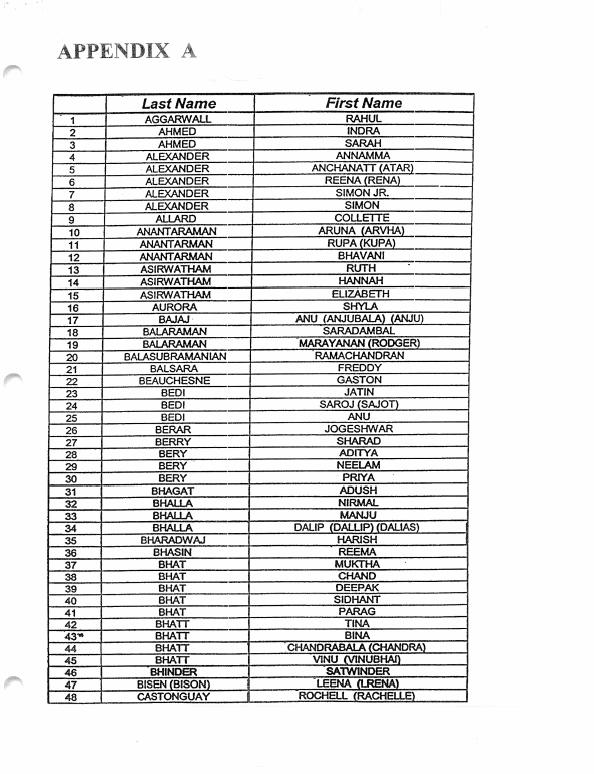
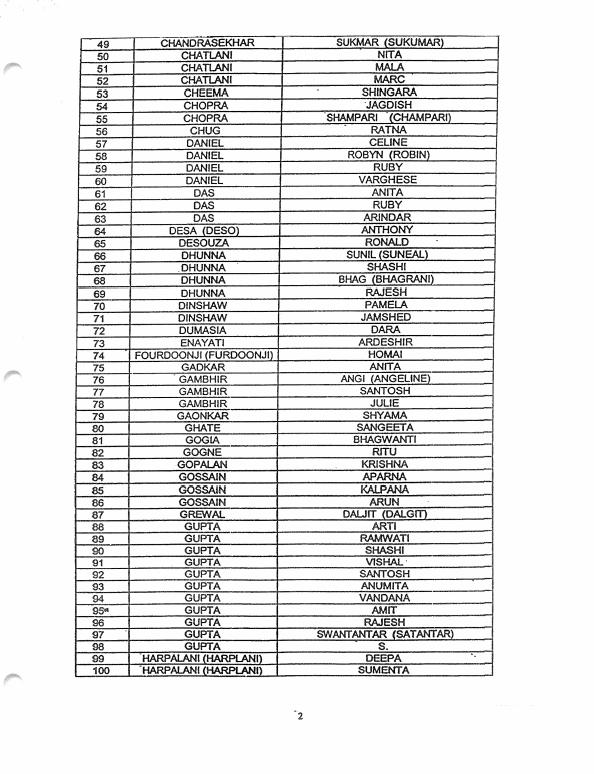
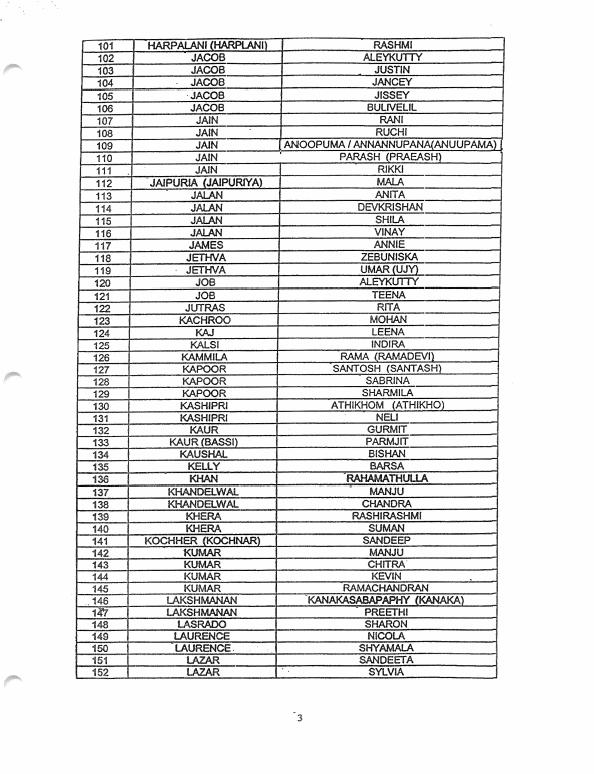
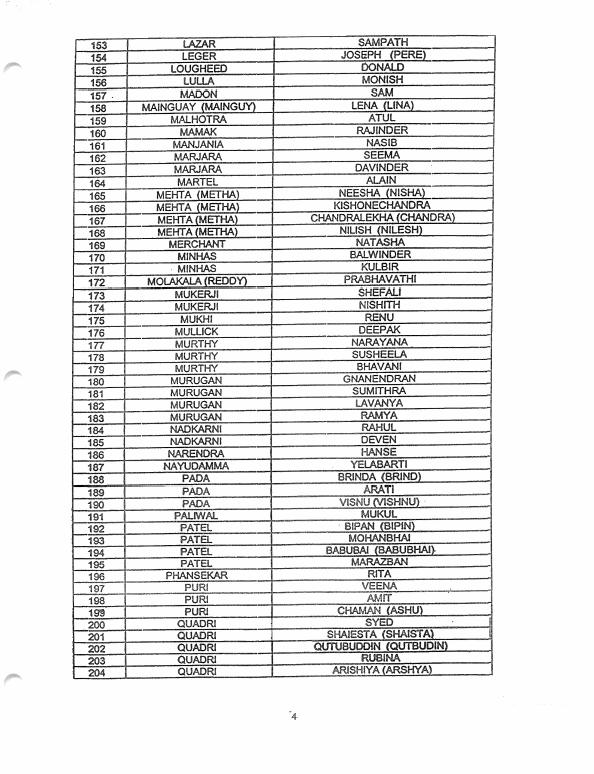
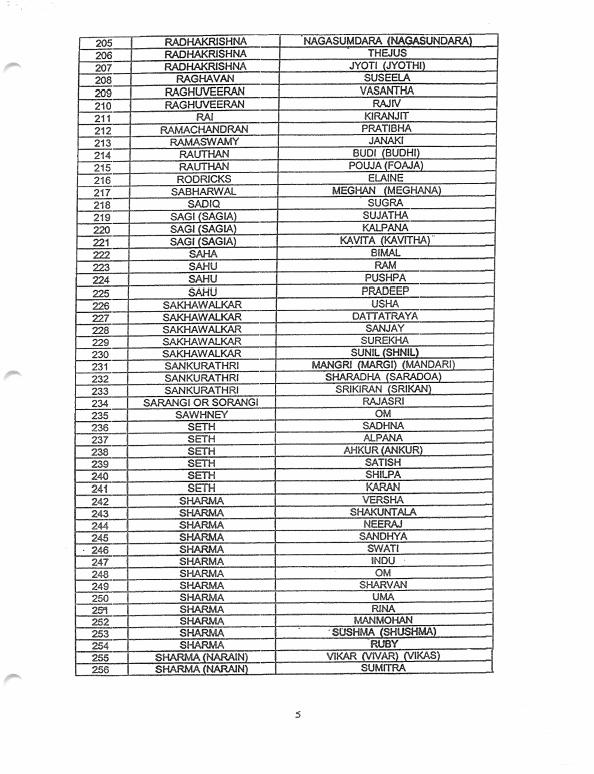
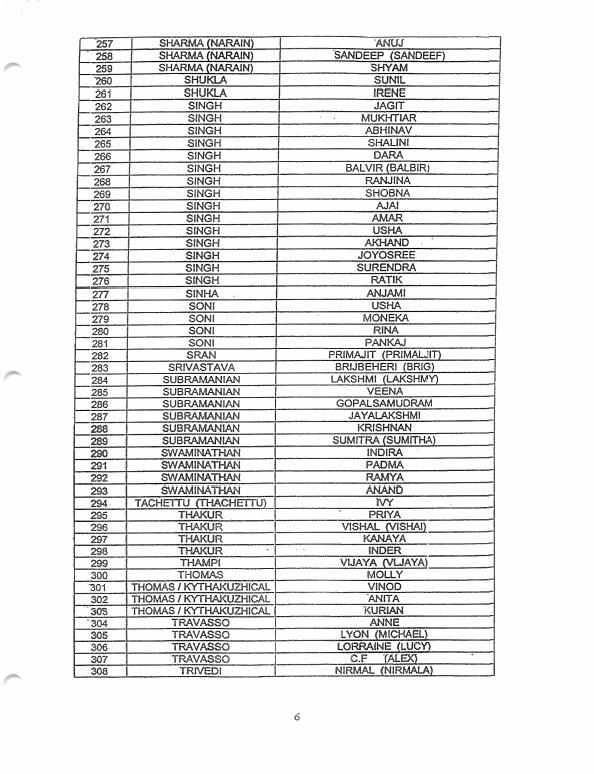
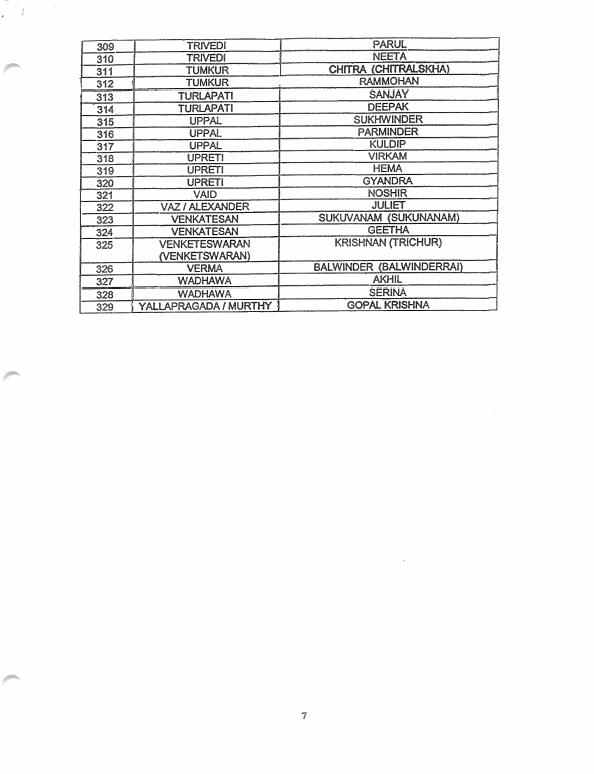
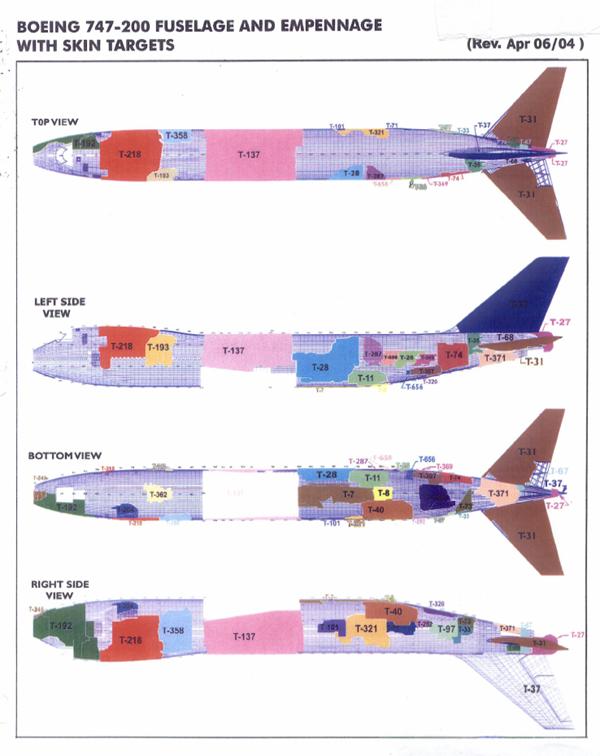
APPENDIX B